

More news on this day
Air travellers across the United Kingdom faced fresh disruption today as more than 30 flights were cancelled at major airports, affecting services operated by Gulf Air, El Al, Ryanair, SAS and other carriers on routes to Bahrain, Tel Aviv, Berlin, Dubai, Doha, Paris, New York and additional destinations.
Get the latest news straight to your inbox!
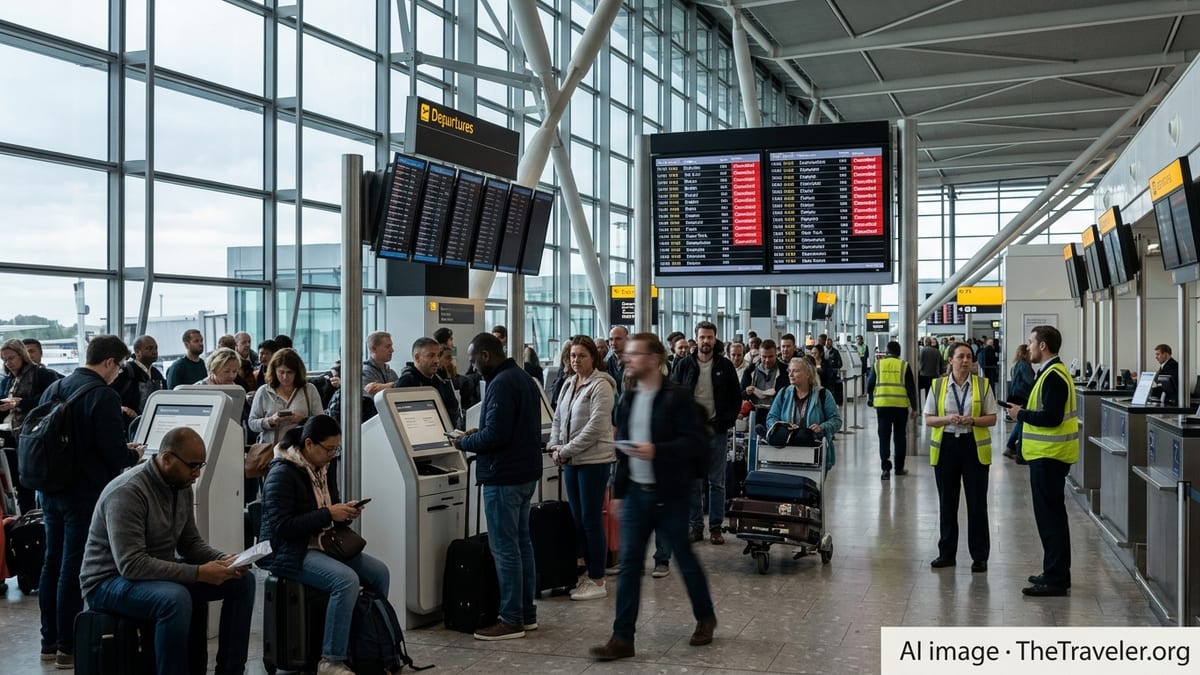
UK Airports Grapple With Wave of Same-Day Cancellations
Flight tracking data and airport departure boards on 25 March 2026 showed a cluster of short-notice cancellations from London and other UK airports, with more than 30 departures and arrivals removed from schedules over the course of the day. The disruption particularly affected long haul and regional links to the Middle East and Europe, compounding weeks of instability across several key air corridors.
Publicly available information from London Heathrow and Gatwick indicated that cancellations were spread across multiple terminals and time slots, rather than concentrated in a single operational window. This pattern suggested a mix of operational and airspace-related causes, rather than a single technical failure or localised weather event.
Passengers bound for major hubs such as Bahrain, Dubai and Doha, as well as European cities including Berlin and Paris, were among those forced to rearrange travel at short notice. Transatlantic services, notably to New York, also appeared in the cancellation lists, adding to the knock-on impact for connecting travellers.
Aviation analysts note that while the total number of cancellations remains modest in comparison with peak disruption events in previous years, the concentration on key connecting routes means the fallout can extend well beyond UK borders as misconnected passengers seek alternatives.
Middle East Routes Under Pressure Amid Regional Airspace Strain
Several of the affected services involved Gulf Air and other carriers operating between the UK and the Gulf region, at a time when airspace in parts of West Asia remains constrained. Published coverage of the recent closure and partial reopening of Qatari airspace, along with wider tensions involving Iran and neighbouring states, has highlighted the sensitivity of routings over the Gulf and surrounding areas.
Reports indicate that Bahrain-linked itineraries have been particularly exposed. Gulf Air, which uses Bahrain as its primary hub, has already allowed extended rebooking and cancellation flexibility for passengers holding March departures, reflecting the elevated risk of last-minute operational changes on its network.
Travel accounts shared publicly in recent days describe repeated cancellations of itineraries connecting via Bahrain and onward to Europe, including the UK. These experiences underline how swiftly route viability can change when hub airspace is restricted or when airlines reshuffle fleets to adapt to fast-moving conditions.
Flights between the UK and other Gulf hubs, including Dubai and Doha, have largely continued but with sporadic disruption and schedule adjustments. Industry observers note that even when a specific airport remains open, re-routed traffic and longer flight paths can tighten aircraft and crew availability, contributing indirectly to cancellations elsewhere in the network.
El Al and Tel Aviv Services Affected as Security Situation Evolves
El Al connections between the UK and Tel Aviv have also come under pressure, with cancellations and re-timings affecting passengers planning to travel in late March. This comes against a backdrop of continuing security concerns in Israel and the wider region, as well as ongoing evacuations and special flights arranged for foreign nationals.
According to recent published coverage of evacuation efforts linked to the Iran conflict, scheduled operations to and from Tel Aviv have been repeatedly reshaped, with several foreign and regional airlines reducing or suspending services. El Al has remained one of the more consistent operators on core routes, but has still made frequent schedule changes and introduced temporary policies allowing greater flexibility for ticket holders.
Travellers have reported on public forums that they are being advised to treat upcoming departures as provisional until close to the travel date, even when tickets remain confirmed in booking systems. In the UK market, this uncertainty has led some passengers to seek alternative routings through European hubs that still maintain limited links to Israel, at the cost of longer travel times and more complex itineraries.
The latest cancellations affecting Tel Aviv flights from UK airports fit into this wider pattern of rolling adjustments rather than a single-day suspension, with each change adding to a cumulative sense of unpredictability for those trying to plan journeys in and out of the country.
European Short-Haul Networks Feel the Knock-On Effects
Alongside long haul disruptions, short-haul operations on carriers such as Ryanair and SAS have seen targeted cancellations on routes to cities including Berlin and Paris. These flights are crucial for both point-to-point travellers and those connecting to long haul services operated by partner or interline airlines.
Operational data and airline updates suggest that some of these cancellations are linked to aircraft and crew being repositioned in response to broader network pressures, including diversions around affected Middle Eastern airspace and adjustments to schedules at major hubs. In other cases, standard operational challenges, such as late-running inbound aircraft, appear to have tipped marginal flights into cancellation.
For budget carriers, which operate tight turnarounds and high aircraft utilisation, any disruption in one part of the network can quickly ripple across other bases. On peak travel days, this can result in relatively small numbers of cancelled flights having an outsized impact on passenger flows, as seats on alternative departures are already heavily booked.
Passengers travelling between UK airports and European capitals today reported longer queues at customer service desks and higher same-day fares on remaining services, as those affected sought to rebook on the few remaining options that fit their schedules.
Transatlantic Routes and Passenger Rights Considerations
Transatlantic links, including services from the UK to New York, also featured among the cancellations, adding complexity for travellers whose journeys relied on intercontinental connections. Where flights to or from the United States are disrupted, passengers often face a mix of different regulatory frameworks and compensation regimes, depending on the airline’s country of registration and the exact routing.
Consumer advocates note that for flights departing from UK or European Union airports, or operated by UK or EU carriers, established passenger rights rules may apply in cases of cancellation or long delay, subject to specific conditions. These frameworks can entitle travellers to rerouting, refunds, or in some cases compensation, although exemptions may apply where airlines can demonstrate extraordinary circumstances.
Public guidance from travel regulators and airport operators continues to emphasise the importance of checking flight status directly with airlines before leaving for the airport, especially for itineraries touching the Middle East. Travellers are also being encouraged to keep receipts for any additional out-of-pocket expenses incurred during disruptions, in case these can be reclaimed later under airline policies or travel insurance.
With geopolitical tensions and airspace restrictions still evolving, industry observers expect intermittent disruption to UK flight schedules to continue in the short term. Airlines are likely to keep adjusting their operations day by day, leaving passengers facing a travel environment that remains more volatile than usual for this time of year.