

More news on this day
Passengers across the United Kingdom faced severe disruption today as British Airways, easyJet and Ryanair reported 219 delayed flights and 41 cancellations affecting services to and from London, Manchester, Edinburgh, Birmingham, Glasgow and Bristol.
Get the latest news straight to your inbox!
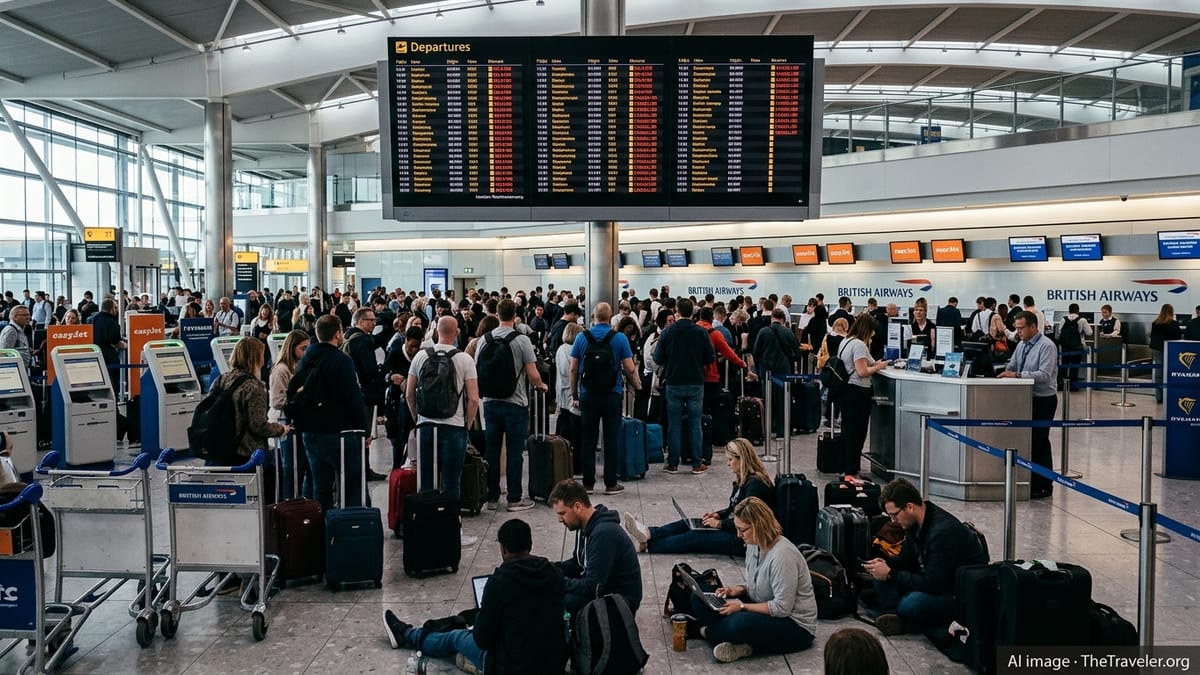
Major UK Hubs Hit by Cascading Disruption
The latest disruption has rippled across some of the country’s busiest aviation hubs, including London’s airports as well as Manchester, Edinburgh, Birmingham, Glasgow and Bristol. Publicly available flight-tracking data and media reports indicate clusters of delayed and cancelled departures throughout the day, with knock-on effects for later rotations.
These airports handle tens of millions of passengers each year, so even a relatively small proportion of affected services can translate into thousands of disrupted journeys. Data from the UK Civil Aviation Authority shows that London, Manchester and Edinburgh rank among the nation’s busiest airports by passenger volumes, underlining how operational problems at these hubs can quickly spread across domestic and European networks.
The pattern of disruption suggests a combination of factors, from weather and air-traffic constraints to aircraft and crew availability. Once early services run late or are pulled from the schedule, airlines can struggle to recover their timetables, especially on densely packed routes that already operate close to capacity.
Impact on British Airways, easyJet and Ryanair Customers
The three carriers at the centre of the latest disruption collectively operate hundreds of daily flights across the UK and Europe, meaning that delays and cancellations can strand passengers far from home or leave them facing difficult rebooking decisions. According to published coverage and live status boards, the 219 delays and 41 cancellations have hit a mix of short-haul leisure and business routes.
British Airways, which has a particularly strong presence at London airports and on domestic links to Scotland and northern England, has seen schedule changes affect connections into and out of major hubs. Delays on early-morning services can cause missed onward flights later in the day, leading to re-routing, overnight stays or extended layovers for some travellers.
Low-cost operators easyJet and Ryanair, dominant on high-frequency leisure and city-break routes from Manchester, Edinburgh, Birmingham, Glasgow and Bristol, have also reported a series of disrupted services. Crowded departure halls, lengthy queues at customer service desks and busy digital channels have been a common experience for affected passengers trying to secure alternative travel plans.
What Travellers Are Experiencing on the Ground
In terminals across the affected cities, travellers have faced a familiar mix of uncertainty and frustration as departure boards refresh with new times and occasional cancellations. Families heading off on school-holiday breaks, business travellers working to tight schedules and international visitors connecting through UK hubs have all been caught up in the operational difficulties.
Reports indicate that some passengers have been rebooked onto later same-day services, while others have been shifted to next-day flights or offered alternative routings through different airports. In busy hubs, this can mean longer queues at security and boarding gates as re-accommodated travellers join already full departures.
For those departing from regional airports such as Glasgow and Bristol, a cancelled or heavily delayed flight can leave few same-day alternatives, particularly on thinner routes. In some cases, travellers have opted to reroute at their own expense by rail or via other airports, weighing the cost and time of overland travel against waiting for the next available seat.
Rights and Options Under UK261 Rules
Under UK261, the United Kingdom’s passenger-protection framework that mirrors many provisions of the former EU261 rules, travellers whose flights are significantly delayed or cancelled may be entitled to assistance, rerouting and, in some circumstances, financial compensation. The specific rights depend on the cause of the disruption, the length of delay and the distance of the journey.
If a flight is cancelled, airlines are generally required to offer passengers a choice between a refund and rerouting at the earliest opportunity or at a later convenient date. When long delays occur, carriers may be expected to provide meals, refreshments and, if necessary, hotel accommodation. Compensation payments are usually only due when the disruption is within the airline’s control and not caused by extraordinary circumstances such as severe weather or air-traffic control restrictions.
Consumer groups advise passengers to keep boarding passes, booking confirmations and receipts for any essential expenses incurred during disruptions, as these documents can support later claims. They also recommend using official airline apps and websites to manage rebookings where possible, as digital tools can sometimes offer faster access to alternative flights than in-person queues at the airport.
Operational Strain Highlights Fragility of Busy UK Skies
The latest wave of delays and cancellations highlights how quickly the UK’s congested air-travel system can come under strain. High aircraft utilisation, tight turnaround times and busy airspace leave limited margin for error, so relatively small issues early in the day can eventually lead to large numbers of delayed and cancelled flights across multiple cities.
Industry observers note that seasonal peaks, crew rostering challenges and the ongoing need to manage air-traffic constraints over Europe continue to test the resilience of airline operations. British Airways, easyJet and Ryanair, with their dense networks and reliance on rapid turnarounds, are particularly exposed when conditions become less than optimal.
For travellers, the disruption underscores the value of building extra time into tight connections, monitoring flight status closely before leaving for the airport and considering flexible booking options where schedules are critical. As air travel continues to rebound and passenger numbers grow, episodes like today’s disruption across London, Manchester, Edinburgh, Birmingham, Glasgow and Bristol illustrate how closely the industry operates to its limits.