

More news on this day
Thousands of passengers were left stranded or facing long delays at major UK airports on Friday as a wave of cancellations and schedule disruptions hit flights operated by Lufthansa, Qatar Airways, Gulf Air, Virgin Atlantic, American Airlines and several other international carriers.
Get the latest news straight to your inbox!
Major Carriers Cut Frequencies on Key UK Routes
Airline operations at London Heathrow, London Gatwick, Manchester and Edinburgh were heavily disrupted as at least 56 flights were cancelled and many more delayed across the day, according to preliminary figures compiled from airport and airline operational data. The cancellations affected a mix of long haul and European services, with transatlantic and Gulf connections among the hardest hit.
Lufthansa grounded a number of departures to its Frankfurt and Munich hubs, while Virgin Atlantic adjusted parts of its transatlantic schedule, including services to US cities that feed onward connections. American Airlines also reported disruptions on some of its joint venture routes with British Airways, impacting passengers connecting through London to North America and beyond.
Qatar Airways and Gulf Air, both key carriers linking the UK with the Gulf region and onward to Asia and Australia, trimmed frequencies and retimed flights in response to wider airspace and scheduling constraints. The combined changes left travellers on popular corridors such as London to Doha, London to Bahrain and Manchester to major Gulf hubs facing last minute rebookings or overnight stays.
Smaller codeshare and interline services were also affected as partner airlines adjusted their timetables in response to the network changes, creating a knock on effect that rippled through intra European and domestic UK connections.
Passengers Face Long Queues, Confusion and Limited Rebooking Options
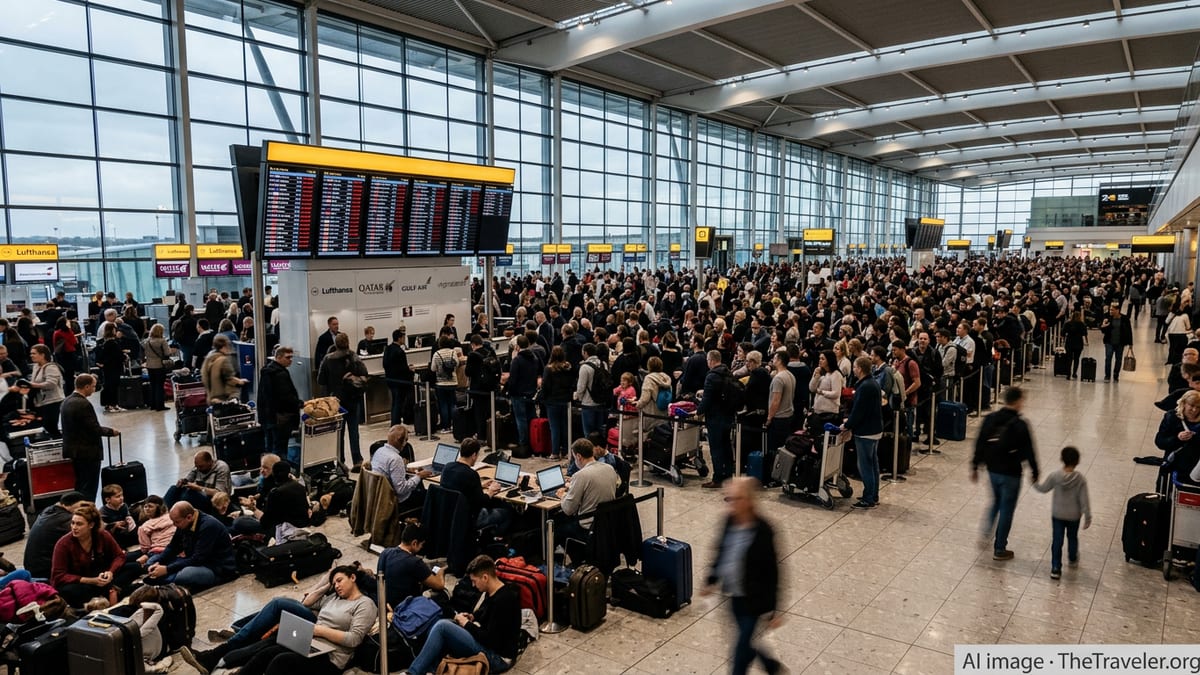
At Heathrow and Manchester, terminal departure boards showed rows of cancellations and severe delays from early morning, with queues quickly forming at airline service desks as passengers tried to secure alternative routes. Travellers reported waiting hours to speak with ground staff, while phone lines and online chat channels for several carriers were overwhelmed by a surge in calls.
Families heading off on long planned holidays, business travellers with time sensitive commitments and students returning to universities were among those caught in the disruption. Many described confusion about their rights to rebooking and hotel accommodation, especially where itineraries involved multiple airlines under codeshare agreements.
With seats on remaining services rapidly selling out, some passengers opted to reroute via alternative European hubs operated by other alliance partners, often adding several hours and extra stops to journeys that would normally be nonstop. Others faced the prospect of waiting one or two days for the next available flight on their original carrier, particularly on long haul and premium heavy routes.
Airport hotels around Heathrow and Manchester reported a spike in last minute bookings, while some travellers turned to budget accommodation further afield, using rail links into central London or Manchester to find available rooms at short notice.
Operational Pressures and Regional Tensions Behind the Disruptions
A combination of operational pressures and wider regional tensions has added strain to already complex international networks. Airlines serving the UK from the Gulf and wider Middle East have been juggling evolving airspace restrictions and longer diversion routes in recent weeks, pushing aircraft and crew rotations closer to their limits and reducing schedule resilience when further disruption occurs.
Carriers such as Qatar Airways and Gulf Air, which rely heavily on hub and spoke operations through Doha and Bahrain, have had to repeatedly adjust departure times and routings into Europe, including the UK. When delays accumulate at hub airports, knock on effects are quickly felt on onward services to destinations like London, Manchester and Edinburgh, where airport slot constraints make last minute retiming particularly difficult.
At the same time, European and US airlines including Lufthansa, Virgin Atlantic and American Airlines have been managing a busy late winter and early spring travel period at a time of constrained fleets and ongoing crew rostering challenges. Even modest weather or air traffic control issues can trigger a cascade of missed connections and out of position aircraft, forcing operators to proactively cancel or consolidate flights rather than risk widespread late night disruption.
Industry analysts note that the global system remains highly sensitive to shocks, with long haul operations especially vulnerable when multiple regions face pressure simultaneously. The UK, as one of the world’s busiest aviation markets, often feels those effects quickly when partners across alliances are forced to redraw their schedules.
Impact on London, Manchester and Edinburgh Travel Flows
In London, both Heathrow and Gatwick saw significant disruption to long haul departures, with passengers heading to the Gulf, North America and parts of Asia hardest hit. Heathrow’s role as a major transfer hub magnified the effect, as missed inbound flights left some connecting passengers stranded mid journey despite their onward segments remaining officially scheduled.
Manchester, which has grown as a northern gateway for carriers such as Qatar Airways, Aer Lingus, Virgin Atlantic and others, experienced particular stress on flights feeding major hubs. Travellers on itineraries combining Manchester with Doha, New York or European connections reported limited alternative options once initial services were cancelled or heavily delayed.
Edinburgh, while smaller in scale, was not spared. A handful of key international departures, including services enabling onward links to the Gulf and North America, were cancelled or significantly retimed. For Scotland based passengers, the changes often meant being rebooked via London or other European hubs, adding extra segments and potential for further disruption.
Rail operators saw a modest uptick in last minute bookings as some travellers abandoned air plans altogether for shorter UK journeys, opting instead for fast intercity services between London, northern England and Scotland while they waited for new flight dates to open up.
What Stranded Travellers Are Being Told to Do
Airlines affected by the disruption have urged passengers to check their flight status online before travelling to the airport and to ensure contact details in bookings are up to date so that rebooking offers and schedule changes can be communicated quickly. Many carriers are waiving change fees for affected services, although fare differences may still apply where passengers elect to shift to different routes or dates.
For travellers whose flights have been cancelled outright, customer service teams are prioritising rebooking on the next available services, with vulnerable passengers, families with young children and those with urgent medical or compassionate needs typically receiving the first available seats. Where same day options are not possible, airlines are arranging hotel accommodation and meal vouchers in line with their contractual obligations and applicable regulations.
Consumer advocates in the UK are advising passengers to keep records of boarding passes, booking confirmations and all communication with airlines, and to retain receipts for any out of pocket expenses incurred while stranded. These documents will be important when submitting claims for statutory compensation or reimbursement of reasonable costs under UK and EU air passenger rights frameworks.
With flight schedules remaining volatile, travel experts recommend that passengers with upcoming trips on affected routes build in extra margin for connections, consider travel insurance policies that cover disruption, and monitor airline updates closely in the days leading up to departure.