

More news on this day
The UK Foreign, Commonwealth and Development Office has entered 2026 with one of its starkest sets of overseas travel warnings in years, assigning its highest-level guidance against visiting 24 countries amid wars, regional instability and rising security threats.
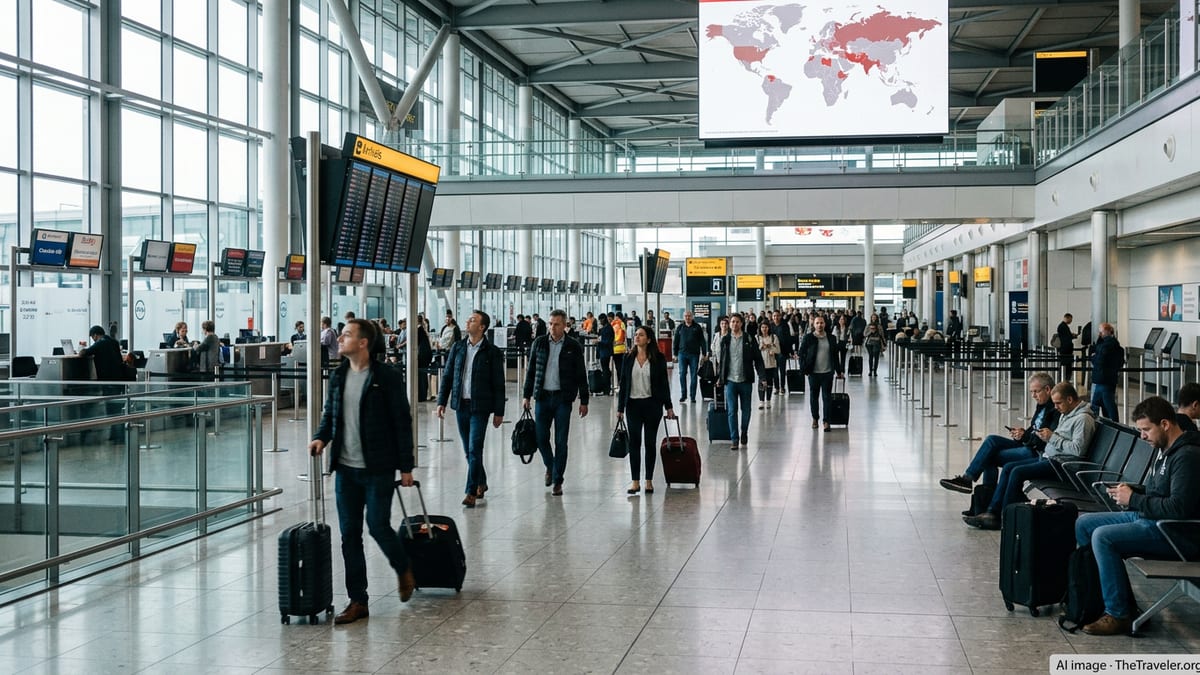
What the Foreign Office ‘No-Go’ Warning Really Means
The Foreign Office does not use the phrase “no-go” in its formal advisories, but travel industry figures and commentators have increasingly adopted the term to describe destinations where officials advise against all travel or all but essential travel across most or all of the country. Such warnings reflect the government’s view that the risk to British nationals has risen to an unacceptably high level, often because of active conflict, terrorism, state repression or a breakdown in basic services.
In practical terms, the classification has two immediate consequences for travellers. Many standard insurance policies will not provide cover for trips taken in direct contradiction of official advice, leaving holidaymakers potentially uninsured for medical emergencies, cancellations or evacuations. Airlines and tour operators also use the Foreign Office list to guide scheduling and cancellations, with some carriers suspending routes altogether when a destination is placed under a blanket warning.
Officials stress that advisories are not political sanctions, but risk assessments based on intelligence, on-the-ground reporting and coordination with allies. The list is reviewed constantly and may be tightened or relaxed at short notice. For 2026, however, security analysts note that the number of countries under the strictest guidance has remained elevated, reflecting persistent global instability, from the Middle East to Eastern Europe and parts of Africa.
For travellers, the message is clear: checking destination-specific FCDO advice is now an essential early step in any planning, not a last-minute formality.
Middle East Tensions Drive Sudden Escalations
The most dramatic changes to the Foreign Office map this year have centred on the Middle East, where a sharp escalation in Iran-linked tensions has triggered sweeping revisions to existing warnings. In late February and early March 2026, London hardened its position on Israel and the Palestinian territories, advising against all travel following renewed airstrikes and concerns over regional spillover.
Iran has long featured among the UK’s highest-risk destinations, but the latest unrest and protests have deepened official alarm about the prospects for consular support on the ground. British and dual nationals are being warned about the risks of arbitrary detention, internet shutdowns and civil unrest, with officials acknowledging that evacuations or in-person assistance could be extremely limited in a crisis.
Neighbouring states including Iraq, Syria and Yemen remain on the strictest rung of advice because of ongoing conflict and the presence of armed groups. Travel guidance across parts of the Gulf and wider region has also tightened, with some countries facing partial “do not travel” warnings for border areas and zones close to active military operations.
Tour operators that specialise in cultural and religious tourism to the region say demand has dropped sharply for itineraries that once combined city breaks, desert tours and pilgrimages. Many are pivoting to alternative routes in North Africa and Europe, while urging customers to book only on fully flexible terms that allow last-minute changes if the Foreign Office adjusts its stance again.
War and Political Crackdowns Keep Europe’s Conflict Zone on the List
The war in Ukraine and the fallout from Russia’s invasion continue to anchor Europe’s contribution to the 2026 “no-go” roster. The UK maintains its firmest warnings against travel to both Russia and Ukraine, citing the risk of missile strikes, military mobilisation and unpredictable shifts in local regulations affecting foreigners. The conflict has turned large areas into active warzones, making overland journeys that cross the region particularly complex to plan.
Belarus, a close ally of Moscow, also remains flagged for heightened risk, with concerns about political repression, surveillance of foreign visitors and the proximity of military activity along its borders. While not every city is directly affected by fighting, the Foreign Office’s countrywide stance reflects a calculation that conditions can deteriorate rapidly.
Further south and east, the South Caucasus remains volatile after repeated flare-ups between Armenia and Azerbaijan. The UK’s advice has grown steadily stricter around contested border regions and areas close to previous flashpoints. Though some parts of these countries continue to welcome tourists, the breadth of restrictions has pushed them into the upper tier of concern for British travellers weighing alternatives.
Rail and overland routes that once carried backpackers from Europe into Central and East Asia now require intricate risk assessments, with some segments effectively off-limits and others subject to fast-changing security checks. Transport companies are responding by rerouting services and advising passengers to monitor official advice daily.
Africa’s Conflict Hotspots and Fragile States
Across Africa, a cluster of countries appears on the Foreign Office’s 2026 high-risk slate because of internal conflict, coups or chronic lawlessness. Long-running crises in Sudan, Mali and parts of the Sahel region have led to comprehensive warnings against travel, as fighting and banditry make road journeys especially dangerous and raise the prospect of sudden airport closures.
In several states, British officials highlight the risk of kidnapping, terrorism and violent crime, particularly in remote areas where government control is weak. Humanitarian organisations and journalists, who often have compelling reasons to be on the ground, are urged to put in place robust security plans and evacuation contingencies before entering.
Some countries on the list have seen pockets of tourism return when front lines stabilise temporarily, but the overall security picture remains too unpredictable for the Foreign Office to ease its position. Fragile ceasefires, contested elections and the presence of multiple armed factions mean that what appears calm one month can deteriorate with little warning the next.
Regional tourism boards elsewhere on the continent are keenly aware of the reputational spillover. Destinations in East and Southern Africa are stepping up campaigns emphasising their relative stability, hoping to ensure that travellers do not write off the entire continent based on headlines from specific conflict zones.
What Travellers Should Do Before Booking in 2026
For British travellers, the existence of 24 “no-go” countries on the Foreign Office’s list does not mean the world has closed, but it does demand more discipline in planning. Analysts say the first step should always be to consult official travel advice for each intended stop, paying close attention not just to the national overview but also to regional breakdowns and any recent updates.
Insurance specialists urge customers to read policy wording carefully and to confirm whether coverage remains valid if they choose to travel to a destination under an “advise against all travel” or “all but essential travel” notice. In many cases, claims arising from trips that go against official guidance may be rejected, leaving travellers personally responsible for costly medical bills or repatriation flights.
Travel companies are increasingly building Foreign Office triggers into their booking terms. Some offer fee-free changes or refunds if advice hardens after a trip is booked, while others suspend operations entirely in line with government assessments. Holidaymakers are being advised to favour flexible tickets and packages that can be amended at short notice, particularly for regions that have seen frequent advisory changes.
Above all, 2026 is shaping up as a year when informed decision-making matters more than ever. With a quarter of the world’s countries now carrying some of the UK’s strictest warnings, the distinction between a routine holiday and a high-risk journey hinges on how closely travellers track and act on official guidance.