

More news on this day
Escalating tensions involving Iran, the United States and Israel, along with tighter travel advisories and airspace risks across the Middle East, are prompting many UK holidaymakers to abandon long‑planned itineraries and reroute their trips to Spain, Latin America and other European favourites instead.
Get the latest news straight to your inbox!
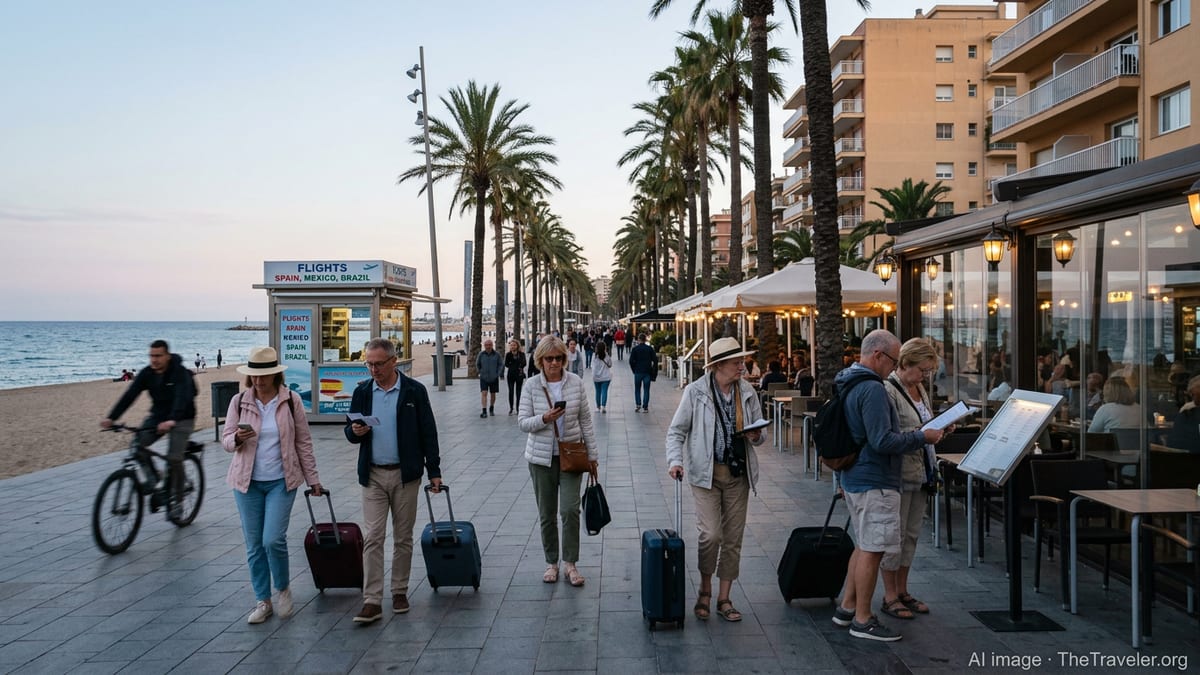
Geopolitics Push UK Travellers to Reroute Plans
Recent flare‑ups in the Iran–Israel conflict and related security alerts have reshaped the risk map for British holidaymakers. Travel advisories now highlight a heightened likelihood of airspace disruption, flight diversions and sudden changes to entry requirements across parts of the Middle East and neighbouring corridors. Publicly available guidance points to Iran and Israel as focal points of concern, with cautionary language also extending to routes that typically overfly Iranian and Iraqi skies.
These developments have had a knock‑on effect that reaches far beyond the immediate conflict zone. Aviation data and industry briefings indicate that major carriers have periodically re‑plotted eastbound routes to avoid higher‑risk airspace, adding time, cost and uncertainty to long‑haul itineraries. For UK leisure travellers weighing where to spend limited annual leave, the prospect of last‑minute detours or cancellations has become a powerful reason to favour simpler, more predictable options.
Analysts tracking booking patterns report a visible softening of demand for trips that would ordinarily combine Gulf hubs, the eastern Mediterranean or stopovers in the United States with onward connections. In their place, short‑ and medium‑haul destinations with direct point‑to‑point links from British airports are gaining ground, particularly across southern Europe and the Americas.
The shift is not driven solely by security concerns. The prospect of disrupted consular services in high‑risk destinations, changing insurance coverage, and an ongoing sense of volatility around the Iran–United States–Israel triangle are combining to make risk‑averse decisions more common among UK families and older travellers.
Spain Emerges as the Primary Beneficiary
Spain is one of the clearest winners from this rerouting trend. Official figures for 2025 show the country welcoming close to 97 million international visitors, a fresh record that builds on several consecutive years of post‑pandemic growth. UK residents remain Spain’s single largest source market, with nearly 19 million British visitors helping to power a surge in tourism revenue and cementing the country’s status as one of Europe’s most resilient destinations.
Sector analysis published over recent months suggests that British travellers are leaning into what Spain offers at a time of wider uncertainty: abundant sunshine without long‑haul flights, extensive low‑cost and full‑service connections from regional UK airports, and familiarity with popular resorts in the Balearic and Canary Islands, the Costa del Sol and city‑break hubs such as Barcelona, Madrid and Valencia. Travel intelligence providers report that Spain now captures roughly one third of overall international demand for southern Europe, underlining its central role in the regional tourism landscape.
The latest commentary from tourism economists notes that UK demand helped push Spain’s tourism earnings to well over 130 billion euros in 2025, outpacing growth in visitor numbers. This aligns with a broader industry narrative that British visitors are spending more per trip, opting for upgraded accommodation, longer stays and higher‑end experiences while still keeping overall travel risks comparatively low.
At the same time, Spain’s tourism boom is not without tension. Local media coverage has highlighted mounting concerns about overtourism, especially in the Balearic and Canary Islands and in city centres where short‑term rentals have proliferated. Demonstrations in 2024 and 2025 called for tighter regulation and a rebalancing of visitor flows, adding a reminder that even perceived “safe” havens carry their own complexities.
Mexico, Brazil, Costa Rica, Portugal, Italy and Peru Gain Momentum
While Spain stands out, it is far from alone. Data from booking platforms and airline capacity announcements point to growing UK interest in Mexico, Brazil, Costa Rica, Portugal, Italy and Peru as alternatives to itineraries that once routed via, or stayed in, more sensitive parts of the Middle East or the United States. In many cases, these countries offer a mixture of sun‑seeking escapes, cultural city stays and adventure travel that can be reached on single‑ticket flights without complicated transfers in higher‑risk hubs.
Mexico and Costa Rica have been prominent beneficiaries on the Latin American side. Winter‑sun travellers and honeymooners who might previously have considered Gulf beach resorts or multi‑stop itineraries through US hubs are instead choosing all‑inclusive stays on Mexico’s Caribbean coast or eco‑lodges in Costa Rica’s Pacific provinces. Carriers are responding with seasonal increases in capacity and marketing that emphasises direct connectivity and stable on‑the‑ground conditions.
Brazil and Peru are seeing a more gradual but noticeable bump among UK travellers seeking long‑haul experiences that feel far from current geopolitical flashpoints. City‑and‑beach combinations around Rio de Janeiro and São Paulo, together with Peru’s mix of Andean trekking, gastronomy and heritage routes, are featuring more frequently in UK tour operator offerings. Industry reports highlight that these countries are attracting visitors who are willing to travel long‑haul but want to avoid itineraries that rely on US or Middle Eastern transit points.
Closer to home, Portugal and Italy continue to act as pressure valves for diverted demand. Both countries offer many of the perceived advantages of Spain – comprehensive air links from the UK, visa‑free entry for British passport‑holders and a wide range of price points – but with distinctive cultural and culinary draws. Secondary cities and coastal regions in both markets are seeing increased search interest as travellers look beyond the most recognisable hotspots.
United States Trips Reconsidered as Regional Tensions Rise
The United States itself, traditionally one of the most aspirational long‑haul destinations for UK visitors, is also feeling the ripple effects of the Iran–Israel crisis. Publicly available arrival statistics for 2025 point to a modest decline in European visitor numbers compared with the previous year. While multiple factors are in play, travel analysts have linked part of this shift to heightened geopolitical anxiety, complex connecting itineraries and changing perceptions of value for money.
For UK holidaymakers, trips to the United States often involve transits through major hubs that have been affected by airspace detours, longer flight times and a greater sensitivity to global security alerts. In addition, a strong US dollar relative to the pound in parts of 2025 and early 2026 has made on‑the‑ground expenses more daunting for British families comparing options against euro‑zone breaks or Latin American destinations where spending power can stretch further.
Travel consultants note that some itineraries which once combined US city breaks with stopovers in the Gulf, the eastern Mediterranean or North Africa are being redesigned or dropped altogether. The cumulative effect is a quiet rebalancing away from complex multi‑stop long‑hauls towards more straightforward journeys that minimise exposure to volatile regions, even when the primary destination is not itself subject to a severe travel warning.
Despite this, the United States retains strong pull in core segments such as theme‑park holidays, iconic road trips and major sporting events. Industry forecasts suggest that once the current phase of heightened tension around Iran and Israel stabilises, transatlantic demand from the UK could rebound, particularly if exchange‑rate conditions become more favourable.
What UK Holidaymakers Need to Consider Now
For prospective travellers, the latest trends underline how quickly external events can reshape the global holiday map. Before committing to long‑haul plans, UK residents are increasingly advised by consumer groups and travel insurers to check the latest Foreign, Commonwealth & Development Office guidance, not only for their final destination but also for any countries whose airspace or airports feature on their route.
Insurance policies have also come under closer scrutiny. Many products distinguish between destinations under general caution and those subject to explicit “advice against all travel” or “advice against all but essential travel.” Travellers who book holidays to locations that subsequently move into higher‑risk categories may find coverage limited unless they have purchased policies with robust change‑of‑advice or cancellation clauses.
The experience of Spain, Portugal, Italy and a growing roster of Latin American destinations shows how powerful the appeal of perceived stability can be. Direct flights, clear entry rules and well‑developed tourism infrastructure are being weighed more heavily alongside climate and cost. For UK travellers aiming to avoid disruption linked to Iran–United States–Israel tensions, this often means looking for routes that stay within Europe or cross the Atlantic without intermediate stops in sensitive regions.
As the situation in the Middle East and its wider diplomatic fallout continues to evolve, booking data suggests that flexibility will remain a priority. Changeable fares, refundable accommodation and alternative destination back‑up plans are becoming part of mainstream holiday planning, even for those heading to comparatively low‑risk favourites like Spain, Mexico or Costa Rica.