

More news on this day
UK holidaymakers heading to Spain for Easter are being urged to prepare for potential disruption, as Spanish airport strikes coincide with the first major holiday test of the European Union’s new biometric border checks for non-EU visitors.
Get the latest news straight to your inbox!
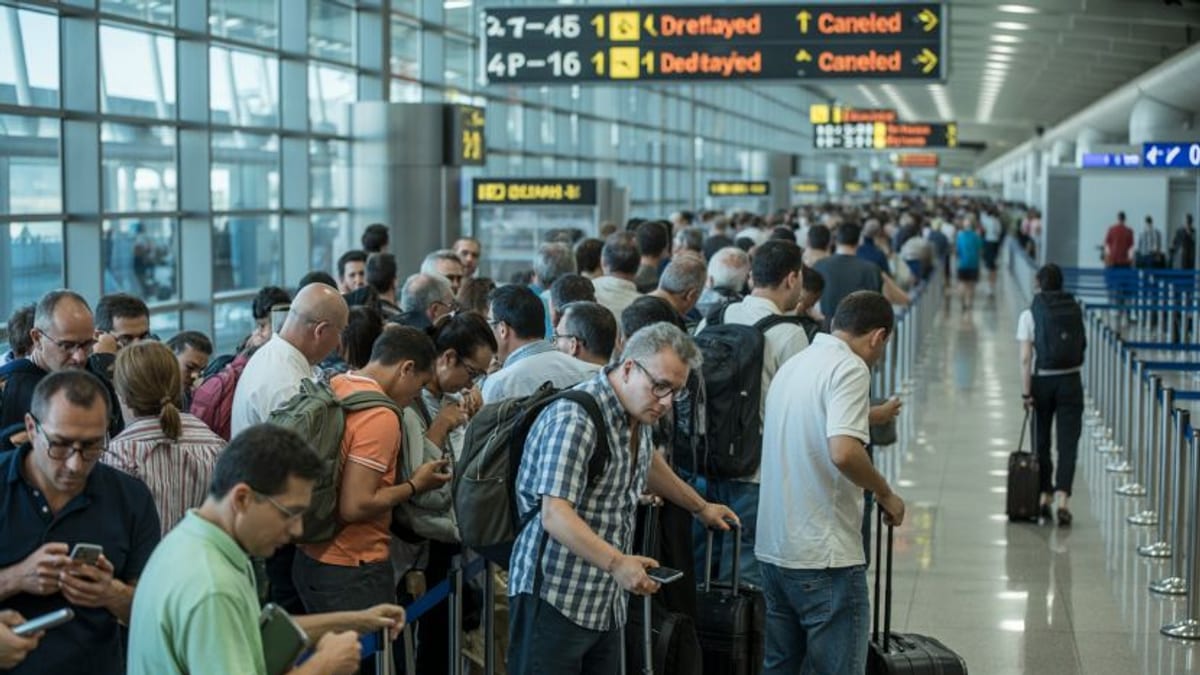
Image by Travel And Tour World
Strikes threaten peak Easter getaway at Spanish hubs
Industrial action by airport and ground-handling staff in Spain is expected to overlap with the busy Easter getaway period, raising the risk of delays and congestion for thousands of UK passengers. Reports from Spanish and European travel outlets indicate that unions representing security, handling and support workers have called stoppages at several major gateways, including Madrid-Barajas and Barcelona-El Prat, during key Easter travel days.
While exact participation levels can vary from one airport to another, experience from previous labour disputes in Spain suggests that even limited walkouts can quickly ripple through operations when flights are running close to capacity. At peak times, relatively small slowdowns at security lanes or boarding gates can lead to queues spreading into check-in halls and knock-on delays across the wider network.
Airlines serving the UK–Spain market are closely monitoring the situation and have begun issuing general advisories urging passengers to allow additional time at departure airports. Publicly available guidance from carriers typically recommends arriving at least three hours before short-haul flights at peak holiday periods, with some low-cost operators now advising even earlier arrival for passengers with checked baggage.
Spanish rules on minimum service levels during strikes, designed to protect essential transport links, usually keep a proportion of flights running. However, past episodes show that staffing constraints can still trigger last-minute schedule changes, longer waits at security and occasional cancellations, particularly on domestic and intra-EU routes that connect through the same terminals used by UK leisure travellers.
New EU Entry/Exit checks add to passport control queues
The disruption risk is being magnified by the roll-out of the European Union’s Entry/Exit System, a biometric scheme that records the movements of non-EU nationals entering and leaving the Schengen area. The system, which went live in October 2025 and is being expanded in stages, now covers Spain’s main international airports and ports, including those that handle large volumes of UK tourists.
Under the new rules, UK visitors who do not hold EU citizenship are treated as third-country nationals. On their first trip after activation of the system, they are required to have their passport scanned and to provide fingerprints and a facial image at automated kiosks or staffed booths. Subsequent trips should, in theory, be faster, because the biometric profile is already stored and only a passport scan and verification are needed.
Airport industry groups and travel associations across Europe have warned that, in practice, the new checks have lengthened processing times. Evidence gathered since late 2025 points to registration taking significantly longer than traditional passport stamping during busy periods, with some airports in Spain and neighbouring countries reporting queues stretching well beyond the immigration hall at peak arrival times.
Spanish media coverage and accounts from passengers indicate that pressure points are emerging at popular holiday gateways such as Málaga, Alicante and Palma de Mallorca, where arriving flights from the UK often land in concentrated waves. Technical glitches with fingerprint scanners and facial-recognition kiosks, combined with the need to give first-time users instructions, have occasionally forced border police to divert travellers back to manual desks, adding to congestion.
UK travellers advised to build in extra time and plan for queues
Publicly available guidance from UK and EU authorities, along with industry advisories, now consistently urge travellers to assume longer waits at border control as the Entry/Exit System beds in. For Easter, when many schools in the UK break at the same time and flights to Spanish resorts run close to full, that caution is being redoubled.
Travel bodies suggest that passengers factor additional time not only at departure airports in the UK but also on arrival in Spain, particularly if onward connections by train, coach or domestic flight are involved. Booking flexible onward tickets where possible, or allowing a wider buffer between landing and transfers, is being recommended to reduce the risk of missed connections.
Families and those travelling with elderly relatives or young children are being encouraged to prepare for the possibility of standing in line for extended periods. This includes carrying water, snacks and essential medication in hand luggage, as well as ensuring mobile devices are charged in case boarding passes or accommodation details need to be retrieved during delays.
Some airports and airlines have signalled plans to bolster staffing and passenger information over Easter, with more personnel positioned in arrivals halls to direct travellers to appropriate queues and assist with kiosk usage. However, industry representatives caution that staffing and layout limitations in older terminals, combined with simultaneous strike action, may cap what can realistically be achieved during the busiest hours.
Spain’s tourism hotspots brace for first major holiday test
Spain remains the leading overseas destination for UK tourists, and Easter is traditionally one of the earliest stress tests of the year for its airports before the main summer peak. Regions such as the Costa del Sol, the Balearic Islands and the Canary Islands are preparing for a sharp influx of British visitors seeking early-season sun.
Local tourism bodies and airport operators have welcomed the long-term objectives of the Entry/Exit System, which is intended to improve border security and, eventually, streamline flows once travellers are enrolled. In the short term, however, they acknowledge in public statements and interviews that the combination of new technology, high passenger volumes and industrial unrest creates a challenging environment.
Recent reports highlight that Spanish airports have been investing in additional automated border-control lanes, signage and staff training since the system’s launch. Yet, as seen in other Schengen countries, the pace of infrastructure upgrades has not always matched the rapid growth in passenger numbers, particularly on routes from the UK, which continue to rebound strongly compared with pre-pandemic levels.
Tourism industry analysis suggests that any severe and prolonged disruption over Easter could have knock-on effects for bookings later in the year, if travellers perceive Spanish gateways as notably more congested than competing Mediterranean destinations. Travel companies are therefore watching how smoothly the holiday period unfolds, and whether further timetable adjustments or capacity changes might be needed for the peak summer season.
What UK passengers can do before travelling
Consumer organisations and travel specialists are advising UK passengers to take a series of practical steps before flying to Spain over Easter. Checking airline apps and airport websites for real-time information on queues and flight status remains essential, particularly on days when strike action is scheduled. Where airport operators provide estimated wait times for security and passport control, these tools can help travellers decide when to leave for the airport.
Passengers are also being urged to complete as many formalities as possible in advance, including online check-in, printing or downloading boarding passes and ensuring passport validity meets Schengen rules. Travellers who have previously enrolled in the Entry/Exit System should keep their passport safe from damage, as a replacement document would require fresh biometric registration on their next trip.
For those yet to travel to the EU since the biometric system went live, anticipating a slower arrival process can reduce stress. Travel planners recommend choosing earlier flights in the day where feasible, as morning services can benefit from better operational resilience than late-evening arrivals, which are more exposed to knock-on delays.
With airlines, airports and border authorities all seeking to avoid a repeat of the worst post-Brexit bottlenecks, the Easter period will be an important indicator of how well Spain’s airports can manage the combined pressures of industrial action and a new digital border regime, while remaining attractive to the UK travellers who underpin much of the country’s tourism economy.