

More news on this day
UK holidaymakers flying to Spain for Easter 2026 are being warned to expect possible disruption at airports as Spanish staff strikes coincide with the rollout of new European Union border checks, raising the risk of queues and delays during one of the busiest travel weekends of the year.
Get the latest news straight to your inbox!
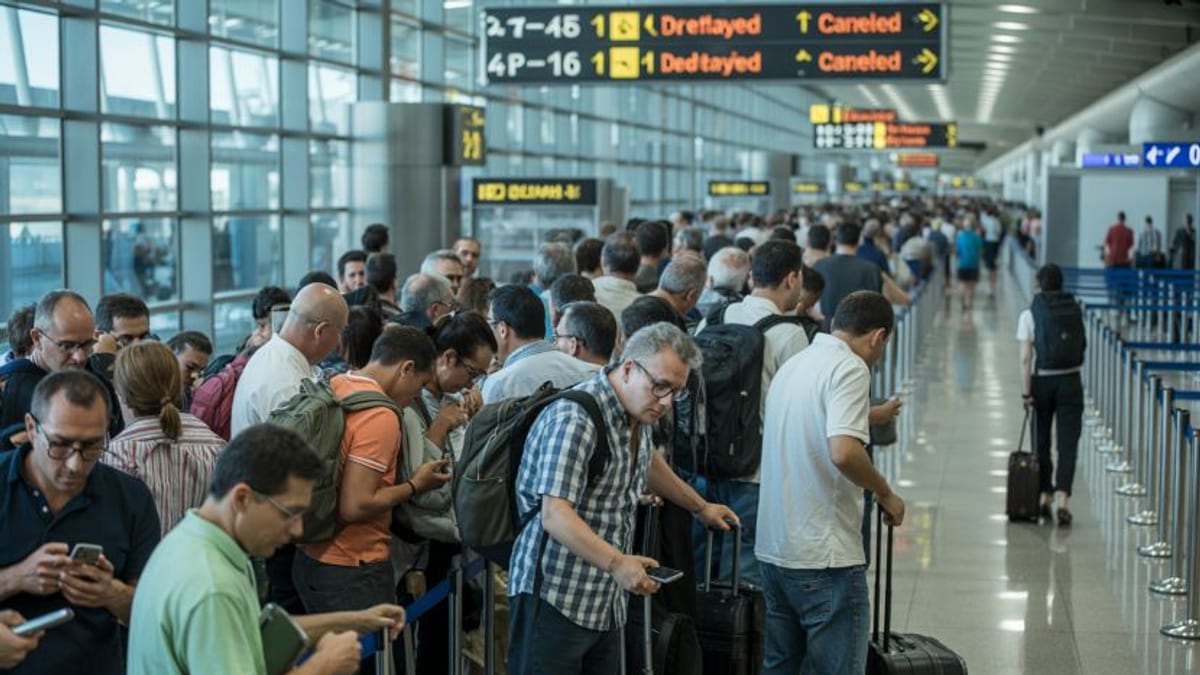
Image by travelandtourworld.com
Easter getaway collides with Spanish airport strike threats
The Easter bank holiday remains one of the peak periods for outbound travel from the UK, with recent research indicating tens of millions of leisure journeys planned over the long weekend. As demand surges, concerns are growing that industrial unrest affecting airports in Spain could make the route particularly vulnerable to disruption for British travellers.
Recent travel industry coverage highlights continuing labour tensions among airport and ground handling staff at several major Spanish gateways, including those serving popular resorts on the Costa del Sol, the Canary Islands and the Balearics. While strike calendars can shift at short notice, reports indicate that unions have been willing to target high‑volume periods such as Easter to maximise leverage in disputes over pay, staffing levels and scheduling.
Any stoppages or work‑to‑rule action affecting security screening, baggage handling or passenger services in Spain are likely to have a knock‑on effect for flights originating in the UK. Even if British airports operate normally, delays can build as aircraft, crews and baggage become entangled in congestion at Spanish hubs. Travellers on early‑morning departures may be particularly exposed if overnight rotations from Spain are disrupted.
Airlines serving UK to Spain routes typically seek to consolidate flights, adjust schedules or rebook passengers when industrial action is confirmed. However, high load factors over Easter reduce the spare capacity available, increasing the risk that some UK travellers will face extended waits at departure gates, last‑minute time changes or, in more severe cases, cancellations.
New EU entry and exit checks add pressure at border control
Alongside the threat of strikes, British passport holders heading for Spain are contending with the gradual implementation of the European Union’s new Entry/Exit System, a digital border regime that is transforming the way non‑EU citizens are processed at external frontiers. The system records biometric data and travel movements electronically and is being phased in across Schengen‑area airports ahead of full coverage, expected by April 2026.
Publicly available information from EU institutions describes how the new regime replaces traditional passport stamping with fingerprint and facial data collection on a traveller’s first entry after activation. While designed to strengthen security and automate compliance checks, reports from early adopters around Europe indicate that the additional steps can lengthen the time each person spends at border control, especially during the initial registration phase.
Industry groups representing airports and airlines have repeatedly raised concerns that border facilities in popular tourist destinations may struggle to cope with peak flows, warning of the risk of queues stretching to several hours if staffing, space and technology are not scaled up accordingly. In recent months, travel trade bodies and tourism organisations have urged European governments to adopt flexible approaches, including the use of contingency measures where waiting times become excessive.
For UK travellers to Spain this Easter, the impact of the new system will depend heavily on how far individual Spanish airports have progressed with installation and testing, and whether local authorities choose to apply the most stringent checks at every point. Some locations may still be operating a mixed model, with a combination of legacy passport stamping and partial digital registration, while others move faster towards full biometric processing.
What UK travellers to Spain should expect at Easter 2026
For those flying from the UK to Spanish destinations such as Malaga, Alicante, Barcelona, Palma de Mallorca, Tenerife or Gran Canaria, the main pinch points are expected to be at check‑in, security and outbound passport control in the UK, followed by arrival checks at Spanish border posts. Any delays caused by industrial action at Spanish airports are most likely to manifest as late‑running inbound aircraft, tight turnaround times and congested baggage reclaim areas.
On the border‑control side, the introduction of the Entry/Exit System means British nationals are treated as third‑country visitors. Travellers can expect to be asked to remove hats and face coverings for identity verification, present passports for scanning, and, where the new infrastructure is active, provide fingerprints and a facial image on dedicated terminals. The first journey into Spain after the system is switched on for a given airport is typically the slowest, as the initial enrolment must be completed.
Recent European travel advisories highlight that the extra processing time per passenger, though measured in minutes, can translate into lengthy queues when several large aircraft arrive together. Airports that serve as gateways to Spain’s busiest resorts, particularly during Easter and school holidays, face some of the most acute pressure, as terminals are often already operating close to capacity at peak hours.
Budget‑conscious families and groups may also encounter busy scenes at car‑rental desks and local transport hubs if flights are delayed or bunched together. When late‑night arrivals slip past scheduled times because of upstream disruption, onward connections to islands or coastal resorts can become more challenging, especially where services are infrequent.
Travel industry responses and advice for managing disruption
Airlines, tour operators and airport authorities across Europe have been adapting their operations in anticipation of both industrial unrest and the new EU border checks. Trade publications report that carriers have modelled longer ground times at certain European airports to reflect the new reality at border control, while some hubs have reconfigured queuing areas and installed additional automated gates in an effort to smooth passenger flows.
Travel companies are increasingly advising UK customers heading to Spain to build in more time at departure airports, particularly for morning flights on peak Easter days when demand is highest. The emphasis in recent guidance is on arriving early enough to absorb potential delays without creating additional congestion by turning up excessively ahead of departure, as overcrowding in terminal halls can compound operational challenges.
Information campaigns by travel agents and online booking platforms now routinely flag the new border procedures for non‑EU travellers, encouraging passengers to check their passport validity, carry printed confirmations of accommodation and return travel, and be prepared to answer questions about their stay. Some European countries are trialling or promoting optional pre‑registration tools to accelerate checks, although these do not replace the requirement for an in‑person verification at the border.
In the context of possible Spanish airport strikes, passengers are being urged to monitor their airline’s app or website closely in the days before departure for any schedule changes, and to ensure contact details are up to date. Travel insurance policies that cover delays and cancellations are also being highlighted more prominently, with consumer groups reminding holidaymakers to read terms carefully to understand their rights if flights are disrupted by industrial action or systemic border delays.
Outlook for UK–Spain travel as EU systems bed in
Looking beyond this Easter, Spain is expected to remain one of the most popular overseas destinations for UK residents, even as the European Union’s digital border regime becomes fully operational. Spain consistently ranks among the top choices for British holidaymakers, and tourism industry analyses suggest that demand is resilient despite added procedural steps at the frontier.
As the Entry/Exit System moves towards its April 2026 deadline for full deployment, officials at EU level have signalled that there will be some flexibility in how quickly individual border crossings ramp up requirements. This phased approach is intended to give airports and maritime ports time to refine processes, upgrade technology and train staff, reducing the risk of sustained disruption once the system is fully in force.
For UK travellers, the early months of operation are likely to define perceptions of the new checks. If Easter 2026 passes with only localised or short‑lived disruption, confidence in summer travel plans may remain high. Conversely, if queues and delays at Spanish airports prove extensive, pressure could grow on both national authorities and EU bodies to adjust procedures or activate contingency options.
In the meantime, those planning an Easter getaway from the UK to Spain face a travel landscape shaped by the intersection of traditional peak‑season pressures, domestic labour disputes and a major shift in how Europe manages its external borders. Awareness of the potential bottlenecks, and careful preparation before departure, may prove critical in turning a stressful journey into the start of a much‑needed spring break.