

More news on this day
British travellers heading to Europe this spring are being urged to prepare for disruption after the UK government widened its travel warnings to cover Poland alongside France, Sweden, Germany, Iceland, Estonia, the Netherlands and other Schengen destinations, citing mounting problems with visas and passports, new biometric border checks and heightened political tensions across the continent.
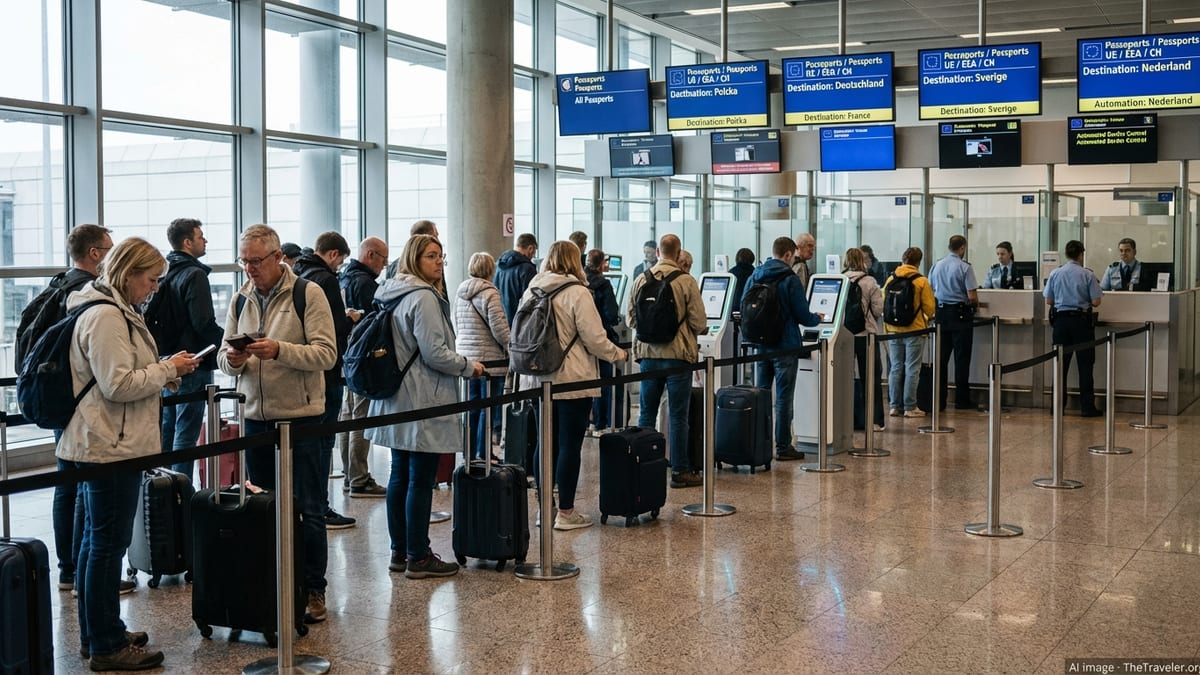
Poland Pulled Into Growing Web of UK Warnings
Poland has become the latest European country to feature prominently in UK travel advisories as officials warn of a difficult spring for cross‑Channel trips. While the Foreign, Commonwealth and Development Office (FCDO) has not told Britons to avoid travel, it has sharpened its language around the risks of delays, documentation problems and politically charged demonstrations that could affect major cities from Warsaw to Kraków.
Poland’s position on the external eastern flank of the European Union has placed it at the centre of debates over security, migration and Russia’s war in Ukraine. UK officials now routinely flag the possibility of sudden protests near government buildings, embassies and transport hubs, and note that police may impose short‑notice restrictions on movement or public gatherings.
At the same time, Poland is fully integrated into the EU’s tightening border regime for non‑EU nationals, including British tourists. That means UK passport holders arriving by air or overland will increasingly encounter the same digital systems and biometric checks already causing queues elsewhere in the Schengen area, compounding the risk of missed connections during the busy Easter and early‑summer getaway period.
Travel agents say Poland’s rising popularity as a city‑break destination for British tourists means even modest disruptions can now affect large numbers of passengers. Airlines operating into Warsaw Chopin, Gdańsk and Kraków report brisk spring bookings, prompting warnings that those travelling without carefully checked documents could find themselves turned away at departure gates or stuck in lengthy queues on arrival.
Biometric Borders and the New Reality for UK Passport Holders
Behind much of the current turmoil is the phased rollout of the European Union’s new Entry/Exit System, or EES, which has been progressively introduced since October 2025 and is due to be fully operational at all Schengen external borders by April 10, 2026. The scheme, which replaces manual passport stamping with digital records, requires non‑EU nationals, including Britons, to have fingerprints and a facial image taken the first time they enter the Schengen area.
Airline groups and airport associations have warned that the technology has already generated long lines at several major gateways as staff and passengers adjust to the new procedures. Industry bodies say that border processing times have risen sharply where EES kiosks are live, raising the prospect of multi‑hour queues at peak holiday periods if technical and staffing issues are not resolved before the main summer season.
For UK travellers heading to Poland, France, Germany, the Netherlands, Sweden, Iceland and Estonia this spring, the practical impact is unpredictable but potentially serious. Not all border posts are running the system at full capacity, and EU countries retain some flexibility to pause or limit checks during the busiest travel days. However, British visitors can no longer assume that arrival formalities will be quick, particularly where land borders or ferry ports share space‑constrained facilities between national authorities.
Travel experts say the combination of new biometrics, continued post‑Brexit passport scrutiny and the growing volume of UK leisure and business travel is creating a structurally more fragile system. Any glitch, staffing shortage or security alert can now ripple through airports and stations more quickly than before, pushing UK authorities to issue broader warnings even in the absence of a specific terrorist or safety threat.
Spring Squeeze: Visas, Waivers and Confusion Over Requirements
Compounding the friction at the border is mounting confusion about the evolving patchwork of visa and pre‑travel authorisation regimes affecting British nationals. While short‑term tourism and business visits to Schengen countries remain visa‑free, the EU is preparing to enforce its European Travel Information and Authorisation System, ETIAS, which will require most non‑EU visitors to obtain an online waiver before departure. The scheme is expected to sit alongside EES as a core part of Europe’s digital border architecture.
Although ETIAS has not yet become mandatory for UK citizens, earlier EU and national announcements, combined with a proliferation of unofficial websites charging extra fees, have left many travellers unsure about what paperwork they actually need. UK consular staff say they are already dealing with cases of passengers turned away at check‑in because they lacked the right documentation for onward journeys involving non‑Schengen legs or separate tickets.
On the UK side, the tightening of inbound rules is creating another potential flashpoint. From 25 February 2026, visitors from dozens of visa‑exempt countries, including many European states, must hold an Electronic Travel Authorisation before boarding a flight or ferry to the UK. British and Irish citizens are exempt, but dual nationals and permanent residents travelling on foreign passports have been caught out by the new regime, raising the risk of reciprocal scrutiny for UK tourists heading in the opposite direction.
These overlapping systems sit atop the longstanding Schengen rules that require UK passports to be less than 10 years old on the day of entry and have at least three months of validity remaining beyond the intended departure date. Travel advisers say misunderstandings over those conditions continue to derail trips, particularly for families and older travellers who may not realise that, unlike in the past, extra validity added when a passport was first issued no longer counts toward the Schengen limit.
Political Tensions and Protest Risks Across Europe
Alongside the bureaucratic turbulence, the UK’s latest advisories highlight the potential impact of political tensions and civil unrest on travel to several European partners. In Poland, the Netherlands, Germany and France, street protests linked to economic pressures, agricultural policy, climate measures and the war in Ukraine have all periodically disrupted transport and tourist hotspots over the past year.
Officials warn that demonstrations can flare with little advance notice and sometimes turn confrontational, particularly around parliaments, ministries and central squares frequented by visitors. Public transport closures, police cordons and last‑minute route changes have repeatedly forced travellers to reroute journeys or abandon plans for central‑city sightseeing, and there is little sign that the broader grievances fuelling such protests will ease before the spring.
In Sweden and Estonia, concerns focus more on hybrid threats and cyber activity linked to Russia’s confrontation with the West, as well as sporadic counter‑demonstrations involving nationalist and pro‑Kremlin groups. While incidents rarely target tourists directly, UK authorities underline that misinformation campaigns, cyber disruptions or symbolic protests near embassies and NATO facilities can still spill over into delays for everyday travel and consular services.
Iceland, though outside the EU and Schengen’s mainland land borders, has not escaped political and social strains. Debates over tourism’s environmental footprint, labour conditions in the hospitality sector and the island’s own security partnerships have triggered regular protests in Reykjavík. With the capital’s small size and limited road network, even modest gatherings can cause disproportionate traffic and public transport disruption.
Airports, Ports and Rail Hubs Under Strain
The practical impact of these overlapping pressures is most visible at Europe’s major gateways, where operational bottlenecks have started to feel like a new normal. UK travellers have already been warned to expect disruption at Dover and at Eurostar terminals as EES is progressively embedded into French controls conducted on British soil, creating knock‑on delays for both holidaymakers and freight traffic.
In the air, hubs such as Paris Charles de Gaulle, Amsterdam Schiphol, Frankfurt, Warsaw, Stockholm Arlanda and Keflavík remain under scrutiny from airlines and regulators. Each is juggling the twin demands of implementing new biometric systems and handling resurgent passenger numbers at a time of persistent staffing shortages in border police and ground handling units.
Travel industry groups say that while airports and carriers have learned lessons from the worst of the post‑pandemic chaos, they now face a more complex challenge: how to keep passengers moving when border‑control timings are increasingly outside their direct control. Airlines warn that missed connections will remain a significant risk this spring, especially on tight itineraries involving separate tickets or budget carriers with limited rebooking flexibility.
Rail hubs, notably those linking the UK to continental Europe, are also feeling the strain. At London St Pancras, where French border officers conduct outbound checks on UK soil before passengers board the Eurostar, staff have already trialled queuing systems and pre‑check procedures to cope with EES. Operators caution that any technical issue at the kiosks can quickly back up into the station concourse, particularly during school holidays.
Passport Pitfalls and Administrative Backlogs
Beyond border‑gate technology, UK officials are bracing for renewed pressure on passport and visa processing systems ahead of the spring rush. The recent memory of pandemic‑era backlogs, combined with new rules and higher demand, has prompted repeated calls for travellers to renew documents well ahead of expiry and to check destination‑specific requirements before booking.
Home Office data show that routine passport turnaround times have stabilised compared with the worst delays of recent years, but spikes still occur before Easter and the summer holidays. Any sudden surge in applications, triggered by media coverage of new EU rules or a wave of rejected boarding attempts, could again stretch processing capacity and leave would‑be holidaymakers grounded.
At the same time, some European consulates continue to report busy appointment schedules for longer‑stay and work‑related visas, particularly for Germany, the Netherlands and Poland. Students, seasonal workers and business travellers who misjudge lead times can find themselves queuing not only at borders but also for scarce embassy slots, a situation UK officials say is avoidable but likely to recur as cross‑border mobility rebounds.
Sector insiders say the complexity of the new travel environment has increased the scope for simple mistakes, from mismatched names on bookings and documents to confusion over children’s passports and parental consent rules. With many spring trips booked online without the intervention of a travel agent, errors are often spotted only at the airport, when options for remedying them are limited.
How Travellers Are Adapting Ahead of the Spring Getaway
Despite the growing list of warnings, there is little evidence that British demand for travel to Poland, France, Sweden, Germany, Iceland, Estonia, the Netherlands and other European destinations is softening in any sustained way. Tour operators report strong early bookings for city breaks, cultural tours and nature trips from the Tatra Mountains to the fjords and Nordic capitals.
Instead, travellers appear to be adapting by building in more margin for error. Many are choosing earlier flights on the same day to allow for missed connections, paying for through‑tickets where possible so that airlines assume responsibility for rebooking, and arriving at airports earlier than the minimum guidance. Travel insurance policies that cover missed departures due to extraordinary queues at security or border control are also gaining traction.
Consumer groups, however, warn that individual preparations can only go so far. They argue that without better coordination between UK and EU authorities, particularly on the timing and communication of new rules, travellers will remain vulnerable to abrupt changes that are poorly advertised. Airlines, airports and ferry operators have joined that call, urging clearer, joint messaging on what will be required of British passengers in the months ahead.
For now, the FCDO’s advice is cautious rather than alarmist: check the latest country‑specific guidance before travel, ensure passports are valid for Schengen rules, allow extra time at borders and stay alert to local political developments that could affect transport. With Poland now explicitly mentioned alongside a growing list of European partners in UK travel warnings, the message for spring is clear: Europe remains open, but getting there and back is more complicated than it used to be.