

More news on this day
British holidaymakers are being urged to rethink trips to some of their favourite winter-sun and Easter break destinations as the Maldives joins Turkey, Qatar, Egypt, Cyprus and a growing list of countries affected by airspace closures, flight disruptions and heightened security concerns linked to the spiralling conflict in the Middle East.
Get the latest news straight to your inbox!
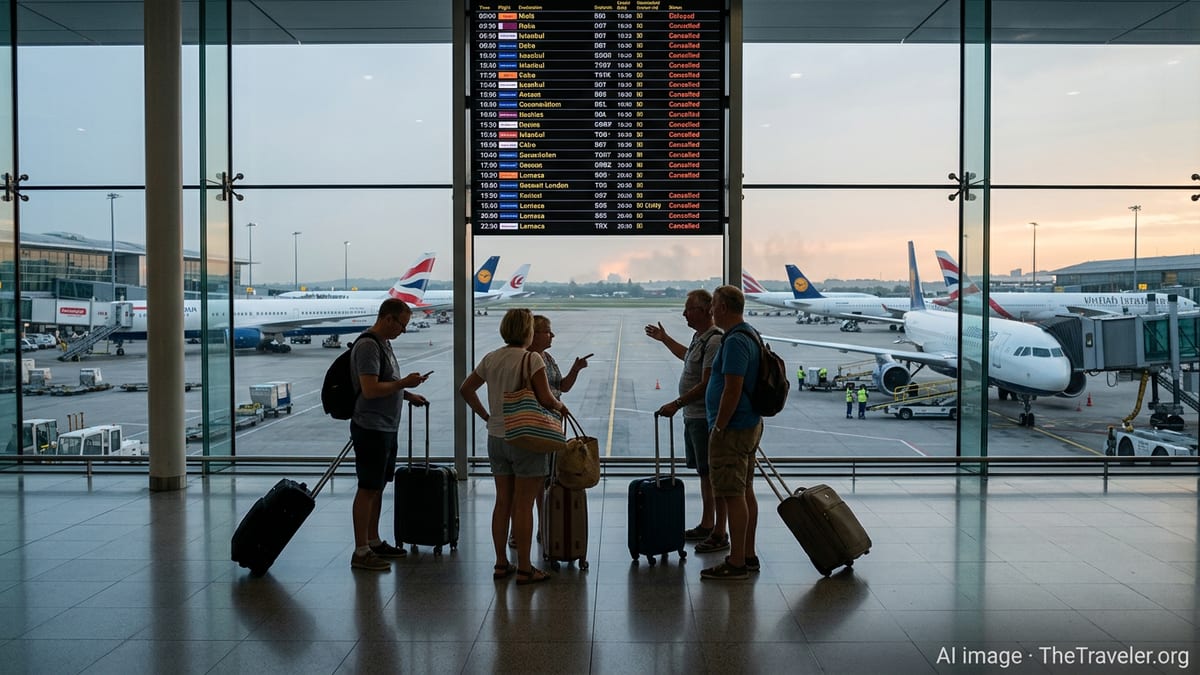
Middle East Conflict Spills Over Into Global Holiday Routes
The latest UK travel updates come after a sharp escalation in regional conflict that began on 28 February 2026 with coordinated US and Israeli strikes on Iran, followed by Iranian missile and drone attacks on targets across the Gulf and wider Middle East. Airspace closures in Qatar, Kuwait, Bahrain and parts of Saudi Arabia, as well as temporary suspensions at major hubs, have thrown flight schedules into disarray.
For UK travellers, this has an immediate knock-on effect. Many flights to Indian Ocean resorts and Eastern Africa, including popular itineraries to the Maldives and Mauritius, typically route via Gulf hubs such as Doha, Dubai and Abu Dhabi. With Qatar’s airspace only partially reopened under emergency conditions and neighbouring states restricting overflight, airlines have been forced to cancel, reroute or significantly extend journey times on services that would usually involve smooth overnight connections.
Specialist aviation trackers report thousands of flights rerouted around Iranian and Iraqi airspace, with airlines adding hours to long-haul journeys to avoid conflict zones. Carriers including Emirates, Qatar Airways and Etihad are operating reduced schedules, while some European and Asian airlines have suspended services to parts of the region altogether, contributing to a volatile and fast-changing picture for UK holidaymakers.
Security concerns are not limited to the skies. Drone and missile incidents near key infrastructure in countries such as Cyprus, along with heightened military activity in the Eastern Mediterranean, have raised the threat profile of several destinations traditionally viewed as safe bets for British families seeking sun within a five-hour flight of home.
Maldives Added to Updated UK Guidance Amid Transit Risks
The Maldives, long marketed as the quintessential remote escape, has now been swept into the disruption. Updated UK guidance highlights that while the resorts themselves remain calm and largely insulated from political tensions, access to the islands is heavily dependent on air corridors that cross or skirt the conflict zone, as well as on Gulf transit hubs currently under pressure.
Maldivian authorities recently convened a special cabinet committee on Middle East tensions to coordinate their response, after airspace restrictions in the Gulf left more than two thousand tourists temporarily stranded at Velana International Airport near Malé. With Dubai and Doha serving as primary gateways for European visitors, including large numbers from the UK, cancellations and last-minute rerouting quickly cascaded into long queues, missed connections and extended layovers.
In tandem, an urgent advisory carried in Maldivian media this month echoed the message now being amplified in UK outlets: travellers should monitor airline communications closely, build in extra time for connections, and ensure they have comprehensive travel insurance that covers disruption linked to regional conflict. British visitors are also being advised to keep a close eye on Foreign, Commonwealth & Development Office (FCDO) alerts for any shift in the security assessment.
While there is currently no blanket prohibition on travel to Maldivian resorts, officials stress that the situation in regional airspace is fluid, and that further closures or military activity could quickly upend flight plans at short notice. For travellers with fixed holiday windows over Easter and early summer, that uncertainty is now a central planning consideration.
Turkey, Egypt, Cyprus and Qatar Face Heightened Scrutiny
The Maldives joins a roster of destinations where the FCDO has refreshed guidance in light of the Middle East crisis. Turkey, Egypt and Cyprus, all longstanding favourites for British package holidays, sit close to or within air routes now being patrolled by military aircraft and monitored for potential spillover from the Iran war and allied operations.
In Cyprus, recent drone activity and heightened security measures around the RAF base at Akrotiri have underscored the island’s strategic role and raised concerns about its visibility in any future escalation. Although the Republic of Cyprus remains open to tourists and most resorts are operating normally, travellers are being told to stay alert to local security announcements and possible disruption at Larnaca and Paphos airports.
Egypt, meanwhile, is likely to experience secondary effects from changing overflight patterns and the enduring instability around the Red Sea corridor. Previous attacks and military operations linked to the Red Sea crisis prompted detours for ships and aircraft; current tensions raise the risk of renewed restrictions that could impact flights to and from popular Red Sea resorts such as Sharm el-Sheikh and Hurghada, as well as Cairo.
Qatar occupies a particularly sensitive position. Doha’s Hamad International Airport, usually one of the world’s busiest transit hubs, has already seen operations curtailed due to temporary airspace closures. Although limited repatriation and emergency flights have resumed under strict controls, regular commercial schedules remain fragile. The UK’s refreshed guidance urges anyone with transit bookings via Doha to check their flight status repeatedly in the days before departure and to consider alternative routings where possible.
What UK Travellers Are Being Told to Do Now
The core message from UK officials is caution rather than panic. The FCDO is encouraging travellers to stay informed, build flexibility into their plans and be prepared for sudden changes to flights, routes and even destination risk ratings. Those with bookings to the Maldives, Turkey, Egypt, Cyprus, Qatar or other nearby states are urged to sign up for country-specific email alerts and to check official travel advice before confirming final payments or departing for the airport.
Airlines and tour operators are advising customers to ensure contact details on bookings are up to date so that schedule changes and rebookings can be communicated quickly. Passengers should expect longer routings and potential technical stops as aircraft are diverted around closed or high-risk airspace, which may affect arrival times and onward connections. For those on tight itineraries, such as cruises or organised tours, that could mean rethinking travel dates or considering more direct routings via still-stable hubs.
Travel insurers, for their part, are updating policy language to reflect the conflict as a known event from late February 2026. This means some new policies may exclude cancellations or changes related to the evolving situation, while existing holders may still be covered depending on when they bought their insurance. UK travellers are being strongly encouraged to read the small print, confirm what is and is not included, and obtain written clarification from providers where necessary.
Industry risk consultants note that while most UK visitors are not being evacuated or urged to leave these destinations, the growing complexity of regional airspace and the potential for further missile or drone incidents mean that disruption, rather than direct security threats at resorts, is now the dominant concern for holidaymakers.
Planning Ahead: Routes, Alternatives and Risk Tolerance
For Britons still determined to travel, experts suggest rethinking not only where to go but how to get there. Routes that previously relied on quick Gulf transfers may now involve detours via southern Europe, North Africa or South Asia, with Istanbul, Cairo and certain Indian cities emerging as alternative hubs for long-haul connectivity. These workarounds can preserve many itineraries but often at the cost of longer journey times and higher fares.
Families and older travellers with less tolerance for uncertainty may prefer destinations that do not require traversing Middle Eastern airspace or relying on hubs directly affected by the conflict. That could shift demand back towards the Canary Islands, mainland Spain, Portugal, and other parts of the Mediterranean that remain outside the current air corridor disruptions, even if they lack the tropical appeal of the Maldives or the Red Sea.
Travel agents report a surge in enquiries from customers with imminent departures who are weighing whether to postpone, rebook to alternative destinations, or proceed as planned while accepting the risk of delays and last-minute changes. The consensus advice is to keep plans under constant review, stay closely in touch with airlines and tour operators, and factor in the possibility of extended layovers or unexpected overnight stops on the way to or from holiday hotspots.
With the situation in the Middle East still evolving and no clear timeline for a full reopening of affected airspace, British travellers are being warned that disruption could continue well into the peak summer season. For now, anyone heading to the Maldives, Turkey, Egypt, Cyprus, Qatar and neighbouring destinations is navigating a more complex map, where geopolitics has become as important as sunshine when choosing where, and how, to travel.