

More news on this day
The United Kingdom has sharply escalated its travel advice for Russia, placing the country in the highest-risk category and aligning it with conflict-affected and politically volatile destinations such as Niger, Israel, Iraq, Burkina Faso, Mali and Syria, as foreign travel guidance is tightened in response to fast-evolving global security threats.
Get the latest news straight to your inbox!
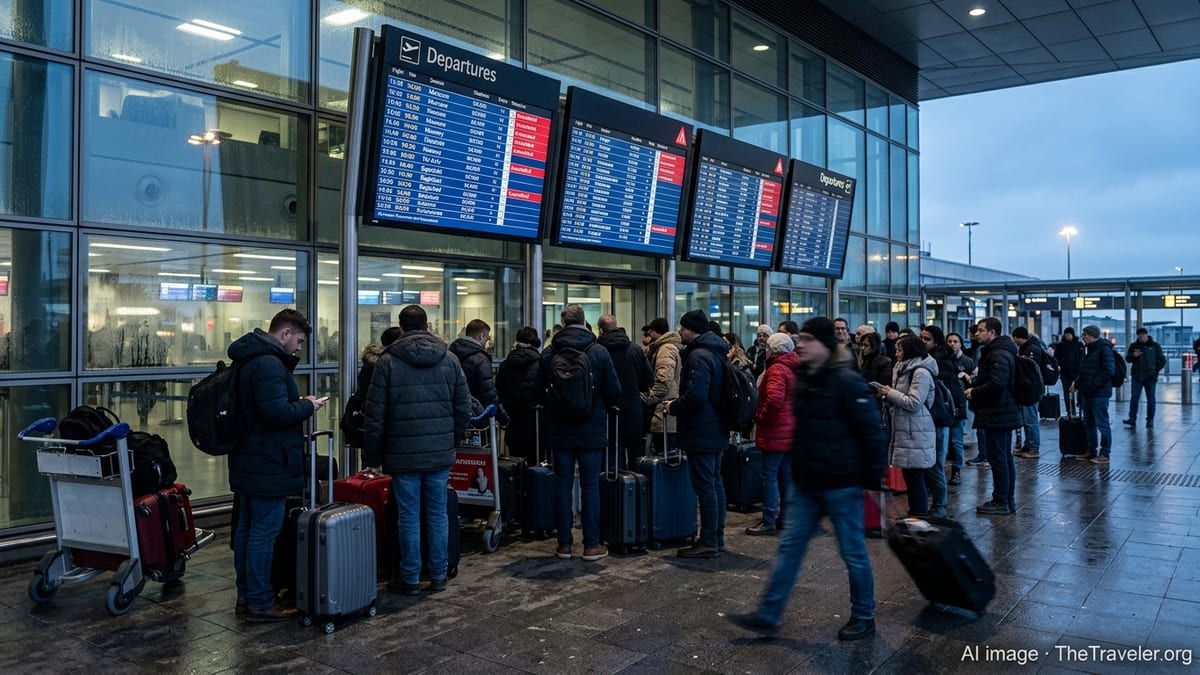
Russia Added to UK’s Highest-Risk Travel Category
Recent updates to the UK government’s foreign travel advice show Russia listed in the strictest warning bracket, with guidance that advises against all travel. Publicly available information highlights a combination of security, legal and logistical risks, reflecting Moscow’s ongoing war with Ukraine, domestic security concerns and significantly reduced transport links.
Government travel pages describe a heightened threat environment in Russia, including references to the impact of the conflict in Ukraine, sporadic security incidents and a risk of arbitrary enforcement of local laws. Travellers are warned that consular support inside the country would be extremely limited in a serious crisis, and that evacuation assistance could be impossible.
Reports on past advisory changes for Russia indicate that early concerns centred on disrupted flights, financial volatility and the potential for rapid policy shifts. Those factors have since been compounded by the wider deterioration in relations between Russia and Western states, increasing the likelihood that British visitors could face sudden changes in treatment, border controls or exit options.
Security analysts and risk consultancies tracking the guidance note that Russia now sits alongside a small group of locations where the combination of geopolitical tension and operational constraints leads to a blanket “do not travel” style warning. For ordinary leisure visitors, this effectively removes Russia from the mainstream European holiday map for the foreseeable future.
Wider Network of ‘Do Not Travel’ and High-Risk Destinations
Russia’s status is part of a broader pattern in UK foreign travel advice, which lists dozens of destinations subject to either full “advise against all travel” warnings or strict regional restrictions. Recent round-ups of Foreign, Commonwealth and Development Office guidance highlight Russia alongside Afghanistan, Haiti and Belarus in the top category, as well as multiple African and Middle Eastern states where conflict or instability has sharply escalated risk.
Across the Sahel region, countries such as Burkina Faso, Mali and Niger are subject to particularly severe warnings due to the spread of jihadist violence, military takeovers and fragile government control. Coverage of official advisories for Burkina Faso in mid-2025 noted that several governments, including the UK, shifted to advising against all travel following a series of attacks and kidnappings targeting both locals and foreigners.
Niger has seen renewed attention after high-profile militant incidents, including attacks near key transport hubs. Public reports from early 2026 describe how international authorities responded to a major assault on Niamey’s main airport with stepped-up alerts and “do not travel” classifications, citing the risk that travellers could be caught in crossfire or stranded by sudden route closures.
In the Middle East, Syria has long been flagged as one of the most dangerous destinations, with UK guidance warning of ongoing conflict, terrorism and a collapse in essential services across much of the country. Parts of Iraq remain under strict warnings as well, with travel advice singling out border areas and provinces affected by militant activity, unexploded ordnance and limited emergency response capacity.
Israel and the Middle East Under Intensifying Scrutiny
Israel, traditionally a popular year-round destination for British holidaymakers and religious tourism, has seen its risk profile transformed by recent conflict. Travel intelligence briefings in early 2026 describe a highly volatile regional picture, with airspace disruptions, missile attacks and large-scale evacuations affecting multiple countries in the eastern Mediterranean and Gulf.
Advisory maps produced by universities and corporate risk departments, which draw directly on UK and allied government data, show much of Israel and surrounding areas coloured at the highest risk levels. Some guidance urges travellers to reconsider transit through nearby hubs and warns that routes can close with little notice, leaving passengers scrambling for expensive alternative itineraries.
The intensification of conflict involving Iran, Israel and neighbouring territories has also had a spillover effect on surrounding states. Reports note intermittent closures of air corridors, sudden curfews and tight security at major airports, especially during periods of missile fire or cross-border clashes. British travellers are told to expect potential diversions, overnight delays and last-minute rebookings if they attempt to move through the region.
For tour operators and airlines, the shifting status of Israel and its neighbours has complicated scheduling and risk assessments. Many are increasingly reliant on real-time feeds of travel advisories, route restrictions and insurance coverage conditions before confirming departures or launching new products in the wider Middle East.
What UK Travelers Face When Ignoring High-Level Warnings
Insurance specialists and consumer advocates consistently flag one major consequence of travelling against UK foreign office advice: the likely loss of effective travel insurance cover. Guidance from major insurers and independent travel forums emphasises that standard policies often become void when individuals enter countries marked as “advise against all travel” or even “all but essential travel.”
That can leave holidaymakers personally liable for medical bills, emergency evacuations, theft and cancellations. Recent discussions on UK travel and aviation forums describe cases where would-be visitors to sanctioned or conflict-affected states discovered that they could not secure comprehensive cover, or that claims would be rejected due to the official risk classification.
Some universities, NGOs and media organisations maintain their own “no go” lists, cross-referencing UK advice with other government and international security sources. Documents circulated in late 2025 and early 2026 show Russia, Syria, much of Sudan and large swathes of the Sahel highlighted in red, indicating an internal ban on sponsored travel for staff and students.
For independent travellers, the warnings also signal practical challenges beyond insurance. Reduced diplomatic presence, limited commercial flights, the potential for targeted detentions and restrictions on electronic payments can combine to make even routine trips unpredictable. In places like Russia, where relations with the UK are strained, publicly available commentary stresses the risk that visitors could become entangled in politically charged legal cases or exit bans.
How Global Tensions Are Reshaping Travel Planning
The expansion of the UK’s highest-risk list, with Russia joining conflict-heavy states such as Niger, Israel, Iraq, Burkina Faso, Mali and Syria in the travel spotlight, reflects a broader shift in how leisure and business travellers must plan international trips. Instead of relying solely on package deals or airline schedules, travellers are now urged to consult official advisories, independent risk analyses and local news before booking.
Travel media and safety briefings highlight the speed at which situations can deteriorate. The war in Ukraine, the spiralling confrontation involving Iran and Israel, and coups in the Sahel all moved from regional flashpoints to full-scale crises within relatively short periods, rapidly changing the security calculus for visitors and carriers alike.
For the tourism sector, the tightening of UK foreign office warnings has both immediate and long-term implications. Entire markets can disappear overnight when a destination enters the “advise against all travel” category, leading operators to pivot toward lower-risk regions and invest in more flexible booking policies. At the same time, travel companies are under pressure to provide clearer pre-departure information about political and security conditions, especially for routes that transit nearby hotspots.
For British travellers, the new Russia guidance and the expanding map of high-risk countries serve as a stark reminder that global tensions are increasingly reshaping where, and how, it is realistic to travel. Checking the latest official advice is no longer a formality but a core part of responsible trip planning in a more volatile world.