

More news on this day
The United Kingdom has sharply tightened its travel advice for Israel and the West Bank, joining France, Germany, Poland and Italy in warning citizens to avoid non-essential trips as fears mount that a confrontation with Iran could spill into a broader regional conflict.
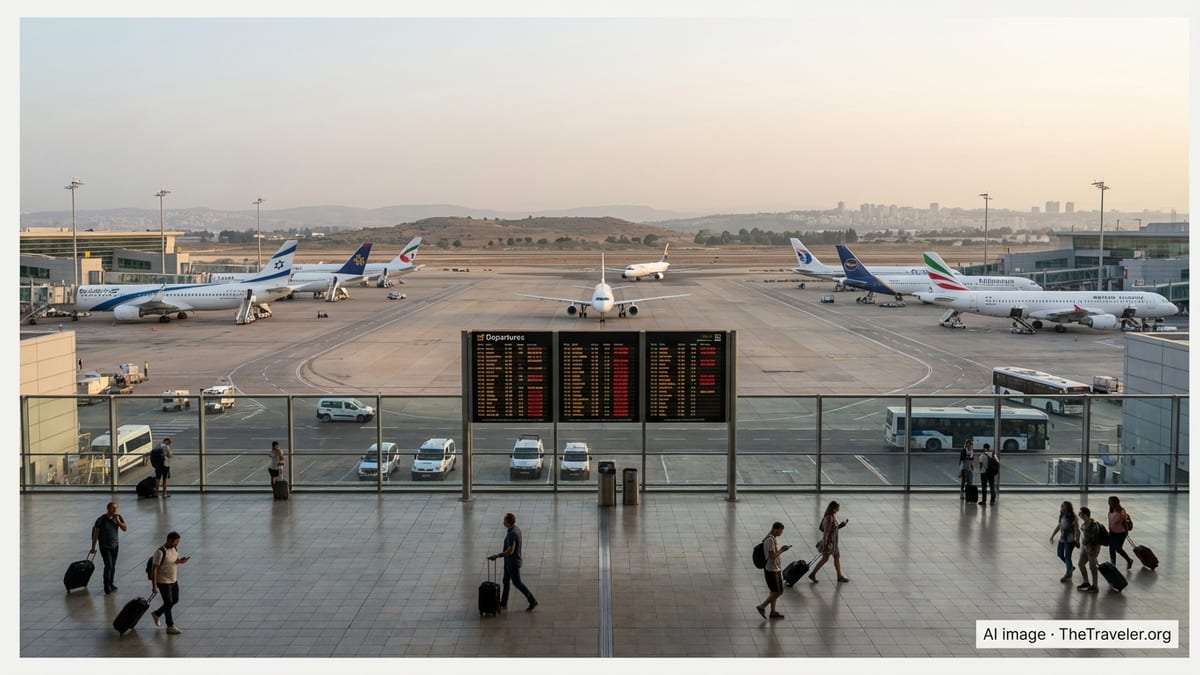
What The New UK Travel Warning Actually Says
The Foreign, Commonwealth & Development Office (FCDO) on Friday 27 February 2026 updated its guidance to advise against all but essential travel to Israel and the Palestinian territories, including the West Bank, citing a rapidly deteriorating security environment linked to the standoff between the United States and Iran.
The UK has for some time advised against travel to certain high-risk areas, but the latest revision significantly widens the scope, effectively putting almost all tourism and non-urgent business trips on pause. Officials warn that the situation “could escalate quickly,” with the potential for missile or drone attacks, civil unrest and sudden closures of border crossings and airports.
British diplomats have temporarily closed the embassy in Tehran and relocated some staff inside Israel from Tel Aviv to other locations as a precaution. Authorities stress that consular assistance may be limited if commercial flights are suspended or if land borders shut with little or no notice.
Britons already in Israel or the West Bank are being urged to register their details with the FCDO, keep travel documents ready, review their personal security plans and closely follow local instructions, particularly regarding access to shelters and safe rooms.
European Allies Tighten Advice In Lockstep
The UK shift comes as several major European partners move in the same direction. France has reinforced its call for citizens to avoid travel to Israel, Jerusalem and the West Bank, explicitly linking the warning to the unstable situation surrounding Iran and the risk of regional repercussions.
Germany has updated its own guidance to “urgently” advise against travel to all of Israel, widening earlier restrictions that had focused on border areas and specific flashpoints. Berlin has also highlighted the possibility of abrupt flight cancellations and airspace closures affecting departures from Tel Aviv and other regional hubs.
Italy has urged its nationals to leave Iran where their presence is not strictly necessary and is advising extreme caution across the wider Middle East, while strongly discouraging non-essential trips to Israel and neighboring countries. Poland has gone further still, calling on its citizens to leave Iran, Israel and Lebanon immediately, warning that any major escalation could make evacuation difficult or impossible.
Smaller European states, including Belgium, Cyprus and Greece, have echoed the message, reminding their citizens to avoid travel to Iran and to reconsider non-essential visits to Israel, the West Bank and the Gaza Strip as the risk of conflict intensifies.
Why Iran’s Standoff Is Shaping Israel Travel Risk
The sudden tightening of travel advisories is rooted less in on-the-ground tourism concerns and more in the broader strategic picture. After inconclusive nuclear talks and mounting rhetoric between Washington and Tehran, Western intelligence services now see a credible risk of military confrontation that could quickly engulf Israel.
Two United States carrier strike groups are already deployed in the region, and Western embassies have begun drawing down non-essential staff in several capitals. Security officials warn that any US or Israeli strike on Iranian territory could trigger retaliatory missile or drone attacks against Israeli cities, along with rocket fire from Iranian-aligned groups in Lebanon, Syria and Gaza.
For travelers, this raises the prospect not only of direct security threats, such as incoming-fire sirens, shelter orders and sporadic clashes, but also of severe disruption to the aviation network. Governments are openly warning that airspace closures over Israel, Iran or key transit corridors could strand visitors abroad with limited options for onward travel.
Risk assessments also factor in the possibility of demonstrations and unrest in sensitive locations, including Jerusalem’s Old City and flashpoint sites in the West Bank, where tensions have historically risen during regional crises.
What This Means If You Are Planning To Travel
For anyone with a forthcoming leisure trip to Israel or the West Bank, the message from European governments is increasingly clear: reconsider your plans. Travel insurers may treat the latest warnings as a material change in risk, affecting coverage for cancellations, medical costs and evacuations linked to conflict or terrorism.
Tour operators are already reporting a surge in customer inquiries and postponements, particularly for spring and Easter-period pilgrimages. Many are offering date changes or credit vouchers as they monitor developments, but policies vary widely and depend on the specific wording of government advisories and insurance contracts.
Travelers currently on the ground are being advised to keep a low profile, avoid demonstrations or large gatherings and maintain flexible itineraries that can be adjusted at short notice. Authorities recommend identifying the nearest shelters or safe rooms to hotels and short-term rentals, carrying identification at all times and keeping electronic devices charged in case of sudden alerts or transport disruptions.
Those who decide to depart are urged to do so while commercial flights remain available. Airlines can scale back operations quickly in response to government guidance or security incidents, and seats out of the region may become scarce if demand spikes suddenly.
How Long Might The Warning Last?
One of the most difficult questions for travelers and the tourism industry is how long these heightened warnings will remain in place. Officials in London, Paris and Berlin stress that the situation is “highly fluid” and that advisories could be tightened further or, in a more optimistic scenario, eased if diplomatic efforts succeed in lowering tensions with Iran.
For now, foreign ministries are updating their guidance on an almost daily basis, reflecting the pace of negotiations and military movements. Analysts note that even if a direct confrontation is avoided, it may take weeks for airlines, insurers and governments to feel confident enough to relax restrictions.
In the meantime, Israel’s hard-hit tourism sector faces another setback after years of intermittent conflict and pandemic-related disruption. Hotels, guides and small businesses that had been counting on a stronger 2026 season are once again bracing for cancellations and reduced visitor numbers, particularly from Europe.
For travelers contemplating future trips, the emerging consensus is to stay flexible: hold off on non-essential bookings, opt for refundable fares and accommodation where possible, and monitor official advice closely. While Israel and the West Bank remain deeply meaningful destinations for many visitors, the current regional climate means that safety and contingency planning must take precedence over spontaneity.