

More news on this day
The UK Foreign, Commonwealth and Development Office has tightened several key travel advisories for 2026, with fresh warnings for Israel, South Africa and a wider list of high-risk destinations prompting British travellers to reassess upcoming trips.
Get the latest news straight to your inbox!
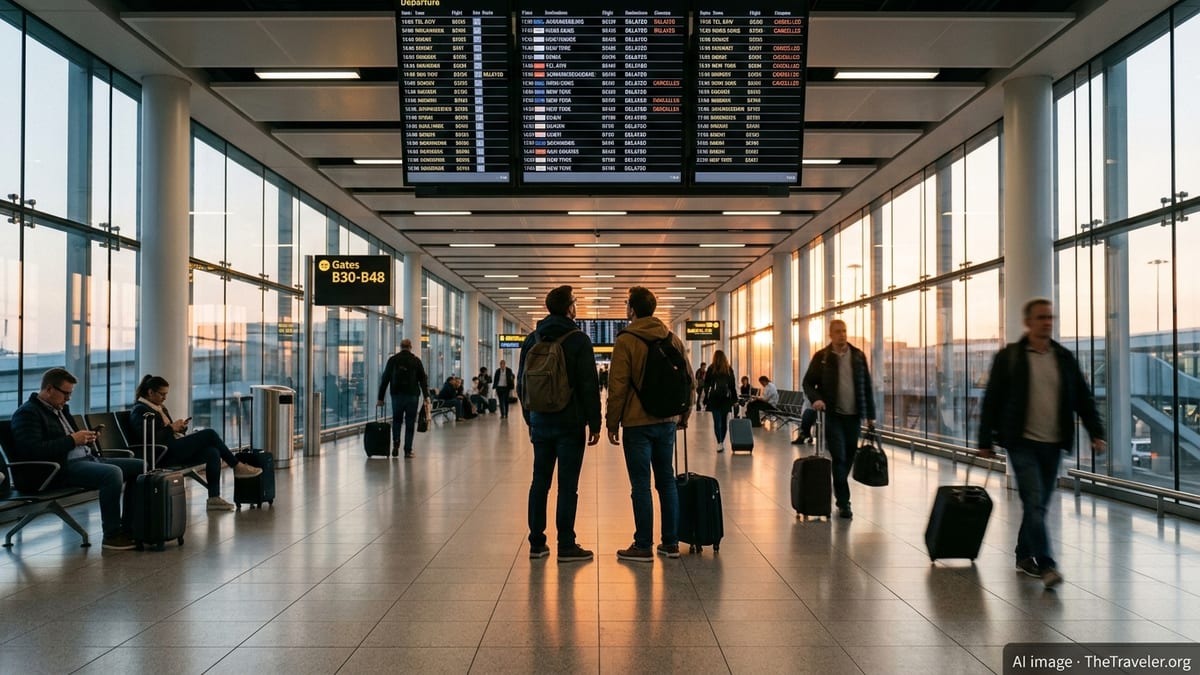
Heightened Alerts as Regional Tensions Reshape 2026 Travel
Publicly available UK travel advice for 2026 shows a markedly tougher line on a number of destinations, reflecting conflicts, civil unrest and infrastructure strains that have disrupted international travel across multiple regions. A consolidated reading of government guidance and media coverage indicates that more than 50 countries and territories now carry warnings against some or all forms of travel, alongside more granular alerts for specific border zones and hotspots.
Recent coverage of Foreign Office advice highlights that the harshest ratings, including full “do not travel” recommendations, are concentrated in parts of the Middle East, sub-Saharan Africa and Eastern Europe, largely due to war, political volatility and kidnapping or terrorism risks. Analysts note that these advisories are framed not only around personal safety but also the practical difficulty of evacuating visitors if hostilities escalate or airspace closes.
Travel industry reporting suggests that the Foreign Office has been updating its risk maps more frequently in early 2026, as missile and drone attacks, cyber incidents and cross-border tensions create fast-changing conditions. Tour operators and insurers are responding by tightening coverage, inserting conflict-related exclusions and urging customers to check government advice repeatedly in the days before departure rather than relying on information gathered at the time of booking.
This shift has placed a new emphasis on individual risk assessment. Guidance from the UK and other governments consistently stresses that advisories are a decision-making tool rather than a guarantee of safety, and that travellers who proceed to higher-risk areas may face reduced consular support and invalidated insurance if they ignore “all but essential” or “no travel” warnings.
Israel and the Occupied Palestinian Territories: Conflict Drives Severe Restrictions
The security picture in Israel and the occupied Palestinian territories remains one of the most volatile elements in the 2026 advisory landscape. UK travel pages covering Israel, Gaza and the West Bank continue to describe a highly unpredictable environment, shaped by recurring flare-ups between Israeli forces and armed groups, as well as regional spillover from the ongoing confrontation between Iran and Israel.
Government guidance reproduced in media summaries maintains firm advice against all travel to Gaza and areas close to its perimeter, and against all but essential travel to large parts of the West Bank outside certain corridors and East Jerusalem. Reports indicate that crossing points such as Erez have remained closed since late 2023, with only limited and often ad hoc arrangements for humanitarian movement. Curfews, checkpoint closures and airspace disruptions can be imposed with little notice when tensions spike.
Coverage of the 2026 Iran war and related missile strikes on Israeli territory underlines the risk that air travel could be affected at short notice by attacks, retaliatory action or temporary closures of airports and airspace. Civilian infrastructure, including transport hubs and urban centres far from Gaza or the northern border, has periodically been placed under alert, heightening anxiety for residents and visitors alike.
For British travellers who still intend to visit Israel, publicly available advice highlights several recurring safety themes. These include staying away from demonstrations, avoiding border areas, following local security instructions, and having robust contingency plans in case flights are cancelled or ground transport is disrupted. Insurance challenges are also becoming more acute: consumer discussions in early 2026 point to cases where standard UK travel policies have refused cover once Foreign Office advice hardened, particularly for trips booked before the most recent updates.
South Africa: Crime, Unrest and Infrastructure Risks Under Scrutiny
South Africa remains a popular long-haul destination for British tourists, but updated Foreign Office material and international travel advisories reiterate that visitors must exercise a high degree of caution. The UK government’s South Africa pages point to high levels of violent crime, including armed robbery, carjacking and burglary, with incidents reported in both major cities and smaller towns. Travellers are urged to be vigilant when arriving at and leaving airports, driving at night, and using public or informal transport.
Safety and security sections on official sites note that protests and strikes occur regularly across South Africa and can turn violent without warning. Transport routes, including highways and access roads to townships and industrial areas, have periodically been blocked by demonstrators. Reports describe cases where bystanders were caught up in unrest or where attempts to drive through roadblocks triggered attacks on vehicles, leading advisories to warn against trying to force a way past obstructions.
Infrastructure concerns remain another theme in 2026 updates. While local reporting suggests that scheduled power cuts, known as loadshedding, have eased compared with previous years, UK advice still flags the risk that renewed outages could impact water supplies, street lighting, traffic signals and security systems. Travellers are encouraged to factor in the possibility of power failures when planning journeys after dark, booking accommodation or relying on electronic payment and communication systems.
Publicly available guidance also highlights fraud and scams targeting foreign visitors, including fake officials, card skimming and online rental or safari offers that disappear after payment. Prospective travellers are advised to scrutinise documentation carefully, avoid carrying large sums of cash, and book through reputable providers with clear cancellation and refund policies. Travel medicine considerations, such as malaria prevention in certain provinces and routine vaccination checks, remain part of standard pre-trip preparation.
Beyond Israel and South Africa: A Wider Map of 2026 Risk
The Foreign Office’s 2026 warnings fit into a broader global trend of heightened travel risk. Recent roundups in UK media identify around 55 countries and territories where British nationals are advised against all or all but essential travel, particularly in areas affected by armed conflict, state fragility or systemic violent crime. Examples often cited include Afghanistan, parts of the Sahel, Yemen, Syria and sections of Eastern Europe, where front lines, airspace closures and sanctions regimes complicate even basic travel planning.
In the Middle East, updated advice concerning Iran, Lebanon and several Gulf and Red Sea states reflects concern about regional escalation and the risk of spillover from the Iran war and related naval incidents. Publicly available analyses emphasise that travellers may face sudden flight cancellations, visa restrictions, telecommunications blackouts or short-notice curfews, even if they are staying far from active conflict zones.
Elsewhere, advisory changes for destinations such as Haiti, Myanmar and certain parts of Latin America underline how crime, political instability and kidnapping risks can reach levels where consular assistance becomes limited or impractical. Some government and industry commentary describes a widening gap between destinations marketed as holiday hotspots and the on-the-ground realities that shape evacuation options, medical care and legal recourse for visitors caught up in crises.
At the same time, UK travel advice continues to differentiate within countries, distinguishing relatively stable urban centres or resort areas from higher-risk border regions or interior provinces. This granularity can create confusion among travellers, particularly where a single country has both “no travel” and “normal precautions” zones, but it also offers scope for more nuanced, route-specific planning where local conditions allow.
Practical Safety Steps for British Travellers in 2026
Against this backdrop of shifting risk, publicly available guidance from governments, insurers and security specialists converges on several practical measures for those planning international trips in 2026. Travellers are urged to consult official travel advice not only when booking but again in the days leading up to departure, paying particular attention to sections on terrorism, civil unrest, border areas and transport disruption.
Experts quoted in travel and risk-industry coverage recommend building flexibility into itineraries, including refundable or changeable tickets, accommodation with clear cancellation terms and contingency funds to cover unexpected stays or re-routing. In regions affected by conflict or political tension, a common suggestion is to identify backup exit routes, such as alternative airports or land crossings, and to keep digital copies of key documents accessible offline.
Insurance has become a critical decision point. Policy wordings increasingly exclude claims that arise when travellers go against formal government advice, meaning that a sudden shift from “caution” to “all but essential travel” can have immediate consequences for medical, cancellation or repatriation cover. Consumers are advised to verify, in writing where possible, how their insurer interprets the current status of their destination, and to consider specialist providers where mainstream products will not offer protection.
Finally, observers stress the importance of personal security habits, particularly in higher-risk locations such as parts of Israel and South Africa. These include avoiding large crowds, staying away from military or police installations, limiting display of valuables, using registered transport, and keeping family or friends informed of route changes. While no set of precautions can eliminate risk, the evolving 2026 Foreign Office warnings underline that informed, flexible planning is now an essential part of international travel from the UK.