

More news on this day
The UK Foreign, Commonwealth and Development Office has issued an urgent update to its travel advice for Egypt, warning British nationals to be prepared for sudden disruption and an elevated security risk as tensions escalate across the Middle East.
Get the latest news straight to your inbox!
Heightened Regional Tensions Behind the Warning
The latest advisory, updated at the start of March, reflects concern in London that the conflict involving Israel, Gaza and Iran could spill over into neighbouring countries or lead to opportunistic attacks on Western interests. While Egypt itself remains officially open to tourists and around a million Britons visit each year, officials say the broader regional crisis has pushed the risk profile higher than in recent seasons.
The Foreign Office notes a high threat of terrorism globally affecting UK interests and British nationals, with Egypt singled out as vulnerable because of its proximity to Gaza, long land borders and role as a key hub for regional diplomacy and aid movements. Past incidents, including shootings targeting tourists in Alexandria and attacks in the Sinai Peninsula, are being cited as reminders that foreign visitors can be caught up in violence even far from front-line fighting.
Security analysts also point to warnings issued to airlines and overflight operators about the potential for miscalculation in the wider Eastern Mediterranean and Red Sea region. While Egypt’s main tourist resorts and Cairo’s airspace continue to function normally, the message from London is that conditions could change quickly if hostilities intensify or widen.
Where the UK Advises Against Travel in Egypt
Despite emphasising that major tourist centres remain open, the Foreign Office continues to advise against all travel to North Sinai, where militant groups linked to the so-called Islamic State have operated for years. The area near the border with Gaza around Rafah is particularly sensitive, with Egypt’s military maintaining tight control and access restrictions due to both security operations and humanitarian movements.
Britons are also reminded that advice against all but essential travel applies to parts of the Western Desert and border zones with Libya and Sudan, where smuggling routes and sporadic clashes present heightened risks. These areas are far from the Nile Valley and Red Sea resorts that attract most leisure visitors, but the classification matters for overland adventure trips, independent drivers and those tempted by remote historical sites.
The warning has a practical financial impact too. Travelling into areas where the UK advises against all or all but essential travel can invalidate standard travel insurance policies, leaving visitors exposed if they need evacuation or medical support. Officials stress that travellers must read the detailed regional breakdown before planning domestic flights, desert safaris or road journeys that stray beyond the main tourist corridors.
Impact on Flights, Borders and Tourist Hotspots
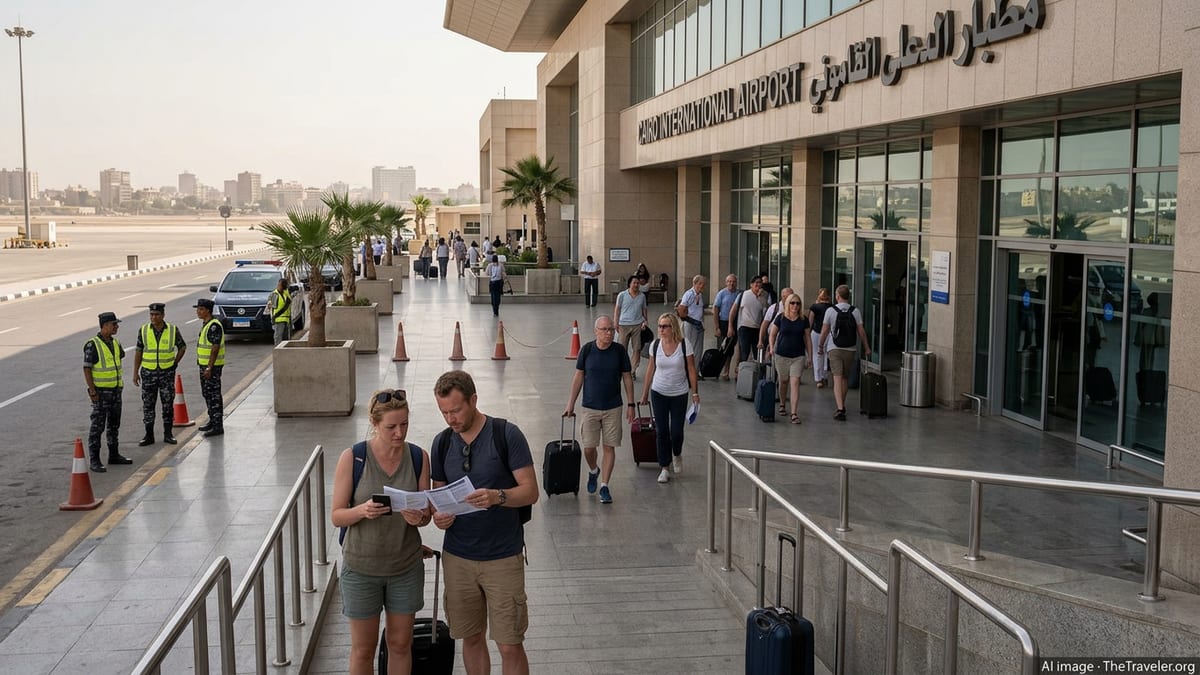
For now, the government says Egypt’s main gateways, including Cairo, Hurghada, Sharm el Sheikh, Luxor and Marsa Alam, are operating broadly as normal, and the country continues to market itself as a safe refuge amid regional chaos. Recent reporting in British and Egyptian media has highlighted that no formal UK warning is in place against travel to these popular destinations, even as neighbouring states face severe restrictions or outright “do not travel” guidance.
However, the updated Foreign Office advice warns that regional airspace and aviation routes remain vulnerable to sudden disruption if military activity escalates. Last year’s conflict-related alerts over parts of the Red Sea and Gulf of Aqaba are cited as an example of how quickly airlines can reroute or suspend services when risk levels change. British travellers are told not to go to the airport without confirmed flight information from their airline and to expect possible delays, diversions or last-minute cancellations.
Land borders are also under scrutiny. The Rafah crossing between Gaza and Egypt has opened and closed repeatedly during the Gaza conflict, often at very short notice, primarily for humanitarian and evacuation purposes. While this has little direct impact on mainstream holidaymakers, the Foreign Office notes that any deterioration around Rafah or along the Israeli and Libyan frontiers could lead to increased security checks, road closures or broader movement restrictions elsewhere in Sinai and the Suez region.
Security Measures and Behaviour Expected of British Travellers
Alongside the geographic warnings, British nationals are being urged to adapt their behaviour in Egypt to reflect the heightened tension. The government advises avoiding large public gatherings and political demonstrations, which can form quickly in response to developments in Gaza, Israel or the Gulf states. Even peaceful rallies can escalate without warning, and foreign visitors may be perceived as potential targets or unwelcome observers.
Travellers are encouraged to maintain a low profile, be mindful of local sensitivities over the conflict and avoid overt political discussion in public spaces. Photography near military sites, police checkpoints, government buildings and critical infrastructure such as bridges, canals and energy facilities is strongly discouraged and can lead to arrest or questioning. Officials say that British visitors should follow instructions from Egyptian security forces promptly and without argument.
The Foreign Office also stresses the importance of basic precautions that are often overlooked on holiday. These include keeping passports and visas secure, registering contact details with travel providers, monitoring news from trusted outlets and ensuring mobile phones are charged and capable of receiving emergency alerts. Those joining organised tours are advised to check that operators are following the latest government guidance on routes and timings, particularly for trips to desert monasteries, oases and off-the-beaten-track archaeological sites.
Preparation, Insurance and What to Do if the Situation Deteriorates
In its latest update, the UK government underlines that it has limited capacity to assist citizens if the regional crisis deepens rapidly. British nationals are told to ensure they have comprehensive travel insurance that explicitly covers terrorism, civil unrest and airspace disruption, and to confirm that their policy remains valid if the Foreign Office changes its advice while they are abroad.
Prospective visitors are urged to keep plans flexible, avoid non-refundable bookings where possible and consider how easily they could leave the country if commercial flights were reduced. Officials highlight the importance of carrying enough funds and essential medicines to cope with temporary delays, as well as having copies of key documents stored securely online in case of loss or theft.
Anyone already in Egypt is asked to read the latest Foreign Office advice regularly and sign up for email updates, as changes can be made with little warning. Should the security environment deteriorate significantly, Britons may be instructed to limit movements, stay away from particular districts or even consider leaving the country while routes remain open. The Foreign Office notes that, in a fast-moving crisis, decisions about evacuation or assisted departures are never guaranteed and should not be relied upon as a primary safety plan.
Despite the toughened tone, officials stress that Egypt remains an important partner for the UK and a major global tourism destination. The core message of the new warning is not that Britons must stay away entirely, but that those who do choose to travel must do so with their eyes open, prepared for rapid change and attentive to both local conditions and the wider geopolitical storm surrounding the region.