

More news on this day
British travellers across the Gulf have been ordered to shelter in place after the UK Foreign Office issued an emergency alert on Saturday, warning of reported missile attacks and rapidly deteriorating security conditions across the Middle East.
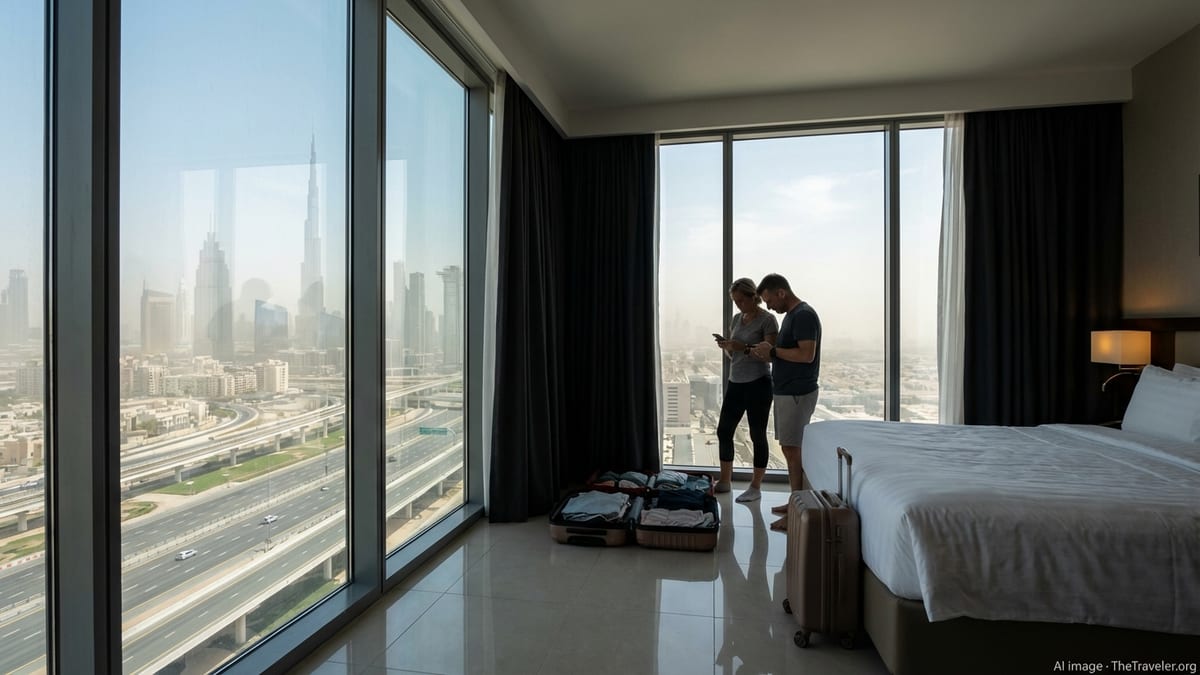
Foreign Office Raises Middle East Travel Warning to Highest Levels
The Foreign, Commonwealth and Development Office (FCDO) said British nationals in Bahrain, Kuwait, Qatar and the United Arab Emirates should “immediately shelter in place”, remain indoors in a secure location and avoid all travel. The rare, region-wide alert came as the United States and Israel launched extensive strikes on targets in Iran, prompting retaliatory missile fire across the Gulf.
Updated travel advisories now warn against all travel to Iran and advise against all or all but essential travel to Israel and the Palestinian territories, reflecting concern that airspace closures and further military escalation could leave travellers stranded without warning. Embassies have reduced operations, with officials urging UK citizens to monitor local media and be prepared to follow additional instructions from local authorities at short notice.
Travel and security analysts say the language of the FCDO alert, particularly the explicit call to shelter in place, underlines the seriousness of the threat environment. The guidance also notes that the UK government’s ability to provide consular support or organise evacuations may be limited while active missile operations and airspace shutdowns continue.
Missile Threats and Airspace Closures Disrupt Regional Connectivity
The travel warning follows reports of missiles flying over major population centres, including Dubai, a key global aviation hub and home to a large British expatriate community. Projectiles have been observed in skies above several Gulf states as Iran targeted US and allied assets in response to the initial strikes, heightening fears of miscalculation in heavily trafficked air corridors.
Authorities in Qatar, Bahrain, Kuwait, Iraq, Iran and the UAE have closed their airspace, forcing airlines to cancel services or reroute around the region. Flights into and out of Dubai and Abu Dhabi have been suspended or severely curtailed, causing widespread disruption for passengers en route to Asia, Africa and Australasia who would normally transit through Gulf hubs.
Travel companies report that aircraft are diverting on long detours to avoid conflict zones, adding hours to journey times and straining crew and fleet resources. With several airports operating under emergency protocols, carriers warn that schedules could remain volatile for days, and possibly longer, depending on how the military situation develops.
Holidaymakers Stranded as Tour Operators Pause Departures
Tour operators and airlines serving Gulf destinations have moved quickly to respond to the FCDO escalation. Major UK-based travel brands say they are suspending new departures to the UAE and Qatar in the coming days while they review safety assessments, airspace restrictions and insurance coverage in light of the missile activity.
Customers already in the region have been told to remain in their hotels or accommodation, avoid non-essential journeys and keep in close contact with their travel provider. Operators are coordinating with airline partners to identify windows of opportunity to operate safe outbound services once authorities reopen airspace and clear specific corridors.
Industry insiders describe a complex operational picture, with aircraft and crews out of position, passengers scattered across multiple transit points and limited clarity on when normal routings will resume. Flexible booking policies introduced during earlier crises are being reactivated, allowing affected travellers to postpone or reroute their trips without additional change fees in many cases.
What the ‘Shelter in Place’ Order Means for Travellers on the Ground
For British nationals currently in Bahrain, Kuwait, Qatar and the UAE, the FCDO’s shelter in place guidance means staying indoors in a secure interior space, away from windows and external walls, and refraining from any non-essential movement until further notice. Travellers are advised to carry identification, keep mobile phones charged and ensure they have access to drinking water, basic supplies and any essential medication.
The Foreign Office has urged people not to attempt to travel to airports or border crossings unless specifically advised by local authorities or their airline, warning that roads could be congested or intermittently closed, and that gathering at transport hubs could increase exposure to potential secondary incidents. Instead, those affected are encouraged to stay in touch with airlines and tour operators via digital channels and to monitor official updates from embassies and local governments.
Security experts note that hotel properties in major Gulf cities are generally built to high structural standards, often with established emergency procedures for guests. Travellers are being told to familiarise themselves with property-specific safety instructions, including designated shelter areas and alarm protocols, and to respond immediately to any internal alerts or announcements.
Escalating Conflict Reshapes Near-Term Middle East Travel Plans
The latest crisis comes at a time when Gulf destinations such as Dubai, Abu Dhabi and Doha have been enjoying sustained growth as stopover hubs and winter-sun holidays for UK travellers. The sudden shift from promotional campaigns to emergency advisories underlines how quickly geopolitical shocks can alter the travel landscape in a region that has long marketed itself as a safe, high-end gateway between continents.
Travel insurers are closely watching the FCDO moves, as government warnings against travel to specific countries can affect coverage for upcoming trips. Travellers who booked packages through UK tour operators may have stronger protections, including the ability to rebook or receive refunds, while independent travellers are being urged to check the fine print of their policies and to speak directly with airlines and accommodation providers.
For now, travel industry sources expect demand for non-essential travel to the wider Middle East to drop sharply, with some passengers opting to reroute through European or Asian hubs. While many hope that sustained diplomatic pressure will bring a rapid de-escalation, the Foreign Office has signalled that its priority remains the immediate safety of British nationals on the ground, and that restrictions could tighten further if the security situation worsens.