

British travellers heading to Spain are being urged to check journeys carefully after the UK government issued updated travel advice in response to January’s deadly high-speed train collision near Adamuz in southern Spain, where services have only partially resumed and crucial routes remain under repair.
UK Foreign Office Flags Ongoing Rail Disruption in Spain
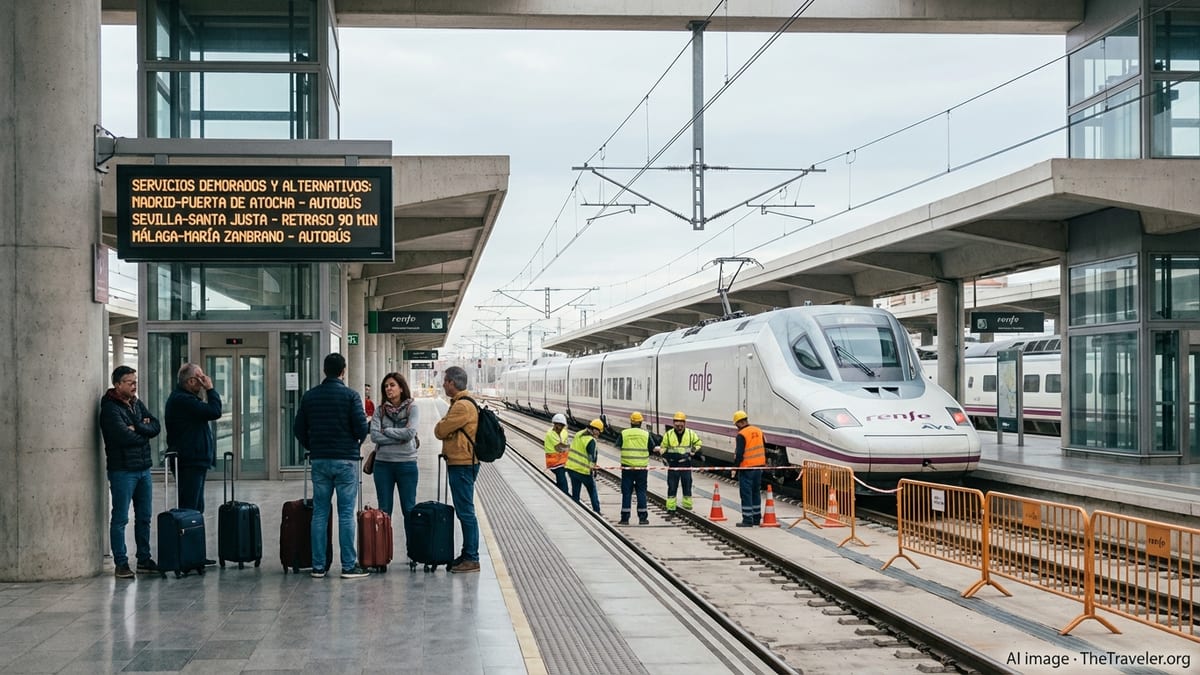
The UK’s Foreign, Commonwealth and Development Office has updated its travel advice for Spain, warning British visitors that high-speed rail services in the south of the country remain disrupted in the wake of the Adamuz rail disaster. The advisory, issued on February 17, stresses that the situation is evolving and that planned journeys, particularly on popular holiday routes, may face delays, diversions or replacement buses.
Officials underline that the notice is a disruption warning rather than a safety alert against visiting Spain. The guidance highlights the importance of checking rail timetables before travel, monitoring operator updates and allowing extra time for connections, especially for holidaymakers relying on rail links from Madrid to coastal and Andalusian destinations.
Travel industry analysts say the move reflects the UK government’s attempt to balance transparency about infrastructure problems with reassurance that Spain remains a safe and welcoming destination. Tour operators are being encouraged to proactively inform customers of potential timetable changes and to offer flexible arrangements where possible.
Deadly Adamuz Collision Shuts Core Madrid to Andalusia Corridor
The disruption stems from a catastrophic double train derailment and collision on January 18 near Adamuz in Córdoba province, on the high-speed line that links Madrid with Seville and the wider Andalusia region. Two high-speed trains, one operated by private company Iryo and another by Renfe, derailed and collided on parallel tracks, resulting in dozens of deaths and hundreds of injuries, according to Spanish authorities.
The accident severed one of Spain’s most important rail arteries at the height of the winter travel season. All high-speed services between Madrid and key southern cities were immediately halted, cutting direct train links to Seville, Málaga, Granada, Cádiz, Huelva and Algeciras. For several weeks, passengers were forced to complete journeys using a patchwork of reduced train operations and emergency bus connections across the damaged stretch of track.
The closure rippled across Spain’s wider transport network. Airlines added extra flights on routes such as Madrid to Seville and Málaga to cope with displaced rail passengers, while long-distance coach operators reported spikes in demand on corridors normally dominated by high-speed trains. For travellers already in Spain when the crash occurred, the sudden loss of a mainline route translated into missed connections, extended travel times and in some cases overnight delays.
Partial Service Restoration Brings Relief but Not Full Normality
After weeks of intensive engineering work, Spain’s infrastructure manager Adif has completed major repairs on the damaged section north of Córdoba, enabling through services to resume on the core Madrid to Seville high-speed axis. From February 17, Renfe restored regular high-speed operations from Madrid to Seville, Cádiz, Huelva, Granada and Almería via Granada, while open access operators Iryo and Ouigo Spain have also brought back Madrid to Seville services.
Rail operators conducted extensive signalling and safety tests ahead of reopening, with night-time trial runs along the repaired section to verify systems performance and confirm that the line could handle commercial speeds. Spanish transport officials have stressed that passenger safety remains the overriding priority and that the line was only cleared once all technical requirements had been met.
The resumption of direct trains has eased pressure on replacement bus links and on airlines that had been carrying higher volumes of domestic travellers. For British visitors connecting through Madrid to southern cities, the reinstated services mean fewer complex multi-leg journeys. Nevertheless, the UK travel advisory emphasises that timetables may still be adjusted at short notice as Spanish operators fine-tune their operations and absorb backlogs of rebooked passengers.
Key Route to Málaga Still Severely Affected
Despite progress on the Adamuz section, one of Spain’s most important tourism corridors remains impaired. High-speed services between Madrid and Málaga, gateway to the Costa del Sol, are not expected to operate normally until at least early March. Adif is carrying out additional engineering works on a damaged retaining wall near Málaga, leaving part of the line between Antequera and Málaga closed.
For now, Renfe is using replacement buses between Antequera and Málaga, with passengers required to disembark high-speed trains at Antequera and complete the final leg by road before rejoining the rail network or continuing to coastal resorts. Travel times on this route are longer than before the accident and schedules are more vulnerable to congestion and weather conditions on the roads.
The extended disruption on the Madrid to Málaga axis is particularly significant for British holidaymakers, given Málaga airport and the surrounding resorts’ popularity as year round sun destinations. Travel agents report that many customers who normally rely on rail links from Madrid are being advised to book internal flights or direct services into Málaga where possible, while those already holding rail tickets are urged to track updates from Renfe and other operators daily in the run up to departure.
Questions Mount Over Infrastructure Oversight and Safety Culture
The Adamuz disaster has triggered intense scrutiny of Spain’s high-speed rail infrastructure management. In the weeks following the collision, documents emerged indicating that the SEMAF train drivers’ union had warned state owned infrastructure operator Adif in 2025 about severe wear and tear on sections of high-speed track, including the area later involved in the crash. The union highlighted track irregularities and issues with overhead power systems, urging speed reductions until repairs were undertaken.
Investigators are examining whether a broken rail joint, known as a fishplate, and long standing maintenance deficiencies played a decisive role in the derailments. Preliminary findings reported by Spanish media suggest that the joint may have deteriorated over time, gradually widening a gap in the rail and weakening the structure under repeated high-speed traffic. Adif has said it will cooperate fully with judicial and technical inquiries and has defended the overall safety record of Spain’s high-speed network.
For now, the UK travel advisory stops short of raising broader safety concerns about Spanish rail travel, instead focusing on the practical impact of the disruption. However, travel risk consultants say British travellers are increasingly asking questions about inspection regimes, maintenance oversight and how quickly Spain will implement any recommendations arising from the investigation. The outcome could shape public confidence in one of Europe’s flagship high-speed systems.
Impact on British Tourists and the Wider Travel Industry
Spain remains the most popular overseas destination for UK holidaymakers, and the timing of the crash, ahead of the busy Easter and summer booking periods, has unsettled some travellers. Tour operators and airlines say they have fielded a wave of inquiries from customers with itineraries involving connections to Andalusian cities, particularly Seville, Málaga and Granada.
Package holiday companies are reviewing excursion schedules that rely on train travel and, where necessary, switching customers to alternative forms of transport. For independent travellers, the main effect has been the need to rebook or replan rail segments at short notice, sometimes incurring additional costs if replacement flights or hotels are required. Insurance providers advise policyholders to keep all receipts for extra expenses related to disruption, in case claims can be made under travel delay or missed connection clauses.
The disruption has also had knock on effects for the Spanish tourism sector. Hotels in some inland cities reported cancellations in the days after the crash as visitors reconsidered trips that depended heavily on rail connections. Conversely, car hire firms and domestic airlines have seen stronger demand. Industry groups in Spain argue that restoring full confidence in high-speed rail will be vital to sustaining growth in sustainable, low carbon travel between regions.
Advice for Travellers: Check, Confirm and Allow Extra Time
Travel experts recommend that anyone planning to use Spanish trains in the coming weeks treat timetables as subject to change, even on routes where services have officially resumed. With operators still absorbing the backlog from the closure, trains on the Madrid to Seville corridor may be busy, particularly at weekends and around public holidays. Advance seat reservations and flexible planning are strongly advised.
Passengers are urged to confirm departure and arrival times on the day of travel, arrive at stations earlier than usual and be prepared for platform changes or announcements of replacement bus segments. Those with onward flights or cruise departures should allow a generous buffer between rail arrival and check in, in case of delays on the high-speed network or connecting road sections. Where possible, travellers may want to build in an overnight stay in Madrid, Seville or Málaga rather than relying on tight same day transfers.
For UK visitors, the updated Foreign Office advisory remains the primary reference point for government assessed disruption levels. Travel agents and rail specialists also suggest monitoring updates from Spanish rail operators and local news outlets. By staying informed, they say, travellers can mitigate most of the inconvenience, even as repair work continues on the remaining bottlenecks.
Spain’s High-Speed Network Still Central to Future Travel Plans
Despite the scale of January’s tragedy and the ongoing disruption to some routes, both Spanish and UK officials emphasise that high-speed rail will remain a cornerstone of travel within Spain. The Madrid to Andalusia corridor is one of the busiest and most strategically important in the country, carrying millions of passengers every year and linking the capital with major cultural and economic hubs in the south.
Infrastructure planners argue that the rapid restoration of most services, combined with a thorough investigation into the causes of the crash, demonstrates the resilience of the system. They point out that Spain continues to boast one of the world’s largest high-speed rail networks, offering an alternative to domestic flying at a time when travellers and policymakers are increasingly focused on reducing carbon emissions from transport.
For British travellers weighing up journeys later in 2026, the key message from officials is one of cautious normalisation. With core high-speed links back in operation and only a handful of critical sections, such as the approach to Málaga, still under repair, Spain’s railways are gradually returning to their role as a fast and efficient backbone of holiday and business travel. The UK’s urgent warning is, in effect, a call for vigilance and preparation rather than a signal to stay away.