

More news on this day
Britain has joined a growing roster of countries set to gain new nonstop connections with Vietnam’s Phu Quoc Island after Sun PhuQuoc Airways confirmed a $22.5 billion agreement for up to 40 Boeing 787-9 Dreamliners, a landmark widebody order that positions the resort-focused carrier at the heart of a new phase in global tourism, trade and air connectivity.
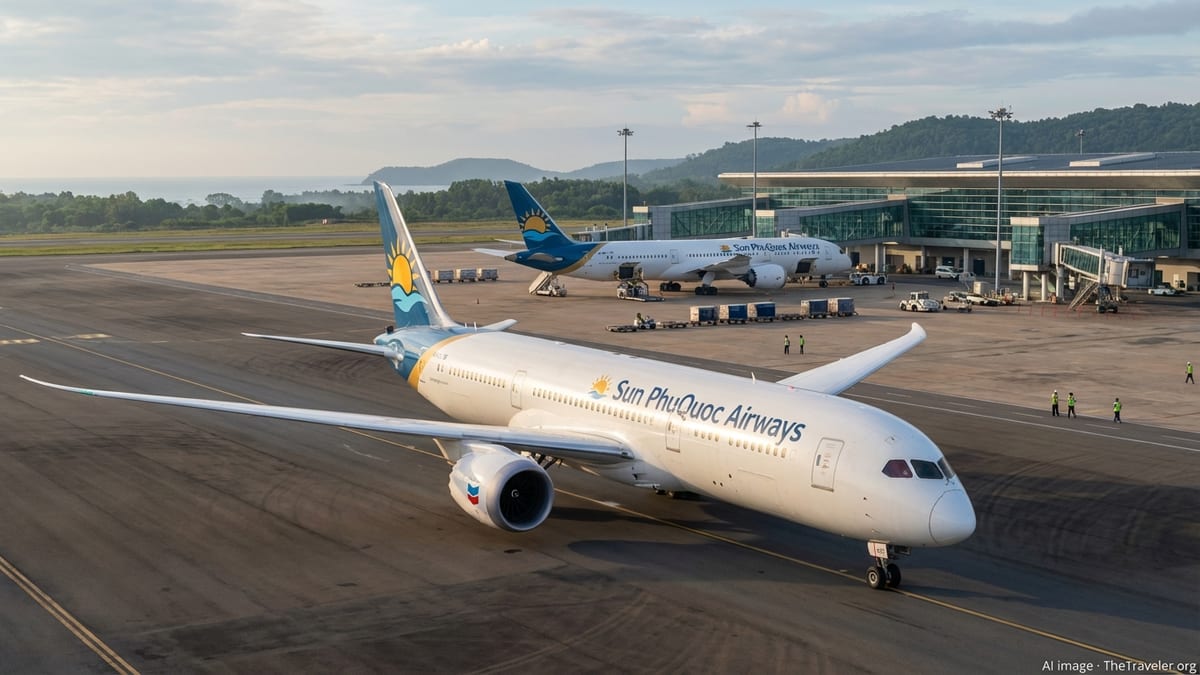
A Record Dreamliner Order Built Around Phu Quoc’s Global Ambitions
Signed in Washington on February 18, 2026, the Sun PhuQuoc Airways deal covers up to 40 Boeing 787-9 Dreamliners at list prices, marking the largest widebody aircraft order in Vietnam’s history and one of the most ambitious fleet plans ever conceived by a leisure-focused airline. The jets will form the backbone of the carrier’s future long-haul network, pivoting the island of Phu Quoc from a regional getaway into a globally connected hub.
Sun PhuQuoc Airways, launched in late 2025 by Vietnamese conglomerate Sun Group, describes itself as a “resort airline,” designed explicitly to feed the group’s integrated hotel, resort, entertainment and real estate ecosystem. Until now, its operations have centered on short- and medium-haul routes with Airbus narrowbodies, but the Dreamliner order signals a decisive move into intercontinental markets where tourism, trade and premium leisure demand are rising sharply.
The 787-9 Dreamliner offers a range of more than 14,000 kilometers, enabling nonstop flights from Phu Quoc and other Vietnamese gateways to major cities in Europe, North America and South Asia. Boeing notes that the 787 family has already been used to open hundreds of long, thin city pairs worldwide, and Sun PhuQuoc intends to replicate that strategy by connecting secondary and leisure destinations directly, bypassing traditional hubs.
For Boeing, the agreement caps a week of intense commercial diplomacy in which Vietnamese carriers collectively committed to nearly 100 new jets. For Vietnam, it underscores the government’s ambition to turn aviation into a pillar of economic growth, supporting tourism targets and new trade corridors with partners including the United States, the United Kingdom, the European Union and India.
United Kingdom Links Anchor a Wider Transatlantic Push
Among the most closely watched route prospects emerging from the Sun PhuQuoc order are potential nonstop services linking Phu Quoc and major British gateways such as London Heathrow, London Gatwick and Manchester. The UK joins the United States, France, Germany, the Czech Republic, India and Vietnam itself on a list of priority markets identified by the airline and Vietnamese officials in recent briefings around the deal.
Tourism data show the UK is one of Vietnam’s fastest-growing long-haul source markets in Europe, driven by a mix of backpackers, mid-market holidaymakers and higher-spending luxury travelers. Currently, most British visitors to Vietnam must connect through hubs like Doha, Dubai, Singapore, Bangkok or Seoul. Direct links to Phu Quoc would cut hours off journey times, make packaged beach and resort holidays more competitive, and elevate the island alongside established long-haul favorites such as Phuket, Bali and the Maldives.
For British businesses, the planned routes also promise more efficient access to southern Vietnam’s emerging special economic zones and infrastructure projects, including the development boom around Phu Quoc and increased investment in renewable energy and coastal logistics. Combined with existing nonstops between the UK and Hanoi and Ho Chi Minh City, direct flights to Phu Quoc would give corporate travelers and trade delegations a third Vietnamese entry point, increasing flexibility and redundancy across the network.
On the aviation front, the UK’s participation deepens transatlantic and trans-Eurasian connectivity through partnerships and code-share potential between Sun PhuQuoc Airways and established British and European carriers. Analysts say that once the Dreamliners arrive, the Vietnamese carrier is likely to seek alliances or strategic cooperations that allow UK-origin passengers to connect seamlessly across Europe and North America, while funneling inbound visitors onward to Vietnam’s beaches and cultural centers.
A Growing Constellation of Nonstop Routes Across Europe and Asia
The United Kingdom is only one piece of a wider map. Sun PhuQuoc executives and officials have flagged the United States, France, Germany, the Czech Republic, India and key Asian partners such as South Korea and Taiwan among early targets for long-haul and extended medium-haul service. The Dreamliner’s range opens possibilities for nonstop flights from Phu Quoc to West Coast American cities, central European capitals and major Indian metros without technical stops.
The Czech Republic’s inclusion reflects deepening tourism and labor ties between Central Europe and Vietnam, with Prague already an important gateway for Vietnamese communities and travelers. Direct services could stimulate two-way tourism flows, allowing Czech travelers to reach Phu Quoc in a single overnight flight while giving Vietnamese holidaymakers a more direct path into Central Europe’s cities and ski destinations.
In Western Europe, France and Germany are expected to feature prominently in Sun PhuQuoc’s network planning, not just because of their sizeable outbound tourism markets, but also due to their roles as financial and aviation hubs. Nonstop links from Paris and Frankfurt into Phu Quoc would open extensive one-stop connectivity for travelers from across the European Union, while also helping European businesses reach Vietnam’s southern tourism and investment corridor more directly.
India, meanwhile, has emerged as a strategic priority for Vietnam’s tourism industry, with a rapidly expanding middle class and growing appetite for overseas beach and honeymoon destinations. Once the first 787-9 aircraft join the fleet, routes to major Indian cities such as New Delhi, Mumbai or Bengaluru could complement shorter-haul flights to tier-two Indian markets, deepening cultural and commercial exchanges along a north-south axis across the Bay of Bengal.
Phu Quoc’s Transformation Into a Regional Aviation and Tourism Hub
The Dreamliner order is inseparable from Phu Quoc’s broader transformation from a largely undeveloped island into one of Vietnam’s flagship tourism and investment zones. In recent years, authorities and Sun Group have poured resources into upgrading Phu Quoc International Airport, expanding resort capacity, and positioning the island as host of major regional events, including the Asia-Pacific Economic Cooperation summit planned for 2027.
Sun PhuQuoc Airways is designed as the aviation spine for this ecosystem. Under a hub-and-spoke strategy, the airline plans to link Phu Quoc to key domestic centers such as Hanoi, Ho Chi Minh City, Da Nang and Nha Trang, then extend spokes to international markets. By integrating schedules, baggage handling and ground experiences with Sun Group’s hotels, theme parks and conference facilities, the carrier aims to offer a seamless “resort aviation” product that begins at the booking stage and continues through to the traveler’s stay.
For Vietnam’s government, turning Phu Quoc into an aviation hub serves multiple policy goals. It helps relieve pressure on congested airports in Hanoi and Ho Chi Minh City, supports balanced regional development, and strengthens the country’s profile as a high-end, year-round destination for both leisure and business events. Nonstop flights from the UK, continental Europe, India and potentially North America would diversify visitor flows and reduce overreliance on any single source market.
Local businesses, from tour operators and restaurants to logistics providers and small manufacturers, are expected to benefit from the rise in international arrivals and improved cargo capacity that widebody aircraft bring. The 787-9’s belly-hold can carry high-value goods, pharmaceuticals and e-commerce shipments alongside passengers, positioning Phu Quoc as a niche node in regional supply chains that link Europe, the Middle East, South Asia and Southeast Asia.
Economic Connectivity and the Wider Vietnam–U.S.–Europe Partnership
The signing ceremony in Washington underscored how the Sun PhuQuoc order sits within a wider pattern of deepening economic and strategic partnerships. Senior U.S. officials attended the event, highlighting the deal’s contribution to American manufacturing jobs and its role in consolidating Vietnam’s status as a key trade and aviation partner of the United States.
For Vietnam and its European partners, including the United Kingdom, the transaction reinforces a shared focus on resilient, diversified supply chains and sustainable tourism growth. As European firms shift portions of production and sourcing to Vietnam and other Southeast Asian economies, nonstop air connectivity becomes a crucial enabler for executive travel, technical support missions and time-sensitive cargo.
Industry observers note that the $22.5 billion Dreamliner purchase aligns closely with Vietnam’s long-term aviation forecast, which anticipates some of the fastest passenger growth rates in Southeast Asia through 2030. New direct links connecting Phu Quoc, Hanoi and Ho Chi Minh City with the U.S., UK and European Union capitals could help anchor trade deals, investment flows and institutional partnerships already in motion.
The deal also strengthens Boeing’s foothold in a region where aircraft demand is intensely competitive and often contested by rival manufacturers. With Vietnam Airlines also placing a significant order for Boeing 737 MAX jets, the country is emerging as a key showcase for the U.S. plane maker’s updated product line, positioning Vietnamese carriers to serve as launch customers for new long-haul leisure and business routes.
From Domestic Start-Up to Intercontinental Carrier
Sun PhuQuoc Airways has moved at remarkable speed since its formal launch in October 2025. After securing its air operator certificate from Vietnam’s Civil Aviation Authority in September, the airline began with a small fleet of Airbus A321 aircraft serving core domestic routes: Phu Quoc to Hanoi and Ho Chi Minh City, and a trunk service between the two main cities themselves. Additional services to Da Nang and Nha Trang are being added as the narrowbody fleet grows.
The carrier’s model is distinct from Vietnam’s legacy flag carrier and low-cost airlines. Rather than build a nationwide network first, Sun PhuQuoc has focused on high-frequency shuttle services that feed its resort complexes, marrying air travel with packaged experiences on the ground. Promotional campaigns have offered bundled tickets with theme park access, hotel stays and local experiences, signaling an integrated approach more akin to a vertically unified tourism company than a traditional stand-alone airline.
The transition to widebody operations within just a few years raises operational and financial challenges. Long-haul flying requires significant investment in crew training, maintenance capabilities, digital infrastructure and global sales channels. Sun PhuQuoc will also need to navigate complex traffic rights, bilateral agreements and slot allocations in constrained airports such as London Heathrow or major U.S. gateways.
However, the backing of Sun Group, combined with financing agreements already secured from major Vietnamese banks, gives the airline a capital base and institutional support that many start-ups lack. The Dreamliner’s efficiency and size flexibility are expected to help manage risk on new routes, allowing the carrier to start with moderate frequencies and adjust capacity as demand matures.
What Nonstop Flights Mean for Travelers and Regional Tourism
For travelers from the United Kingdom, Europe, India and North America, the eventual launch of nonstop services from Sun PhuQuoc’s Dreamliner fleet could reshape how Vietnam fits into long-haul itineraries. Instead of multi-stop journeys via regional hubs, passengers would be able to land directly on Phu Quoc’s beaches or connect through the island to other Vietnamese cities on a single ticket.
The airline plans cabins configured for both leisure and business travelers, with full-flat seating in premium classes and modern inflight entertainment and connectivity throughout. The 787’s larger windows, quieter cabin and lower pressurization altitude are touted as comfort enhancements that should appeal to holidaymakers flying overnight from European winters into Vietnam’s tropical climate.
Tour operators in the UK and continental Europe are closely watching the rollout of Sun PhuQuoc’s fleet and network to design new packages that combine beach stays with cultural circuits linking Hanoi, Ha Long Bay, Hue, Hoi An and Ho Chi Minh City. Nonstop flights reduce transit stress and make it easier to market short and medium-duration holidays to time-poor travelers who might previously have viewed Vietnam as a once-in-a-lifetime, extended trip.
Across Southeast Asia, the emergence of Phu Quoc as a long-haul gateway is likely to generate competitive responses from rival destinations and carriers. Yet regional tourism officials argue that enhanced connectivity tends to lift the entire market by making Southeast Asia more accessible overall. In this context, Sun PhuQuoc’s Dreamliner deal is seen not only as a boost for Vietnam’s aviation ambitions, but as a catalyst for a broader network of multi-country itineraries linking the UK, Europe, India, the United States and the wider Indo-Pacific region.