

More news on this day
Travellers planning long-haul getaways from the United Kingdom to destinations such as Australia, Japan and Mexico face steeper ticket prices from April 2026, as a fresh rise in Air Passenger Duty pushes the cost of flying to record levels for ultra long-haul routes.
Get the latest news straight to your inbox!
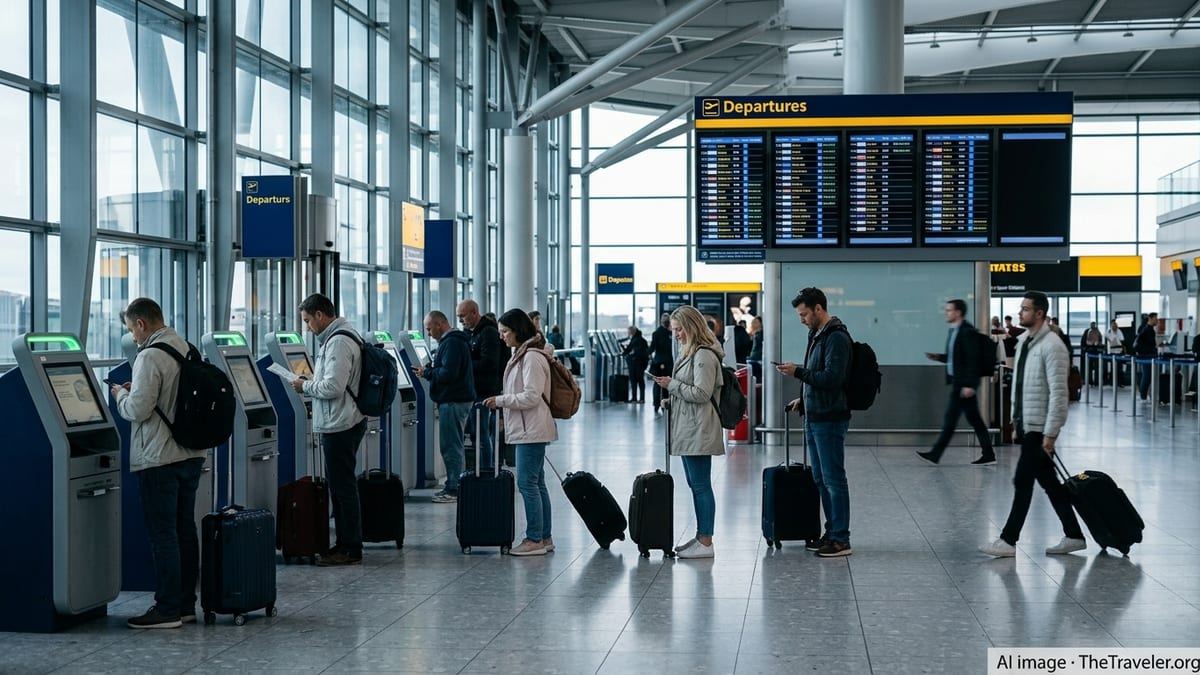
New 2026 APD Bands Hit Ultra Long-Haul Routes Hardest
The UK government has confirmed that a new set of Air Passenger Duty rates will apply from 1 April 2026, covering all chargeable passengers departing from UK airports. Publicly available guidance shows that the tax continues to be structured in destination bands based on the distance between London and the destination’s capital city, with Band C capturing flights over 5,500 miles. That includes many of the most popular long-haul leisure routes, such as services to Australia, parts of Asia including Japan, and Latin America, including Mexico.
Updated government tables indicate that for 2026 the reduced-rate economy APD on Band C routes will rise to just over £100 per passenger, while the standard rate for cabins with a larger seat pitch, including most premium economy and business class products, will exceed £250. Higher-rate charges for certain private and large business jet operations on these ultra long-haul sectors are set to climb above £1,100 per traveller, cementing the UK’s status as one of the costliest departure points for premium long-range flying.
The 2026 changes follow earlier increases already scheduled for April 2025, meaning that long-haul passengers are seeing three consecutive years of APD uplifts. According to specialist tax and travel industry analysis, the government has used forecast inflation and additional adjustments to keep the real-terms burden of the levy on premium and private jet travel at, or above, previous levels.
While the duty is technically paid by the airline, official policy documents acknowledge that carriers “ordinarily pass the cost” on to travellers through higher ticket prices, particularly on routes where demand is strong and capacity remains tight.
Economy Fares Rise, But Premium Cabins Shoulder the Biggest Burden
For leisure travellers booking economy seats to far-flung destinations, the 2026 increases may appear relatively modest in isolation. On an ultra long-haul economy ticket to Australia, Japan or Mexico, the APD component will rise only a few pounds compared with the 2025–26 tax year. However, because the duty is a fixed amount per passenger rather than a percentage of the base fare, it can represent a substantial share of the total price on the cheapest tickets.
The picture is starker in premium cabins. Business travel publications and airline-focused sites report that Band B and Band C standard-rate APD for 2026 will push the tax on a typical long-haul premium economy or business class seat well beyond £240. On some transpacific or southern hemisphere routes, the duty alone may exceed the base fare of heavily discounted economy tickets on shorter sectors.
For travellers using points and miles, the effect is particularly visible. Frequent-flyer communities highlight that award redemptions originating in the UK already attract high cash surcharges because APD is payable even when the underlying fare is covered by loyalty points. With 2026 rates in place, members booking business class awards to Australia, Japan or Mexico can expect the tax component to increase again, even if the mileage cost remains unchanged.
Those flying privately face the steepest jump. Industry guidance circulated to the charter sector notes that for qualifying large private jets on Band C routes the higher APD rate will approach or exceed double the level seen a few years ago. Charter brokers caution that this will significantly lift the overall cost of bespoke ultra long-haul itineraries from UK airports.
Popular Destinations Like Australia, Japan and Mexico Squarely in Band C
Under the UK’s distance-based structure, ultra long-haul Band C covers destinations over 5,500 miles from London. Travel industry explainers point out that this captures much of Australasia, including key hubs in Australia such as Sydney and Melbourne, as well as New Zealand. It also includes a range of East Asian cities, with Tokyo among the most prominent, and a slice of Latin America, including some Mexican destinations depending on routing and distance calculations.
For holidaymakers eyeing winter sun or big-ticket trips of a lifetime, these are precisely the markets that have surged in popularity as post-pandemic travel has rebounded. Airlines have been rebuilding direct links from London to Australia via one-stop services, increasing capacity to Japan ahead of major events and tourism campaigns, and adding or enlarging services to Mexico’s resort gateways. Each additional Band C departure from a UK airport will now carry the higher APD charge in 2026, embedding the tax rise into the cost of long-distance leisure travel.
Consumer-facing travel sites and fare trackers already warn that headline prices to these destinations are under pressure from multiple directions, including higher fuel costs, constrained aircraft availability and strong demand. The 2026 APD uplift adds another fixed layer to the fare structure, limiting the scope for truly low promotional prices, especially during school holidays and peak seasons.
Some tour operators are responding by promoting more itineraries that start long-haul journeys from nearby European hubs, where different departure taxes apply. However, these workarounds often involve separate tickets or complex connections and may not be suitable for all travellers, particularly families or those seeking maximum protection under UK and EU consumer rules.
Wider Debate Over Competitiveness and Sustainability
The latest APD rise has reignited debate over the UK’s position in global aviation. Business travel commentators argue that repeatedly increasing departure taxes on long-haul routes risks undermining the country’s competitiveness as a hub for international connectivity. By 2026, APD on some premium long-haul itineraries will sit comfortably above equivalent passenger taxes in many competing markets, raising questions about whether high-yield travellers and conference organisers may increasingly choose to route via alternative gateways.
On the other side of the argument, some economic and environmental think tanks have long pointed to Air Passenger Duty as a tool that can partially reflect the climate impact of frequent flying, especially on long-distance routes with higher emissions per passenger. Reports from these groups note that, despite its level, APD still represents only one component of the overall ticket price, and that demand for ultra long-haul leisure travel has remained resilient even as the duty has climbed.
The government has also set out separate plans to promote sustainable aviation fuel use across the industry, but campaigners contend that, in the near term, higher ticket taxes remain one of the few mechanisms that can be implemented quickly. Industry bodies, in contrast, argue that a complex, banded duty focused on departures from one country is a blunt instrument that does little to incentivise cleaner fleets or more efficient operations.
For now, publicly available policy documents and industry analysis suggest there is little prospect of a reversal. Further inflation-linked APD increases from 2027 have already been signalled, meaning that the 2026 rise affecting long-haul journeys to Australia, Japan and Mexico is unlikely to be the last adjustment travellers see this decade.
What Travellers Can Do to Manage Higher 2026 Costs
With the new rates now set in legislation, airlines are expected to embed 2026 APD levels into their pricing for departures on or after 1 April of that year. Fare experts indicate that one of the simplest ways to limit exposure is to be flexible with dates and to avoid the busiest departures around school holidays, when underlying fares as well as taxes and fees combine to push total prices sharply higher.
Another strategy highlighted by loyalty and travel advisory sites is to consider ex-Europe departures for complex long-haul itineraries, starting journeys from airports in neighbouring countries with lower or differently structured departure taxes. While this can reduce the APD burden, it introduces additional legs and potential disruption, and travellers need to weigh savings against convenience and risk.
Those determined to depart directly from the UK may find the greatest value by using points and miles for long-haul economy redemptions where the absolute APD amount, though still significant, is smaller relative to the overall cash price. Conversely, award bookings in business or first class to Band C destinations such as Australia, Japan and Mexico will continue to attract some of the highest cash surcharges seen anywhere in commercial aviation.
As booking windows for 2026 open, travel agents and online platforms are expected to place greater emphasis on explaining the tax component of fares, including APD, to help travellers understand why prices to certain long-haul destinations have moved higher. For many passengers, the 2026 changes will turn a largely hidden duty into a noticeable line item on their journey budget.