

More news on this day
Britain’s long-haul air links are being reshaped by overlapping crises in global airspace, as recent Middle East closures, long-running route bans and higher fuel prices push up fares and force time-consuming detours on flights connecting the UK with Asia, Africa and Australia.
Get the latest news straight to your inbox!
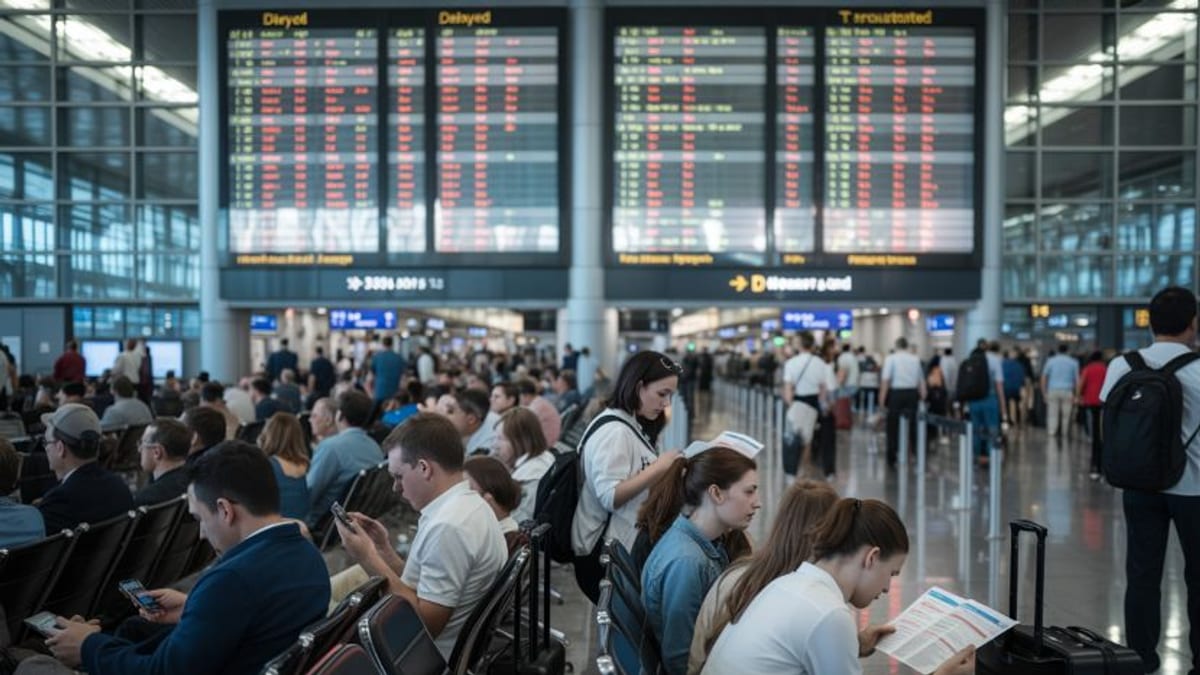
Image by Travel And Tour World
Middle East Airspace Closures Ripple Into UK Schedules
Fresh disruption across the Middle East since late February 2026 has quickly filtered into UK departure boards. Broad airspace restrictions over Iran, Israel, Iraq, the United Arab Emirates, Qatar, Kuwait, Syria and Bahrain have removed a core corridor for flights linking Europe with Asia and Australasia, prompting mass cancellations and diversions on dates that would usually see tens of thousands of passengers crossing the region.
Published reports indicate that on 1 March alone, more than 19,000 flights worldwide were affected as large swathes of Middle Eastern airspace were effectively unavailable. Analysts describe the scale of disruption as the biggest network shock since the pandemic, with knock-on effects felt at major European hubs, including London Heathrow and Gatwick, as aircraft and crews were left out of position and onward connections collapsed.
Coverage from passenger-rights platforms and travel advisories shows UK travellers among those most exposed. Many itineraries from Britain to South and Southeast Asia, as well as to Australia and New Zealand, are designed around Gulf and Levantine hubs. When those hubs face temporary shutdowns or severe schedule cuts, UK-origin passengers often face rolling delays, last-minute reroutes via Europe or Central Asia, or multi-day waits for replacement flights.
Some airlines have restored limited operations through adjusted routings, but advisories still warn that remaining corridors around the region are prone to sudden changes. Travellers departing the UK are being urged by airlines and regulators to monitor flight status closely and to expect longer block times on routes that previously relied on the shortest trans-Middle East paths.
Detours Add Hours to Europe–Asia Journeys
The Middle East crisis layers on top of existing route restrictions that have already reshaped the map for Europe–Asia services. Long-haul carriers serving the UK have been unable to use Russian airspace since the invasion of Ukraine, forcing many flights to China, Japan and Korea onto more southerly or polar routings that add distance and fuel burn. Industry briefings from aviation bodies note that, by 2024, a substantial share of long-haul routes worldwide had been forced into similar detours by geopolitical conflicts.
With parts of the Middle East now intermittently closed, some operators are turning to even longer paths, crossing Central Asia or looping over North Africa and the Mediterranean to reach South and East Asia. Travel industry analyses describe additional flight times of two to four hours on certain Europe–Asia sectors since the latest closures, a pattern that quickly compounds when aircraft rotate through multiple long-haul legs touching the UK.
There are also regional knock-on effects linked to other hotspots. A protracted airspace closure by Pakistan to Indian airlines, and subsequent reroutes by international carriers around the subcontinent, have added complexity to South Asia’s already crowded air corridors. For UK passengers bound for India and beyond, that can translate into irregular schedules, longer ground holds and increased risk of missed connections, even when their own flights technically operate as planned.
Operationally, airlines are confronting extended crew duty times, tighter turnaround windows and constraints on the number of rotations a single aircraft can complete in a day. Network planners are responding by trimming frequencies, upgauging aircraft on the most lucrative routes and, in some cases, suspending marginal services entirely. UK long-haul markets that depend heavily on connecting traffic via the Gulf or South Asia are among the most vulnerable to those capacity decisions.
Higher Fuel Costs and War-Risk Premiums Feed Rising Fares
The cost implications of today’s fractured airspace are now clearly visible in ticket prices. Aviation analysis and financial reporting indicate that detours around conflict zones, higher jet fuel prices tied to instability near the Strait of Hormuz and elevated war-risk insurance premiums are all feeding into airlines’ operating costs. Long-haul services, where fuel already accounts for a large share of total expenditure, are particularly exposed.
Global travel commentary points to a sharp rise in average fares on Europe–Asia routes since late February 2026, as carriers pass on at least part of the additional cost of extra flight hours and complex routings. In some cases, analysts describe prices reaching record levels for the post-pandemic era, especially on dates where capacity is constrained by aircraft and crew shortages.
For UK travellers, the effect is most visible on one-stop and non-stop itineraries to destinations such as Bangkok, Singapore, Hong Kong and Sydney. Routes that once relied on efficient overflight of Russia or direct passage over the Middle East are now competing for more circuitous corridors, limiting the number of seats airlines are willing or able to put into the market. Published fare tracking shows that economy-class return prices on certain London–Asia city pairs are frequently several hundred dollars higher than typical pre-crisis averages, with premium cabins climbing even more steeply.
While some Middle Eastern and European airlines with diversified networks may be better placed to absorb temporary shocks, industry briefings stress that persistent instability and volatile oil markets leave limited room to discount aggressively. Price-sensitive UK travellers are increasingly nudged into off-peak departures, secondary airports or multi-stop itineraries that trade time and convenience for marginally lower fares.
UK Hubs Juggle Capacity, Connectivity and Competition
London’s major airports, particularly Heathrow, sit at the intersection of these shifting patterns. As Gulf hubs and other Middle Eastern gateways wrestle with closures and reduced throughput, some long-haul traffic is being re-routed over European alternatives, reinforcing Heathrow’s role as a back-up bridge between North America, Europe and Asia. Industry observers note that European hubs have seen surges in connecting traffic when Middle East networks falter, even as the overall experience for passengers becomes less predictable.
However, the pivot is not without strain. Airports across Europe have been managing steady growth in traffic, leaving limited spare capacity to absorb large numbers of disrupted long-haul passengers at short notice. Operational data from regional air-traffic agencies in 2025 already highlighted congestion and delay pressures at major hubs, a backdrop that makes today’s rerouting challenges even more acute for UK-bound and UK-origin travellers.
For British carriers, the environment is strategically delicate. On one hand, reduced reliability across certain Gulf and South Asian hubs can make nonstop or one-stop services via the UK more attractive for some markets, potentially boosting transfer traffic through London. On the other, higher operating costs, airspace restrictions and the risk of sudden route suspensions complicate long-term planning, especially for thinner secondary routes beyond the main business and leisure trunk lines.
Smaller UK and European airlines that rely on interline agreements with Gulf carriers have also found their models tested. When a partner airline’s hub experiences extended disruption, codeshares and through-tickets that underpin many UK regional departures can quickly unravel, creating additional customer-service and rescheduling challenges at British airports far from the conflict zones themselves.
Travellers Adapt With New Booking and Routing Strategies
The shifting landscape is prompting changes in passenger behaviour. Travel advisories from governments and aviation regulators across Europe and Asia consistently recommend that long-haul travellers build more flexibility into their plans, including longer connection windows and a willingness to accept reroutes at short notice. For UK-based holidaymakers and business travellers, that often means departing a day earlier, allowing extra time between flights in London or other hubs, or choosing itineraries with more robust rebooking options.
Consumer-facing travel analysis sites report rising interest in flexible tickets and comprehensive travel insurance, despite the added upfront cost. Many policies still exclude fare increases caused by geopolitical events, but some travellers are opting for broader “any reason” coverage or higher-tier airline fares that allow changes without penalties. That trend is particularly evident among UK residents booking complex, multi-sector journeys to Australasia and the Pacific.
There is also early evidence of route switching as travellers seek to avoid perceived chokepoints. Some UK passengers are favouring connections via northern Europe or North America rather than the Gulf, even when travel times are longer, while others are targeting airlines whose schedules appear less exposed to airspace closures. As low-cost carriers expand their long-haul offerings into secondary UK airports over the coming months, those services may capture demand from travellers willing to trade frequency and frills for perceived stability and price.
Industry forecasts suggest that, absent a rapid easing of geopolitical tensions, these behavioural shifts could become a lasting feature of UK long-haul travel. The country’s role as a global aviation crossroads is intact, but the pathways to and from its airports are being redrawn in real time, with airspace closures, security concerns and economic pressures continuing to dictate who flies where, and at what price.