

More news on this day
British nationals stranded in Dubai amid sweeping Middle East airspace disruptions are being urged to register with a new Foreign, Commonwealth and Development Office booking portal, as the UK government ramps up evacuation flights and warns its citizens not to travel to the region unless absolutely essential.
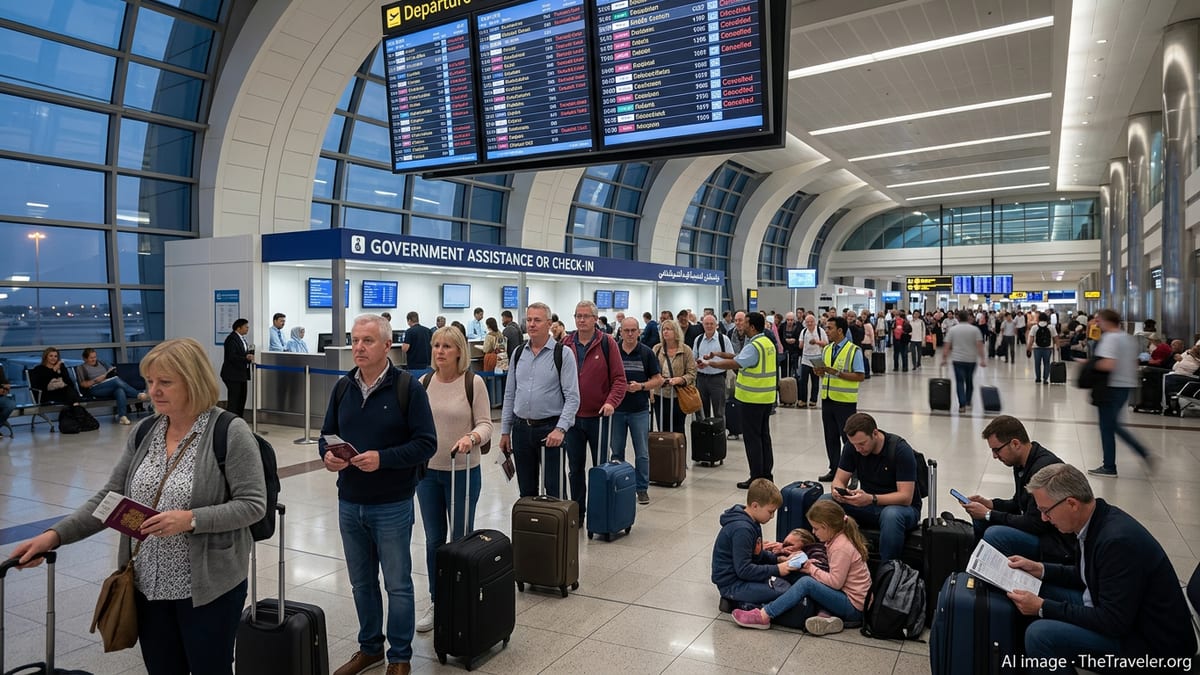
New FCDO Portal Launches as Crisis Deepens
The Foreign, Commonwealth and Development Office confirmed on Sunday 8 March that a dedicated online booking portal is now live for British nationals in Dubai who wish to access UK government-organised flights. The move comes after days of severe disruption triggered by the widening conflict involving Iran, Israel and Gulf states, which has left regular airline schedules in disarray and thousands of travellers stranded across the region.
Officials say the portal is designed as the main gateway for British citizens to signal their interest in charter flights from the United Arab Emirates and to receive direct updates about seat availability, eligibility checks and departure timings. It follows an earlier Foreign Office decision to advise against all but essential travel to the UAE and neighbouring Gulf states, citing the risk of further missile and drone activity and the possibility of sudden airspace closures.
Two government-chartered flights to the UK have already operated and a further departure from Dubai is scheduled for early next week, according to government briefings. Ministers have described the wider multinational evacuation effort as one of the largest of its kind, as European and North American allies scramble to move citizens out of high risk zones while commercial carriers cautiously restart limited operations.
The new system has been launched alongside a stepped up information campaign on official social channels and through consular networks, urging British passport holders to register online rather than contacting embassies directly, in an effort to streamline case handling as demand for seats rapidly outstrips supply.
How British Nationals Can Use the Booking System
British nationals currently in Dubai or elsewhere in the UAE are being advised to start by registering their interest through the FCDO portal, providing key details such as passport information, current location, contact numbers and any specific medical or mobility needs. Officials stress that completing the form does not guarantee a seat but is essential for triaging cases and allocating places on a priority basis.
Once registered, travellers will receive messages from the UK government with instructions on how and when to confirm a booking, together with precise flight details and airport reporting times. Those invited to travel will be told not to proceed to Dubai International Airport until they have a confirmed seat and clear instructions, reflecting ongoing congestion and tight security controls around terminals.
The Foreign Office guidance also emphasises that where safe commercial options exist, passengers may still be encouraged to depart on regular airline services rather than waiting for a charter seat. With some carriers resuming a limited schedule out of Dubai and Abu Dhabi, consular staff are weighing individual circumstances, including vulnerability and onward travel plans, before deciding who should be offered government organised evacuation.
Families are being urged to register all travelling members together, including dual nationals, and to keep phones charged and accessible for short notice contact. Those without reliable internet access are being told to seek assistance from hotels, employers or local contacts to complete the online process, as phone lines to consular posts remain heavily overloaded.
Safety, Eligibility and What to Expect at the Airport
Alongside registration, British nationals are being reminded that personal safety should take priority over travel plans. FCDO advisories continue to warn of the potential for further attacks affecting civilian infrastructure and urge people to follow instructions from local authorities, avoid large gatherings and remain alert to rapidly changing conditions. Travellers are encouraged to monitor local news and official channels for updates on curfews, road closures or restrictions that could affect movement to and from the airport.
Priority for charter flights is expected to go first to those deemed most at risk, including unaccompanied children, the elderly, people with serious health conditions and those with no viable commercial alternatives. Travellers who still hold confirmed tickets on operating airline services may be advised to stick with those plans rather than wait for an evacuation seat, particularly while airport capacity and air corridors remain constrained.
At the airport, passengers boarding government organised flights should be prepared for extended security and check in procedures, with additional document checks and screening carried out before boarding. Travellers are being told to carry essential medications in hand luggage, bring a supply of food and water in case of queues, and to keep baggage to a minimum to speed processing and maximise the number of people who can be accommodated on each aircraft.
Authorities in Dubai have also been urging passengers not to attempt to access the terminal buildings without a confirmed flight and valid booking. Local officials say terminal access may be restricted to ticketed passengers only at periods of peak demand, and that people arriving early without confirmation risk being turned away or adding to congestion that could delay evacuation departures.
Commercial Flights, Insurance Complications and Next Steps
While the launch of the FCDO booking portal marks a significant escalation in the UK response, the broader picture for travel across the Middle East remains volatile. Airlines including Emirates, Etihad and several European carriers have begun to restore a limited number of services through Dubai and other Gulf hubs, but schedules remain heavily reduced and subject to last minute change as airspace permissions shift from day to day.
Travel firms and airlines are warning that even where services do operate, rebooking demand is intense and seats are scarce. Many carriers have introduced temporary fare waivers and flexible change policies for passengers due to fly through the region in early to mid March, yet customers continue to report difficulty securing new itineraries as capacity lags far behind normal levels.
For British travellers whose trips have been disrupted, insurance has become another concern. Under UK rules, the FCDO decision to advise against all but essential travel to the UAE and some neighbouring states means many standard travel insurance policies will not cover new departures to the region, and may limit cover for those already there. Travellers are being urged to check policy wording closely and to contact their insurer to clarify what emergency medical, accommodation and repatriation costs will be honoured while official travel warnings remain in place.
Officials in London insist that more evacuation flights will follow if demand and security conditions require, but they also caution that operations depend on ongoing cooperation with regional authorities and the reopening of safe air corridors. For British nationals currently in Dubai, the key message is to register on the FCDO portal, stay reachable, and be ready to move quickly if and when a seat becomes available.