

More news on this day
Tourists planning rail journeys across the United Kingdom this year will encounter a network in transition, as operators roll out new digital ticket formats, phase out older magstripe passes and accelerate accessibility upgrades at stations and on board trains.
Get the latest news straight to your inbox!
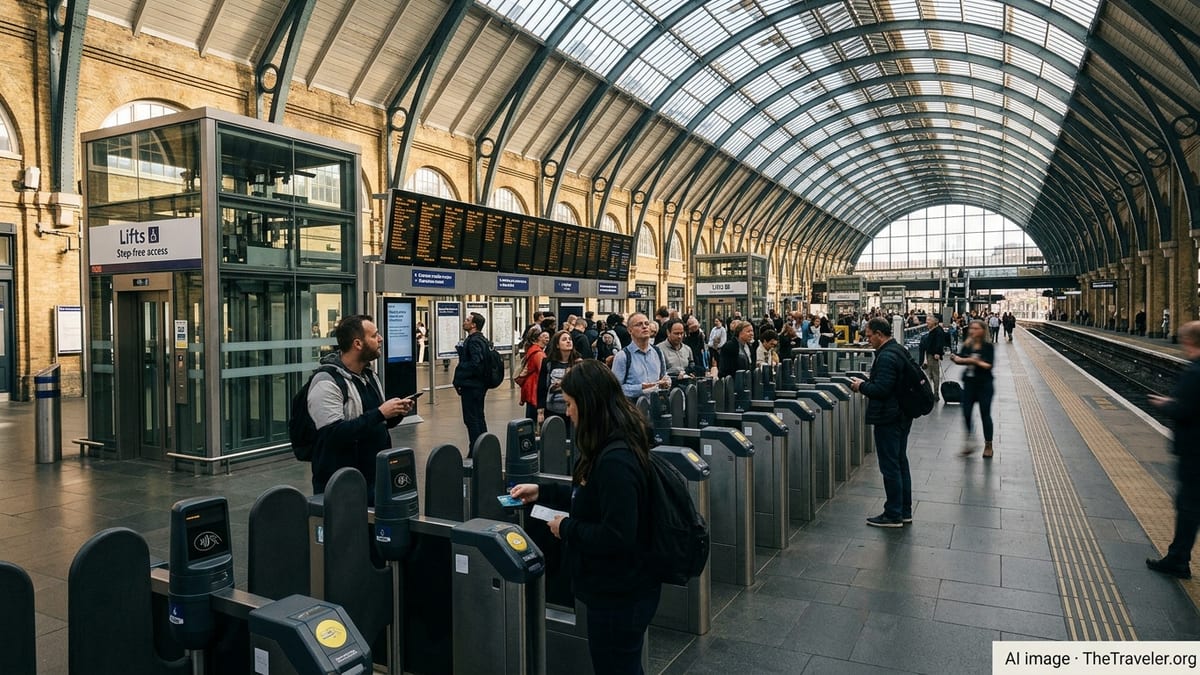
Shift From Magstripe Tickets to Barcodes and Contactless
Visitors used to the traditional orange credit card sized rail tickets are increasingly likely to receive larger paper slips with barcodes or to travel using digital tickets on their phones. Industry information and recent passenger reports indicate that operators are steadily phasing out legacy magstripe stock in favour of barcode-based tickets that can be scanned at gates and on board. This change is especially visible at larger stations in England, where ticket vending machines and staffed counters now default to barcode formats.
Rail Delivery Group, which represents train and station operators, has highlighted the environmental and operational benefits of this shift, pointing to redesigned paper tickets and a growing share of barcode sales as ways to cut paper use while simplifying gate technology. At the same time, government-backed initiatives such as Project Oval are extending contactless pay as you go ticketing from London into more National Rail stations in the South East, aligning traditional tickets and contactless fares under a streamlined structure.
For tourists, the practical impact is that train tickets may look and behave differently from past visits. Many advance and off-peak fares are now issued as mobile barcodes, app-based tickets or printable PDFs. Where contactless pay as you go is available, passengers who tap bank cards or devices at the start and end of their journey are charged automatically, rather than buying a conventional paper ticket. However, contactless does not yet integrate every discount and railcard, so some travellers may still prefer pre-purchased tickets if they rely on concessionary fares.
International visitors are advised to check ticket format options when booking, and to confirm whether a physical printout is needed. On most routes, staff accept tickets displayed on a smartphone screen, but some third party retailers and particular fare types continue to require printed copies, especially for longer distance or cross-border itineraries involving multiple operators.
What New Ticket Rules Mean for Visitors
Alongside format changes, tourists are encountering evolving rules around how and where tickets can be used. The expansion of pay as you go contactless in the South East means that for many short and medium distance journeys around London, buying a separate paper ticket is no longer essential, provided that tap in and tap out is correctly completed. Fare structures have been adjusted so that traditional tickets increasingly mirror contactless pricing on these routes, reducing the gap between different purchase methods.
On long distance and intercity services, advance purchase tickets often remain tied to specific trains, while flexible anytime and off-peak tickets usually allow travel on a range of services within a set period. Some tickets are restricted to particular operators or routes, and these conditions still apply regardless of whether the ticket is held on paper, smartcard or mobile. Tourists who are unfamiliar with the network often underestimate how complex UK fare rules can be, so checking restrictions before boarding remains important.
Government policy is also moving toward stronger consumer protection for disabled passengers whose booked assistance fails, with regulators considering tougher compensation expectations for disrupted journeys. While this does not directly alter ticket validity for most tourists, it underlines a wider trend towards clearly documented passenger rights. Visitors may benefit from more transparent refund and delay compensation information, which is typically set out in operators’ conditions of travel and accessible travel policies.
Passengers connecting between domestic UK services and international trains such as Eurostar should note that ticketing systems and assistance arrangements are coordinated but not identical. Separate tickets may be required for British domestic segments and cross-channel high speed services, and assistance bookings sometimes need to be made with more than one operator, especially if travel involves changes between mainline and urban networks.
Accessibility Roadmap: Lifts, Level Boarding and Station Upgrades
For many visitors with reduced mobility, the most significant developments are not ticket formats but physical accessibility improvements. The UK government’s Accessible Railways Roadmap sets out a long term strategy to integrate accessibility from booking through to boarding, including step free station access, reliable lifts, accessible toilets and clearer information systems. Recent documentation highlights priorities such as faster repair of key facilities and closer monitoring of operators’ performance on accessibility.
Across England, Scotland and Wales, the Access for All funding programme and local transport schemes are financing new lifts, replacement footbridges, tactile paving and upgraded signage at selected stations. Business case summaries from regional authorities, such as those in West Yorkshire, describe plans to install lift towers, tactile surfaces and improved CCTV at stations that currently have only stair access, with the aim of reducing the need for passengers with reduced mobility to divert to distant accessible stations.
In major cities, accessibility is advancing unevenly but measurably. Transport information for London indicates that around one third of Underground stations now offer step free access, with work underway on additional stops and complementary measures such as “mini ramps” to bridge small platform gaps. London Overground and National Rail terminals have a higher share of step free stations, though many still rely on portable ramps for boarding because of varying platform heights.
Tourists planning itineraries that rely on wheelchair access, reduced step routes or accessible toilets are therefore encouraged to check station-by-station information before travel. National Rail provides an online accessibility map, while individual operators publish station access guides and accessibility sections describing lift availability, ramp use and the locations of accessible parking bays and entrances.
Assisted Travel and Changing Booking Processes
Alongside infrastructure upgrades, rail companies are refining how passengers request assistance. All licensed train and station operators in Great Britain are required to maintain an Accessible Travel Policy, which sets out the help they offer, how to request it and what happens when things go wrong. The Office of Rail and Road has reported relatively high satisfaction with the overall assistance process, while also noting recent concerns about reliability and the need for better data on performance.
Operators are responding with new tools and processes. Greater Anglia, which serves key tourist routes in East Anglia, recently introduced an integrated assistance booking feature that allows passengers to request help directly from their online booking confirmation or “My Bookings” page, rather than visiting a separate Passenger Assist site. Travel industry coverage describes this as a first among UK operators, signalling a broader move towards embedding assistance options inside mainstream booking journeys, instead of treating them as an add on.
Other intercity and regional operators, including GWR, LNER and newer open access companies, have updated their Accessible Travel Policies in 2024 and 2025. These documents typically outline timeframes for booking assistance in advance, how “turn up and go” support is handled at staffed stations, and what passengers should expect if assistance fails, including onward travel and potential reimbursement. Campaigning organisations and accessibility research bodies have argued for passenger assistance to become a statutory duty with consistent standards, and this debate continues as the roadmap is implemented.
For tourists, the key point is that help is available but often works best when arranged early. Travellers who need ramp boarding, guidance through stations or support with luggage should consider booking assistance at least 24 hours in advance where possible, while also checking current arrangements for short notice travel. On the day, arriving early at major hubs and identifying clearly signed information desks or help points can reduce stress, particularly during peak times or engineering works.
Practical Tips for Tourists Navigating a Changing Network
Because reforms are being rolled out in stages, visitors will encounter a patchwork of old and new systems. Some stations already support contactless pay as you go, barcode-only gates and fully step free access, while others rely on traditional paper tickets, manual ticket checks and stairs. The most reliable approach is to confirm current information shortly before travelling, rather than relying on memories from previous trips or outdated guidebooks.
For ticketing, tourists can benefit from exploring both national and operator specific booking channels, comparing mobile, barcode and paper options. Where contactless pay as you go is supported, it can provide a straightforward way to move around metropolitan areas without learning complex fare tables, although visitors using discount railcards may find better value in traditional tickets on some journeys. Keeping digital tickets accessible offline, carrying a power bank and, where allowed, printing backup copies can provide reassurance on longer routes.
For accessibility, planning tools such as station access maps, operator accessibility pages and up to date announcements on lifts and engineering works are increasingly important. Many operators now publish detailed PDFs of their Accessible Travel Policies and route maps showing step free stations, while some also offer dedicated accessibility contact lines. Tourists who depend on these features should build extra time into interchanges and consider avoiding complex routes that require multiple platform changes at older, multi level stations.
As infrastructure projects, ticketing reforms and accessibility rules continue to develop, the UK rail network remains a powerful way for tourists to explore cities, coastlines and countryside. Understanding the latest ticket formats, assistance options and station upgrades can help visitors make the most of the system while it undergoes one of its most significant modernisation phases in decades.