

More news on this day
Rail travel across Scotland and the wider United Kingdom is steadily returning to normal after a major city-centre fire beside Glasgow Central station forced days of cancellations, diversions and crowding on alternative routes, creating knock-on disruption far beyond Scotland’s busiest rail hub.
Get the latest news straight to your inbox!
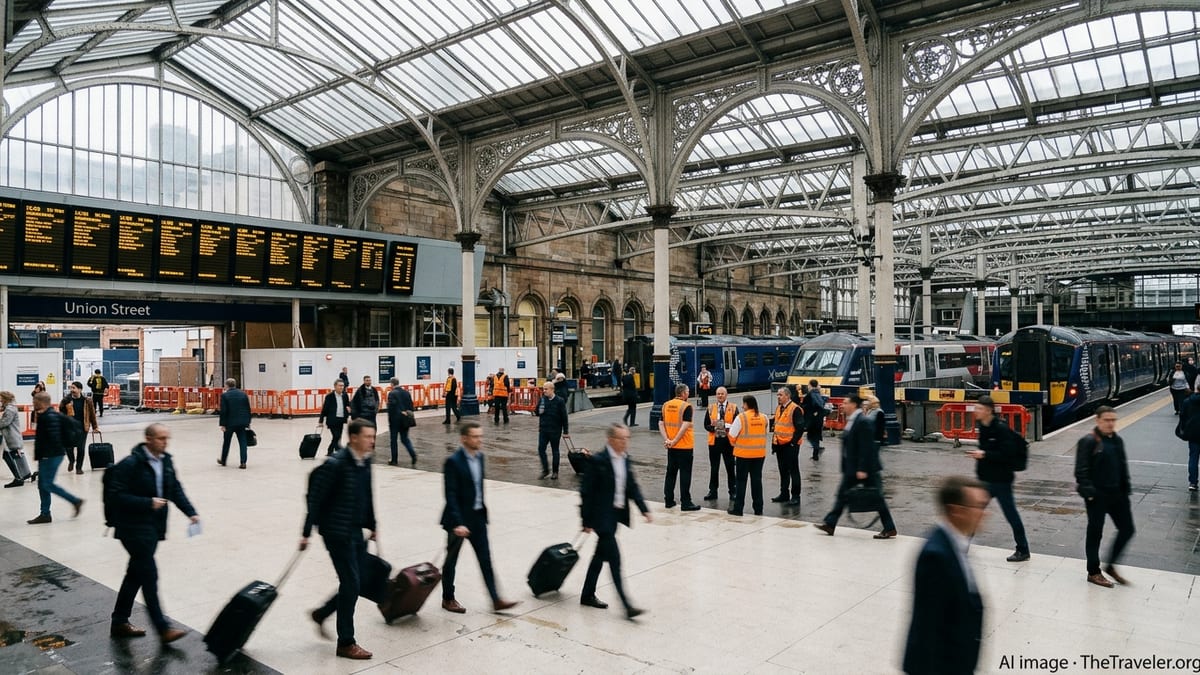
From Urban Fire to Network-wide Shock
The Union Street fire in Glasgow on 8 March 2026 originated in a vape shop within a historic corner building directly attached to Glasgow Central, according to publicly available reports. The blaze led to a partial building collapse and prompted the closure of the high level section of the station, which handles a large share of long distance and commuter trains serving Scotland and cross-border routes into England.
Coverage from national and local outlets indicates that low level suburban services beneath the main concourse were initially allowed to run through without stopping, while high level platforms were taken out of use because of concerns over the stability of the fire-damaged structure next door. Long distance services on the West Coast Main Line were turned short at locations such as Motherwell and Carlisle, disrupting journeys between Glasgow, the English Midlands and London.
In the days that followed, rail operators introduced emergency timetables, with some trains diverted to Glasgow Queen Street or replaced by buses where capacity allowed. However, publicly available information shows that replacement road transport could not fully absorb demand, leading to crowding on remaining services and extended journey times across parts of Scotland and northern England.
Travel analysts noted that the incident came on top of planned engineering work and seasonal demand, meaning that disruption in Glasgow was quickly felt on routes serving Edinburgh, the central belt and key cross-border corridors. Passengers heading for airports and ferry ports also experienced missed connections and tighter transfer windows as services were thinned out or rerouted.
Glasgow Central Gradually Reopens
According to recent network updates, the first significant step towards normality came when low level platforms at Glasgow Central reopened to stopping services on 11 March, several days after the fire. This allowed more suburban and regional trains to call at the city-centre hub again, easing pressure on nearby stations that had been handling displaced traffic.
High level operations have followed a phased path. Published coverage indicates that a limited number of high level platforms reopened from 18 March, with restricted access across the concourse while demolition of the damaged Union Street building continued under an exclusion zone. During this phase, many passengers had to follow one-way walking routes and use alternative entrances on Hope Street.
New information shared in recent days shows that Network Rail is now preparing to restore access to all high level platforms, allowing the full range of operators serving Glasgow Central to resume their usual stopping patterns. The remaining constraints are focused on the Union Street side of the station, where structural safety work is still progressing and some entrances remain closed.
While the concourse layout is not yet fully back to its pre-fire configuration, the reopening of every platform means that the station can once again function as Scotland’s principal rail hub. This is expected to improve reliability and reduce journey times on routes to destinations including Ayrshire, Inverclyde, the Highlands, northern England and London.
Knock-on Effects Across Scotland and the UK
The initial closure of Glasgow Central’s high level section had a ripple effect across large parts of the Scottish and UK rail network. According to timetables and service updates published in mid-March, operators including ScotRail, Avanti West Coast, TransPennine Express, CrossCountry and Caledonian Sleeper all altered their schedules, with some services curtailed, diverted or temporarily suspended.
North-south links on the West Coast Main Line were among the most affected, with several long distance services terminating early at Motherwell or Carlisle rather than continuing into Glasgow. This required passengers to switch to local services or alternative routes, adding changes and waiting time to journeys between Scotland and cities such as Birmingham, Manchester and London.
Within Scotland, substitution patterns varied by route. Some trains were rerouted to Glasgow Queen Street, while others used nearby suburban stations or relied on rail replacement buses where road access permitted. Public information from travel operators shows that certain commuter corridors, including those serving south Glasgow and Ayrshire, experienced longer travel times and reduced frequency during peak periods.
As platforms at Glasgow Central return to service, these temporary arrangements are being withdrawn. Timetables are gradually reverting to normal, and operators are encouraging travelers to recheck journey planners on the day of travel, as residual alterations and short-notice changes may persist while the network fully resets.
What Rail Passengers Should Watch Now
With Scotland’s core hub station largely back in operation, the focus for travelers has shifted from emergency disruption to careful journey planning. Passenger information channels highlight that while the majority of services are running, some trains may still be subject to altered stopping patterns, platform changes or slightly extended journey times while operational staff and signaling teams adjust to the restored layout.
Travelers heading to or from Glasgow are being advised, through published guidance, to allow extra time when moving through the station, particularly because some concourse areas and entrances around Union Street remain within a restricted zone. Access via Hope Street and other open entrances may be busier than usual at peak hours as footfall returns.
Across the rest of the United Kingdom, the key message for rail passengers is to treat the coming days as a transitional period. Journey planners and real-time departure boards are being updated to reflect the reopening of platforms and the removal of diversions, but minor discrepancies can remain while operators fine-tune rolling stock and crew diagrams that were temporarily restructured during the closure.
Travel experts suggest that passengers with critical onward connections, such as flights or evening events in other cities, should continue to favor earlier trains where possible, especially on cross-border routes that depend on punctual arrivals into Glasgow or major English hubs.
Practical Tips for Upcoming Journeys
For visitors planning imminent trips across Scotland and the rest of the UK, publicly available journey advice emphasizes preparation and flexibility. Checking for updates on the morning of travel remains essential, as does reviewing any alerts from individual operators, particularly for services that previously originated or terminated at Glasgow Central during the height of the disruption.
Travel planners recommend that rail users pay close attention to departure stations, platform allocations and interchange points, as some long distance trains may still start or finish at alternative locations while final demolition and safety works progress beside Glasgow Central. Allowing additional time to move between platforms and concourse areas is sensible, especially for those carrying luggage or traveling with children.
Passengers booking advance tickets for routes through Scotland in late March and early April are likely to benefit from a largely restored schedule, according to current timetables. However, given recent events, many travelers are opting for flexible or refundable fares where budgets permit, offering more options in the event of any residual disruption.
Despite the challenges of the past weeks, the rapid reopening of Glasgow Central and the normalization of services across the wider UK rail network underline the system’s capacity to recover after a major urban incident. For travelers, that means a gradual return to predictable timetables, familiar interchange points and the ability to once again plan seamless rail journeys across Scotland and beyond.