

More news on this day
Rail travel across Scotland and much of the wider United Kingdom is steadily returning to normal after a major city-centre fire beside Glasgow Central station triggered two weeks of severe disruption, forcing diversions, cancellations and temporary closures on one of the network’s most important hubs.
Get the latest news straight to your inbox!
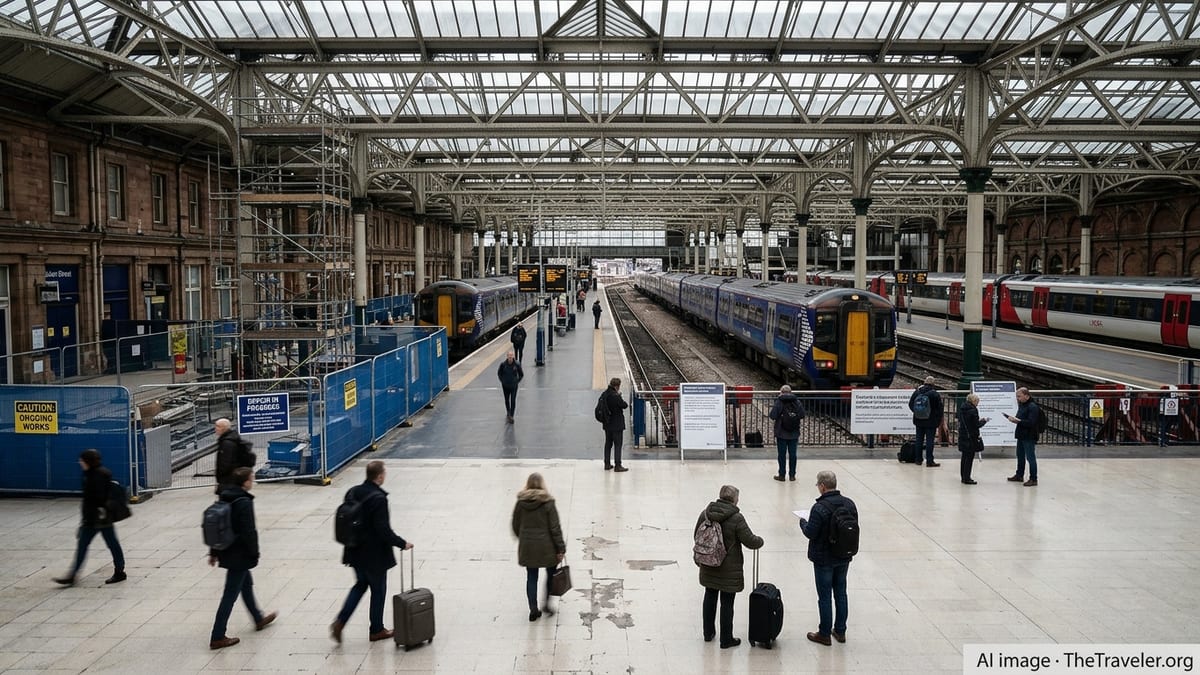
Glasgow Central Set To Fully Reopen After Union Street Fire
Publicly available information shows that all platforms at Glasgow Central, Scotland’s busiest railway station, are expected to reopen on Wednesday 25 March, more than two weeks after a fire tore through the adjoining Union Corner building on Union Street. The blaze on 8 March led to the partial collapse of the historic structure and prompted an immediate shutdown of the station’s high-level platforms, cutting a key artery for rail services across Scotland and to England.
Reports indicate that low-level services beneath the main concourse were the first to resume, reopening on 11 March, while a limited number of high-level platforms came back into use from 18 March. A reduced concourse with safety cordons remained in place as demolition of the fire-damaged building continued, constraining passenger flows and restricting some services.
According to recent coverage, progress in dismantling unsafe sections of the facade has now allowed Network Rail to restore access to all high-level platforms, including those used by ScotRail, Avanti West Coast, TransPennine Express, CrossCountry and Caledonian Sleeper. However, some entrances around Union Street and Gordon Street are expected to remain closed for the time being, with passengers advised to follow station signage and staff guidance when moving through the concourse.
The incident has highlighted the strategic importance of Glasgow Central within both the Scottish and UK rail networks. The station sits at the northern end of the West Coast Main Line and acts as the primary hub for services to Ayrshire, Inverclyde, Lanarkshire and cross-border routes to cities including London, Manchester and Birmingham.
Impact On Services Across Scotland And Cross-Border Routes
When the fire broke out on 8 March, publicly available timetables show that services were suspended to and from Glasgow Central’s high-level platforms, with many trains either terminating early or being diverted to alternative stations. West Coast Main Line trains from England reportedly stopped short of Glasgow, turning around at Motherwell, while some Scottish suburban and regional services were switched to Glasgow Queen Street or cancelled outright.
During the most acute phase of disruption, travelers heading to Ayrshire, the Clyde coast and parts of South Lanarkshire faced extended journey times, rail-replacement buses and complex route changes. Those connecting between Scottish services and long-distance operators such as Avanti West Coast and TransPennine Express encountered missed connections and reduced frequencies as operators reworked diagrams to cope with the loss of capacity at Central.
As more platforms have reopened, service patterns have gradually improved. According to operator updates, most regular weekday and weekend timetables are now close to normal, though pockets of disruption may still occur while residual engineering and safety work continues around the affected site. Passengers are being urged to check live journey planners on the day of travel and allow extra time when making tight cross-platform connections, particularly during the peak commuter periods.
Within Scotland, the return of a fuller timetable at Glasgow Central is expected to ease pressure on nearby stations such as Glasgow Queen Street and Paisley Gilmour Street, which have absorbed additional traffic during the closure. For cross-border travelers, the restoration of through services to and from Glasgow Central simplifies itineraries that had temporarily required changes at intermediate hubs.
Network Resilience And Ongoing Safety Measures
The Union Street blaze has renewed attention on how the UK rail network manages incidents in dense urban settings where railway infrastructure is tightly woven into surrounding streets and buildings. Published material from rail infrastructure documents notes that operational codes already require rapid assessment of structural risk before services can run near a damaged structure, a factor that contributed to the extended closure of the high-level concourse in Glasgow.
In the weeks since the fire, demolition teams have been working to remove unstable sections of the Union Corner building while maintaining strict exclusion zones above the platforms. Public reports describe a carefully phased approach, shrinking the cordon only as engineers confirm that adjacent structures and overhead supports are safe for passenger use. This staged reopening has allowed some services to restart earlier, while still prioritising safety for travelers and staff.
Observers point out that the Glasgow incident follows other recent UK rail disruptions linked to fires near tracks or stations, underlining the importance of robust contingency planning. Industry reports on resilience highlight measures such as predefined diversionary routes, rail-replacement agreements and coordinated passenger information strategies intended to keep people moving when a major hub is suddenly taken out of use.
For operators and infrastructure managers, the return to full operations at Glasgow Central will also trigger reviews of how well those contingency plans worked in practice. These assessments typically inform future investment in both physical protection measures around key stations and the digital systems that deliver real-time updates to passengers.
What Rail Travelers Should Watch For In The Coming Days
With Glasgow Central’s high-level platforms due to be fully available again, most travelers can expect a noticeable improvement in reliability and journey times across western and central Scotland, as well as on cross-border routes. However, published updates still flag several points for passengers to monitor closely over the next week.
First, station access routes remain altered. Some traditional entrances near Union Street and Gordon Street are likely to stay closed while the remaining demolition and safety works continue. Travelers should plan for slightly longer walks through the station, follow on-site wayfinding signs and be prepared for occasional congestion at open entrances during busy periods.
Second, minor timetable changes and platform alterations may persist even after all platforms reopen. Network operators often retain short-term adjustments while they test new layouts and confirm that passenger flows are working as intended. Those making tight onward connections, including to airports and long-distance services, are advised to build in additional buffer time.
Third, anyone holding advance or off-peak tickets purchased before the fire should double-check validity and reservations. Some operators permit flexible travel on alternative services after major disruption events, but conditions can vary between routes and fare types. The most reliable guidance in this area continues to be the live information provided on train company and National Rail journey planning tools.
Finally, rail users planning wider trips across the United Kingdom should remain alert to unrelated engineering works and weather-related restrictions that are part of the normal calendar of rail operations. While the Glasgow fire created an exceptional interruption, the broader network continues to run a mix of routine maintenance closures and improvement projects that can affect weekend and evening services on key intercity and regional corridors.
Broader Lessons For Travelers Using UK Rail Hubs
The disruption triggered by the Union Street fire has underlined how dependent many Scottish and UK journeys are on a small number of major city hubs. When a station such as Glasgow Central is suddenly constrained, the impact ripples out across multiple lines, operators and regions, from commuter belts to cross-border links.
Travel commentators suggest that one practical response for passengers is to become more familiar with alternative routes and stations before they are needed. In Glasgow’s case, options have included transferring via Glasgow Queen Street, Paisley Gilmour Street or Motherwell, or using local bus and subway connections to bridge gaps in the rail network when Central has been unavailable.
The episode has also highlighted the value of flexible planning, particularly for leisure travelers and those making discretionary trips. Booking slightly later, choosing refundable fares where possible and building time margins into itineraries can help mitigate the stress of sudden timetable changes caused by incidents outside the rail industry’s direct control.
As Scotland’s busiest station prepares to return to full operation, the broader UK rail network appears to be stabilising after a challenging fortnight. For many travelers, the reopening of all platforms at Glasgow Central marks a welcome step back toward predictable, joined-up rail journeys across Scotland and between Scotland and the rest of the United Kingdom.