

More news on this day
The United Kingdom is rapidly emerging as a global frontrunner in quantum navigation for rail, with new projects on London Underground and the wider network promising smarter, more reliable journeys that could fundamentally change how tourists explore the country by train.
Get the latest news straight to your inbox!
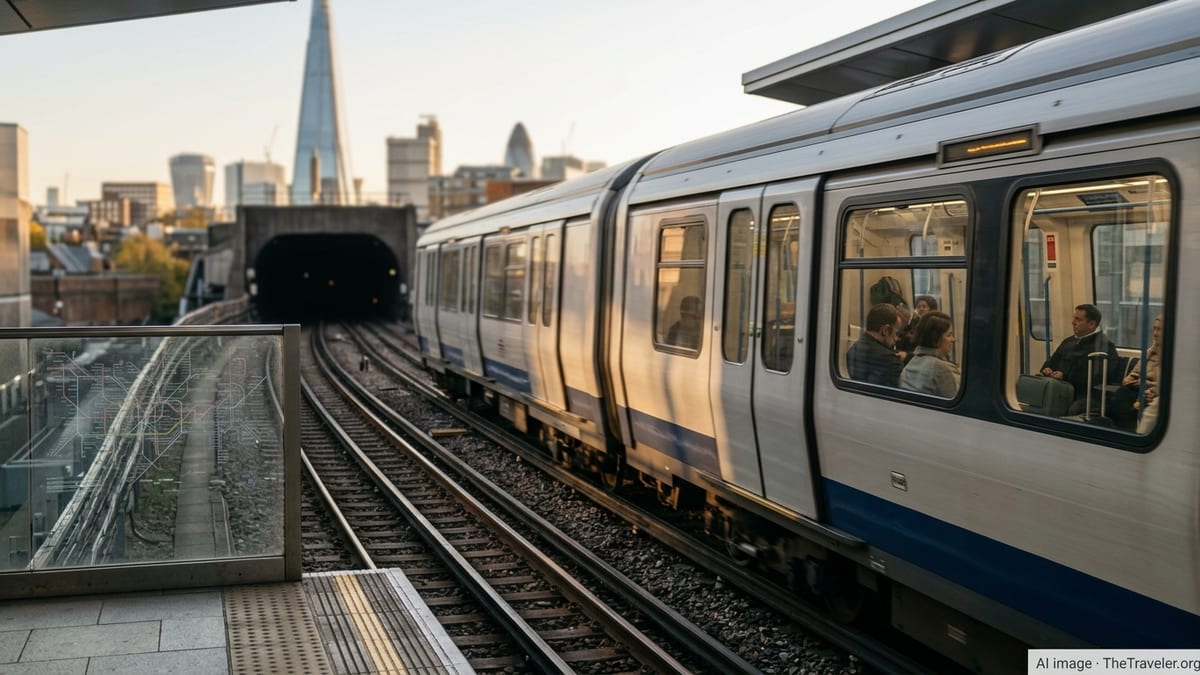
From Laboratory Physics to Live Railways
Once confined to advanced physics laboratories, quantum navigation technologies are now moving onto real-world rail systems in the UK. Drawing on years of research in cold atom sensors and quantum inertial navigation at institutions such as Imperial College London and the University of Birmingham, experimental devices that measure motion using ultra-cold atoms are being adapted for trains and urban transport.
Quantum navigation differs from traditional satellite-based positioning by relying on precise measurements of acceleration and rotation, rather than external signals. This approach creates a kind of “internal compass” that can keep accurate track of location even when GPS signals are blocked or unavailable. The UK’s national quantum research programs and dedicated hubs for quantum-enabled position, navigation and timing have made rail transport a priority testbed for these advances.
Recent demonstrations in other sectors, including maritime trials of quantum sensors in Arctic conditions and experimental flights guided by quantum navigation, are feeding directly into rail applications. Publicly available information shows that the UK government views resilient, satellite-independent navigation as critical infrastructure, and rail operators are among the first to explore how this can be deployed at scale.
For future visitors, the result is likely to be a network where sophisticated quantum hardware hums quietly out of sight, improving punctuality and safety on everyday journeys from airports to historic city centres.
MoniRail and the RQINS Project: Quantum on the London Underground
At the centre of the UK rail effort is MoniRail, a University of Birmingham spin-out focused on rail condition monitoring and navigation. According to published coverage from the company and its academic partners, MoniRail leads the Rail Quantum Inertial Navigation System project, often referred to as RQINS, which is developing quantum-based navigation for use on trains.
In early 2024, MoniRail secured government-backed funding through a national quantum catalyst programme to refine quantum navigation systems for rail, working with partners including Transport for London, Imperial College London and the University of Sussex. Subsequent announcements in the specialist rail press indicate that the company has since received additional multi-million-pound support to advance trials for the London Underground, with the explicit goal of helping trains run more reliably and on time.
The technology aims to tackle a longstanding challenge in urban rail: the difficulty of tracking trains accurately in deep tunnels and complex junctions where GPS and other satellite signals cannot reach. By integrating quantum inertial sensors with existing onboard monitoring systems, the RQINS concept would allow Underground trains to know their precise position along the track at all times, without the need for extensive trackside equipment.
For tourists, especially those unfamiliar with London’s intricate Underground network, this could translate into more reliable headways, smoother recoveries from disruption and clearer information about delays. The same underlying technology could later be extended to airport links, intercity services and scenic regional routes that form the backbone of many UK rail itineraries.
Beyond GPS: Why Quantum Navigation Matters for Visitors
Today’s rail journeys, ticketing apps and journey planners depend heavily on satellite signals. When those signals are blocked in tunnels, cuttings or dense city centres, operators must rely on a mix of trackside sensors, legacy systems and conservative safety margins that can reduce capacity and increase delays. Quantum navigation offers an alternative by providing accurate, continuous positioning that is internal to the vehicle and resistant to signal loss or interference.
For travellers, this shift could be most visible in more robust timetables and fewer unexplained gaps in service information. If trains can report their location with higher precision, operators can run services closer together without compromising safety, improving frequencies on busy routes that tourists depend on, such as central London corridors or connections between major attractions.
Quantum navigation also has implications for smart ticketing and flexible travel products. Better real-time knowledge of train positions and network conditions supports more dynamic pricing and pay-as-you-go models that charge based on actual travel rather than fixed zones or paper tickets. That could benefit international visitors arriving with contactless bank cards or digital wallets, allowing them to ride complex rail networks with minimal planning.
In the background, the same quantum-driven data can enhance condition monitoring of tracks and rolling stock. Early detection of faults, informed by precise measurements of how trains move along the rails, may reduce unplanned engineering work and last-minute cancellations that often catch tourists off guard.
UK Quantum Investments Position Rail as a Global Showcase
The UK’s lead in rail-focused quantum navigation is underpinned by significant public and private investment. The UK National Quantum Technologies Programme and related funding streams have directed hundreds of millions of pounds into quantum-enabled position, navigation and timing, with universities and technology companies encouraged to collaborate with transport operators.
Reports from research institutions note the creation of a dedicated national hub for quantum navigation and timing, with anticipated applications in maritime, aviation and mass transit. Within this ecosystem, projects on the London Underground have become highly visible demonstrations of how quantum research can transition into public-facing services.
By coupling advanced navigation with Britain’s extensive and historically rich rail network, policymakers and industry bodies are effectively turning the country into a real-world showroom for quantum-enhanced public transport. International delegations already visit London to study contactless ticketing and metro operations, and quantum navigation trials are poised to become another area of interest for foreign transport planners.
For the tourism sector, this technological leadership could become part of the UK’s wider brand as an innovation-driven destination. Travel marketing materials increasingly highlight fast rail access between cities, low-carbon journeys and integrated urban transport; quantum-enabled networks add a new layer to that narrative by promising greater reliability and resilience beneath the surface.
How Tourists Could Experience Quantum-Enabled Rail in the Coming Years
While quantum navigation hardware will remain invisible to the average rider, its impact on the tourist experience is likely to grow over the next several years as pilot projects mature. Initial benefits may include more accurate arrival countdowns on station displays, improved journey-time predictions in travel apps and a gradual reduction in minor delays that previously arose from uncertainties in train positioning.
As the technology spreads beyond the London Underground, visitors could see more consistent performance on popular intercity routes linking hubs such as London, Manchester, Edinburgh and regional gateways. Scenic branch lines, heritage corridors and coastal routes might also benefit from improved reliability, helping tourists plan day trips with greater confidence that the last train home will run as advertised.
In parallel, advances in quantum-secure communications and timing, developed under the same national programmes, may enhance the digital infrastructure that supports ticketing, reservations and rail operations. For travellers, this convergence of technologies could mean smoother connections between trains, buses, trams and ferries, with fewer technical glitches and a more seamless door-to-door experience.
Although widespread deployment will take time and careful testing, current projects suggest that the UK is actively positioning itself as the first major tourism destination where quantum navigation quietly underpins daily rail travel. For future visitors, boarding a train in London or beyond may offer not only a view of historic landscapes, but also a glimpse of how next-generation science is reshaping the future of mobility.