

More news on this day
The United Kingdom has tightened its travel advice for Mexico, placing parts of the country alongside Germany, France, Turkey, Costa Rica, Thailand and the Bahamas on an expanding list of destinations where British travellers are being urged to exercise heightened caution amid political tensions, violent crime and protest-related disruption.
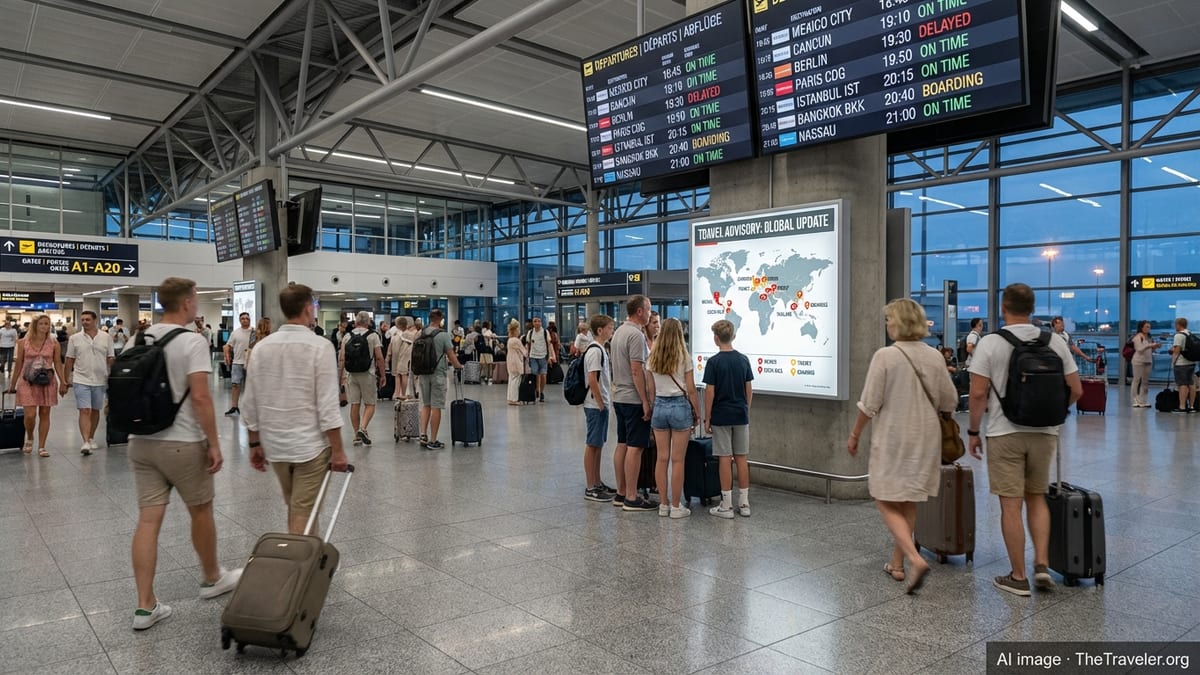
Mexico Moves Into Higher-Risk Category for UK Travellers
Mexico’s inclusion in the latest wave of UK Foreign, Commonwealth and Development Office advisories reflects mounting concern over cartel-related violence, sporadic unrest and a complex political climate. While the country remains one of the world’s most visited tourism markets, the Foreign Office now formally advises against all but essential travel to several regions, warning that security conditions can deteriorate quickly and often without notice.
Current guidance highlights high-risk areas including parts of Baja California, Guerrero and Chiapas, as well as sections of major federal highways that have seen roadblocks, armed robberies and clashes between security forces and organised criminal groups. British travellers are being reminded that travel insurance may be invalidated if they enter zones where official advice categorically discourages non-essential visits, a factor that raises both the financial and personal risk of travelling off the main tourist trail.
Officials stress that the elevated advisory does not equate to a blanket ban on visiting Mexico. Popular resort states such as Quintana Roo, home to Cancun and the Riviera Maya, and much of Baja California Sur remain open to tourism, though travellers are urged to monitor local developments closely, avoid demonstrations and follow instructions from local authorities and tour operators if incidents occur nearby.
The shift in tone comes against the backdrop of several high-profile security incidents, including cartel reprisals following operations by Mexican security forces, which have led to temporary shutdowns of airports, blocked highways and sporadic gunfire in or near urban areas. Analysts say these flashpoints have underscored the reality that even destinations traditionally marketed as secure beach escapes can be affected by broader security dynamics.
A Broader Pattern: Germany, France, Turkey and Others Under Scrutiny
Mexico is not alone in facing tougher language from the UK authorities. Over the past year, the Foreign Office has gradually strengthened warnings for a swathe of countries that are otherwise core tourism destinations for British holidaymakers, including Germany, France, Turkey, Costa Rica, Thailand and the Bahamas. In each case, the drivers are different, ranging from heightened protest activity and political tensions to crime, extreme weather and infrastructure strain.
In Germany and France, recent mass demonstrations, labour strikes and isolated attacks have periodically disrupted transport networks, with rail services, airports and city centres affected. While these European countries are still considered low risk for routine travel, British officials are reminding visitors that large crowds and political rallies can change security calculations rapidly, particularly in major urban hubs such as Berlin, Munich and Paris.
Turkey has long appeared in UK advisories due to its proximity to regional conflicts, domestic political volatility and the persistent risk of terrorism in some areas. The latest wording reiterates the need for vigilance in major cities and border regions, while also drawing attention to periodic military operations and the potential for sudden curfews or localised restrictions that can impact tourists and expatriates alike.
In Thailand, Costa Rica and the Bahamas, the emphasis is more squarely on crime, road safety and environmental risks. Reports of robberies targeting tourists, road accidents involving motorbikes and rental cars, and seasonal storms or hurricanes have led to calls for travellers to avoid complacency in destinations that are still heavily promoted as worry-free tropical escapes.
Political Tensions, Protests and the Changing Risk Map
Diplomats and security analysts say the latest advisories mirror a broader global trend in which domestic political tensions increasingly spill into public spaces, creating unpredictable conditions for visitors. From large anti-extremism marches in German cities to union-led demonstrations over pension reforms in France and political rallies in Mexico ahead of key elections, crowds have become a growing variable in risk assessments.
While the vast majority of protests remain peaceful, authorities caution that large gatherings can be magnets for opportunistic crime or, in rare cases, targeted attacks. The UK guidance now consistently urges travellers to avoid protests and to leave the area at the first sign of unrest, even if events initially appear peaceful or are located in well-known tourist districts.
In Mexico, political dynamics are intertwined with security concerns. Election periods and major policy announcements can lead to road blockades, public sector strikes or heightened clashes between security forces and criminal organisations. Travel experts note that foreign visitors are rarely the direct target of such tensions, but they can easily become stranded if roads to airports or coastal resorts are closed or if public transport is suspended without warning.
The changing risk map is also influenced by social media, which can amplify both real and perceived dangers. Viral videos of isolated incidents, such as confrontations on public transport or scuffles between police and demonstrators, often circulate globally within minutes, prompting a surge of queries to embassies and travel agents and, in some cases, leading to a wave of cancellations that outweighs the actual on-the-ground risk.
Safety Concerns: From Organised Crime to Everyday Risks
The UK’s latest warning on Mexico foregrounds the threat posed by organised crime, including drug cartels and associated gangs, but it also underscores a more familiar set of urban safety concerns that travellers may underestimate. Street crime, opportunistic theft from vehicles, fraud and scams remain common in many Mexican cities and resort areas, particularly at night or in districts away from main tourist zones.
British officials warn that violent incidents involving firearms, including targeted killings linked to organised crime, have taken place in or near locations frequented by tourists. While foreign nationals are rarely the intended victims, the risk of being caught in crossfire or affected by collateral violence is real. Travellers are advised to avoid displaying expensive jewellery or electronics, to use licensed taxis or registered ride-hailing services and to be cautious when withdrawing cash.
Safety guidance also pays special attention to vulnerable groups. Solo travellers, particularly women, are urged to exercise heightened vigilance in nightlife districts and when using informal transport. Lesbian, gay, bisexual and transgender visitors are told that attitudes are generally more tolerant in major tourist hubs such as Mexico City, Cancun and Playa del Carmen, but that discrimination and harassment may occur in more conservative or rural areas.
Similar themes appear in the updated notices for other destinations. Thailand and the Bahamas are flagged for issues such as drink spiking, late-night assaults and water-sports accidents, while Costa Rica’s advisory points to an uptick in robberies and car break-ins around some national parks and beach towns. Across the board, travellers are encouraged to research local norms and to understand that popular holiday destinations can still present complex, layered risks that go beyond postcard images.
Insurance, Liability and the Cost of Ignoring Warnings
One of the most consequential elements of the UK’s travel advisories relates to insurance and financial protection. The Foreign Office reiterates that travelling to areas where it advises against all or all but essential travel can invalidate standard policies, leaving tourists personally liable for costly medical treatment, emergency evacuations or last-minute changes to itineraries if security conditions worsen.
Travel insurers typically rely on official advisories when determining coverage. When a destination or specific region within a country is upgraded to a higher risk category, policies may no longer cover non-essential trips that go ahead regardless. This is particularly relevant to parts of Mexico now deemed too dangerous for routine tourism, as well as any region globally that experiences a sudden spike in unrest, such as after a high-profile political assassination or terror attack.
Consumer advocates urge British travellers to read policy wording carefully before departure, paying close attention to clauses related to civil unrest, terrorism, natural disasters and government warnings. Some premium products offer more flexible coverage or include cancellation for any reason options, but these tend to come at a higher price and with specific conditions on timing and documentation.
For tour operators and airlines, changes in Foreign Office advice also carry legal and reputational implications. Package holiday providers may be required to offer refunds, rebooking options or alternative destinations when a region is formally placed under a higher-level warning, while carriers risk criticism if they continue operating flights into areas widely perceived as unsafe. The result can be a rapid reshaping of available routes, especially during peak travel seasons.
Impact on Tourism Economies and Traveller Behaviour
For Mexico and other countries named in the latest advisories, tourism remains a critical pillar of the economy. Industry representatives warn that repeated headlines about violence or unrest can deter international visitors even in areas that remain relatively stable and well policed. Hoteliers and local businesses in beach resorts, colonial towns and eco-tourism hubs report that whenever a major incident makes global news, cancellations and deferred bookings often follow, sometimes for months.
Officials in Mexico and elsewhere insist that popular destinations like Cancun, Los Cabos, Phuket, Paris, Berlin and the Bahamas’ major islands are still welcoming visitors in large numbers and that security has been reinforced around tourist districts. They argue that a nuanced reading of foreign advisories is essential and that lumping an entire country into a single risk category can overlook substantial regional differences in safety and stability.
Nonetheless, British and European travellers are increasingly factoring political and security assessments into their holiday planning. Travel agents report a growing number of clients asking specifically about protest activity, crime statistics and emergency healthcare capacity before booking long-haul trips. Some are choosing destinations perceived as more predictable, while others are adjusting travel dates to avoid election periods, large sporting events or peak hurricane season.
The upshot is that tourism flows have become more sensitive to short-term shocks. Countries that respond quickly to incidents with transparent communication, visible security measures and targeted support for affected visitors tend to recover faster, while those seen as downplaying or obscuring risks may suffer more lasting reputational damage.
How British Travellers Can Navigate the New Advisory Landscape
Travel experts say that the rise in high-level advisories does not mean Britons should stop travelling to Mexico or other affected destinations, but it does require more preparation and situational awareness. The first step, they note, is to check the latest Foreign Office advice not just for a country as a whole but for specific regions or cities, and to revisit that advice regularly in the days leading up to departure.
Travellers are encouraged to register with their tour operator, share itineraries and contact details with family or friends and keep copies of key documents, including passports and insurance certificates, stored securely in digital form. They should also plan how to respond if a protest blocks access to an airport, if local authorities impose curfews or if a violent incident occurs near a hotel or resort complex.
Seasoned visitors to Mexico and other higher-risk destinations recommend simple practical steps: using hotel safes for valuables, avoiding driving at night on rural highways, arranging airport transfers through reputable providers and seeking local advice before venturing into unfamiliar neighbourhoods. Staying tuned to local news and relying on official announcements rather than rumours can also help travellers distinguish between isolated incidents and genuinely deteriorating security conditions.
As Mexico joins Germany, France, Turkey, Costa Rica, Thailand, the Bahamas and a widening list of countries under closer UK scrutiny, the message from officials remains consistent. International travel is still possible and, in many cases, highly rewarding, but the days of booking a flight and assuming that familiar destinations are automatically safe have passed. For British tourists, staying informed and adaptable has become as essential as packing a passport.