

More news on this day
Mounting flight cancellations between the UK and the Middle East have triggered tough new messaging from the UK Civil Aviation Authority, which is warning airlines that they must fully uphold passenger rights as airspace closures wreak havoc on travel plans.
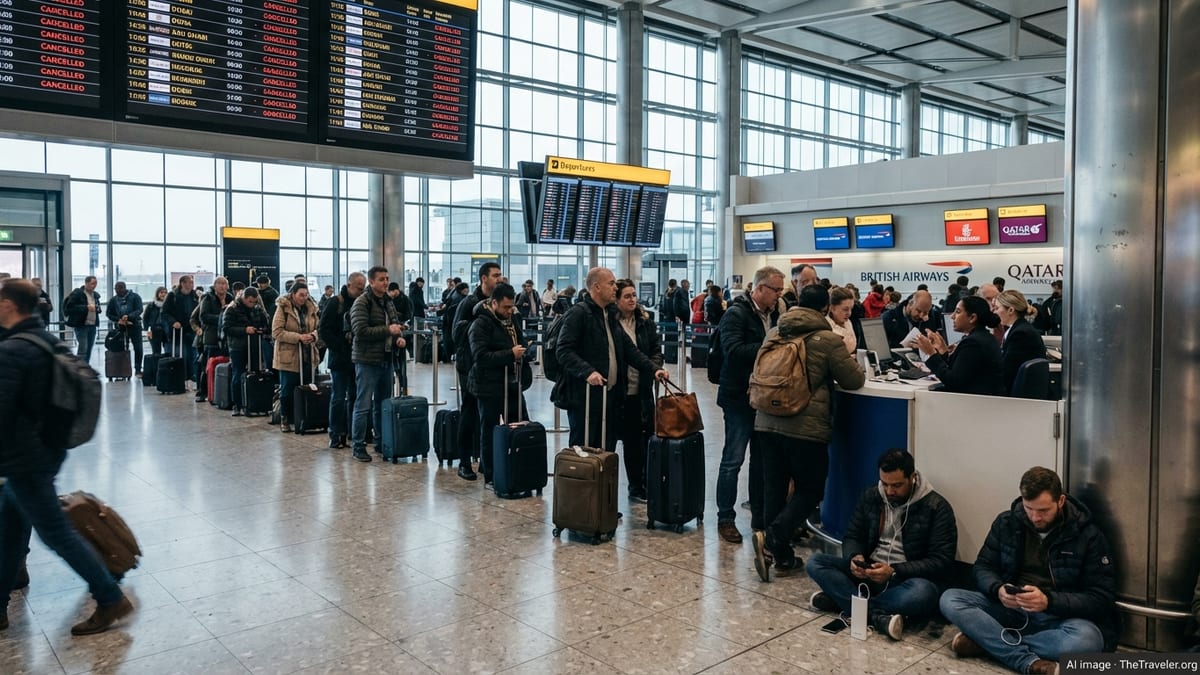
Airspace Closures Trigger Worst Disruption Since the Pandemic
Fresh airspace shutdowns across parts of the Middle East in recent days have led to a cascade of cancellations on routes linking the UK with key Gulf and wider regional hubs. Data compiled by aviation analytics firm Cirium shows that nearly a quarter of inbound flights to major Middle Eastern destinations were cancelled on 28 February alone, with disruption spilling into March as the security situation remains volatile.
The impact is being felt acutely on high-traffic corridors between London and cities such as Dubai, Abu Dhabi and Doha, which normally function as vital connecting points for journeys onward to Asia, Africa and Australasia. Airlines including Emirates, Qatar Airways and Etihad have axed hundreds of flights, with many European and Asian carriers suspending services or rerouting to avoid restricted airspace.
In parallel, the UK Foreign, Commonwealth and Development Office has strengthened its travel advisories across the region, warning that short-notice airspace closures, diversions and delays are likely to continue. The result is a highly fluid operating environment in which schedules are being revised hour by hour and passengers face prolonged uncertainty about when, and even whether, they will be able to travel.
Industry observers say the scale and speed of the cancellations are reminiscent of the early months of the Covid-19 crisis, but with the added complexity of rapidly shifting no-fly zones and limited safe corridors for long-haul flights.
CAA Issues Targeted Passenger Travel Advice
Responding to the turmoil, the UK Civil Aviation Authority has issued dedicated Middle East passenger travel advice, published on 1 March, urging travellers to closely monitor airline communications and official government guidance. The regulator notes that many flights to and from the region are now cancelled and stresses that passengers should check with carriers before travelling to the airport.
The CAA is directing those already abroad and unable to return home to contact their airline for details of support and assistance, including rebooking options, care at the airport and, where necessary, overnight accommodation. It is also advising anyone due to fly to the Middle East to keep their contact details updated with airlines so that they can receive real-time notifications of changes.
While the regulator stops short of instructing airlines on specific operational decisions, its latest communication is unambiguous about expectations around consumer protection. The message from the CAA is that safety-driven cancellations do not remove the obligation to treat passengers fairly, provide timely information and explain what remedies are available under UK law.
The advisory comes as UK consular officials step up contingency planning for stranded nationals in the region, with thousands of British travellers affected by suspended or diverted services in recent days.
Enforcement Powers and the UK261 Passenger Rights Regime
The CAA’s stance is underpinned by the UK’s retained version of European air passenger rights legislation, known as UK261. The regime, which mirrors many of the protections found in the former EU261 regulation, entitles eligible passengers to care, rerouting or refunds when flights are cancelled or heavily delayed, and in some circumstances to financial compensation.
Although extraordinary circumstances such as sudden airspace closures can exempt airlines from paying compensation, they do not remove duties around basic assistance. Carriers are still expected to offer meals, refreshments, access to communication and, where passengers are forced to stay overnight, hotel accommodation and transport to and from the airport.
In late 2025 the CAA launched a UK261 compliance programme focusing on major UK and European airlines, after a surge in complaints about how disruption was being handled. That initiative, which remains underway, gives the regulator additional leverage at a time when the Middle East crisis is testing airline customer-service systems once again.
Consumer advocates say the combination of legal obligations and active regulatory scrutiny should make it harder for airlines to quietly lower standards during periods of intense operational strain. The CAA has the ability to escalate from informal engagement to formal enforcement, including court action, if it finds systemic breaches of consumer law.
Airlines Juggle Safety, Complexity and Cost
For carriers operating between the UK and the Middle East, safety remains the overriding concern. Airlines are rerouting long-haul services to skirt closed or high-risk airspace, often adding many hundreds of kilometres to journeys and pushing up fuel burn and crew costs. Some have temporarily withdrawn from certain markets where viable alternative routings are not available.
Aviation analysts note that hubs in the United Arab Emirates and Qatar are particularly exposed, serving as crossroads for tens of thousands of connecting passengers each day. With those hubs constrained, airlines that rely on them to funnel UK-originating traffic into their wider networks have little choice but to consolidate operations or suspend flights altogether until the security picture becomes clearer.
The disruption is also squeezing already thin profit margins. Longer flight times, complex diversions and out-of-position aircraft are driving up operating expenses at the same time as airlines are absorbing the cost of caring for stranded passengers and issuing refunds. Shares in several major carriers have weakened as investors price in the risk of a prolonged crisis.
Despite these pressures, regulators and passenger groups are urging airlines not to pass the burden onto customers through opaque policies or slow refunds. They argue that transparent communication and generous flexibility, including fee-free changes, will be critical to rebuilding confidence once more stable conditions return.
What Passengers Should Do Now
With no clear timeline for a full resumption of normal flying between the UK and the Middle East, the CAA is encouraging travellers to adopt a cautious and well-informed approach. Prospective passengers are advised to verify the status of their flights repeatedly in the days and hours before departure, and to avoid setting out for the airport without written confirmation from the airline that a service is operating.
Travel experts recommend that passengers retain all receipts for expenses incurred during disruption, such as meals and accommodation, in case they need to pursue reimbursement later. Those whose trips are time-sensitive, including business travellers and people with family emergencies, are being urged to explore alternative routings via unaffected hubs, even if that means longer journeys.
The situation is also prompting a renewed focus on travel insurance. Policies vary widely in how they treat cancellations linked to conflict and airspace closures, and the CAA is advising passengers to review the small print and, where necessary, seek guidance from insurers before making major changes to their plans.
For now, the regulator’s warning is clear: disruption on UK to Middle East routes is likely to persist, and both airlines and passengers must be prepared for an extended period of uncertainty. How effectively the sector upholds passenger rights during this crisis will shape public trust in air travel long after the immediate turbulence subsides.