

More news on this day
The UK government has issued updated global travel guidance highlighting heightened security and logistical risks in several regions, as the Foreign, Commonwealth & Development Office (FCDO) urges travellers to review country-specific advice and exercise caution even in destinations previously viewed as low risk.
Get the latest news straight to your inbox!
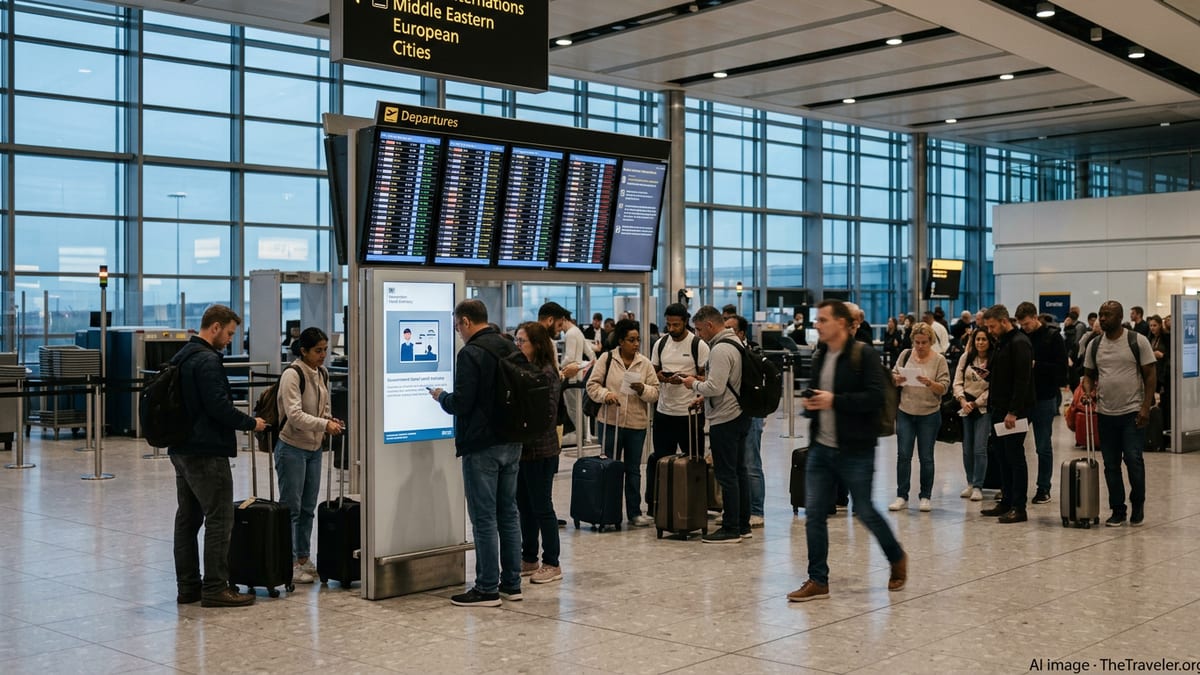
New Global Guidance Reflects Escalating Regional Tensions
Recent updates across the UK’s official foreign travel advice pages signal a broader shift in tone, with the FCDO drawing clearer attention to how regional conflicts and political instability can affect trips far beyond immediate hotspots. Publicly available information shows that the advice for multiple destinations now includes explicit references to global knock-on effects, particularly from the current escalation in the Middle East and ongoing security concerns in parts of Africa and Asia.
In several country profiles, including destinations in the Gulf and wider Middle East, the FCDO now highlights the potential for sudden airspace closures, missile or drone activity, and rapid changes to local security arrangements. These warnings are framed as part of a global risk environment, rather than isolated country-specific issues, and are prompting many travellers to reassess transit routes as well as final destinations.
The updated language underlines that even indirect exposure to regional crises, such as using a hub airport for a short layover, may now be subject to more stringent risk assessments by insurers and tour operators. Travel industry commentary indicates that airlines and package providers are closely monitoring the official guidance when deciding whether to reroute or suspend services.
Heightened Caution for Key Transit and Holiday Hubs
According to recent changes flagged in online travel forums and corroborated by the FCDO’s country pages, guidance has tightened for several important transit and holiday hubs. Publicly available information indicates that advice for some Gulf states and nearby destinations has shifted toward warning against all but essential travel, in certain cases affecting both direct visits and connecting passengers.
These changes are particularly significant because many UK travellers rely on regional hubs for onward journeys to Asia, Africa and Australasia. If a hub airport is covered by an “all but essential travel” advisory, insurance cover may be withdrawn for the entire itinerary, even when the ultimate destination is considered relatively low risk. As a result, travellers are being encouraged to scrutinise routing options and consider alternatives that avoid higher-risk waypoints.
Beyond the Middle East, updates in recent days and weeks to advice for countries such as Peru and other parts of Latin America also reflect a more cautious approach. Government guidance points to localised emergencies, infrastructure disruptions and short-notice restrictions that could impede movement or access to essential services, reinforcing the message that conditions can deteriorate quickly even in traditionally popular destinations.
Insurance, Bookings and the Fine Print for UK Travellers
One of the most immediate consequences of the updated guidance is its impact on travel insurance and booking flexibility. The FCDO’s official advice pages stress that travelling against government guidance may invalidate travel insurance policies, leaving travellers without cover for medical costs, disruption or repatriation in the event of an incident. This reminder has become more prominent as new advisories have been issued or upgraded.
Online discussions among UK travellers highlight growing concern about trips booked months in advance, particularly to countries or regions where the advice has recently shifted from routine vigilance to “all but essential travel.” In several cases, policy documents referenced in public forums confirm that coverage is contingent on following UK government travel advice at the time of departure, creating an incentive to monitor updates up to the day of travel.
Airlines and tour operators are also adjusting policies in response to the changing risk picture. Industry reports describe instances of carriers offering rebooking options or credits when government advisories change after tickets are purchased, although the level of flexibility varies between providers. Travellers are being encouraged to check both the terms of their airline and package bookings and the specific language of their insurance policies to understand their rights if advice tightens further.
Global Ripples: Disruption Beyond Immediate Conflict Zones
The FCDO’s recent messaging emphasises that the effects of regional crises are not confined to countries directly involved in conflict. Some travel advice pages now include sections dedicated to “global travel impacts,” explaining that airspace restrictions, fuel supply issues or re-routed flight corridors can create delays and cancellations far from any front line. This aligns with broader coverage from international media outlets, which describe airlines adjusting schedules and flight paths across multiple continents.
In practice, this means that UK travellers heading to destinations in Asia, the Indian Ocean or even parts of Europe may face longer journeys, last-minute schedule changes or increased congestion at alternative hubs. Travel experts quoted in media coverage note that carriers are building in additional contingency time, which can extend connections and reduce the number of daily frequencies on some routes.
Logistical knock-on effects also reach the ground. Reports from several destinations point to fluctuating availability of accommodation in cities used as substitute transit points, as well as increased demand for ground transport when flights are diverted. Travellers are advised, through publicly accessible guidance, to allow more time between connections, keep essential items in carry-on luggage, and remain prepared for unplanned overnight stays.
What Travellers Are Urged to Do Now
Against this backdrop of heightened caution, the UK government is using its online travel advice platform to encourage more proactive trip planning. The FCDO repeatedly recommends that travellers sign up for email alerts for their chosen destinations, review safety and security sections in full, and pay close attention to any areas within a country where travel is advised against. The guidance stresses that conditions may change rapidly and that updates can be issued at short notice.
Published information further encourages UK nationals to register contact details with consular services where appropriate, keep copies of key documents and share itineraries with family or trusted contacts. Travellers are also reminded to verify that passports and visas meet the latest entry requirements, which may be altered as governments respond to shifting security or migration pressures.
For those still planning to travel, industry and government messaging converges on a similar set of recommendations: build in flexibility, consider refundable or changeable tickets where possible, and ensure that any insurance policy explicitly covers the destinations and transit points on the itinerary. With the FCDO’s latest updates underscoring a more fragile global travel environment, UK travellers are being encouraged to remain adaptable, well-informed and ready to adjust plans if official guidance tightens further in the weeks ahead.