

More news on this day
The UK government has issued sweeping updates to its travel advice for countries across the Middle East, warning British nationals of mounting security risks, severe disruption to air travel and the possibility of emergency evacuations as regional tensions escalate following recent strikes involving Iran, Israel and Gulf states.
Get the latest news straight to your inbox!
Foreign Office Tightens Warnings Across the Region
The Foreign, Commonwealth and Development Office has overhauled its guidance for several Middle East destinations in the past week, introducing tougher language on security threats and advising against most forms of non essential travel in areas directly affected by the widening conflict. Travel to Israel is now broadly advised against, while guidance covering Iran, Iraq, Lebanon and parts of the Gulf has been strengthened in response to a deteriorating security picture and repeated attacks on critical infrastructure.
Specialist risk advisories report that the UK now advises against all travel to federal Iraq and the Kurdistan Region of Iraq, and against all but essential travel to key regional hubs including Bahrain, Kuwait, Lebanon, Qatar and the United Arab Emirates. Additional restrictions apply close to borders with Syria and Iran, where authorities fear spillover from cross border rocket fire, drone attacks and retaliatory strikes.
Officials stress that advice is under constant review as military activity and political responses evolve. A recent statement from authorities in Jersey, echoing London’s line, urged travellers affected by disruption to rely on official Foreign Office updates as the most reliable source of guidance, underscoring how quickly conditions and airspace status can change.
The move places the UK among a growing number of governments that have upgraded their warnings for the wider Middle East, following a pattern of coordinated alerts from European partners and international organisations in recent days.
Flight Disruption, Rerouting and Stranded Travellers
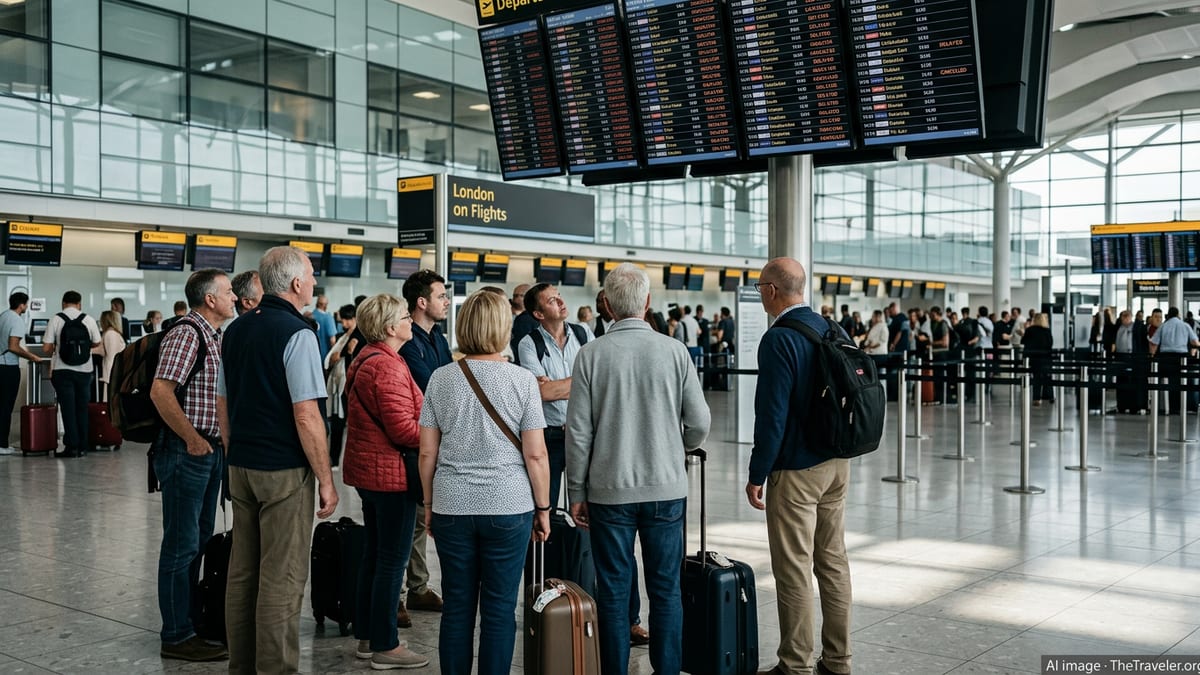
The tightening of travel advice comes amid significant disruption to civil aviation across the region. Following coordinated strikes on Iranian targets and subsequent retaliatory attacks, airlines have cancelled or rerouted services that normally cross Middle Eastern airspace, affecting both point to point routes and long haul connections between Europe, Asia and Africa.
Travel industry bulletins note that carriers have diverted flights away from conflict affected air corridors, and in some cases suspended operations to Israel and parts of the Gulf. Holiday and business travel providers report a sharp rise in schedule changes, missed connections and unplanned overnight stays as aircraft are forced to take longer routes or wait out temporary airspace closures.
In guidance directed at British travellers, the Foreign Office warns that last minute cancellations and diversions may occur with little notice. Passengers are being urged to register contact details with airlines and tour operators, monitor airport announcements and remain flexible about routings and timelines, particularly if their journey involves transit through major hubs such as Dubai, Doha or Abu Dhabi.
Risk consultancies caution that further disruption is likely in the coming days if missile and drone attacks continue to target airports, military installations and energy facilities. Even when airports remain open, heightened security postures and air defence activity can trigger sudden suspensions of arrivals and departures.
Heightened Security Alerts for Iran, Lebanon and Border Areas
The sharpest warnings are reserved for Iran, Lebanon and front line border regions, where the potential for direct attack or collateral damage is considered highest. International risk assessments state that foreign nationals in Iran are being strongly advised to depart while commercial options remain available, citing a lack of reliable early warning systems and the risk that civilians may only become aware of incoming strikes at the moment of impact.
In Lebanon, security indices point to elevated tensions following cross border exchanges of fire and domestic moves to curb the activities of armed groups. The Foreign Office continues to advise against travel to parts of the south and the Bekaa Valley, highlighting the risk of rocket and artillery fire as well as road closures and checkpoints that could impede movement for foreign visitors.
Across Iraq, Syria’s borderlands and sections of Jordan close to conflict zones, British nationals are being urged to avoid high risk areas entirely. The latest updates stress the danger of being caught near military sites, government facilities, energy infrastructure, ports or airports that could be targeted in retaliatory strikes.
Consular officials warn that in the event of a rapid deterioration in security, their ability to provide face to face assistance may be severely limited. Previous guidance on Iran has already underlined that the UK government might not be able to organise large scale evacuations or offer in person support if unrest or conflict further escalates.
Knock On Effects for Safer Holiday Destinations
The revised advice is not limited to states directly involved in the fighting. In a sign of how far the impact of the conflict has spread, the Foreign Office has also refreshed guidance for popular holiday destinations such as Cyprus, Turkey, Egypt and the Maldives, focusing on overflight risks and disruption to connecting flights routed via the Gulf.
While these countries are not currently subject to the same severe warnings as Israel or Iran, British holidaymakers are being told to expect possible delays, rebookings and changes to routings if their itineraries rely on Middle Eastern transit hubs. Travel trade advisories indicate that some airlines have introduced temporary flexibility policies, allowing passengers to move travel dates or reroute without standard change penalties.
Regional security briefings note that recent incidents, including drone activity near sovereign bases and reports of attempted strikes in the eastern Mediterranean, have prompted closer monitoring of airspace around Cyprus and southern Turkey. Though airports there remain open, local authorities are coordinating more closely with allied militaries and air navigation services to adjust flight paths when necessary.
Tourism boards and industry bodies are urging travellers not to cancel trips solely on the basis of uncertainty, but to purchase robust travel insurance, build extra time into itineraries and stay closely informed about developments in departure and transit countries.
Guidance for British Nationals Already in the Region
For British nationals currently in affected countries, officials and security experts are emphasising practical steps to reduce risk and prepare for potential escalation. Core recommendations include keeping passports and essential documents readily accessible, maintaining a charged mobile phone with roaming or local connectivity, and identifying the nearest shelter areas in accommodation and workplaces.
Travellers are being strongly encouraged to register with consular services where applicable and to sign up for alerts from airlines and travel providers. Authorities are advising against travel near demonstrations, political gatherings or sensitive sites and are urging visitors to follow instructions from local security forces and hotel management if sirens sound or shelter in place orders are issued.
In Gulf states where commercial air links remain largely intact, British nationals are being told to consider bringing forward planned departures if they feel uncomfortable with the evolving situation, particularly ahead of forecast peaks in regional military activity. At the same time, officials caution against making overland journeys through border zones without careful assessment of the latest security and transport information.
Across the region, the overarching message from the UK is that conditions can change quickly and sometimes without public warning. Travellers are advised to keep checking official Foreign Office updates right up until departure, and throughout their stay, to ensure that their plans remain aligned with the latest safety advice.