

More news on this day
Britain’s tourism industry is heading into 2026 with expectations of record international visitor numbers and spending, as new digital travel rules bed in and a wave of high-profile marketing campaigns targets key long-haul markets.
Get the latest news straight to your inbox!
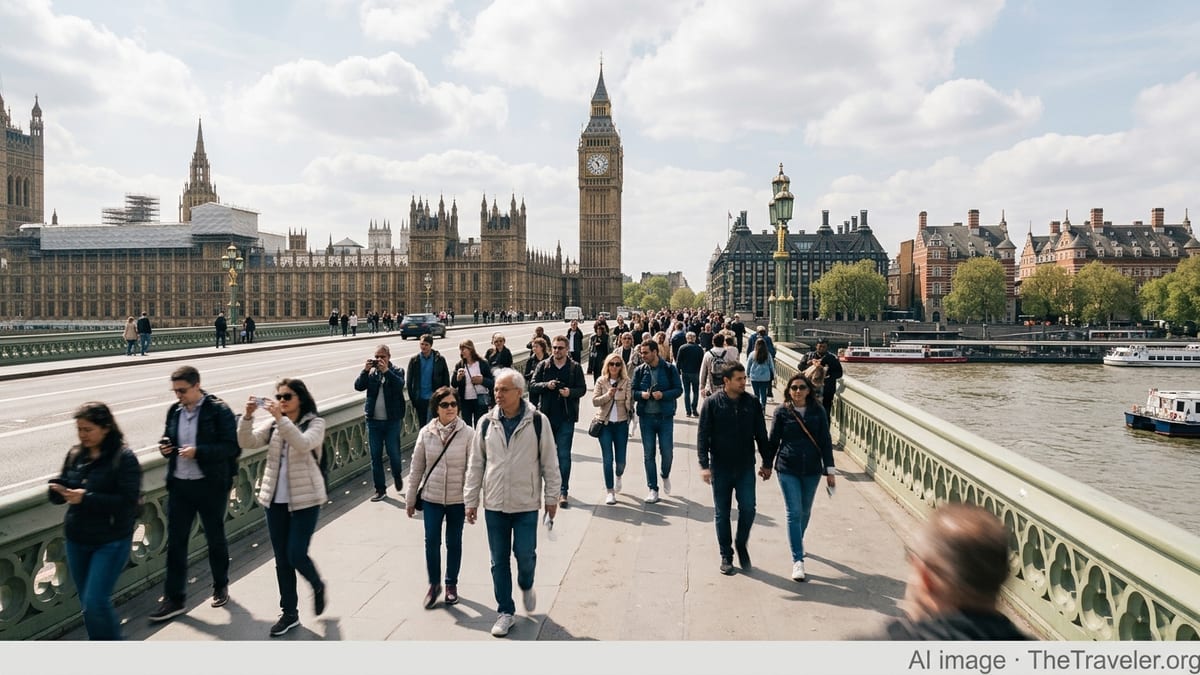
Record-Breaking Visitor Forecasts Signal a Landmark Year
Latest forecasts from VisitBritain indicate that the UK is on track to welcome about 45.5 million inbound visits in 2026, surpassing pre-pandemic peaks and setting a new benchmark for the country’s visitor economy. International visitors are projected to spend roughly £35.7 billion over the year, a figure that would cement tourism as one of the fastest-growing contributors to UK services exports.
Industry analysis highlights the sustained strength of long-haul markets, particularly the United States. Publicly available data from VisitBritain and partner research shows that US travellers alone are expected to account for close to one-fifth of all inbound visitor spending in 2026, reflecting the appeal of sterling exchange rates, extensive air connectivity, and the enduring draw of British culture.
The strong outlook follows a robust recovery through 2024 and 2025, when international travel demand rebounded faster than many analysts had expected. By late 2025, published figures showed visitor volumes closing in on, and in some segments overtaking, 2019 levels, giving operators confidence to ramp up capacity, staffing and product investment ahead of the 2026 peak season.
Domestic tourism is also expected to remain resilient, with industry reports pointing to continued demand for short breaks and “trip-stacking,” in which travellers combine UK city stays with excursions to smaller destinations. This combination of international and domestic activity is set to support hotels, attractions and hospitality businesses across the four nations.
New Digital Travel Rules Redraw the Entry Landscape
A significant backdrop to the 2026 tourism boom is the full enforcement of the UK’s Electronic Travel Authorisation scheme and the wider shift toward eVisas. From 25 February 2026, all visa-exempt visitors must obtain an ETA before boarding transport to the UK, according to recent government notices. Parallel Home Office updates show that physical vignettes and biometric residence cards are being phased out in favour of digital status documents linked to travellers’ passports.
Public information from the UK government and advisory firms indicates that the new regime is designed to tighten border security and streamline checks while still supporting high volumes of legitimate travel. The ETA application is completed online, covers visits of up to six months for tourism and business, and is intended to allow carriers and border systems to verify permission to travel in advance.
Sector observers acknowledge, however, that the transition is not without challenges. Tourism bodies in Northern Ireland and some inbound operators have raised concerns that additional paperwork and fees could deter spontaneous short trips, particularly cross-border excursions from the Republic of Ireland. Industry commentary also notes the risk of confusion among travellers unfamiliar with digital immigration systems, especially older visitors or group travellers.
Despite these concerns, travel trade briefings suggest that clear communication from airlines, tour operators and destination marketing organisations is helping visitors adapt. As awareness of the ETA requirement grows through 2025 and early 2026, many analysts expect the friction to ease, allowing the underlying demand for UK trips to reassert itself.
Marketing Push Targets Film Fans, Culture Lovers and First-Time Visitors
Alongside regulatory changes, an intensified wave of destination marketing is playing a central role in the UK’s optimistic 2026 tourism outlook. VisitBritain has launched a global screen tourism campaign built around a blockbuster-inspired film that showcases locations across England, Scotland, Wales and Northern Ireland. The first phase of this campaign, which rolled out in early 2025, is aimed at converting international audiences of British film and television into visitors.
According to publicly available campaign details, the initiative is being promoted in major source markets including the United States and Germany, with advertising and trade activity focused on regional gateways as well as London. Tailored familiarisation programmes have brought key international tour operators and travel agents to film-linked destinations, encouraging them to package lesser-known towns, landscapes and heritage sites alongside globally recognised icons such as London landmarks and the Scottish Highlands.
The screen-focused activity complements the long-running GREAT brand platform, which continues to position the UK as a destination for heritage, creativity and innovation. Updated creative assets highlight experiences such as contemporary food and drink, live music, green urban spaces and coastal routes, aiming to shift perceptions beyond traditional sightseeing itineraries.
Destination managers report that this wider storytelling is helping to lengthen stays and disperse visitors more evenly across the country. Cities such as Manchester, Glasgow, Cardiff and Belfast are benefiting from increased inclusion in multi-stop itineraries, while rural regions and smaller historic centres are seeing growing interest from high-spending international visitors.
Events, Culture and Regional Cities Poised to Capitalise
The UK’s packed 2026 cultural and events calendar is expected to add further momentum to inbound tourism. Major fixtures in the sporting, music and arts landscapes, including long-established events and new festivals, are drawing international attention and feeding into airline and tour operator schedules. Large-scale gatherings in cities such as London, Glasgow, Birmingham and Liverpool are forecast to stimulate demand for accommodation, dining and local transport across much of the year, not just in the peak summer months.
Museums and galleries are also entering 2026 on a strong footing. Industry coverage in early 2026 highlighted record-breaking visitor figures at flagship attractions in 2025, indicating that appetite for cultural experiences has returned in force. This trend is likely to reinforce the UK’s reputation as a leading destination for free-to-enter museums, world-class exhibitions and family-friendly learning experiences.
Regional and secondary cities are positioning themselves to share in the expected upswing. Investment in rail and air links, new hotel openings and refurbished conference facilities is expanding capacity outside the capital. Local tourism agencies are promoting themed trails around industrial heritage, maritime history, contemporary design and live music, encouraging visitors to explore beyond the most familiar landmarks.
Industry analysts suggest that this focus on dispersal could help alleviate pressure on heavily visited central areas while spreading tourism spending to communities that have historically seen fewer international guests. If the current momentum continues, 2026 could mark a step-change in how international visitors move around the UK, with more balanced flows between major hubs and emerging destinations.
Balancing Growth, Value and Visitor Experience
As projections for 2026 point to record volumes and spending, discussion within the tourism sector is increasingly focused on managing growth sustainably. Policy papers and think-tank reports highlight the need to balance headline visitor numbers with the quality of the experience, local community impacts and environmental considerations, particularly in popular rural and coastal areas.
Many UK destinations are responding by emphasising higher-value, lower-impact tourism models. This includes encouraging longer stays, promoting travel outside peak seasons, and investing in public transport, walking routes and cycling infrastructure to help visitors move around with a smaller environmental footprint. Some cities are exploring data-led crowd management tools and timed entry systems at landmarks to smooth demand and protect heritage assets.
At the same time, operators are under pressure to address workforce shortages and rising operating costs. Hospitality and transport businesses are using 2025 and early 2026 to step up recruitment, training and technology upgrades in anticipation of a busier-than-usual summer. Industry bodies stress that service quality and reliability will be crucial if the UK is to convert first-time visitors into repeat guests and sustain momentum beyond 2026.
With record forecasts, new digital travel systems and ambitious marketing efforts converging, the UK enters 2026 at a pivotal moment for its visitor economy. The coming months will test how effectively policy, industry and destinations can work within this new landscape to turn surging demand into long-term, broadly shared tourism growth.