

More news on this day
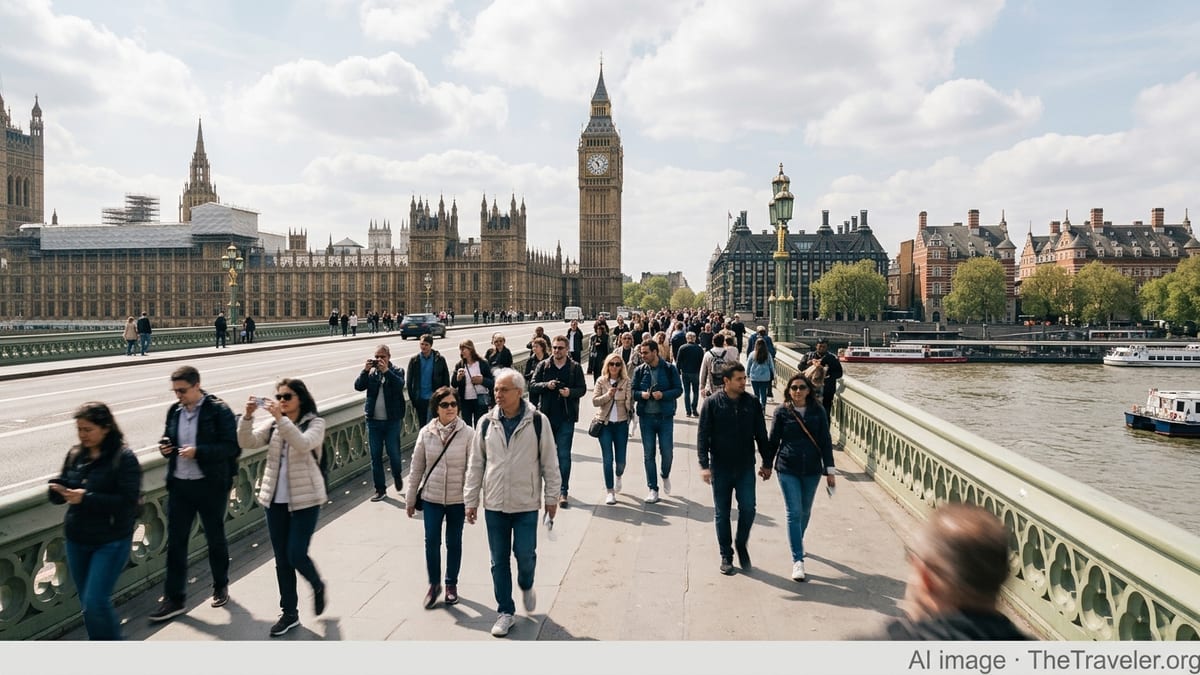
The United Kingdom is heading into 2026 with expectations of a tourism boom, as fresh forecasts, new border technology and expanded global marketing combine to push international visitor numbers and spending toward record highs.
Get the latest news straight to your inbox!
Record Visitor Forecasts Signal a New Peak
Recent data and forecasts from national tourism bodies indicate that the UK is on track to surpass its previous records for inbound travel in 2026. VisitBritain’s latest outlook for 2025 projects around 43.6 million inbound visits and more than £33 billion in spending, already exceeding pre‑pandemic levels in both volume and value. Analysts note that, if current growth trends from 2023 through 2025 continue, 2026 is likely to set a new high for both arrivals and visitor expenditure.
Quarterly statistics from the Office for National Statistics show inbound travel rebounding strongly through 2024 and into 2025, with overseas residents making more than 7 million visits to Great Britain in the first quarter of 2025 alone, spending an estimated £4.7 billion. Observers say this performance provides a higher base from which 2026 growth can accelerate, particularly as aviation capacity continues to recover and long‑haul markets fully reconnect with the UK.
Travel industry assessments also highlight the strength of demand from the United States, which has become the UK’s largest and highest‑spending inbound market. VisitBritain’s 2025 figures point to record spending by US visitors, suggesting that transatlantic demand will continue to underpin overall growth in 2026, even as other markets such as the Gulf states and parts of Asia contribute increasing volumes.
New Digital Border Systems Reshape the Travel Experience
A major change for visitors from 2026 will be the full enforcement of the UK’s Electronic Travel Authorisation, or ETA, which becomes mandatory on 25 February 2026 for many travellers from visa‑free countries. According to government information and industry briefings, citizens of around 85 nationalities, including the United States, Canada, Australia and EU member states, will need to secure a digital travel permit before boarding transport to the UK, with applications processed online and linked electronically to passports.
The ETA has been gradually introduced since 2023, but reports indicate that only from early 2026 will carriers be required to check that passengers have permission to travel before allowing them to board. Travel analysts describe the change as part of a broader shift to a fully digital border, in which traditional entry stamps are phased out and biometric information is captured ahead of or at the point of travel.
Alongside the ETA, the UK is rolling out digital visas and replacing physical visa vignettes and biometric residence permits with online e‑visas. Government strategy documents describe this as a way to streamline checks at the border, reduce fraud and make it easier for travellers to manage their status online. Industry commentary suggests that, once initial adjustment is complete, these systems could shorten processing times at airports and make repeat visits simpler, supporting tourism growth even as security controls tighten.
European Travel Rule Changes Help Redirect Demand
Changes elsewhere in Europe are also influencing expectations for UK tourism in 2026. The European Union’s new Entry/Exit System, which went live in late 2025 and is due to be fully operational at all Schengen borders by April 10, 2026, introduces biometric checks and automated records of entries and exits for non‑EU nationals. Reports from travel media and financial publications indicate that the new procedure may lengthen border queues during busy periods, particularly at land crossings such as the Port of Dover and Eurotunnel.
Later in 2026, the European Travel Information and Authorisation System, or ETIAS, is scheduled to begin for visa‑exempt visitors heading to the Schengen Area. According to European and UK government guidance, this will add another layer of pre‑travel formality for many long‑haul tourists planning multi‑country European trips. Some tour operators and analysts quoted in public coverage argue that, as paperwork for Schengen visits increases, a portion of travellers may choose to spend more time in the UK, which they perceive as a single, English‑speaking destination with familiar consumer protections.
Travel economics briefings note that Britain could benefit from what they describe as “regulatory substitution,” where changes to border rules on the continent lead visitors to reweight their itineraries toward the UK. The expectation is not that new EU systems will reduce European travel overall, but that they may nudge time‑pressed or first‑time visitors to select London, Edinburgh or other UK cities as simpler entry points for short breaks.
Marketing Campaigns Target High-Value Long-Haul Visitors
At the same time as border systems are being modernised, the UK is expanding its international marketing efforts to capture more high‑value tourists. VisitBritain’s recent annual reports describe a strong focus on markets such as the United States, the Gulf, India and China, positioning the UK as a year‑round destination for culture, sport, heritage and contemporary experiences. Campaigns highlight screen tourism linked to British film and television, major music and sporting events, and regional cities beyond London.
Industry and government reports indicate that the UK’s participation in the long‑running GREAT campaign continues to play a central role in promoting tourism abroad. The campaign has evolved from its original launch in 2012 to feature more digital storytelling, influencer partnerships and co‑marketing with airlines and online travel platforms. Tourism analysts say this sustained global visibility is critical as multiple European destinations compete aggressively for the same long‑haul visitors.
Emerging themes in UK marketing for 2026 include sustainability, local experiences and dispersal beyond traditional hotspots. Publicly available planning documents and trade presentations reference efforts to encourage visitors to explore coastal and rural areas, from the Scottish Highlands and the Lake District to Welsh national parks and the English South West. The aim is to spread the economic benefits of tourism while reducing pressure on crowded city centres during peak periods.
Economic Impact and Capacity Challenges Ahead
The anticipated surge in visitors brings significant economic implications. VisitBritain’s forecasts for 2025 already suggest that inbound tourism will generate more than £30 billion in spending, with 2026 expected to climb higher if exchange rates remain favourable and air connectivity continues to improve. Economists note that tourism is a key export sector for the UK, supporting hundreds of thousands of jobs across hospitality, transport, retail and culture.
However, the prospect of record‑breaking numbers also raises questions about capacity. Trade bodies and regional tourism agencies have highlighted ongoing staff shortages in hospitality and aviation, as well as infrastructure constraints at some airports and popular visitor sites. Public reports from tourism boards in Scotland, Wales, London and Northern Ireland point to investment needs in transport links, accommodation and visitor management to ensure that growth translates into a positive experience for both residents and tourists.
New policies on short‑term lets, visitor contributions and sustainable travel, currently under discussion or being piloted in various parts of the UK, are likely to shape how the sector manages this next phase of growth. Observers say that, if managed carefully, the combination of strong demand, digital border systems, and targeted marketing could usher in a new era in which the UK consolidates its position as one of the world’s most visited and most valuable tourism destinations in 2026.