

More news on this day
The United Kingdom’s visitor economy is moving into 2026 with record-breaking momentum, as rising arrivals, fresh government-backed strategies and renewed global marketing campaigns converge to push tourism to new highs.
Get the latest news straight to your inbox!
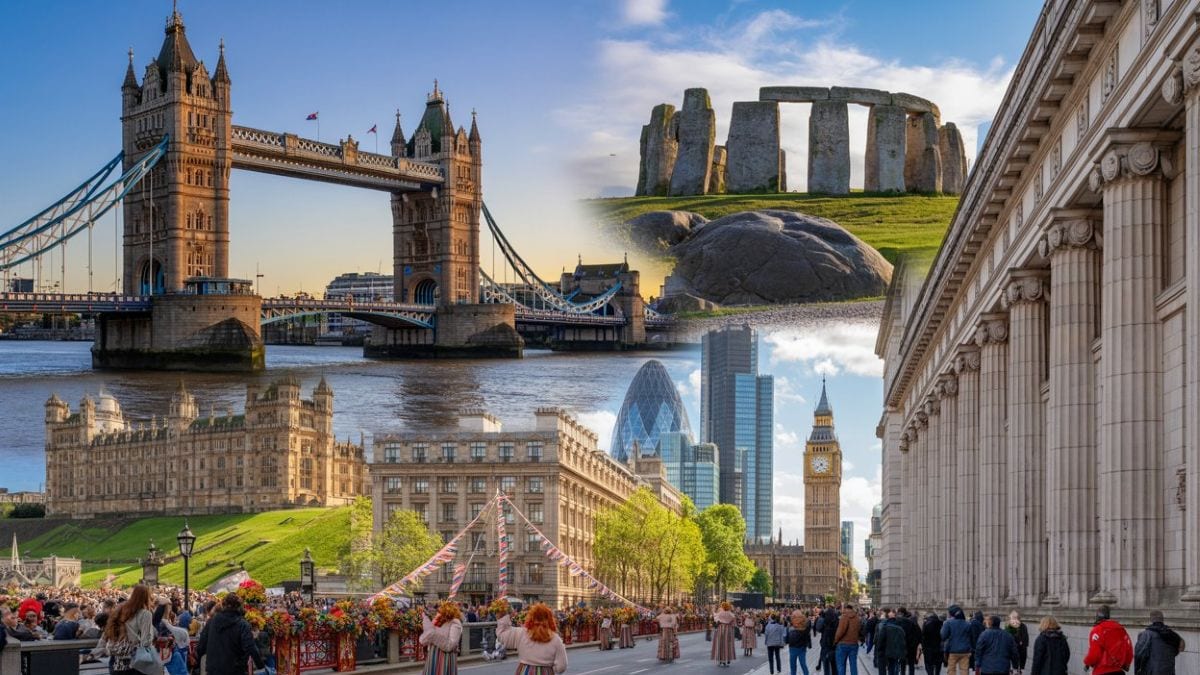
Image by Travel And Tour World
Record Visitor Momentum Heading Into 2026
Recent data indicates that inbound tourism to the UK has not only recovered from the pandemic shock but has moved beyond pre-2020 benchmarks, setting the stage for potential records in 2026. Official statistics compiled by the Office for National Statistics and summarised by VisitBritain show that overseas residents made about 42.5 to 42.6 million visits to the UK in 2024, with spending of roughly £32.5 billion, marking the first full year in which visits exceeded 2019 levels.
Parliamentary research published in early 2026 describes 2024 as the highest recorded year for both inbound and outbound tourism, underlining how quickly demand has returned compared with many competitor destinations. Forecasts released by VisitBritain around the turn of 2024 to 2025 project 43.4 million inbound visits in 2025 and spending of more than £33 billion, suggesting another all-time high before 2026 even begins.
Industry analysis from tourism consultancies points out that this multi-year run of record or near-record numbers provides a powerful base for 2026. While rising costs and inflation are eroding some of the real-terms value of visitor spending, headline figures for arrivals and nominal revenue continue to trend upward, giving operators and destinations confidence to invest in the coming seasons.
With global travel volumes also expanding, the UK is positioning itself to capture a larger share of international trips in 2026, particularly from long-haul markets such as the United States that already dominate inbound spending.
Government Strategies Target Higher Value Tourism
Policy measures introduced over the past few years are expected to have a growing impact on visitor numbers and spending in 2026. Tourism is highlighted across UK government strategies as a key economic driver, with a focus on boosting higher-value international tourism, extending stays beyond London and increasing visits to regional cities, rural areas and coastal destinations.
Recent government-backed programmes include Destination Development Partnerships and Local Visitor Economy Partnerships in England, which channel funding and coordination into priority regions. Public information from the Department for Culture, Media and Sport shows that these initiatives are designed to strengthen local tourism management, diversify products and connect cultural, heritage and nature-based sites into more coherent visitor itineraries.
In parallel, legacy investment from earlier schemes such as the Culture Recovery Fund and large-scale cultural programmes has helped stabilise museums, theatres, galleries and heritage attractions. Many of these organisations now report stronger forward bookings from overseas tour operators and are building new products around late openings, festivals and special exhibitions targeted at international markets in 2025 and 2026.
Infrastructure spending is also expected to support tourism growth. Upgrades to airports, rail lines and regional transport networks, some tied to broader economic development strategies rather than tourism-specific funding, are set to improve access to major gateways and secondary cities. Travel industry observers note that better connectivity typically converts into higher dispersal of visitors and encourages repeat trips.
Global Marketing Campaigns Amplify the UK Brand
VisitBritain and VisitEngland have intensified international marketing in the run-up to 2025 and 2026, with campaigns aimed at converting pent-up demand into firm bookings. The national tourism agency’s published material outlines a strategy centred on promoting Britain’s culture, countryside and cities under unified themes, while tailoring messages to key markets.
Recent promotional pushes have focused strongly on the United States, which is currently the UK’s largest and most valuable inbound market. Forecasts circulated by VisitBritain attribute close to one in every five pounds of inbound spending to US visitors, with further growth expected as airline capacity increases and the dollar remains relatively strong against the pound compared with earlier years.
Campaigns in Europe, the Gulf and selected Asia-Pacific markets are highlighting a mix of familiar icons and new experiences, including contemporary dining, music and creative districts alongside traditional royal and heritage attractions. Trade-facing activity, such as hosting international buyers on multi-day familiarisation trips across England, Scotland and Wales, is designed to get more UK products into tour operator catalogues for the 2025 and 2026 seasons.
Digital channels are playing a growing role. Publicly available information from tourism boards and industry reports points to heavy use of social platforms, influencer partnerships and video storytelling to reach younger travellers, encourage travel outside peak months and spread visits to less-known areas, all of which are priorities for managing record volumes sustainably.
Cultural Richness Remains the Core Draw
Underlying the projected records for 2026 is the enduring appeal of the UK’s cultural and heritage offer. London’s museums, theatres and historic sites continue to attract large numbers of international visitors, with recent data from the capital’s cultural sector showing strong attendance at West End productions and blockbuster exhibitions through 2024.
Beyond the capital, historic cities such as Edinburgh, Bath, York and Oxford remain central to most inbound itineraries, often combined with scenic areas like the Scottish Highlands, the Lake District and coastal regions of Wales and southwest England. Tourism research highlights that visitors drawn initially by headline attractions are increasingly adding smaller towns, food experiences and outdoor activities to their trips.
The creative industries also feed directly into tourism growth. Music festivals, film and television locations, literature trails and contemporary art events provide reasons to visit throughout the year. High-profile anniversaries and cultural seasons planned for 2025 and 2026 are being packaged into campaigns that encourage longer stays and repeat visits.
At the same time, the UK’s multicultural urban fabric is becoming a stronger part of the country’s tourism story. Neighbourhood food markets, diasporic festivals and community-led tours are promoted in destination marketing materials as authentic ways to experience modern Britain, complementing more traditional narratives centred on castles and stately homes.
Opportunities and Pressures in a Record Year
While projections for 2026 are upbeat, industry and parliamentary reports emphasise that record visitor numbers also bring challenges. Rising costs, staff shortages and changing consumer behaviour are putting pressure on margins, especially for small and medium-sized tourism businesses outside major hubs.
Environmental concerns are another factor shaping how growth is managed. Local authorities and destination organisations across the UK are increasingly talking about “responsible” or “sustainable” tourism, encouraging visitors to travel off-peak, stay longer and explore beyond the busiest hotspots. Measures under consideration or already in place in some areas include enhanced public transport options for tourist routes, visitor pledges and stronger data use to spread demand.
Currency movements and global economic conditions could still affect the outlook for 2026. A weaker pound tends to make the UK more attractive and can accelerate spending from overseas markets, while a stronger pound or slowdown in key economies may moderate growth. Industry forecasts for 2026 therefore highlight a range of scenarios, but most converge on the expectation that volumes will at least match, and are likely to surpass, the records anticipated for 2025.
For travellers, the combination of intensified marketing, robust cultural programming and expanding air and rail capacity suggests that 2026 will offer more choice than ever across the UK’s nations and regions. For the visitor economy, the task will be turning that expected visitor surge into sustainable, widely shared benefits at what could be the highest point yet for UK tourism.