

More news on this day
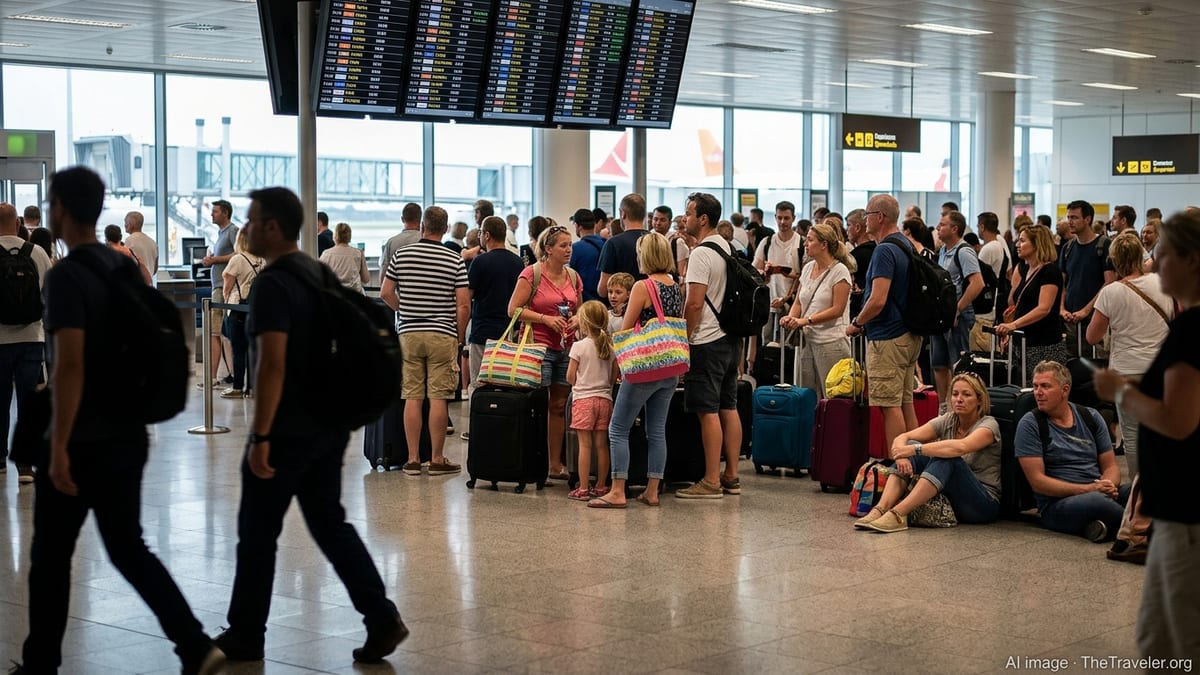
UK holidaymakers heading for summer sun in Spain, France and Italy are being urged to brace for significant disruption at airports, as a combination of strikes, new border checks, staffing gaps and volatile weather patterns raises the risk of long queues, delays and last-minute cancellations across key European travel hubs.
Get the latest news straight to your inbox!
Why UK Travellers Are Being Warned Now
Recent seasons have shown how quickly disruption can ripple through Europe’s aviation network. Industrial action by air traffic control staff in France, nationwide strike days in Italy and operational walkouts at Spanish airports have repeatedly forced airlines to trim schedules, reroute services and cancel hundreds of flights at short notice. Publicly available information from transport agencies and airline statements indicates that similar pressures are expected to coincide with peak travel dates through 2025 and into 2026, particularly during school holidays.
At the same time, European airports are still balancing high demand with staffing levels that remain tighter than before the pandemic. Travel industry briefings highlight that recovery in passenger numbers has outpaced hiring in some ground handling, security and border control teams, leaving limited resilience when problems occur. When strikes or severe weather hit, airports in tourist gateways such as Barcelona, Palma de Mallorca, Malaga, Nice, Rome and Milan can quickly become congested for hours.
Weather has been another growing factor. Strong windstorms and seasonal heatwaves in recent years have triggered widespread delays and diversions in Western Europe, impacting major hubs in France, northern Spain and northern Italy. Aviation analysts note that more frequent extreme weather events are likely to continue straining already busy holiday corridors used heavily by UK visitors.
For British travellers, the concentration of budget and leisure routes into a relatively small number of Mediterranean airports means disruption in just a few locations can have an outsized effect. When aircraft and crew are stranded or rotated away from problem spots, knock-on delays can be felt back at London Gatwick, Manchester, Birmingham and other UK departure points for days.
New EU Border Checks and What They Mean for Queues
Alongside strikes and staffing constraints, UK tourists face a step-change at immigration with the introduction of the European Union’s new Entry/Exit System. The scheme, which is being phased in across the Schengen area, will require most non-EU travellers, including Britons, to undergo biometric checks such as fingerprinting and facial imaging on first entry. Industry groups have repeatedly warned that capturing this data could significantly lengthen processing times, especially at airports serving large volumes of UK passengers.
Pilot testing in parts of the EU has already shown that new procedures may slow down border crossings where infrastructure is limited or where staffing has not yet been expanded. Trade bodies representing airports have cautioned that, if the system is not carefully managed, bottlenecks could develop at busy terminals during school holidays, Bank Holiday weekends and major events. Concerns are particularly acute for smaller or seasonal Mediterranean airports that see sharp peaks in UK-based charter and low-cost flights.
Spanish authorities have reported running trials at airports and seaports, indicating that implementation so far has not triggered widespread problems. However, UK-focused travel commentators stress that the real test will come when full biometric checks coincide with the height of summer traffic. In Italy and France, local media coverage has highlighted airport and airline calls for extra resources and clearer protocols to keep queues moving once the system is fully live.
For British families used to relatively swift e-gate crossings before Brexit, the new regime will feel markedly different. Travellers may be asked to remove hats or glasses for facial scans and place fingers on scanners, with each family member over a certain age processed individually. Even small delays per person can scale up into long waiting times when several full flights arrive simultaneously.
Hotspots: Spain, France and Italy Under Pressure
Spain remains the single most popular destination for UK holidaymakers, and that popularity is a major reason it is so exposed to disruption. Airlines schedule dense waves of flights into coastal airports such as Alicante, Malaga, Palma and Ibiza, often with quick aircraft turnarounds. If ground handling is slowed by strikes, staff shortages or border queues, schedules can unravel quickly and depart late back to the UK. Spanish tourism regions have also experienced large-scale anti-tourism protests, increasing scrutiny of visitor numbers and infrastructure strain.
In France, air traffic control walkouts have a particularly wide impact because a large portion of UK–Mediterranean routes passes through French airspace. When controllers strike, aircraft are often forced to reroute or reduce frequency, creating delays even for flights that do not land in France at all. On days of industrial action, disruption can radiate out to services between Britain and Spain or Italy, as airlines juggle limited airspace capacity with high seasonal demand.
Italy has seen repeated nationwide strike calls affecting aviation workers, from ground handling to security and public transport links serving airports. Notices published by travel risk agencies show that walkouts are sometimes scheduled with only limited warning, catching visitors unaware. Major tourism gateways including Rome Fiumicino, Milan Malpensa and Venice often bear the brunt, with queues forming at check-in, security and baggage reclaim during stoppages.
Together, these three countries form the core of many UK travellers’ summer plans. When disruptions hit all three in close succession, it can become difficult to find alternative routings or spare seats, especially for budget-conscious families. That interconnected risk is a key reason industry bodies and travel insurers are flagging the potential for what some commentators describe as “nightmare” airport conditions during peak periods.
Practical Steps to Avoid Travel Mayhem
Specialist travel advisories emphasise that while widespread disruption is possible, many of the worst impacts can be mitigated with careful planning. One of the most important steps is to build extra time into every stage of the journey. Passengers are being encouraged to arrive earlier than usual at both UK and EU airports, particularly when travelling with checked baggage or young children who may move through queues more slowly.
Checking for strike notices and operational alerts in advance is another essential tactic. Information on planned industrial action in Spain, France and Italy is often posted days or weeks before it takes place, allowing time to adjust flight times or dates where flexible tickets permit. Some airlines offer the option to move bookings free of charge around high-risk days, especially when route-wide disruption is expected.
Experts also recommend travelling with carry-on luggage only whenever feasible. Avoiding checked bags reduces the risk of being separated from belongings if connections are missed or flights are retimed. It can also shorten time spent queuing at departure and on arrival. Where checked baggage is unavoidable, clearly labelling all items and packing medications, chargers and a change of clothes in cabin bags can soften the impact of delays.
Finally, understanding passenger rights before departure can help travellers make swift decisions if something goes wrong. Public guidance from consumer groups explains when airlines must provide meals, hotel accommodation or rerouting in the event of cancellations or long delays. Having travel insurance details, airline apps and key booking references easily accessible on a phone or printed copy can speed up rebooking when time is critical.
How to Choose Flights and Airports More Wisely
Route choice can make a significant difference to the likelihood of a trip being disrupted. Aviation analysts suggest that travellers prioritise early-morning departures wherever possible, as the first wave of flights in the day is less likely to be affected by earlier knock-on delays. Services scheduled for late afternoon and evening are more vulnerable to cumulative disruption, especially on busy Mediterranean corridors.
When options allow, selecting larger and better-resourced airports in Spain, France and Italy can also improve resilience. Major hubs often have more border control booths, larger security areas and greater capacity to absorb sudden changes than very small regional fields. For example, choosing Barcelona rather than a small nearby coastal airport, or flying into Rome Fiumicino instead of a secondary Italian airport, may provide more flexibility if schedules begin to slip.
Direct flights are generally less risky than itineraries requiring changes in another European city. Each connection adds another potential point of failure, particularly when new border controls and security checks are involved at intermediate hubs. UK visitors heading to Mediterranean resorts are therefore being encouraged, where budget permits, to favour nonstop services over complex multi-leg journeys, even if this means travelling slightly further by road at the destination.
Travel planners also advise keeping a close eye on weather forecasts in the week before departure, especially during seasons associated with strong storms or extreme heat. Adjusting plans by a day or two ahead of a major weather system can sometimes avoid the worst of the disruption. Remaining flexible about exact departure times, and allowing a buffer at the start and end of holidays, can turn potential “airport chaos” into a more manageable inconvenience.