

More news on this day
Rising geopolitical tensions linked to the Iran war, including a recent drone strike on a British military base in Cyprus, are prompting UK holidaymakers to reconsider summer trips to Turkey, Cyprus and, to a lesser extent, Greece as travel providers and analysts warn of mounting security and disruption risks across the eastern Mediterranean.
Get the latest news straight to your inbox!
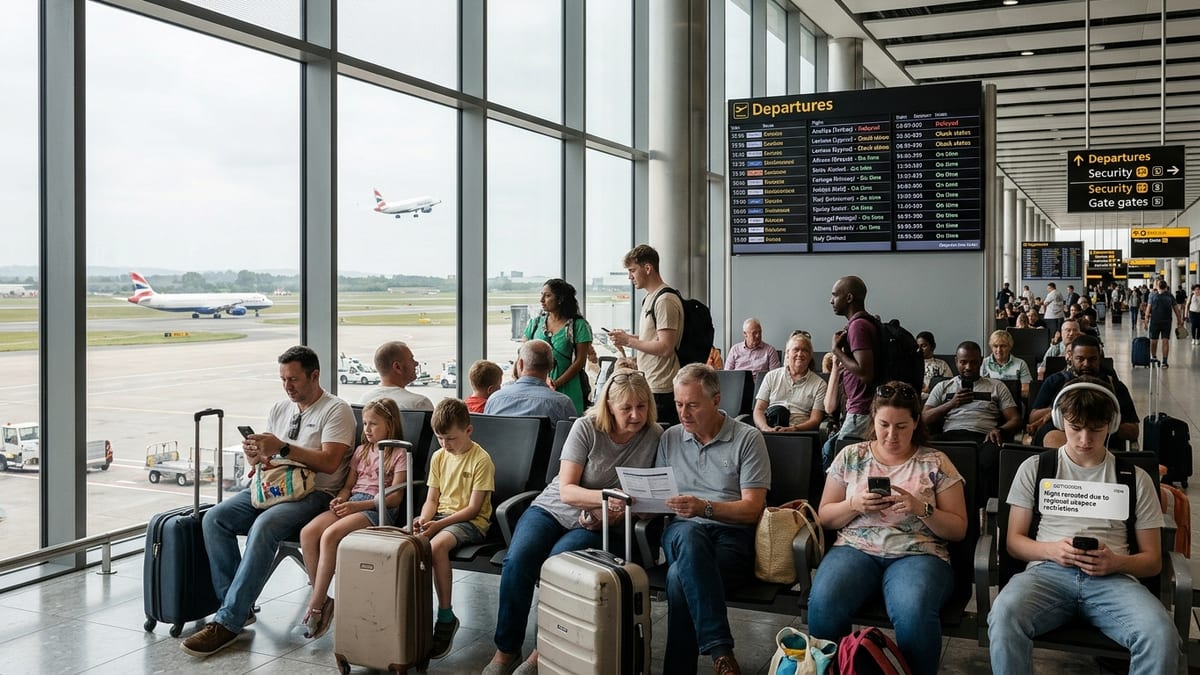
Updated UK guidance heightens focus on regional risk
UK Foreign, Commonwealth & Development Office (FCDO) travel advice for Turkey, Cyprus and Greece has been revised in March 2026 to reflect the impact of the Iran war and wider instability in the eastern Mediterranean. While core assessments of crime and everyday safety in popular resorts have not changed dramatically, the updated language places greater emphasis on the potential for spillover incidents, disruption to air routes and protests linked to the conflict.
For Turkey, publicly available UK guidance highlights the long-standing risk of terrorism and political tensions, but now also refers more explicitly to the regional conflict and the possibility of sudden changes in the security environment. The advice underlines that demonstrations can occur at short notice in major cities and urges travellers to stay alert to developments that could affect airports, airspace and border crossings.
In Cyprus, the presence of two British sovereign base areas and their role in operations connected to the Iran war have become central to the perception of risk. UK guidance notes that Cyprus remains a functioning holiday destination, yet acknowledges heightened regional tensions and advises travellers to keep monitoring updates, particularly with regard to air travel disruption and any security incidents near military facilities.
Greece continues to be described as generally safe and stable for visitors, with the FCDO maintaining no formal restrictions on travel to the mainland or islands. However, recent updates still reference the wider regional picture, advising travellers to be aware of potential knock-on effects from the conflict, including changes to flight paths, temporary closures of airspace further east and isolated protests in urban centres.
Drone strike on RAF Akrotiri jolts confidence in Cyprus
Concerns about Cyprus escalated sharply after Iranian-made drones struck facilities at RAF Akrotiri, the British base on the island’s southern coast, in the early hours of 2 March 2026. According to international media coverage and open-source reporting, the attack formed part of Tehran’s response to airstrikes carried out by Israel and the United States on Iranian territory at the end of February.
The strike, which targeted military infrastructure rather than civilian areas, was contained within the base perimeter, but it pushed Cyprus into the centre of the security debate around the Iran war. Analysts note that the island’s proximity to the Middle East, its use as a staging ground for Western operations and its role as an evacuation hub for foreign nationals have all increased its strategic profile and, with it, perceived exposure to future incidents.
Local tourism bodies have responded with reassurance campaigns aimed at European markets, stressing that resorts, beaches and historic sites remain open and that everyday life continues largely as normal in most of the Republic of Cyprus. At the same time, they acknowledge that international headlines about drones, air raids and military deployments are influencing sentiment among travellers who may not distinguish between sovereign bases and civilian areas.
Industry commentary indicates that UK bookings for Cyprus have slowed in March, with some tour operators reporting cancellations or deferrals as families re-evaluate summer plans. Travel trade reports suggest that while package holidays are still operating, many customers are asking about refund options and flexibility in case the security situation deteriorates or further attacks affect air operations.
Turkey tourism hit by cancellations and image concerns
Turkey, which had been counting on strong British demand after several record seasons, is feeling the impact of the regional crisis through a wave of cancellations and slower new bookings. Travel and tourism outlets monitoring UK behaviour report that travellers are increasingly opting for alternatives perceived as less exposed to the Iran conflict, particularly Spain, Portugal, Italy and parts of the western Mediterranean.
Travel trade analysis published in mid-March points to a marked uptick in UK holidaymakers postponing or redirecting trips that would have involved transiting near affected airspace or flying deeper into the eastern Mediterranean. Destinations such as Antalya, Bodrum and Dalaman, long-time favourites for British package holidays, remain open and operational, but are now competing with destinations viewed as more distant from the conflict zone.
Turkey’s domestic political dynamics and historic security challenges also weigh on perceptions. Risk maps and insurance assessments produced in early 2026 continue to classify parts of the country, particularly in the southeast, as higher risk due to terrorism and instability. Although these areas are far from the main coastal resorts frequented by UK tourists, the aggregate effect is to place Turkey higher on many travellers’ risk radar just as the Iran war pushes regional security issues back into headlines.
Tourism officials and operators in Turkey are reportedly adjusting marketing strategies, highlighting value, cultural attractions and improvements in safety measures, while also emphasising flexible booking policies. However, until there is greater clarity on the trajectory of the conflict and on airspace restrictions cross-cutting the eastern Mediterranean, market data suggests that many British families will delay decisions or look elsewhere for 2026 summer breaks.
Greece walks a fine line between reassurance and realism
Greece occupies a more nuanced position in this shifting landscape. Travel industry data cited by specialist outlets in March shows that demand for Greek holidays has not collapsed, but has entered what analysts describe as a wait-and-see phase. Bookings for summer 2026 remain solid overall, yet the pace of new reservations has slowed compared with earlier expectations.
Some reports indicate that Greece has even benefited marginally from travellers switching away from destinations closer to the core conflict zone, with islands in the Ionian and central Aegean absorbing demand diverted from parts of the eastern Mediterranean. At the same time, operators report that customers are asking more detailed questions about flight routes, proximity to military bases and contingency plans in the event of further escalation.
Greek tourism officials have been keen to underscore the country’s membership of the European Union and NATO, its reputation for political stability and its robust infrastructure for managing high visitor volumes. Public statements and domestic campaigns focus on portraying Greece as a dependable choice in an uncertain region, while acknowledging that airlines may need to reroute flights or adjust schedules in response to airspace closures further east.
Analysts note that Greece’s challenge is to balance reassurance with realism. While the country is not on the front line of the Iran war, its geographical position at the edge of the eastern Mediterranean means that knock-on effects, such as changes to maritime traffic, refugee flows or military deployments, cannot be completely ruled out. That reality is prompting some UK travellers to hedge their bets by choosing western Greek destinations or keeping bookings flexible.
UK travellers weigh safety, rights and alternatives
For British tourists considering Turkey, Cyprus or Greece this summer, the emerging picture is one of heightened uncertainty rather than outright closure. Flights are still operating to all three countries and many resorts remain busy with early-season visitors, yet the combination of a live regional conflict, a recent drone attack on a UK base and evolving government travel advice is reshaping risk calculations.
Consumer guidance produced by travel firms and legal experts in recent weeks stresses that UK holidaymakers retain strong protections if official advice changes or flights are cancelled. Package travellers are generally entitled to refunds when FCDO guidance shifts to advising against travel, and European air passenger regulations continue to apply to cancellations or significant schedule changes, regardless of the underlying cause.
Industry analysts suggest that two trends are likely to define UK behaviour in the coming months: more cautious destination selection and a stronger emphasis on flexibility. Many travellers are expected to book later, favour destinations perceived as less exposed to the Iran war and prioritise fully refundable options or packages that allow date or destination changes at low cost.
As of late March 2026, the consensus among risk specialists is that Turkey and Cyprus face more direct perception challenges than Greece, due largely to their proximity to military operations and recent security incidents. However, the situation remains fluid. UK tourists weighing a holiday in the eastern Mediterranean are being encouraged by travel commentators to monitor official advice closely, scrutinise cancellation terms and consider whether their personal risk tolerance aligns with the evolving realities on the ground.