

More news on this day
The United Kingdom is entering 2026 with a significantly tougher and more data-driven approach to border control, as fee increases for the Electronic Travel Authorisation system and wider regulatory adjustments begin to reshape the cost and complexity of visiting one of the world’s most popular tourism markets.
Get the latest news straight to your inbox!
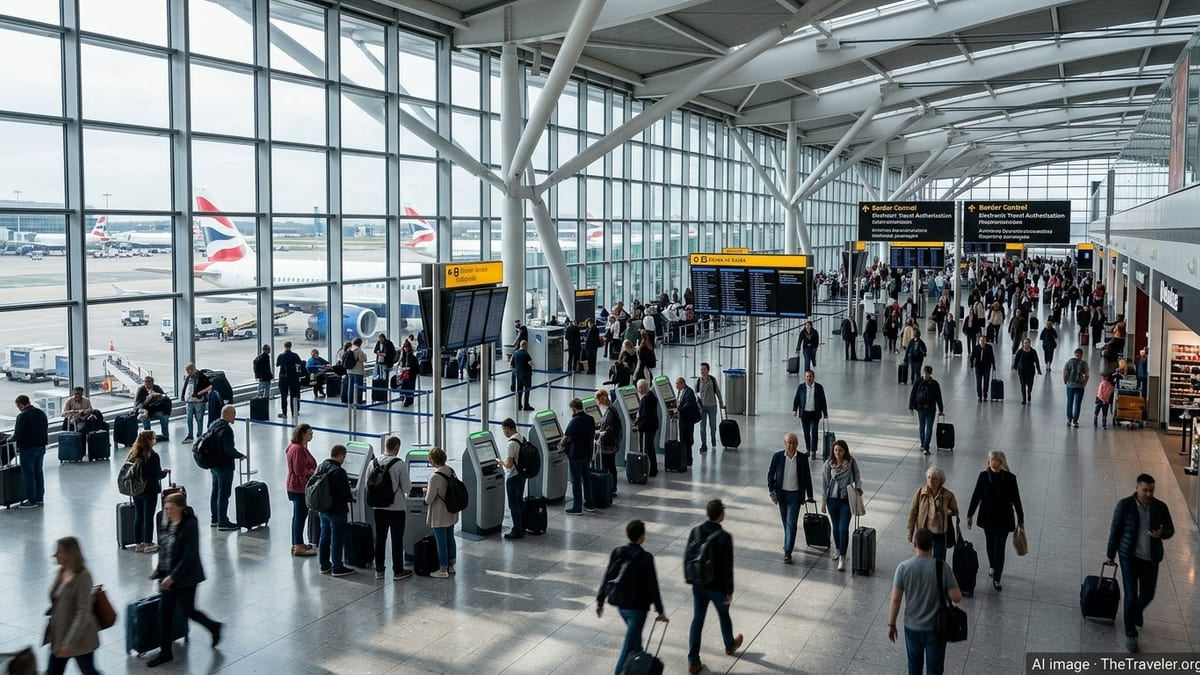
Electronic Travel Authorisation Becomes Universal in 2026
The UK’s Electronic Travel Authorisation, or ETA, moves from phased rollout to a universal requirement for most visa-exempt visitors in 2026. Public information indicates that from late February 2026, travellers from more than 80 visa-waiver countries, including the United States, Canada and most of Europe, will need digital approval in advance of boarding transport to the UK or transiting through its airports.
According to recent Home Office updates, the ETA functions as a pre-travel security and immigration screening tool, aligning the UK with similar systems such as the US ESTA and the forthcoming European ETIAS. The permission is electronically linked to a traveller’s passport and is normally valid for multiple short stays within a fixed period, currently two years or until passport expiry, whichever comes first.
As the system becomes fully operational, border agencies are shifting more checks from arrival halls to airlines and rail operators. Industry analyses suggest this reduces last-minute refusals at the border but places more responsibility on carriers and travellers to ensure documentation is correct before departure.
Travel advisers report that awareness of the new rules remains uneven, particularly among infrequent leisure travellers and those booking low-cost flights independently. Missed ETAs can result in denied boarding, adding a new layer of risk to what had previously been visa-free short-term travel.
ETA Fee Increases Add to the Cost of Visiting Britain
On top of the new requirement itself, the cost of securing an ETA has risen sharply. UK government costings and legal instruments published since 2024 show that the original 10 pound fee was increased to 16 pounds in April 2025, a 60 percent rise framed as part of a broader Home Office revenue strategy. Recent government communications and travel-industry coverage indicate that a further increase to 20 pounds per application will take effect in 2026, coinciding with the full extension of the scheme to all eligible nationalities.
Impact assessments released alongside the fee regulations state that additional income from ETA charges is intended to support investment in digital borders, biometric systems and immigration enforcement. They also acknowledge some risk that higher charges may marginally deter short-stay and price-sensitive visitors, particularly those on repeat trips or travelling as families.
Compared with similar programs globally, the UK’s updated ETA charge sits below the US ESTA, which was raised to 40 dollars in 2025, but above the 7 euro fee currently planned for the EU’s ETIAS system when it launches in the second half of 2026. Analysts note that the cumulative cost of pre-travel authorisations, visas and ancillary fees across multiple destinations is becoming a more significant factor for long-haul travellers planning multi-country itineraries.
Early feedback from tour operators and city tourism bodies suggests that while the ETA fee remains a small fraction of overall trip spending, it contributes to a perception of rising friction and “nickel-and-diming” at borders. In a competitive global tourism market, that perception can be as important as the absolute cost.
Wider UK Visa and Border Fee Adjustments Shape 2026 Travel
The ETA fee increases sit alongside a broader series of UK immigration and visa price changes that continue to roll through 2025 and 2026. Legal and consultancy briefings describe across-the-board rises to visitor, work and study visa fees from April 2025, with the standard six-month visitor visa moving from 115 to 127 pounds and some long-term visit options and work categories seeing increases of up to roughly a quarter compared with early-2020s levels.
These financial shifts follow a wider policy agenda set out in government white papers and Home Office impact assessments that emphasise cost recovery and the principle that users of the immigration system should bear more of its expense. The immigration health surcharge, which is separate from short-stay tourism but relevant for longer visits and mobility programs, has also increased in stages since 2018, adding to the overall price of relocating or undertaking extended study in the UK.
At the same time, digital transformation continues behind the scenes. Policy notes describe the gradual replacement of physical visa vignettes with electronic visas and the integration of ETA data into carrier systems and automated border gates. This shift promises faster processing for compliant travellers but depends on smooth technology rollouts and clear communication across the travel ecosystem.
For 2026, industry commentators are watching how these regulatory and fee changes interact with other local measures, such as the introduction of a visitor levy in Scottish cities from July 2026, which will add per-night charges on certain accommodation, and ongoing debates about regional tourism taxes in England and Wales. Together, these layers are redefining the baseline cost of a UK stay.
Measuring the Impact on Global Tourism Flows
Quantifying the precise impact of ETA fees and related visa price increases on tourism demand is challenging, but early signals are emerging from government statistics and travel-industry reporting. Recent immigration data show a softening in some categories of visa applications, including students and certain work routes, following earlier rule changes. While these shifts are driven by multiple factors, higher costs and stricter eligibility thresholds are regularly cited in sector analyses.
For short-term leisure travel, the situation is more nuanced. Economic modelling used in Home Office impact assessments concludes that the incremental cost of an ETA or modest visa fee rise is unlikely, on its own, to deter most long-haul visitors whose total trip budgets run into the hundreds or thousands of pounds. However, sensitivity analysis in the same documents points to a greater effect on travellers from lower-income markets, as well as on marginal trips such as weekend breaks or repeat visits.
Global context also matters. Several major destinations, including the United States, Japan, Australia and parts of the European Union, have recently announced or implemented their own visa and authorisation fee increases. Trade associations and tourism economists warn that as more countries raise border fees at the same time, the cumulative burden may push some travellers to shorten trips, skip secondary destinations or reduce discretionary spending once they arrive.
In this environment, the UK’s competitive position depends not only on headline charges but on how predictable, transparent and user-friendly its systems feel to visitors. Reports from travel agents and online forums indicate that confusion about who needs an ETA, how to apply and how long approval lasts remains a friction point that could influence destination choice, particularly when compared with straightforward, low-cost alternatives.
What Travellers and the Industry Are Doing to Adapt
Airlines, rail operators and travel companies are spending early 2026 refining their communication around UK entry requirements. Booking platforms increasingly surface ETA reminders during checkout for routes into Britain, and some carriers have built eligibility checks into mobile apps to reduce the risk of last-minute denials at the gate.
Travel planners are advising customers to treat the ETA similarly to a mandatory pre-flight formality, on a par with passport validity checks, rather than an optional extra. Because the authorisation typically covers multiple trips over its validity period, frequent visitors can dilute the per-journey cost, making the increase less significant over time.
On the destination side, British tourism boards and city marketing organisations are emphasising value and experience to offset the perception of higher entry costs. Campaigns highlight free museums, competitive hotel pricing outside peak season and strong exchange-rate conditions for some source markets, framing the UK as offering robust overall value despite new administrative fees.
Policy debates are likely to continue through 2026 as government departments monitor revenue, border performance and visitor numbers against projections. Travel and tourism groups are expected to keep pressing for clear communication, reasonable processing times and safeguards against future increases that could tip the balance for cost-conscious travellers choosing between the UK and rival destinations.