

More news on this day
Escalating conflict and sweeping airspace closures across the Middle East are triggering a fresh wave of cancellations from UK holidaymakers to Turkey, Egypt and Cyprus, as travelers rapidly redirect their spring and summer getaways toward safer, more convenient and familiar destinations across mainland Europe.
Get the latest news straight to your inbox!
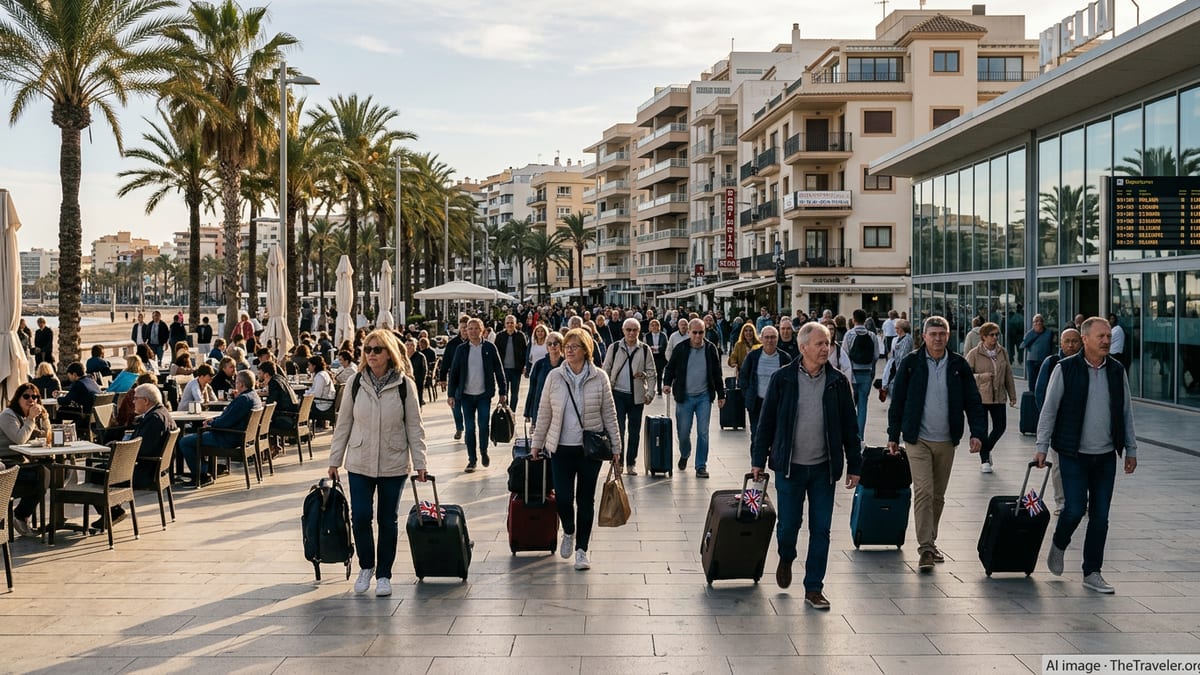
Middle East War Triggers New Wave of Cancellations
The war involving Iran, the United States and Israel that erupted on 28 February 2026 has upended air travel across the Middle East, shutting or severely restricting key transit hubs and forcing widespread flight cancellations. Published coverage from major international news agencies describes hundreds of thousands of travelers stranded after countries including Iran, Iraq, Kuwait, Bahrain, Israel and Qatar closed their airspace, while the United Arab Emirates imposed a temporary partial closure that effectively halted operations at major hubs in Dubai and Abu Dhabi.
Those hubs are central to long-haul itineraries used by UK travelers heading to destinations from the Indian Ocean to Southeast Asia. With routes suddenly severed or diverted, airlines have cancelled or rerouted flights at short notice, sending disruption ripples into nearby leisure markets such as Egypt’s Red Sea resorts and Turkey’s Mediterranean coast, which rely heavily on connecting traffic and regional stability.
Travel analysis reports indicate that as air corridors narrowed and detours pushed up flying times and fuel costs, carriers prioritized core European networks and trimmed capacity to the eastern Mediterranean and Middle Eastern leisure zones. For UK package operators facing mounting uncertainty around schedules, security and insurance, scaling back exposure to these regions has become a defensive move ahead of the busy Easter and early summer season.
Security perceptions are compounding the aviation chaos. Specialist risk advisories issued in early March highlight elevated concerns around potential attacks on Western-linked targets and critical infrastructure across the wider region, including the eastern Mediterranean. That backdrop has sharpened the sense among many UK travelers that it is simpler, and safer, to stay within Europe for 2026 holidays.
Turkey, Egypt and Cyprus Hit as Guidance Tightens
Turkey, Egypt and Cyprus, long among the most popular medium-haul sun destinations for British tourists, have been pulled into the turbulence despite being outside the core conflict zone. Updated UK travel guidance issued in early March for all three countries warns of heightened regional tensions, the risk of spillover incidents and potential disruption to air travel, prompting many travelers and tour companies to reassess near-term plans.
Industry-facing briefings describe a rapid “surge of cancellations” affecting bookings from the UK to Turkey’s southern coast, Egypt’s Red Sea resorts and Cyprus, particularly for departures in March, April and May. Operators report that customers who booked months ago are now either bringing forward cancellation decisions or seeking to transfer deposits to European alternatives, citing worries about rapidly changing advisories and indirect exposure to the Iran war.
Cyprus occupies a particularly sensitive position. Recent analysis of the security situation notes that the island’s proximity to regional flashpoints and the presence of UK military bases have pushed it closer to the geopolitical spotlight than in previous Middle East flare‑ups. While tourism bodies on the island have previously stressed that resort areas remain calm, the latest round of tensions, airspace disruptions and nearby military activity is testing traveler confidence.
In Egypt, tourism centers such as Sharm el‑Sheikh and Hurghada are feeling the impact of their association with broader Middle East travel. Sector commentary suggests that even where local conditions remain stable, the combined effect of war headlines, changing guidance and lost connectivity through Gulf hubs is weighing on new bookings from the UK, especially for families and older travelers seeking uncomplicated journeys.
UK Holidaymakers Flock Back to Mainland Europe
As the Middle East becomes harder to reach and appears riskier in the eyes of many consumers, traditional European favorites are experiencing a sharp upswing in UK demand. Regional travel press reports a notable surge in bookings for Spanish holidays in early March, particularly for Easter and early summer dates, as British travelers pivot to the Costa del Sol, the Balearic Islands and the Canary Islands.
Low‑cost carriers are emerging as early winners from this shift. Airline statements and booking data cited in European media indicate strong double‑digit increases in demand on routes from UK airports to Spain, Portugal and Italy since the start of March, just as tensions around Iran and regional airspace closures intensified. Several carriers are understood to be adding capacity or upgauging aircraft on these routes to capture redirected demand.
Broader research on European travel trends released over the past year points to a pre‑existing inclination among Europeans, including Britons, to stay within the continent due to geopolitical uncertainty elsewhere. The latest Middle East war appears to have accelerated that pattern, reinforcing the appeal of destinations where travelers perceive robust infrastructure, predictable regulations and reliable consular support.
Tourism economists note that Europe’s combination of short‑haul flight times, extensive low‑cost networks and high familiarity among UK travelers makes it a natural beneficiary when long‑haul and near‑east options are disrupted. Cities such as Barcelona, Lisbon and Rome, alongside resort regions in southern Spain, Portugal’s Algarve and the Greek islands, are already registering stronger search and booking interest for the spring and early summer months.
Safety, Convenience and Cost Now Drive Booking Decisions
Behind the geographic reshuffle is a clearer reprioritization of safety, convenience and controllable costs in UK travel decisions. Interviews and survey data cited in recent financial and travel industry coverage show that British consumers increasingly weigh geopolitical risk, route complexity and potential for disruption alongside traditional factors such as price and climate when choosing destinations.
With large parts of Middle Eastern airspace periodically closing and re‑opening, itineraries that depend on multiple connections or overflights now look fragile. By contrast, point‑to‑point flights from UK regional airports to European holiday hubs offer simpler contingency planning, shorter travel times and lower exposure to sudden reroutings. Insurers and travel agents are highlighting this difference when advising anxious customers seeking to rebook away from Turkey, Egypt or Cyprus.
Currency stability is another quiet but important factor. Analysts quoted in recent European travel reports note that the relatively steady pound‑euro rate makes budgeting for European breaks more predictable than for holidays priced in dollars or pegged currencies. In a season when conflict‑related fuel costs may push up airfares unpredictably on longer routes, many UK travelers perceive European options as both safer and easier to price.
The result is a feedback loop: as more travelers shift toward European destinations perceived as lower risk, airlines and tour operators respond by reallocating capacity, marketing budgets and last‑minute deals to Spain, Portugal, Italy and Greece. That, in turn, reinforces consumer awareness of Europe as the default “safe choice” for 2026’s main holiday periods.
Industry Braces for a Rebalanced 2026 Summer Season
For tourism markets in Turkey, Egypt and Cyprus, the timing of the conflict could hardly be worse. The period from late winter through early summer is when UK travelers traditionally lock in peak‑season packages, giving hotels, airlines and local suppliers the revenue visibility needed to plan staffing and investment. The current wave of cancellations and deferrals is creating a more volatile outlook, with operators warning of possible last‑minute discounting if confidence fails to recover.
Destination strategists quoted in specialist travel industry outlets argue that the ultimate impact on these markets will depend heavily on how long airspace closures and heightened security alerts persist. If tensions ease and reliable flight schedules return by early summer, some of the diverted demand could flow back, particularly among repeat visitors with strong attachments to specific resorts. If not, 2026 may mark a decisive shift toward a more Europe‑centric holiday mix for UK travelers.
In the meantime, European destinations are preparing for a busier‑than‑expected season. Tourism boards in Spain, Portugal and Italy have already been emphasizing safety, accessibility and value in their messaging, while also responding to concerns about overcrowding and extreme weather after last summer’s heatwaves and wildfires. Balancing this renewed demand with sustainable visitor management is emerging as a key policy challenge.
What is clear is that the latest Middle East crisis has again demonstrated how quickly geopolitical shocks can reorder global tourism flows. For UK travelers, the calculus in March 2026 is increasingly straightforward: when long‑haul gateways close and nearby regions feel unstable, Europe’s familiar beaches and cities become not just the default option, but the destination of choice.