

More news on this day
The UK Foreign, Commonwealth and Development Office has updated its travel advice for Turkey in response to escalating conflict in the wider Middle East, prompting fresh questions from British holidaymakers with spring and summer trips booked.
What Has Changed in the Foreign Office Advice
The latest UK guidance keeps Turkey open for travel but stresses a higher level of vigilance, particularly in major cities and areas close to the Syrian and Iranian borders. Turkey remains a popular destination for British tourists, and the core advice continues to be that most visits are trouble free, yet the security language has been sharpened to reflect the regional instability linked to the ongoing Iran and Middle East crisis.
Officials highlight that there is an increased risk of indirect impacts from the conflict, including potential disruption to regional airspace and the possibility of protests or demonstrations in Turkish cities. While the overall terrorism threat level and the broad structure of the advice have not fundamentally changed, the Foreign Office has added more explicit references to monitoring local and international news, avoiding security installations and reviewing travel plans regularly.
The guidance also underscores that travel advice can change at short notice. Travellers are being urged to check the Turkey page of the Foreign Office travel advice immediately before departure and to sign up for email alerts so they receive updates if the situation or wording changes again in the coming days and weeks.
Security Landscape Inside Turkey
Within Turkey itself, the UK government continues to distinguish between mainstream coastal resorts and higher‑risk border regions. Tourist centres such as Antalya, Bodrum, Dalaman and the Turquoise Coast are not currently subject to specific restrictions, and flights and holiday operations continue to run largely as normal. Hotels and local authorities in these areas are used to operating with heightened security measures and are maintaining visible checks at entrances and around key tourist zones.
By contrast, the advice remains more cautious for parts of southeastern Turkey near the Syrian and Iraqi borders, where the UK has long warned against all or all but essential travel because of terrorism and conflict spillover risks. In the context of the latest Middle East tensions, the Foreign Office reiterates that travellers should not venture into areas that already carried strong warnings, and that they should be prepared for additional checkpoints, security operations or temporary local restrictions if they are anywhere near sensitive locations.
Visitors to Istanbul, Ankara and other major cities are advised to stay away from any demonstrations or large political gatherings, which can form quickly in response to developments in the region. Even when protests appear peaceful, they can become confrontational without warning. The guidance stresses the importance of following instructions from local authorities, carrying identification and keeping accommodation details and emergency numbers easily accessible.
Flight Disruption and Airspace Concerns
Airlines serving Turkey have so far maintained the bulk of their schedules, but the knock‑on effects of military activity and tensions across the Middle East are being felt in regional airspace. Some carriers have diverted or cancelled flights to destinations closer to the conflict zone, and routings for services between the UK and Turkey may be altered at short notice to avoid affected corridors, potentially increasing flight times.
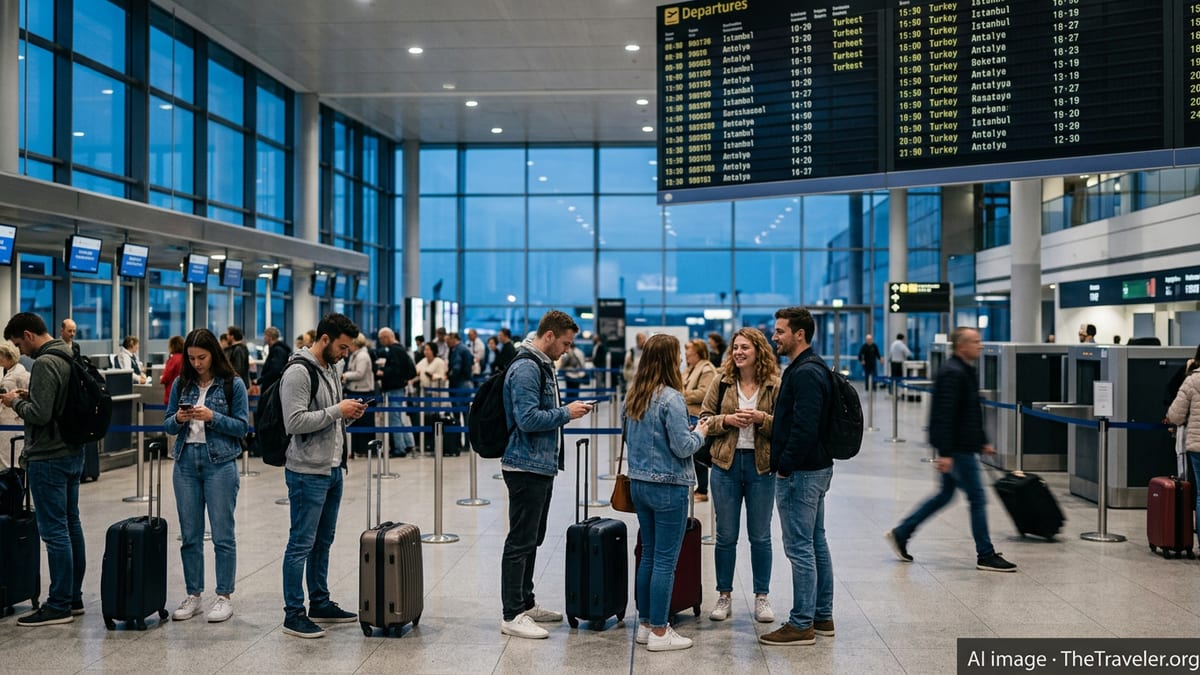
For British travellers, the main message from both the government and airlines is to expect some uncertainty and to build flexibility into plans. Passengers are being told to keep a close eye on airline apps and departure boards, to reconfirm flights 24 hours before travel and to allow extra time at the airport in case of enhanced security checks. Package holiday customers should check their operator’s travel alerts, as companies are required to review itineraries if official advice changes.
While there is currently no blanket warning against air travel to Turkey, officials caution that a significant escalation in regional hostilities or a direct incident affecting Turkish airspace could trigger rapid changes. Travellers are urged to keep essential items and medications in their hand luggage in case of diversions, and to ensure that their travel insurance would cover extra accommodation or rebooking costs if they are delayed abroad.
Practical Steps UK Travellers Should Take Now
The Foreign Office is placing renewed emphasis on preparation and contingency planning for anyone travelling to Turkey in the coming weeks. British nationals are advised to register their contact details with their airline or tour operator, make sure someone at home has a copy of their itinerary, and keep digital copies of passports and key documents stored securely online. Checking passport validity and entry rules before departure is particularly important at a time when consular services across the region may be stretched.
Holidaymakers are also encouraged to review their travel insurance policies carefully. Comprehensive cover that includes disruption related to security incidents, route changes and government advice updates is now regarded as essential rather than optional. Travellers should retain receipts and records if they incur extra expenses due to delays, as insurers may require detailed evidence when assessing claims linked to geopolitical events.
Once in Turkey, basic precautions can significantly reduce risk. These include staying away from military sites and diplomatic missions, avoiding high‑profile political locations, and being discreet when discussing regional politics in public. Tourists should pay attention to hotel briefings on local security, know the location of the nearest medical facilities and keep mobile phones charged with roaming or local data so they can receive alerts quickly.
Looking Ahead for Spring and Summer Holidays
With the Easter getaway approaching and summer bookings already strong, the updated advice is likely to prompt many British travellers to weigh their appetite for risk against the enduring appeal of Turkey’s coastlines and cities. Industry analysts say cancellations to Turkey remain limited so far, with most visitors choosing to proceed while keeping a closer watch on developments than they might have done in previous years.
Tour operators and airlines are actively scenario‑planning, with contingency arrangements for rerouting aircraft, consolidating flights or adjusting itineraries if the security picture deteriorates. Some companies are offering flexible change policies for customers who are nervous about travelling close to the region at this time, while also stressing that they must follow official UK guidance when deciding whether to operate or cancel trips.
For now, the Foreign Office’s message to those heading to Turkey is one of cautious continuity. The country remains open to British tourists, but the margin for complacency has narrowed. Those who invest a little more time in preparation, stay informed throughout their trip and remain willing to adapt plans if necessary are likely to be best placed to enjoy their holiday while navigating an increasingly unpredictable regional backdrop.