

More news on this day
The United Kingdom’s drive to sharply reduce legal migration is now rippling through global travel, education and labour markets, with new Home Office data showing a 19% fall in sponsored study visas and steep declines across several major source countries, including the United States, China, South Africa, France, Ghana, Zimbabwe and Bangladesh.
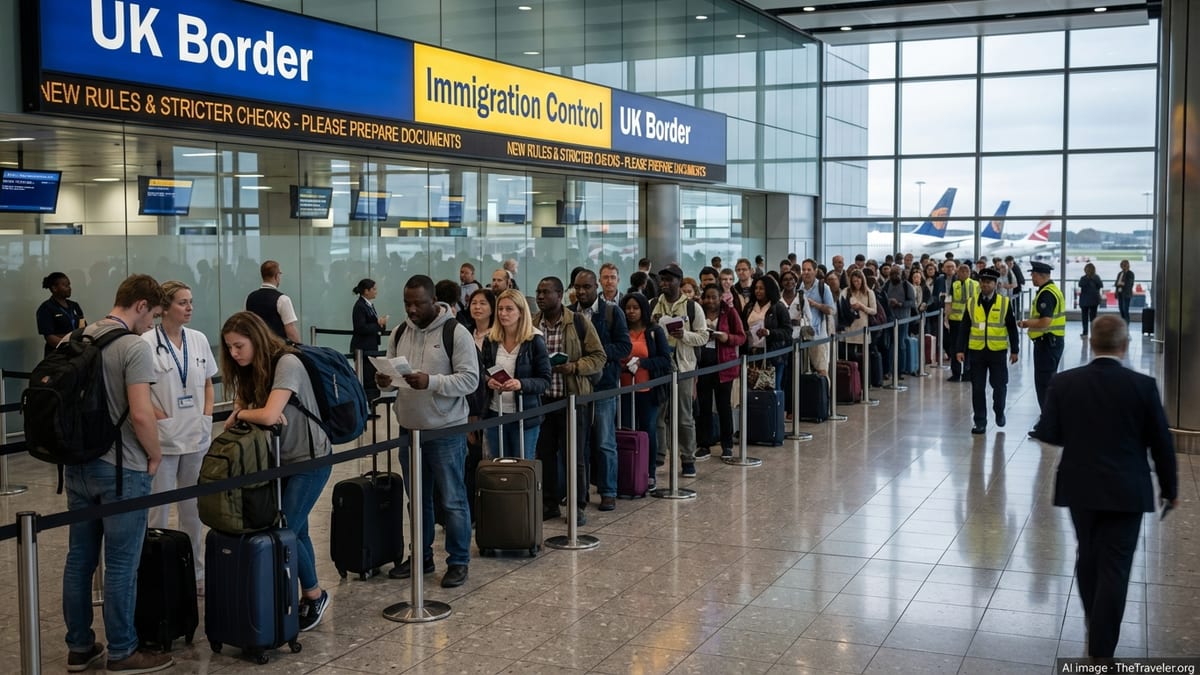
Sharp Visa Decline Tied To Stricter Immigration Rules
The latest immigration system statistics for the year ending September 2024 confirm that the UK granted just under 393,000 sponsored study visas, 19% fewer than in the previous 12‑month period. The fall follows a rapid tightening of visa and dependant rules that began in early 2024 and has since been expanded to work, family and graduate routes.
Alongside the headline decline, officials and analysts say the composition of arrivals is shifting. While overall numbers remain higher than before the pandemic, growth has stalled and, in several categories, has gone sharply into reverse. Early internal assessments published in 2025 suggest that the new framework will cut hundreds of thousands from projected net migration in the second half of the decade.
For travellers and would‑be migrants, the statistical drop translates into fewer approvals for key nationalities that traditionally drive tourism, higher education enrolment and long‑term settlement in the UK. That includes markets as diverse as the United States, China, South Africa, Ghana, Zimbabwe, Bangladesh and other countries across Africa and Asia that have powered university internationalisation and filled persistent skills gaps.
Who Is Being Hit: From US Students To African Health Workers
While the Home Office has not yet released a full country‑by‑country breakdown for all 2025 decisions, earlier evaluations of the Skilled Worker route underscore how exposed some regions are to cuts. Zimbabwe, Ghana and Nigeria together accounted for a large share of health and care visas under the previous regime, making recent restrictions on dependants and higher salary thresholds especially significant for those communities.
Education agents report that US and Chinese applicants, traditionally seen as relatively resilient segments, are also reassessing the UK in light of tougher post‑study options and higher proof‑of‑funds requirements. Competing destinations such as Canada, Australia and several European Union states have simultaneously increased recruitment efforts, promoting more flexible work rights alongside study.
For travellers from South Africa, France and other frequent visitor markets, the squeeze is more subtle but still real. Tougher scrutiny on visitor applications, closer checks on intent to work and higher rejection rates for short‑term stays have combined with a perception that the UK is becoming a more difficult and less welcoming destination.
Policy Changes Driving The 19% Drop
The most dramatic shift has been in the student and dependant space. From January 2024, most international students lost the automatic right to bring family members unless enrolled on research programmes. By September of that year, dependant visas for students had plunged by more than 80% compared with the same period in 2023, heavily contributing to the overall fall in grants.
On the work side, the minimum salary for a Skilled Worker visa jumped from £26,200 to £38,700 in 2024 and 2025 stages, with a shorter, more selective Immigration Salary List replacing the broader Shortage Occupation List. Social care workers, previously a fast‑growing route, were barred from bringing dependants, while additional regulatory conditions were placed on sponsoring employers.
Family migration has also tightened. The minimum income required for a British citizen or settled resident to sponsor a partner rose from £18,600 to £29,000 in April 2024 and, despite calls from the Migration Advisory Committee to moderate that level, the current government has opted to keep it in place for now. Advocacy groups say the combination of higher thresholds and processing delays is effectively pricing out lower and middle‑income households.
Economic And Tourism Fallout For The UK
Business leaders, universities and local tourism bodies warn that the cumulative effect of these measures is starting to show on high streets, campuses and in critical sectors such as health, care and construction. An official impact assessment released in mid‑2025 projected that tighter work and study rules could cost the UK public finances up to £10.8 billion over five years in lost tax receipts and visa fee income.
Universities, many of which relied on international tuition to offset frozen domestic fees, report softening demand from key markets and mounting financial strain. Some institutions have already announced hiring freezes and course closures, particularly in postgraduate taught programmes that previously attracted large cohorts from China, India, Nigeria and Bangladesh.
The travel and hospitality industries are also bracing for weaker growth from long‑haul markets. Fewer students and workers arriving from abroad typically means fewer visiting friends and relatives, a segment that has underpinned hotel occupancy and regional air routes in cities from Manchester to Glasgow. Airline and airport executives have begun lobbying for a more nuanced approach that protects tourism even as net migration is reduced.
Global Ripples As Other Countries React
The UK’s retrenchment comes as several other major destinations revisit their own immigration and visa settings. The United States has expanded security‑driven suspensions and partial suspensions of visa issuance to some African and Middle Eastern countries, while maintaining tight vetting for many others. In Asia, states such as China and Bangladesh are juggling outbound travel demand with domestic labour concerns and changing geopolitical priorities.
A number of African governments, including South Africa, Ghana and Zimbabwe, are closely tracking the shift in UK policy given the scale of their diasporas and remittance flows. Officials and analysts say reduced access to UK work and study visas may redirect talent to alternative destinations, or accelerate efforts to build regional education and employment hubs on the continent.
For now, global mobility experts describe a fragmented landscape in which countries that once competed to attract international students and skilled workers are increasingly imposing caps, income floors and nationality‑specific restrictions. Travellers, students and employers from the US, China, Africa and South Asia are left to navigate a more complex and unpredictable visa environment, with the UK’s 19% drop in study visas a stark marker of how swiftly policy can reshape the map of international movement.