

More news on this day
Bahrain has emerged among the latest countries swept into unprecedented travel disruption, as widening Iran, United States and Israel strikes trigger airspace shutdowns, mass flight cancellations and a sharply worded new advisory from the United Kingdom covering routes across the Middle East and beyond.
Get the latest news straight to your inbox!
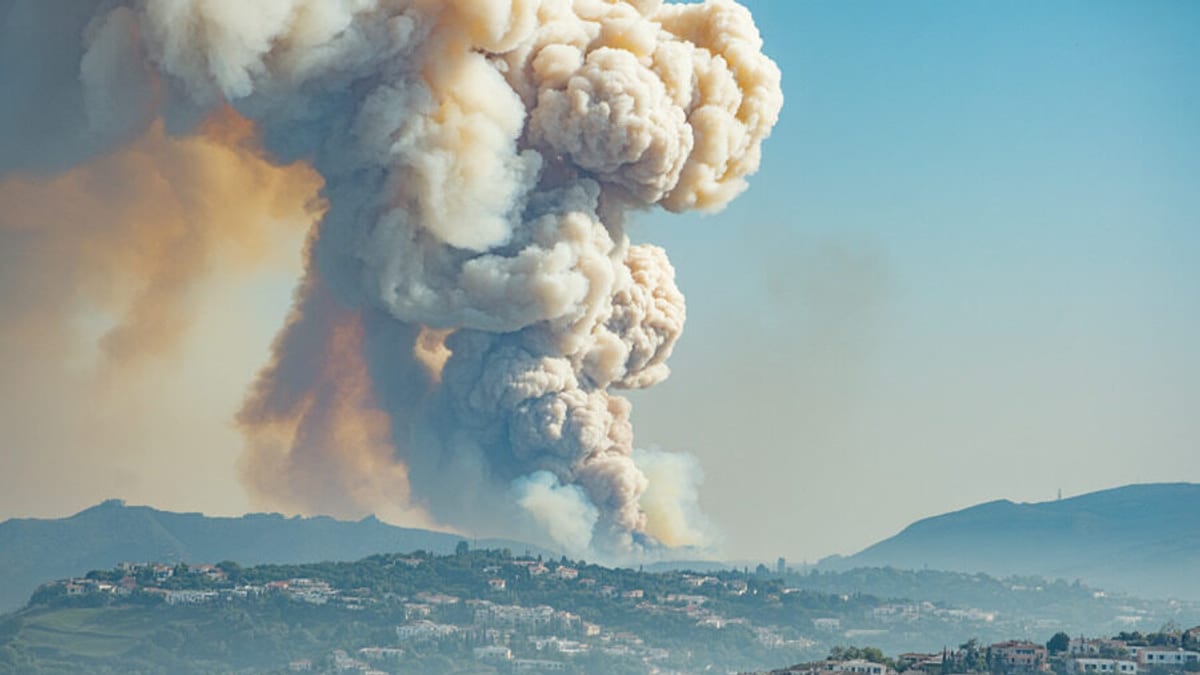
Image by Global Travel Alerts, Advisories, International Travel Alerts
Rapidly Growing Map of Closures and Restrictions
Publicly available flight-tracking data and regional media coverage show that Bahrain has joined Iran, Israel, Qatar, Kuwait, Iraq, Syria and the United Arab Emirates in imposing sweeping airspace closures or severe restrictions since late February, following coordinated United States and Israeli strikes on Iranian targets. These measures have forced thousands of diversions and cancellations across key corridors that connect Europe, Asia and Africa.
Reports from regional outlets and international wire services indicate that partial or complete shutdowns are also affecting Saudi Arabia, Jordan, Oman, Lebanon, Egypt and Yemen at varying times of day, while some countries have opted for night-time suspensions or altitude limitations rather than blanket bans. India, Turkey and Azerbaijan have not fully closed their skies but have faced extensive rerouting, longer flight times and schedule thinning as airlines seek to avoid high-risk airspace.
Coverage from travel and aviation analysts describes the situation as one of the most complex airspace crises since the early months of the Russia Ukraine conflict, with more than thirty countries now impacted in some form. This includes states directly involved in the confrontation, such as Iran and Israel, as well as transit hubs and overflight states whose skies are essential to long-haul connectivity between Europe and Asia.
For passengers, the result is a patchwork of restrictions that change on short notice. Airlines have been extending temporary suspensions on routes to Bahrain, the UAE, Saudi Arabia, Jordan and Israel, while simultaneously adding capacity via safer corridors through Egypt, the eastern Mediterranean and Central Asia. Many carriers are offering fee waivers or free rebooking windows, but availability on alternative routings remains tight.
UK Issues Harsh Advisory as Threat Assessments Shift
According to publicly accessible travel advice updates and media briefings, the United Kingdom has hardened its language on travel to a wide arc of countries affected by the conflict, ranging from Iran and Israel to Gulf states such as Bahrain and Qatar, as well as Jordan, Saudi Arabia and the UAE. The guidance highlights an elevated risk of missile and drone activity, potential strikes on infrastructure hosting United States or allied assets, and the possibility of sudden further airspace closures.
The advisory urges British nationals already in the region to maintain flexible travel plans, stay in close contact with airlines and tour operators, and be prepared for extended stays if exit routes close or evacuation flights are prioritised for the most affected locations. It also notes that transit passengers who previously relied on quick connections via Gulf hubs may now face significant delays, forced stopovers or last-minute re-routing through alternative gateways such as Cairo, Athens or Istanbul.
Security commentators cited in UK and European media state that the advisory reflects not only direct kinetic risks, but also the cumulative impact of layered restrictions from multiple states. Even where a specific country, such as India or Turkey, remains open to commercial aviation, closures in neighbouring airspace and shifting military flight corridors can complicate planning and increase exposure for overflying traffic.
For travel businesses based in the UK, the tougher guidance may trigger further cancellations of package tours, religious pilgrimages and cruise extensions that rely on Gulf and Levant ports. Insurers are also reassessing war-risk and political-violence cover, with some travel policies now explicitly excluding disruption linked to the Iran conflict unless additional premiums are paid.
Bahrain’s Strategic Role and Knock-On Effects for the Gulf
Bahrain, home to critical energy infrastructure and a major United States naval facility, has become an especially sensitive point in the evolving aviation map. Shipping and security advisories reviewed by regional media describe an environment of heightened alert around Gulf ports and offshore installations, which is feeding into cautious decisions on airspace management and commercial flight operations.
Reports indicate that Bahrain’s airspace restrictions, combined with closures in nearby Qatar and partial suspensions in the UAE and Saudi Arabia, have narrowed the traditional web of Gulf transit options. Airlines that previously relied on short hops between Manama, Dubai, Doha and Riyadh are now operating reduced skeleton schedules, diverting flights through Dammam and other secondary airports when possible.
This reconfiguration is creating uneven impacts within the Gulf. Airports outside the immediate closure zones are seeing surges in transit passengers and crew layovers, straining hotel capacity and ground-handling services. At the same time, carriers based in Bahrain and neighbouring states are grappling with route profitability as longer detours raise fuel burn and crew costs, while fare caps and consumer protection rules in home markets limit their ability to pass on the increases.
Aviation analysts quoted in trade publications suggest that if the current pattern of restrictions persists for several more weeks, Gulf carriers may be forced into larger schedule overhauls for the summer season, affecting not only regional traffic but also long-haul services linking the UK, continental Europe, India, Southeast Asia and Australia.
India, Turkey, Azerbaijan and Europe’s New Detour Network
Although India, Turkey and Azerbaijan have not imposed full closures, publicly available aviation data and government notices show that all three are experiencing substantial knock-on disruption. Indian carriers have temporarily suspended or reduced services to the UAE, Saudi Arabia, Qatar and Israel, while rerouting Europe-bound flights via longer northern or southern tracks to avoid hot zones in Iranian, Iraqi and Syrian airspace.
Turkey, traditionally a key bridge between Europe and the Middle East, is facing a dual challenge. On one hand, its airports and land borders have become transit points for people leaving conflict-affected countries; on the other, Turkish Airlines and other carriers must navigate a shifting mosaic of no-fly areas and military zones to maintain links with the Gulf, the Caucasus and Central Asia. Azerbaijani airspace has gained importance as one of several alternative corridors for flights that would normally cross northern Iran.
European and UK airlines, including those based in Germany, France and the Netherlands, are similarly reworking their timetables. Many have extended suspensions of direct services to destinations such as Bahrain, Kuwait, Amman and Riyadh, while reinforcing routes to Cairo, Athens and other airports that sit on newly preferred detour paths. Industry coverage describes a “ladder” of stepped routings, where passengers who once flew nonstop now connect via multiple intermediate hubs.
These changes are adding several hours to typical flight times between European cities and major Indian destinations like Delhi and Mumbai, particularly for services that previously flew over the Gulf and western Iran. The additional distance is feeding into higher operating costs at a time when global jet fuel prices are already elevated, setting the stage for further fare increases if the conflict continues.
Stranded Travellers, Evacuations and the Uncertain Outlook
News reports from across the region describe scenes of anxious travellers stranded at airports from Dubai to Amman as rolling closures took effect in early March. Some governments have organised special evacuation flights using military and charter aircraft to move citizens out of the highest-risk zones, while commercial airlines have struggled to clear mounting backlogs once partial reopenings allowed limited departures.
In Bahrain and neighbouring Gulf states, social media posts and local coverage highlight residents and expatriate workers facing repeated rebookings, overnight stays in terminals and difficulties securing refunds or alternative routes. Many travellers are opting to route through Europe, Egypt or South Asia to bypass traditional Gulf hubs, even when that means longer and more expensive journeys.
Travel industry analysts caution that uncertainty remains high. While there have been brief lulls in missile and drone activity, subsequent strikes on energy facilities, airports and military installations in the wider region have quickly reversed any sense of stabilisation. Airspace notices continue to be updated with little warning, and some carriers are drawing up contingency plans that assume months of elevated risk rather than a rapid return to pre-crisis patterns.
For now, passengers originating in the UK, India, Europe or North America are being advised through public information channels to check flight status frequently, maintain flexible itineraries and avoid non-essential travel to countries at the centre of the Iran, US and Israel confrontation. With Bahrain and more than thirty other nations now affected by restrictions and closures, the Middle East’s role as a seamless crossroads for global aviation has entered one of its most uncertain chapters in recent memory.