

More news on this day
The UK Foreign Office has urged British nationals to exercise extreme caution in the United Arab Emirates, as escalating tensions between Iran and the UAE, including missile and drone attacks on key cities and critical infrastructure, raise serious safety and travel concerns for Dubai and Abu Dhabi.
Get the latest news straight to your inbox!
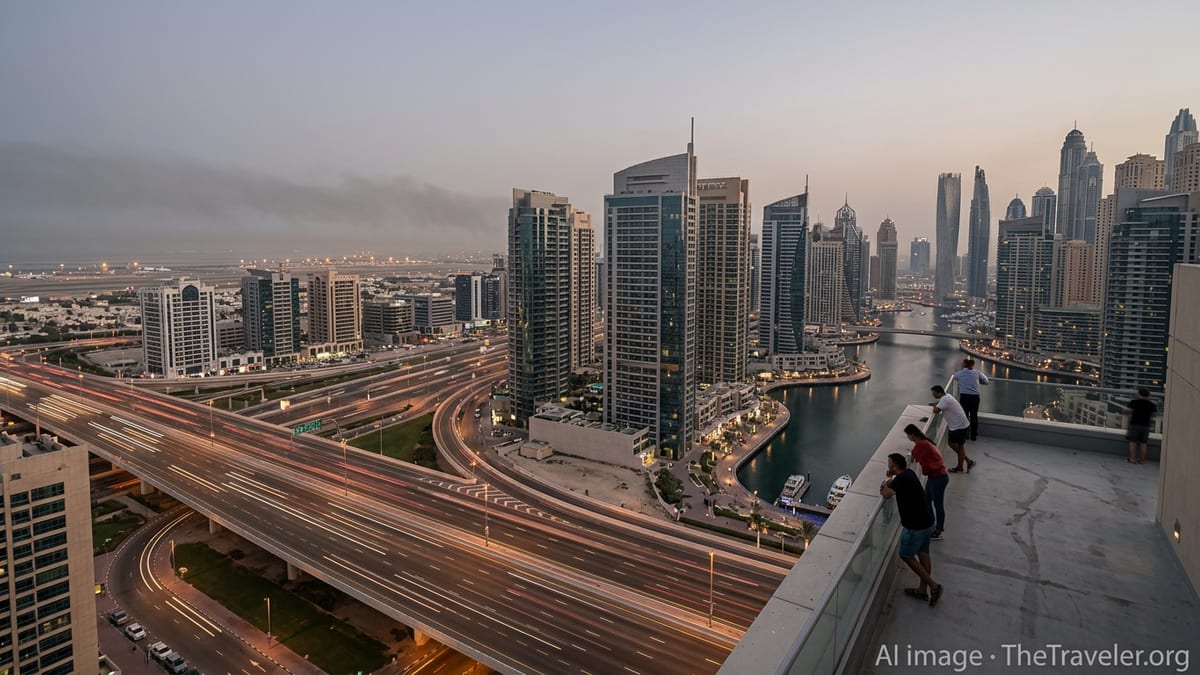
Heightened UK Travel Advice Amid Regional Escalation
According to publicly available government travel advice updated in recent days, the UK Foreign Office now warns against all but essential travel to much of the United Arab Emirates, citing the risk of further attacks linked to the widening conflict between Iran, Israel and the United States. The guidance highlights that Iranian forces have already targeted locations in the UAE with ballistic missiles and armed drones, and that additional strikes remain possible with little or no warning.
The latest advisory stresses that British nationals already in the UAE should remain vigilant, follow instructions issued by local authorities, and keep up to date with local and international news coverage. Travellers are also being urged to check directly with airlines and tour operators, as airspace restrictions and sudden schedule changes have become a defining feature of the current crisis.
Travel insurers have begun to flag that cover may be affected where individuals continue or initiate trips that run contrary to official government advice. Publicly available commentary from travel and insurance specialists indicates that some policies may limit or exclude claims related to conflict and acts of war, increasing the potential financial risk for holidaymakers and business travellers.
Missile and Drone Attacks Near Dubai and Abu Dhabi
Reports from international media and risk consultancies document multiple rounds of Iranian missile and drone launches against the UAE since 28 February 2026, in apparent retaliation for strikes on Iranian territory. While Emirati air defence systems have intercepted the majority of incoming projectiles, debris has fallen over parts of Dubai and Abu Dhabi, damaging buildings and vehicles and underscoring the vulnerability of densely populated urban areas.
Analyses of the attacks indicate that targets and attempted targets include sites close to major population centres and transport hubs. Coverage has referred to impacts or debris near residential towers and commercial districts in Dubai, and around industrial facilities and energy infrastructure to the west of Abu Dhabi. In at least one reported incident, operations at a large petrochemical and refining complex were temporarily suspended following a drone strike and subsequent fire.
Specialist security briefings point to an explicit focus on critical infrastructure, including ports, airports, energy facilities and logistics hubs across the UAE. The pattern of attacks has raised concerns that future salvos could again threaten areas within reach of Dubai International Airport, Al Maktoum International Airport and Abu Dhabi International Airport, even if direct hits on terminals or runways are avoided by air defences.
Airspace Disruption and Flight Cancellations
Published aviation and travel notices show that airspace across large parts of the Gulf region was closed or heavily restricted following the initial wave of strikes, leading to widespread flight cancellations and diversions. Carriers operating through Dubai and Abu Dhabi suspended many services at short notice, leaving transit passengers stranded and complicating onward journeys for travellers from Europe and Asia.
While some airports in the UAE have since moved to what authorities describe as limited or exceptional operations, with a reduced number of commercial flights, schedules remain volatile. Passengers have reported last-minute time changes, aircraft swaps and route alterations designed to avoid higher-risk air corridors. Travel industry bulletins continue to advise passengers to arrive early at airports, expect longer security and check-in processes, and maintain flexibility around itineraries.
For British nationals, the combination of the UK government’s stronger warning and the evolving aviation picture means trips that rely on transiting through Dubai or Abu Dhabi are increasingly uncertain. Travel forums and consumer advice platforms highlight cases where travellers to third countries have had to rebook via alternative hubs or accept refunds due to the instability of UAE connections.
Impact on Tourism, Business Travel and Everyday Life
Dubai and Abu Dhabi are normally among the most popular long-haul destinations for UK holidaymakers and a major transit gateway for travel to Asia, Australasia and Africa. The current security environment is already reshaping those patterns. Reports from the travel sector indicate a sharp rise in cancellations and postponements of leisure trips, conferences and corporate events scheduled to take place in the UAE during March and April.
International media coverage from Dubai and Abu Dhabi describes a cityscape where daily life continues but under a visible layer of tension. Residents have shared accounts of sporadic air raid sirens, increased military overflights, and temporary sheltering indoors during periods of heightened alert. Episodes of GPS interference reported in and around Dubai have also affected navigation systems used by taxis, delivery drivers and private motorists, adding to a sense of disruption.
Hotels and tourism operators are reportedly balancing commitments to guests already in the country with new booking patterns that skew toward shorter stays and more flexible terms. Some travellers are choosing to relocate temporarily to neighbouring countries perceived as less exposed to direct attack, using overland routes where practical, while monitoring how the security situation evolves across the Gulf.
Guidance for British Nationals Considering Travel
The strengthened UK travel advice effectively sets a higher bar for anyone considering a non-essential trip to the UAE. Travel risk consultants recommend that British nationals review whether planned journeys meet a clear threshold of necessity, particularly where alternatives exist that do not require transit through Dubai or Abu Dhabi. For those who decide they must travel, close monitoring of government advisories and airline updates is considered critical.
Security analysts suggest that travellers who remain in or proceed to the UAE should identify safe areas within their accommodation, familiarise themselves with local emergency procedures, and keep essential documents and communication devices easily accessible. It is also widely recommended that visitors register contact details with consular services where that facility is offered, so they can receive updates if the security environment deteriorates further.
Given the focus of recent attacks on infrastructure and strategic sites, individuals are being urged to minimise time spent near high-profile government buildings, energy facilities, major ports and military areas. In practice, this may mean adjusting typical itineraries that include waterfront developments, industrial zones or observation decks in landmark towers, especially during periods of increased regional tension or following fresh reports of cross-border strikes.