

Corfu’s beaches are the island’s greatest seduction, a looping ribbon of coves, golden bays and cobalt bays that feels almost purpose built for slow, salt‑crusted holidays. From the dramatic cliffs and cold, clear waters of Paleokastritsa to the wide sandy shelves of Glyfada and Agios Gordios, the island offers a remarkably varied coastline in a compact area.
Understanding Corfu’s Coastline
Corfu sits in the Ionian Sea off Greece’s northwest mainland, and its coastline is a study in contrasts. The island’s west side is shaped by the open sea, with more swell, larger bays and a string of long sandy beaches such as Glyfada and Agios Gordios. The northwestern corner around Paleokastritsa is carved into steep limestone cliffs that shelter deep, rocky inlets where the water takes on an emerald, almost Alpine quality. The east coast, by comparison, is gentler and more sheltered, with pebble beaches and calm, shallow seas facing Albania and mainland Greece.
These differences matter when you are planning a beach day. Families with children or less confident swimmers often prefer wide, sandy stretches with a gradual slope and lifeguards on duty, common on the west and southwest coasts. Snorkellers and strong swimmers tend to gravitate toward the pebbly coves and rocky headlands of Paleokastritsa or the northeast, where underwater visibility is typically excellent. Wind conditions are also more noticeable on the west, especially in the afternoons, which can bring light surf that is fun for older kids but less ideal for toddlers.
Corfu Town sits roughly on the eastern middle of the island. Most of the beaches covered here are within a 30 to 50 minute drive of town and the airport, making it realistic to base yourself in the capital and day trip, or to move between different beach areas over the course of a week. Public buses connect several major beaches with Corfu Town in season, although services are more frequent in June through early September and thin out significantly in spring and late autumn.
The main beach season typically runs from late May through early October, with sea temperatures warming from around 20 degrees Celsius in late spring to 25 or 26 degrees in August and early September. July and August bring the most crowds and the fiercest sun. Outside these peak months, you will find quieter beaches, lower prices and easier parking, but also a reduced number of open tavernas and beach bars, especially in smaller resorts.
Paleokastritsa: Emerald Coves and Cliffside Drama
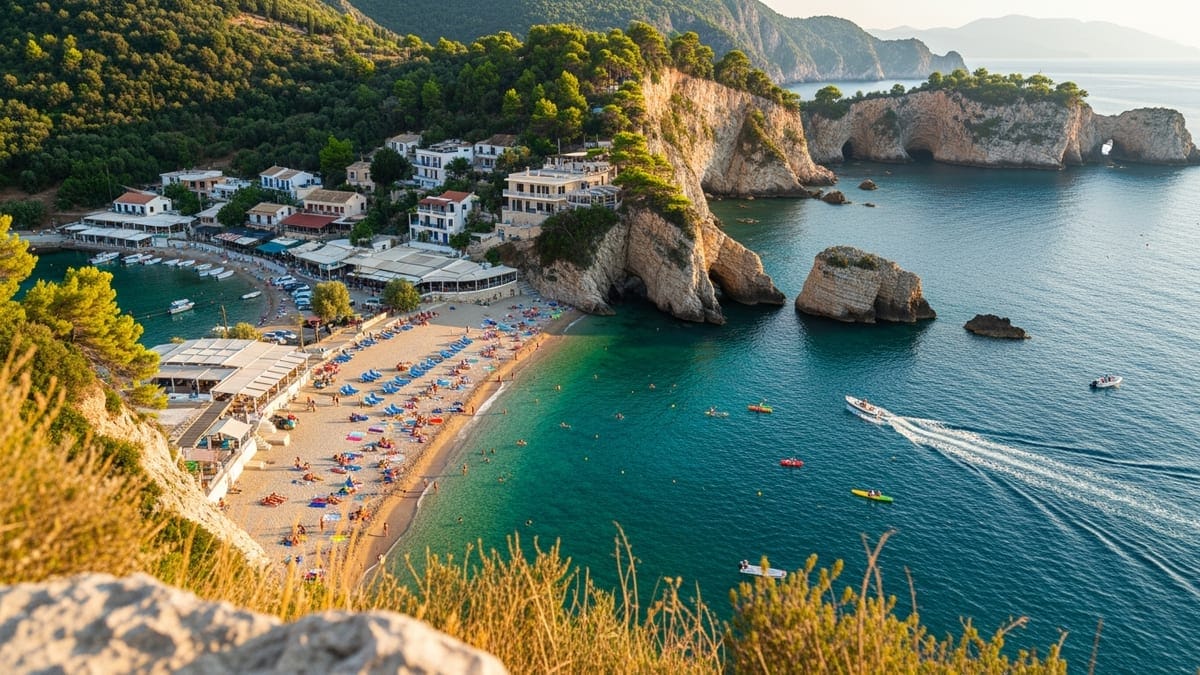
Paleokastritsa is the most photographed stretch of Corfu’s coastline for good reason. Set on the northwest coast about 45 minutes by road from Corfu Town and the airport, it is a cluster of six main coves carved into high, forested headlands. The combination of sheer cliffs, pine and olive groves, and intensely clear, often chilly water gives the area a wild, almost fjord‑like character that contrasts sharply with the sandier bays further south.
The main beach, often referred to as Agios Spiridon, is a gently curving strip of sand and fine shingle that serves as the resort’s focal point. It is well organized, with rows of sunbeds and umbrellas, showers, changing cabins and easy access to tavernas and cafés immediately behind the sand. In recent seasons, day rental of two beds and an umbrella has typically started around the low twenties of euros in high summer, and the car park just behind the beach operates on a paid, per‑day basis. Expect this area to become crowded between late morning and mid‑afternoon in July and August, especially when tour coaches and excursion boats arrive.
Just to the west and east of the main beach lie a succession of smaller coves that are worth seeking out if you prefer slightly quieter surroundings or better snorkelling. Agios Petros is a pebbly, largely organized beach backed by rock that plunges into deep, clear water teeming with marine life. Ampelaki, further west, is a compact bay with mixed sand and pebbles, simple changing facilities, showers and its own jetty for small boat rentals. On the eastern side of the headland, Agia Triada offers bright, pale pebbles and extraordinarily transparent water, along with sunbeds and a handful of beach bars, although free towel space is limited in peak months.
Paleokastritsa is also one of the best bases on Corfu for exploring sea caves and boat‑access beaches. Local operators rent small motorboats, kayaks and stand‑up paddleboards by the hour or the day, allowing you to work your way along the indented coastline to hidden coves such as Chomi, often dubbed Paradise Beach, which is accessible only from the water. Even a short paddle or cruise reveals limestone grottoes, underwater rock formations and sheltered spots for swimming beneath soaring cliffs. For many visitors, a half‑day boat trip combined with a late lunch at one of the hillside tavernas, with their big‑sky views over the bays, is the classic Paleokastritsa experience.
Glyfada: Golden Sand and Accessible Comfort
Glyfada sits roughly 16 miles west of Corfu Town and is widely regarded as one of the island’s most beautiful and user friendly beaches. Here the coastline opens into a broad, gently shelving bay of golden sand framed by green hills and scattered villas. The sea is typically a clear, luminous blue with a soft sandy bottom that makes entry easy for most swimmers. On calmer days the water at the shore is shallow enough for small children to play under supervision, though light waves are common by afternoon.
Over the last few years Glyfada has developed into a polished but still relaxed resort area, with a cluster of beach bars, restaurants and small hotels set just behind the sand. The beach is fully organized along much of its length, offering sunbeds, umbrellas, showers and changing cabins. A range of water sports is available in season, including jet skiing, parasailing and paddleboards, making it a popular choice for mixed groups where some visitors want to simply stretch out while others seek more activity. The beach is also celebrated for its long, fiery sunsets, which can be enjoyed from a lounger or a table at one of the seafront venues.
Practicalities here are straightforward. A large, level car park sits directly behind the main section of beach and is one of the more generous parking areas on the west coast. Recent reports indicate that parking remains free, including roadside spaces along the final access road into the bay, though spaces close to the central cafés and bars tend to fill first late in the morning in high season. The access road is steep but well surfaced and manageable for most drivers. Public buses from Corfu Town run in season, though schedules vary by month and time of day, so it is worth checking timetables locally if you are relying on public transport.
Glyfada’s character changes subtly through the day. Mornings often feel calm and family focused, with children playing at the waterline and couples swimming laps in the still sea. By mid‑afternoon, the beach bars pick up, music becomes more prominent and a younger, livelier crowd mingles with day trippers. Even so, the bay’s size allows you to walk a little way up or down the shore to find a quieter patch of sand if you prefer. For travellers who want the convenience of a fully serviced beach without the heavy nightlife of larger resorts, Glyfada is a strong all‑round choice.
Agios Gordios: Village Charm and Iconic Scenery
South of Glyfada on the west coast lies Agios Gordios, a long sandy bay backed by olive groves, cypress‑dotted hills and a compact, friendly village. The setting is spectacular. Craggy headlands embrace the beach at both ends, and just offshore to the south rises Ortholithi, a solitary rock formation that has become the unofficial emblem of the area. Sunsets here are particularly striking as the sun drops behind the rock and the surrounding cliffs take on crimson and purple tones.
The beach itself is broad and sandy along most of its length, with a shallow, mostly sandy seabed that makes it comfortable underfoot and accessible for different swimming abilities. Organized sections with sunbeds and umbrellas alternate with free, open stretches where you can spread your own towel. The waters are generally calm in the morning, with light swell building in the afternoon, but conditions vary with the wind. Several spots along the shore rent paddleboats, kayaks and small motorboats, and the northern end, where dark rocks jut into deeper water, offers decent snorkelling on clear days.
What distinguishes Agios Gordios from some of Corfu’s more purpose built beach resorts is its lived‑in village atmosphere. A short lane runs from the road down to the beach, lined with family owned tavernas, simple guesthouses, cafés and a handful of small hotels. Many visitors stay within walking distance of the sand, so the area feels cohesive rather than dominated by day trippers. In the evenings, the beachfront comes alive with diners lingering over grilled fish and Corfiot specialties while children play at the water’s edge.
Reaching Agios Gordios by car from Corfu Town typically takes about 30 to 40 minutes, following a winding road over green hills before descending into the bay. Parking is available in several informal lots and roadside spaces near the seafront, though it can be tight at the height of summer, particularly around midday. A bus service links the village with Corfu Town in season, but departures are less frequent than to some larger resorts and schedules can be affected by demand. For many travellers, combining Agios Gordios with a rental car or taxis offers the most flexibility, especially if you plan to explore nearby inland villages and viewpoints.
Beyond the Big Three: Other Notable Corfu Beaches
While Paleokastritsa, Glyfada and Agios Gordios draw the most attention on the central and northwest coasts, Corfu’s shoreline is much richer than a short list of famous names. Just north of Paleokastritsa, Agios Georgios Pagon curves around a vast horseshoe bay that feels spacious even in high season. Its soft sand and gently deepening water make it a favourite with families and repeat visitors who appreciate a more relaxed, low‑rise setting. Beachfront tavernas and a modest selection of accommodations line the bay, and there is usually room to find a quieter patch away from the densest clusters of sunbeds.
For more intrepid beachgoers, Porto Timoni near the village of Afionas has become an emblem of Corfu’s wilder side. Technically two beaches joined by a narrow strip of land, this twin bay is reached either by a 20 to 30 minute hike down from Afionas or by boat from nearby resorts. The walk, while not technically difficult, is steep in places, and closed shoes and plenty of water are recommended, especially in summer heat. The reward is a pair of intensely blue coves flanked by low cliffs and scrub, with no permanent facilities, where the sense of being far from the resort belt is part of the appeal.
The northeast coast offers a sequence of quieter pebble beaches backed by wooded slopes and scattered villas, ideal if you prefer transparent water and a less developed feel. Barbati, about a half hour north of Corfu Town, is a long arc of white pebbles and clear, relatively deep water, well suited to snorkelling and swimming rather than paddling. Further north, Kalami combines literary heritage with beach life, thanks to its association with writer Lawrence Durrell. Here, a crescent of shingle and crystalline sea is framed by hills green with olives and cypress, with a handful of tavernas and boat‑hire jetties dotting the waterfront.
On the southwest, beaches such as Issos, Halikounas and Marathias stretch for long, undeveloped distances, with soft, shifting sands and shallow waters that are particularly appealing to families and walkers. These coasts face the open Ionian and pick up more wind, making them attractive to kite surfers and those who prefer wilder, less organized settings. Facilities can be limited to a few seasonal beach bars and mobile canteens, so it pays to bring shade and supplies if you are planning a full day. The trade off is an expansive sense of space and sky that can be hard to find on the more built up central coast.
Planning Your Corfu Beach Days
Choosing where to base yourself on Corfu depends on how you like to spend your beach time and how much you value variety versus ease. Paleokastritsa is ideal for travellers who prioritise dramatic scenery, boat trips and snorkelling, and who are comfortable with pebbly beaches and occasionally crowded coves. It also works well for shorter stays, as you can mix monastery visits and coastal hikes with time on the sand without travelling far. However, the steep terrain and narrow coastal road mean driving and parking can be more stressful in high summer than at some other resorts.
Glyfada suits visitors looking for a classic beach holiday feel with all the comfort and infrastructure that implies. The sand is soft underfoot, access is easy and there is a good mix of beach clubs, family friendly facilities and moderately priced dining. It can, however, feel busy in July and August, and apart from a few hotels and apartments, there is no sizeable village directly behind the beach. If you want a walkable evening scene with multiple streets to explore, you might prefer to stay in Corfu Town or a larger resort and day trip to Glyfada instead.
Agios Gordios offers a middle path between the two, combining a scenic bay and soft sand with a tangible sense of local life. It is a strong choice for couples and families who enjoy having tavernas, mini markets and cafés close at hand, and who might want to break up beach days with short hikes in the hills or visits to nearby villages. The bay’s orientation provides memorable sunsets, and the presence of smaller pensions and apartments means prices can be more accessible than at some high‑end west coast properties. The trade off is a slightly longer, twistier drive than to Glyfada and potentially limited bus options outside peak season.
Regardless of where you stay, a rental car or at least a few days of car hire can transform your experience of Corfu’s beaches. Distances are not great, but the island’s hilly interior and narrow rural roads mean journeys take longer than they appear on a map, and having your own vehicle allows you to adjust plans to wind direction, crowds and mood. For travellers who prefer not to drive, it is worth checking the latest bus schedules at the Corfu Town terminal or tourist information points, as routes and frequencies can change from one season to the next.
Responsible Enjoyment and Seasonal Considerations
Corfu’s beaches have grown steadily more popular over the past decade, particularly in July and August when Northern European school holidays overlap. On the busiest days, parking areas at flagship beaches like Paleokastritsa and Glyfada can reach capacity by late morning, and organized sections may reserve most front row loungers for guests of specific hotels or beach clubs. Arriving early, before 10am, not only helps secure a parking spot and a preferred patch of sand, it also allows you to enjoy calmer water and softer light before the midday heat intensifies.
Visiting in shoulder months such as late May, June, September and early October can be particularly rewarding. Sea temperatures are comfortable, many businesses are open, and the intensity of high summer crowds is absent. Prices for accommodation and sunbed rentals may be a little lower, and you are more likely to find last minute availability at popular tavernas. The trade off is that some water sports operators and smaller beach bars may operate on shorter hours or close entirely in quieter weeks, especially if the weather turns unsettled.
As on many popular islands, the environmental impact of tourism is a growing concern. Simple steps help preserve Corfu’s beaches for future visitors and residents alike. Using refillable water bottles and avoiding single use plastics, taking all rubbish with you, and respecting any local guidelines regarding dune systems or protected habitats are all important. On pebbly and rocky beaches, wearing reef safe sunscreen and water shoes can protect both your skin and the delicate marine life that thrives along the island’s underwater ledges and seagrass meadows.
Local authorities and private operators periodically adjust regulations on sunbed concessions, access roads and parking to better manage peak season pressure. Before travelling, it is sensible to check recent visitor reports or speak with your accommodation host about any current restrictions, especially if you plan to visit smaller, more secluded coves that may have limited capacity. Flexibility is valuable on Corfu; if one beach feels too busy or windswept, odds are good that another, more sheltered bay lies a short drive away on a different stretch of coast.
FAQ
Q1: Which Corfu beach is best for families with young children?
Glyfada and the long sandy bays of the southwest, such as Issos and Marathias, are particularly good for families thanks to their soft sand and relatively shallow entry into the sea, while Agios Gordios offers a blend of family friendly facilities and village atmosphere.
Q2: Is Paleokastritsa suitable for non swimmers?
Paleokastritsa’s main beach has a gentle slope and offers sunbeds and easy access, but the water becomes deep quite quickly and is often cooler than on sandy west coast beaches, so non swimmers may feel more comfortable on long sandy bays like Glyfada or Agios Georgios Pagon where there is more shallow space to paddle.
Q3: Do I need a car to explore Corfu’s beaches?
Public buses connect Corfu Town with major resorts such as Paleokastritsa, Glyfada and some northeast villages in season, but a rental car gives far greater flexibility to visit quieter coves, adjust plans to weather and avoid waiting for infrequent services, especially outside peak summer.
Q4: Are Corfu’s beaches free to access?
Access to the beaches themselves is free, but many organized sections charge for sunbeds and umbrellas, and some parking areas near popular beaches may operate as paid lots, so budget for these extras if you plan full days by the sea with more comfort.
Q5: When is the best time of year for swimming in Corfu?
Sea temperatures are typically warmest from late June through September, with August and early September offering the most consistently warm water, while May and October can still be pleasant for swimming, particularly for those comfortable in slightly cooler seas.
Q6: Which Corfu beach has the clearest water?
The coves around Paleokastritsa and the pebble beaches of the northeast, such as Barbati and Kalami, are renowned for exceptionally clear, deep water that is ideal for snorkelling, although visibility can also be excellent on calm days at many other beaches.
Q7: Can I find quiet beaches on Corfu in July and August?
Even in peak season it is possible to find quieter spots by visiting early in the day, walking away from the main access points, or seeking out less famous stretches on the southwest coast, though total solitude is rare in high summer on the most accessible bays.
Q8: Are there lifeguards on Corfu’s beaches?
Larger organized beaches such as Glyfada, some sections of Agios Gordios and several popular resorts often have lifeguards on duty during the main season, but this is not guaranteed everywhere, so it is important to assess conditions and supervise children closely regardless.
Q9: What should I bring for a day at a pebbly beach like Paleokastritsa?
Sturdy water shoes or sandals that can get wet, a lightweight beach mat or thicker towel for comfort on stones, and a mask or snorkel set will make the experience more enjoyable, as will reef safe sunscreen given the strong reflection from pale rock and water.
Q10: How far are these beaches from Corfu Town and the airport?
Paleokastritsa is typically around a 45 minute drive from both Corfu Town and the airport in normal traffic, Glyfada and Agios Gordios can usually be reached in about 30 to 40 minutes by car, and northeast beaches such as Barbati and Kalami lie roughly 25 to 50 minutes up the coastal road depending on exact location.