

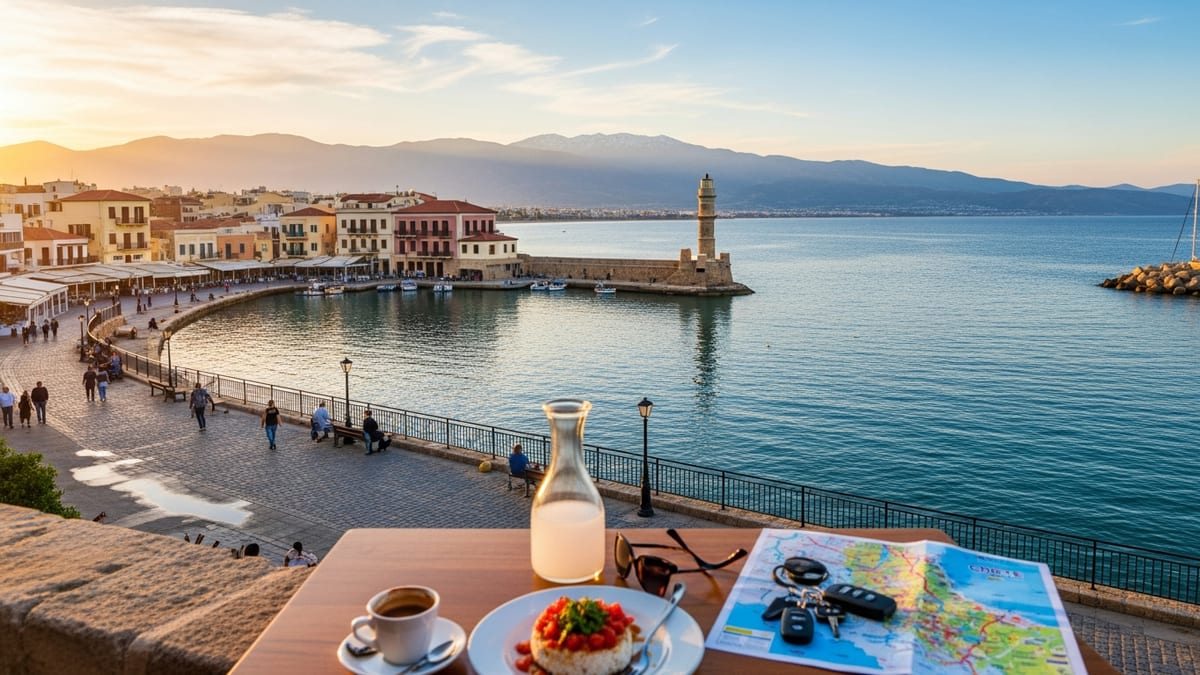
Crete is the kind of island that feels less like a single destination and more like an entire country set adrift in the Aegean. Greece’s largest island blends Bronze Age palaces and Venetian harbors with mountain villages, dramatic gorges, pink-sand beaches and a food culture strong enough to earn it a European Region of Gastronomy title for 2026.
Planning a trip here can feel overwhelming, because Crete offers far more than you can cover in a single holiday. This guide breaks the island down into manageable regions, highlights the essential sights and experiences, and explains how to plan an itinerary that fits your time, interests and travel style.
Understanding Crete: The Four Main Regions
Crete stretches roughly 160 miles from east to west, and most travelers organize their trip around its four regional units: Chania, Rethymno, Heraklion and Lasithi. Each has its own character. Chania in the northwest is known for its romantic harbor town and easy access to famous beaches. Rethymno combines a lively old town with access into Crete’s rugged interior. Heraklion is the busy capital and gateway to key Minoan archaeological sites. Lasithi in the east feels wilder and less developed, with sleepy coves and high plateaus.
Because of the island’s length and mountainous spine, you should not treat Crete like a small island where everything is an easy day trip. For a week or more, many visitors choose a “two-base” strategy: for example, several days in Chania for western Crete, then moving to Heraklion or Agios Nikolaos to explore the central and eastern side. If you have less than a week, it is usually better to focus on one half of the island instead of rushing from end to end.
Transport infrastructure is generally good along the north coast, where the main highway connects all major cities. The south coast and interior are another story, with slow, winding roads and journey times that surprise first-time visitors. This is part of Crete’s appeal: drive just an hour or two away from the busy resort strips and you find tiny villages, empty beaches and hiking paths where the loudest sounds are goat bells and wind in the pines.
When planning your base, consider your travel season and interests. Summer beach seekers tend to gravitate toward Chania and Rethymno, while shoulder-season travelers and culture lovers may prefer Heraklion and Lasithi, where archaeological sites, highlands and smaller coastal towns feel calmer even in August. Food-focused visitors can find excellent tavernas across the island, but Chania, Heraklion and Rethymno offer the biggest concentration of creative Cretan cuisine and wineries.
Top Places to Go in Crete
Most itineraries begin in one of Crete’s three main hubs: Chania, Rethymno or Heraklion. Chania’s old town is one of the most atmospheric urban centers in Greece, with a Venetian harbor, Egyptian lighthouse and tangle of lanes filled with townhouses converted into boutique hotels. It works both as a destination and as a base for day trips to Balos Lagoon, Elafonisi beach and the White Mountains. Even if you stay elsewhere, budget at least one unhurried day to wander its waterfront, climb to viewpoints on the bastions and linger over seafood dinners by the water.
Rethymno, further east, has its own Venetian-Ottoman old town wrapped around a stout fortress on a headland. It feels livelier and more student-driven, thanks to the local university, with a long sandy beach stretching east from the old harbor. The town is also well placed for forays into the Amari Valley, Mount Psiloritis and villages known for cheese, smoked meats and traditional music. If Chania is the romantic postcard, Rethymno is the place where history and everyday island life mingle most visibly.
Heraklion, Crete’s capital, is often dismissed as a mere ferry and airport gateway, but that does it a disservice. The restored Heraklion Archaeological Museum is one of Greece’s finest, housing the most important collection of Minoan art and artifacts and operating on extended hours through most of the year. A short drive away stands the Bronze Age palace of Knossos, long associated with the myth of the Minotaur. Together they form the cultural heart of any trip. Beyond these headline sights, Heraklion has a growing food scene, interesting neighborhoods and easy access to the vineyards and villages of central Crete.
For a different mood, head east into Lasithi. Agios Nikolaos, wrapped around a deep, supposedly bottomless lake, makes a pleasant base for exploring north-eastern Crete, including the mellow resort of Elounda and the former leper colony of Spinalonga island with its Venetian fortress. Further east again, Sitia and the surrounding region feel remote and traditional, with smaller crowds, fertile valleys and access to beaches and hikes such as Richtis Gorge. Inland, the Lasithi Plateau offers a patchwork of fields, old windmills and mountain villages that feel a world away from the resort strips on the coast.
Must-See Sights and Experiences
Crete’s headline attractions fall into three broad categories: Minoan archaeology, Venetian and Ottoman-era towns, and natural landscapes of beaches, gorges and mountains. For most visitors, the essential cultural pairing is Knossos and the Heraklion Archaeological Museum. Plan to see the museum first if possible; its frescoes, ceramics and figurines provide context for the palace’s sometimes controversial reconstructions. Check current opening hours before you go, as winter and summer schedules differ and there can be occasional closures tied to holidays or labor actions.
In Chania and Rethymno, the towns themselves are the sights. Take time to walk the circuit of Chania’s old harbor, including out to the lighthouse and along the Venetian walls. Duck into old mosques, arsenals and merchants’ houses converted into galleries or small museums. In Rethymno, climb up to the Fortezza, explore the narrow streets around the Rimondi Fountain and find a café courtyard to sit with a Greek coffee or glass of local wine. Both towns grow busy in peak season, so early morning and late evening are the best times for photographs and a sense of atmosphere.
Natural highlights are spread around the island. In the west, Balos Lagoon and Elafonisi draw visitors with turquoise shallows and, in the case of Elafonisi, patches of pink sand where crushed shells mix with the shoreline. These are protected areas with evolving access rules, so expect to park away from the beach and walk in, especially in high season. In the south-west, the entrance to Samaria Gorge near Omalos offers one of Greece’s classic hikes, a dramatic descent through soaring rock walls that ends at the Libyan Sea in Agia Roumeli. In eastern Crete, Richtis Gorge provides a shorter, greener hike to a waterfall and quiet beach.
Beyond the big names, some of Crete’s most rewarding experiences are low-key. Spend time in a village kafenio, where older men play backgammon over raki. Visit a small olive oil press or winery to see how staples of the Cretan diet are made. Explore Psiloritis Natural Park in central Crete, a UNESCO-recognized geopark where karst formations, high plateaus and stone shepherds’ huts tell the story of traditional pastoral life. Or simply drive down to a small south-coast beach like Lentas, Plakias or Myrtos, where tavernas spill onto the sand and the pace of life slows to match the sunset.
Beaches, Hiking and Outdoor Adventure
Crete has hundreds of beaches, from fully serviced strands lined with sun loungers to remote coves that require a hike or boat trip. In the west, Elafonisi and Falassarna top many lists. Elafonisi is a shallow lagoon with a sandbar leading to a low island, famous for its soft sand and clear waters. Facilities include organized sections with umbrellas, basic food kiosks and free toilets and showers set back from the shore. Falassarna offers a long exposed sweep of sand facing west, perfect for sunset, with enough space that you can always find a quieter patch even at busy times.
In the north-west, Balos Lagoon is reached either by boat from Kissamos or by driving a rough track and then hiking down from the parking area. The view from the top, where pale sand and turquoise shallows contrast sharply with the rocky Gramvousa peninsula, is among the most photographed scenes in Greece. Elsewhere on the island, the beaches around Malia and Hersonissos are popular with younger crowds, while Almyrida, Georgioupoli and Bali cater more to families. On the south coast, places like Preveli, with its palm grove and river, and the small coves near Loutro and Sfakia, feel more remote and reward travelers willing to walk or take small boats.
Hikers are spoiled for choice. The Samaria Gorge is the most famous hike on Crete, typically open from spring through late autumn, depending on weather and rockfall conditions. It is a one-way walk of around 16 kilometers from the Omalos plateau down to the sea, with narrow passages between high cliffs known as the Iron Gates. Proper footwear, water and sun protection are essential, and many people time their visit on an organized excursion that coordinates the early-morning bus up and afternoon ferry out. Shorter gorge walks include Imbros Gorge in the south-west and Richtis Gorge in the east, both of which offer shaded paths and striking rock formations.
For those drawn to higher ground, the Lefka Ori, or White Mountains, and Mount Psiloritis offer mountain routes, some demanding and others more forgiving. The E4 long-distance trail crosses Crete from west to east, linking many of these landscapes. Even if you are not a serious hiker, consider shorter walks to plateau villages, hilltop chapels and coastal viewpoints. Outside the hottest months, cycling is another way to explore quieter roads and valleys, though traffic and gradients require care. On the water, sea kayaking, sailing, snorkeling and diving opportunities are increasing, particularly around Chania and Agios Nikolaos, where calmer bays and inlets make for good beginner conditions.
Cretan Food, Wine and Culture
Cretan cuisine is a major reason many travelers now choose the island. Built on olive oil, wild greens, seasonal vegetables, pulses, barley rusks, herbs and simple grilled meats, it has long been associated with health and longevity. In recent years, local chefs have combined these traditions with more contemporary techniques and presentations, helping Crete earn recognition as a culinary destination. In cities like Chania, Rethymno and Heraklion, you can alternate between no-frills tavernas serving dishes from a handwritten menu and modern restaurants where chefs reinterpret classics like lamb with stamnagathi greens or slow-cooked goat from the mountains.
Signature dishes include dakos, a barley rusk soaked in olive oil and topped with grated tomato, feta-like mizithra cheese and herbs, and kalitsounia, small pies stuffed with cheese or wild greens. In Heraklion and Rethymno, look for apaki, smoked pork loin often marinated in vinegar and herbs, and in the countryside ask for fresh graviera cheese and thyme-scented honey. At seaside tavernas, grilled sardines, octopus and local fish share the menu with simple salads and boiled horta, or wild greens, dressed with oil and lemon. Portions are usually generous, and meals often end with complimentary dessert and a small carafe of raki, also known locally as tsikoudia.
Wine is another strong point. Indigenous grapes such as vidiano, vilana and dafni for whites, and kotsifali, mandilari and liatiko for reds are increasingly bottled as varietal or carefully blended wines. Wineries around Heraklion and Chania welcome visitors for tastings, usually by appointment. In the last few years, Crete’s rising profile has been highlighted by international travel publications, and the island’s forthcoming role as a European Region of Gastronomy reflects both the quality of its produce and the depth of its culinary traditions.
Cultural life extends beyond the table. In Heraklion’s region, the Nikos Kazantzakis Museum in Myrtia village explores the life and work of the author of “Zorba the Greek.” Near Chania, the School Life Museum in Nerokouros, housed in a historic primary school, delves into Greece’s educational past. Summer brings festivals dedicated to music, dance, wine and the Cretan diet, particularly around Rethymno, where a weeklong celebration each July showcases products from across the island. Even without timed events, you can experience culture in everyday moments: in a lyra player’s impromptu song at a village celebration, or in the way hosts insist you take one more helping at the end of a meal.
When to Go and How Long to Stay
Crete’s official tourist season runs roughly from April to the end of October, but the island is large enough that life continues year-round. July and August bring the hottest temperatures, busiest beaches and highest room rates, along with a vibrant atmosphere in resort areas and towns. Spring, from late April through early June, is ideal for walkers, with wildflowers blooming in the hills, milder temperatures and lower visitor numbers. Autumn, from September into early November, offers warm seas, quieter resorts and long evenings on café terraces.
Winter on Crete, between November and March, can be a rewarding time if your focus is on culture, food and local life rather than beach time. Many coastal resorts shut down, but cities like Chania, Rethymno and Heraklion remain lively, with museums operating on shorter winter hours and prices for accommodation significantly lower than in summer. The mountains often receive snow, and some gorges, including Samaria, are closed in winter for safety reasons, so hikers need to choose routes carefully.
As a rule of thumb, four to five days is the minimum for a meaningful taste of one region, such as western Crete around Chania. A week allows you to combine two bases or add side trips into the mountains or south coast. Ten to fourteen days lets you sample both halves of the island without constant packing and unpacking. If you are combining Crete with other Greek islands or Athens, factor in travel time and possible ferry schedule changes, especially at the margins of the season, and try to avoid planning tight same-day connections between ferries and flights.
Consider local holidays when planning. Greek Orthodox Easter, which shifts each year but usually falls in April or early May, is a major event, with processions, church services and feasts. It can be a memorable time to visit, particularly in villages, but transport and accommodation may be busier. National holidays such as March 25 and October 28 bring parades and some closures of museums and archaeological sites. Always check the latest opening hours, especially if a particular museum or site is central to your itinerary.
Practical Planning: Getting Around and Where to Stay
Most international visitors arrive in Crete via Heraklion or Chania airports, both of which have frequent connections to Athens and, in high season, direct flights from many European cities. Ferries link Heraklion and Chania with Piraeus, the port of Athens, and there are also routes connecting Crete with other Aegean islands. Booking early generally secures better fares in summer, particularly on popular weekend dates, while shoulder-season visitors enjoy more flexibility. If you are arriving late at night or departing early in the morning, consider staying your first or last night close to your point of entry to reduce stress.
To explore beyond a single town and its immediate surroundings, hiring a car is usually the most efficient option. The north-coast highway is straightforward, but once you turn inland or south, expect narrow, winding roads, occasional livestock on the asphalt and slower travel times. Driving at night on unfamiliar rural roads is best avoided. Fuel stations are common along main routes but can be scarce in remote areas, so fill up before venturing far. For those who prefer not to drive, the island’s KTEL bus network connects major towns and many villages, though services thin out on weekends and in the off-season.
Accommodation ranges from basic rooms and family-run pensions to design hotels and full-scale resorts. Chania and Rethymno offer atmospheric stays in repurposed townhouses and mansions inside their old towns, while the surrounding coasts have resort hotels, apartments and villas. Around Heraklion, you will find business hotels in the city center, beach resorts along the north coast and rural guesthouses in wine and olive-growing regions. In eastern Crete, Agios Nikolaos, Elounda and Sitia provide a mix of seafront hotels, smaller inns and luxury properties. In mountain areas and on the Lasithi Plateau, guesthouses and agritourism stays allow you to experience village life and traditional architecture.
Book well ahead for July and August, particularly in sought-after towns and at smaller properties with character, which can fill many months in advance. In shoulder seasons, you have more flexibility and can often secure better rates or negotiate on the spot for small family-run places, though it is still wise to reserve your first couple of nights. Self-catering apartments and villas are plentiful, making Crete a good option for families or groups who prefer to cook some meals and have more space. Wherever you stay, check recent reviews and pay attention to comments about noise, parking and proximity to beaches or old towns, as these factors can greatly influence your experience.
Staying Respectful, Safe and Sustainable
Crete is generally a safe destination with low levels of violent crime. Petty theft can occur, especially in crowded beach car parks and busy urban areas, so follow basic precautions such as not leaving valuables in vehicles and keeping an eye on your belongings in packed bars or buses. Road safety is a more significant concern than crime; drive defensively, anticipate local habits such as cars pulling over onto the hard shoulder to let faster traffic pass, and avoid risky overtaking on blind bends. In summer, heat and sun exposure are additional hazards, especially during hikes or long beach days, so carry water, wear a hat and use sunscreen.
Respect for local culture goes a long way. Dress modestly when visiting churches and monasteries, covering shoulders and avoiding very short shorts. In villages, tone down beachwear and loud behavior, particularly during siesta hours in the afternoon. Tipping in tavernas and cafés is appreciated but not obligatory; rounding up the bill or leaving a small percentage is customary. When invited to share raki, remember that it is strong; you can politely decline or sip slowly rather than matching generous hosts glass for glass.
Sustainability is an increasingly important issue on Crete, especially at high-profile beaches and in fragile mountain and gorge ecosystems. Follow marked paths, avoid picking flowers or disturbing wildlife, and pack out all your rubbish. At protected beaches such as Elafonisi, obey signs about where you may set up umbrellas and avoid walking on sand dunes that protect plant life. Choose locally owned accommodation and tavernas where possible, supporting family businesses and reducing the carbon footprint associated with imported goods. Drinking water quality varies by area, so ask locally if tap water is suitable for drinking; where it is safe, refilling a reusable bottle reduces plastic waste.
Travel insurance is advisable, particularly if you plan to hike, rent a car or engage in activities such as diving or sailing. Pharmacies are widespread and well stocked, and medical care in larger towns is of a good standard, though remote areas may require travel for more serious issues. If you are visiting outside peak season, check in advance whether specific services, such as boat excursions or smaller museums, operate at reduced frequency or close for the winter, and build some flexibility into your plans to accommodate weather-related changes.
FAQ
Q1: How many days do I need in Crete for a first visit?
For a first visit focused on one region, such as Chania and its surroundings, four to five days gives you enough time for the main sights and a beach day or two. To explore both western and central or eastern Crete at a relaxed pace, aim for 10 to 14 days, which allows you to use two bases and include both cultural visits and nature excursions.
Q2: Do I need to rent a car, or can I rely on public transport?
You can explore major towns and some nearby beaches using the island’s KTEL buses, which are reliable on main routes, especially in summer. However, renting a car gives you much greater flexibility and access to mountain villages, remote beaches and trailheads that are difficult or time-consuming to reach by bus. If you dislike driving, consider basing yourself in a well-connected town and using organized excursions for harder-to-reach areas.
Q3: When is the best time to hike the Samaria Gorge?
Samaria Gorge usually opens in late spring and closes in autumn, depending on weather and safety conditions, with May, June, September and early October often considered the most comfortable months. July and August can be very hot and crowded, so an early start is essential then. In winter the gorge is normally closed to hikers, so if Samaria is a priority, plan your trip for the warmer months and always check the latest opening information locally.
Q4: Are the famous beaches like Balos and Elafonisi suitable for children?
Both Balos and Elafonisi have shallow, sheltered areas that many families find ideal for children, but they also involve some logistics. Balos requires either a boat trip or a drive on a rough track and a walk down from the parking area, which may be tiring for very young kids. Elafonisi is easier to reach by road, though you should expect a walk from designated parking areas and take sun protection, as shade is limited. In peak season, arrive early in the day to avoid the worst crowds and heat.
Q5: Is it possible to visit Knossos and the Heraklion Archaeological Museum in one day?
Yes, it is feasible and even recommended to visit both in a single day, as they complement each other. Many travelers start at the museum in the morning, when it is cooler and quieter, then continue to Knossos in the afternoon, or reverse the order depending on opening hours and tour schedules. Booking tickets in advance where possible and arriving early can reduce waiting times, especially in high season or on cruise ship days.
Q6: What should I pack for a summer trip to Crete?
For summer, prioritize light, breathable clothing, a wide-brimmed hat, sunglasses and high-factor sunscreen. Comfortable walking shoes or sandals are essential, with sturdier footwear if you plan to hike gorges or mountain trails. A light layer for cooler evenings, especially in the mountains, is useful, as is a reusable water bottle and small daypack. Swimwear, a quick-drying towel and a basic first-aid kit round out the essentials.
Q7: Is tap water safe to drink in Crete?
Tap water in Crete is generally treated and safe in larger towns, but its taste and quality can vary, particularly in smaller or more remote communities. Many locals drink bottled water out of habit or preference. It is best to ask at your accommodation whether the tap water is recommended for drinking in that specific area. Where it is safe, using a refillable bottle helps reduce plastic waste.
Q8: How expensive is Crete compared with other Greek islands?
Overall, Crete offers good value compared with some smaller and more fashionable Cycladic islands. You can still find reasonably priced family-run rooms, generous taverna meals and affordable local transport, especially away from the most touristed strips. Luxury resorts exist, particularly around Elounda and parts of the north coast, but they are just one segment of a broad accommodation range, so it is possible to travel comfortably on a moderate budget.
Q9: Can I combine Crete with other islands on one trip?
Combining Crete with other islands is possible, particularly with Santorini, Mykonos or smaller Cyclades served by seasonal ferries. However, distances are greater than many visitors expect, and ferries can be affected by weather or schedule changes. If you have only a week, focusing on Crete alone usually makes for a more relaxed trip. With 10 days or more, you can comfortably add a few nights on another island if you plan connections carefully.
Q10: Do people in Crete speak English, and will I need Greek?
English is widely spoken in tourist areas, hotels, restaurants and shops, so you can manage most daily interactions without Greek. That said, learning a few basic phrases such as greetings and thanks is greatly appreciated and can open doors to warmer exchanges, especially in villages where fewer visitors venture. Signage at major sites and museums is typically bilingual, using both Greek and English.