

Faliraki has spent decades in the spotlight as Rhodes’ liveliest resort, but the modern town is far more balanced than its party-heavy reputation suggests.
Families come for the shallow Blue Flag beaches and water park, couples for boat trips into secluded coves and dinners by the sea, and friends for long, warm nights moving between beach bars and late-night clubs.
With regular buses from Rhodes Town, a position close to some of the island’s most beautiful bays, and plenty of practical comforts, Faliraki is one of the easiest bases for exploring the northeast coast of Rhodes.
Getting Your Bearings in Faliraki
Faliraki sits on the northeastern coast of Rhodes, about 14 kilometers south of Rhodes Town and roughly 10 kilometers from Rhodes International Airport.
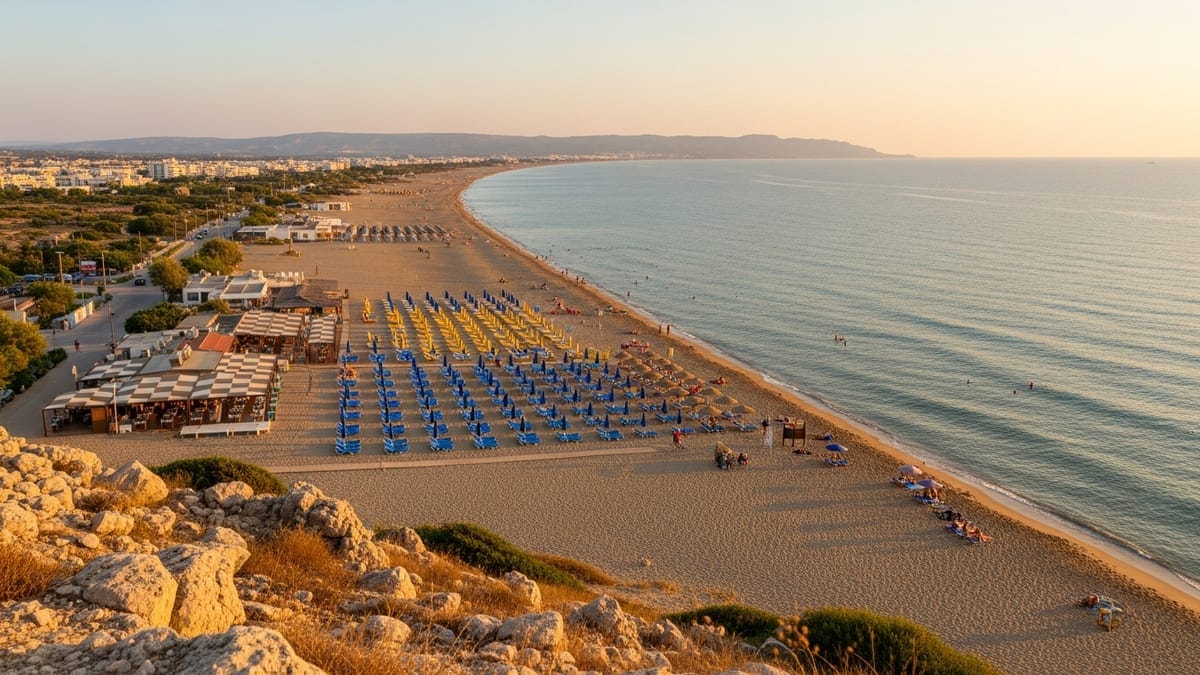
The resort spreads around a wide bay that runs for about five kilometers, curving from more developed beachfront in the center to quieter, more natural segments at the edges.
Inland, low hills dotted with hotels and apartments rise gently away from the sea, while the village center clusters around a grid of streets that are packed with tavernas, cafes and bars in high summer.
Most visitors quickly learn to navigate Faliraki using the beachfront, the harbor and the central streets sometimes referred to as Bar Street and Club Street as reference points.
The central beach is where you find dense lines of sunbeds, water sports stations and upbeat beach bars. To the north, toward Kallithea, the coast becomes a little quieter and more spacious.
To the south, beyond Kathara Beach, small coves lead in the direction of Ladiko and Anthony Quinn Bay. The small fishing harbor of St Apostolos anchors the southern end and is a departure point for many boat trips.
Faliraki belongs to the municipal unit of Kallithea, which is why you will often see the name on bus schedules and local signage.
This connection matters because some of the area’s most appealing attractions, including Kallithea Springs and the modern Kallithea Palais des Sports indoor arena, sit within an easy drive.
Despite this official administrative label, everyday life for visitors revolves around the compact resort grid and the beachfront, where nearly everything from supermarkets and pharmacies to ATMs, car rentals and bakeries can be reached on foot.
The atmosphere in Faliraki shifts noticeably with the seasons. In July and August, the streets pulse into the early hours with families enjoying late dinners, groups spilling out of bars and music drifting from the waterfront.
In May, June, September and early October, things are more relaxed, with warm weather, open businesses, and a distinctly less intense nightlife, making these shoulder months appealing to couples and older travelers who prefer a quieter scene.
Beaches and Bays: Finding Your Perfect Stretch of Sand
Beach life is Faliraki’s main attraction. The resort’s main sand ribbon carries multiple Blue Flag awards for cleanliness and water quality and is unusually versatile.
In the central section near the busiest hotels and beach bars, you will find organized rows of sunbeds and umbrellas, music, waiter service and a rotating cast of water sports, from jet skis and parasailing to banana boats and pedalos.
The sea shelves gently, staying shallow for a long way out, so even this livelier stretch remains popular with families who like having facilities minutes from the waterline.
Walk a little north or south from the central zone and Faliraki beach softens into a more family-focused environment. Here, wide stretches of sand leave space for children to play and adults to spread out without feeling hemmed in.
Tavernas behind the beach serve simple Greek dishes, snacks and ice creams, and the sea remains characteristically calm and clear.
The sand underfoot is mostly soft, with very few pebbles, which is a welcome change for anyone used to rockier Greek shores.
At the fringes of the bay, things become more natural and peaceful. The far ends of Faliraki beach are lightly developed, with fewer sunbeds and a more open, breezy feeling.
Early risers come here to watch the sunrise over the Aegean, joggers use the open sand for morning runs, and those looking for some solitude can usually find it, particularly outside the peak weeks of late July and August.
If you choose these quieter portions, it is sensible to bring water, sun protection and perhaps a light beach umbrella, as shade is minimal.
Faliraki is also home to one of Rhodes’ official naturist beaches, Mandomata, located to the south of the main resort after Kathara Beach. This small cove is quietly self-contained and has a respectful, low-key atmosphere.
Simple facilities, including a small taverna and basic restrooms, support visitors who appreciate a peaceful stretch of shore away from the crowds.
Just beyond, the coastline begins to break up into a series of rocky inlets that mark the start of the scenic walk towards Ladiko and Anthony Quinn Bay.
Top Attractions and Experiences Around Faliraki
Beyond its shore, Faliraki offers enough diversions to fill several days without ever getting in a car. The headliner for many families is the large water park set on the hill behind the resort, widely promoted as one of the biggest in Greece.
It combines adrenaline slides with more relaxed lazy rivers, children’s splash zones and sunbathing terraces, along with snack bars and shaded seating.
Lifeguard coverage is extensive in high season, and a shuttle bus operates from Rhodes Town on many days, making it a practical day out for visitors staying across the island.
In the heart of Faliraki, an expanding cluster of indoor and evening attractions has emerged to complement the beach. Bowling alleys, roller skating rinks, mini golf, trampolines and soft play areas mean there is always something to do when the sun is high or the meltemi wind kicks up.
These venues are especially useful for families when younger travelers need to burn off energy after dinner, or when everyone wants a break from the salt and sun without retreating to a hotel room.
For a taste of traditional Greek architecture and calmer reflection, the church of Saint Nectarios in central Faliraki is an unexpectedly serene spot. Its tiled domes, arched bell tower and tidy courtyard stand in contrast to the resort bustle around it.
Visiting early in the morning or before sunset gives a sense of local life, as residents drop in to light candles or pause on the steps. The church makes a pleasant photographic stop on an evening stroll, particularly when the soft light picks out its warm stone and terracotta roof tiles.
Just beyond the main built-up area, Kallithea Palais des Sports hosts basketball and volleyball games, including fixtures from the Greek Basket League.
For sports enthusiasts, catching a local game here provides a completely different evening out, with a lively home crowd and a glimpse into everyday Greek sporting culture.
Schedules vary by season, so checking game timetables once in Rhodes helps you plan around any matches that might interest you.
Day Trips and Nearby Highlights
Faliraki’s location makes it a strong base for exploring some of Rhodes’ most picturesque coastal landmarks. One of the closest is Kallithea Springs, less than a fifteen-minute drive to the north.
This complex was developed during the Italian era and centers on restored domed buildings, tiled courtyards and mosaics set among pine trees above a sheltered, rocky bay.
The small beaches here, including spots known as Tasos, Nikos and Oasis, have clear water, good snorkeling and a more intimate feel than the long open sands of Faliraki.
Many visitors combine an hour wandering the architecture with a swim and an unhurried coffee by the sea.
To the south, a short journey brings you to Ladiko and Anthony Quinn Bay, two of the most photographed coves on Rhodes.
Ladiko is a small, nearly circular bay lined with sunbeds, rocks and low scrub, popular for its calm waters and sense of enclosure. Just beyond, Anthony Quinn Bay is framed by low cliffs and pine, with water that deepens into rich shades of turquoise and emerald.
The bay acquired its name after the actor who starred in scenes filmed on Rhodes in the early 1960s, and it has been a favorite for snorkeling and swimming ever since. Both bays can be reached by road or visited as part of coastal boat trips from Faliraki harbor.
Rhodes Town, roughly twenty minutes by bus or car, is a natural complement to a beach stay in Faliraki. The medieval Old Town is a UNESCO-listed maze of stone streets, city walls and historic buildings, including the Palace of the Grand Master and the Street of the Knights.
For many visitors, a late afternoon or evening visit works well: you can explore the lanes in the cooler hours, watch the sun drop over the harbor walls, then dine in one of the many restaurants tucked into courtyards and rooftops before returning to the resort.
Families and nature lovers might also consider a day at the Valley of the Butterflies in the island’s interior, where shaded trails lead through a forested canyon that fills with clouds of butterflies in summer, or Seven Springs, where walkways, tunnels and streams provide welcome relief from the coastal heat.
Both attractions are accessible by organized excursions from Faliraki or via rental car. If you are willing to drive a little farther, the whitewashed village of Lindos, with its acropolis and two sheltered bays, makes a rewarding full-day outing from Faliraki.
Nightlife, Dining and the Evolving Character of Faliraki
Faliraki’s nightlife has gone through a transformation. While the town still offers a high-energy bar and club scene in and around the streets commonly called Bar Street and Club Street, it has broadened into a more varied evening destination.
Beachfront lounges serve cocktails to a soundtrack of chilled music well into the night, tavernas cater to lingering family dinners, and smaller wine bars offer quieter corners for conversation.
The busiest nightlife keeps to a fairly contained area inland from the beach, which means it is possible to stay in quieter pockets even within walking distance of the action.
Peak season nightlife usually runs from mid-June through August, with the loudest weeks centered on late July and early August. During this period, crowds typically start to condense in the bars after 10 p.m., building towards the early hours.
Outside these weeks, the mood changes noticeably. In May and September, many venues are still open and sociable, but the overall tone is gentler, with fewer stag and hen groups and more couples and families.
If you want to experience Faliraki’s livelier side without the most intense crowds, early June and late September are often sweet spots.
Food in Faliraki reflects the resort’s international clientele. Along the seafront, you will find classic Greek tavernas serving grilled fish, souvlaki, salads and meze dishes, often with tables right above the sand.
In the center, menus broaden to include pizza, pasta, Mexican and Asian dishes, as well as venues oriented toward British-style pub food and breakfasts. Portions are usually generous, and many places are used to accommodating children’s tastes without fuss.
Those seeking more distinctly local flavors can look for smaller tavernas on side streets or take a taxi to nearby villages for dinners that lean more heavily on Rhodian recipes.
Beach clubs and cafes have embraced longer summer days by extending service from breakfast to late-night drinks. It is common to spend an entire day in one place, moving from morning coffee to lunch, afternoon cocktails and an evening event without changing venues.
Some beachfront bars organize themed nights, Greek dancing or live music, providing easy entertainment within steps of the sea.
For visitors who enjoy nightlife but do not necessarily want to commit to full-scale clubbing, this mix of options along the waterfront often feels like the most appealing compromise.
Practicalities: Getting There, Getting Around and Staying Safe
Reaching Faliraki is straightforward. Rhodes International Airport lies about a twenty-minute drive away, and taxis are readily available on arrival.
Agreeing a fare at the official taxi stand or confirming that the meter is running keeps costs predictable.
Many hotels and larger apartment complexes can also arrange private transfers in advance. If you are already staying elsewhere on the island, buses from Rhodes Town to Faliraki run frequently throughout the day in high season, with services typically every twenty to thirty minutes.
Once in resort, most visitors rely on walking and the local bus network. Faliraki itself is compact, and most accommodation is within an easy walk of the beach and central amenities.
Local buses connect Faliraki with Rhodes Town, the airport junction, Kallithea Springs and other east-coast settlements. Renting a car for a few days is a popular option if you want to explore deeper into the island’s interior or southern beaches.
Driving is on the right, road surfaces on main routes are generally good, and parking in Faliraki and at major attractions is usually manageable if you arrive early in the day during peak periods.
Faliraki is broadly considered safe, with a strong presence of local businesses that depend on repeat tourism and a relaxed island atmosphere.
The usual common-sense precautions apply: keep an eye on belongings at the beach, particularly around busy central stretches, avoid leaving valuables in obvious spots in rental cars, and stick to reputable taxi services when moving around late at night.
Party-focused streets can feel crowded in the early hours in high summer, so those not interested in that environment may prefer to time evening strolls slightly earlier.
On the health front, pharmacies and small medical clinics operate in and around Faliraki, and the larger hospitals of Rhodes Town are within a short drive for more serious issues.
Summers on Rhodes are hot and dry, often with long spells above 30 degrees Celsius, so hydration, sun protection and sensible scheduling of outdoor activities help avoid heat-related problems.
Many travelers choose to hit the beach or sightseeing in the morning and late afternoon while retreating to shaded cafes or their accommodation during the fiercest midday hours.
When to Go and What It Really Costs
The season in Faliraki typically runs from late April to late October, with most businesses fully open from May through early October. May and June bring warm, pleasant weather, blossoming landscapes and relatively low visitor numbers, making this period attractive for couples, hikers and anyone who prefers quieter beaches.
Sea temperatures start warming steadily by late May, becoming comfortably swimmable through the summer months. July and August deliver high heat, packed beaches and peak nightlife, appealing to those who want a fully energized resort experience.
September is often seen as one of the best months to visit. The sea is at its warmest after a full summer’s heating, daytime temperatures remain summery without being oppressive, and the crowds gradually thin, especially towards the end of the month.
Many family travelers with younger children choose early September to combine pleasant weather with a more relaxed atmosphere.
By October, some venues begin to close as the season winds down, but early in the month conditions can still be excellent, with the added bonus of lower prices and less competition for sunbeds and restaurant tables.
Costs in Faliraki scale with how and where you choose to spend. Sunbed and umbrella sets on the main beach typically fall into an affordable range, with higher prices at more upscale beach clubs and lower ones at simpler, family-run sections.
Eating out can be as inexpensive or indulgent as you like. Quick meals such as gyros, souvlaki and bakery snacks offer good value for money, while sit-down dinners at seafront tavernas remain reasonable by Mediterranean resort standards, especially when sharing meze and house wine.
Activities like water sports, boat trips and admission to nearby attractions such as Kallithea Springs or the water park will add to your budget, but they are often regarded as worthwhile highlights of a stay.
Booking some experiences locally once you arrive lets you compare offers in person and adjust based on the weather forecast. For many travelers, the real value of Faliraki lies not only in individual prices, but in the ease with which you can construct a full, varied holiday without long transfers or complicated logistics.
Family-Focused Faliraki
Faliraki has become one of Rhodes’ most family-oriented bases. The main ingredients are its shallow, sandy beaches, a choice of all-inclusive and self-catering accommodations, and a cluster of attractions that cater specifically to children.
The main beach’s gentle slope and generally calm, sheltered waters allow young swimmers to build confidence, while long stretches of soft sand provide space for sandcastles and games.
Many beach sections sit directly in front of tavernas and cafes, so parents can supervise from a shaded table or nearby sunbed.
The local water park is an obvious highlight, but the resort also offers numerous smaller-scale family attractions. Bowling, mini golf, small amusement rides and supervised soft play centers make it easy to break up the day and keep children entertained if the weather turns windy or if the sun feels too strong.
Several venues provide indoor air-conditioned play areas, which can be a welcome respite during the hottest weeks. Evening strolls often become informal adventures, as children gravitate to brightly lit ice-cream counters, street games and harbor-side promenades.
Boat trips from Faliraki harbor are often tailored to be family-friendly, with short routes, swim stops in sheltered bays and simple food on board.
Glass-bottom boat excursions offer younger children the thrill of spotting fish and underwater rocks without the need to snorkel, while older kids appreciate chances to jump from the boat into clear water under the watchful eye of crew and parents.
Operators typically explain safety rules clearly and provide life jackets, contributing to an atmosphere where families feel comfortable on the water.
In practical terms, families benefit from the resort’s infrastructure. Supermarkets and mini-markets stock familiar snacks, baby supplies and beach toys.
Many restaurants readily provide high chairs and are relaxed about children moving between tables, particularly in outdoor seating areas.
If you are traveling with very young children, consider choosing accommodation set a little back from the loudest nightlife streets to ensure quieter nights, while still staying within walking distance of the beach and central services.
The Takeaway
Faliraki today is a resort with two complementary personalities. On one side, it still provides a classic Mediterranean holiday formula of long sandy beaches, water sports, bars and late nights that attract groups of friends and younger travelers.
On the other, it has steadily invested in facilities, attractions and calmer corners that make it genuinely appealing to families and couples seeking more than just a party town.
The result is a base where you can shape your holiday in multiple ways, shifting from quiet morning swims to historic city walks and harbor-front cocktails without changing hotels.
Its strengths lie in convenience and variety. With the airport, Rhodes Town, Kallithea Springs, Anthony Quinn Bay and several other landmarks all within fairly short travel times, Faliraki works as a hub for exploring the island’s northeast while still delivering a self-contained resort experience.
The town’s infrastructure, from supermarkets and pharmacies to transport links and entertainment venues, reduces friction, allowing you to focus on simple pleasures like swimming, eating well and watching the light change over the Aegean.
Like any popular resort, Faliraki has peak weeks when crowds and nightlife intensity will not suit every traveler.
But by choosing your travel dates carefully, picking accommodation in the right pocket of town and planning a mix of beach time and excursions, you can tune the experience to your preferences.
Whether you come for warm, shallow seas and kids’ laughter, for a string of beach bars and clubs, or as a convenient platform for wider exploration of Rhodes, Faliraki offers a flexible, well-organized base that rewards those who look beyond its old reputations.
FAQ
Q1: Is Faliraki suitable for families with young children?
Faliraki is widely regarded as one of the most family-friendly areas on Rhodes, thanks to its long, shallow, sandy beaches, calm waters, and wide range of child-focused attractions, including a major water park, soft play centers and mini golf.
Q2: How do I get from Rhodes Airport to Faliraki?
The most straightforward option is a taxi, which usually takes around twenty minutes. Many accommodations can arrange private transfers on request, and buses connecting the airport area with Rhodes Town and Faliraki also operate, though they may involve a change of route.
Q3: When is the best time of year to visit Faliraki?
For warm weather with fewer crowds and a more relaxed feel, May, June and September are often ideal. July and August offer the hottest temperatures and liveliest nightlife, while early October can still provide pleasant conditions with lower prices and quieter beaches.
Q4: Is Faliraki still a party resort?
Faliraki retains a busy nightlife area with bars and clubs that peak in July and August, but the resort has diversified significantly. Many visitors now experience it primarily as a family or couples destination, especially if they stay in quieter zones away from the main bar streets.
Q5: Do I need a car to enjoy Faliraki and nearby attractions?
You can enjoy a full holiday without a car, making use of the beach, local attractions and frequent buses to Rhodes Town and key sights. Renting a car for a day or two, however, gives you added freedom to explore the island’s interior, southern beaches and villages at your own pace.
Q6: Are the beaches in Faliraki sandy or pebbly?
The main Faliraki beach is largely sandy with a gentle entry into the sea, which is one reason it is so popular with families. Some nearby coves, such as Ladiko and Anthony Quinn Bay, have a mix of sand, shingle and rocky sections, which many people appreciate for snorkeling.
Q7: What kind of accommodation can I expect in Faliraki?
Faliraki offers a broad mix, from large all-inclusive hotels and beachfront resorts to smaller family-run guesthouses and self-catering apartments. This variety makes it possible to find options suited to different budgets and travel styles, whether you prioritize facilities, space or local character.
Q8: Is Faliraki safe for solo travelers?
Faliraki is generally safe for solo travelers, including solo women, particularly if you follow typical travel precautions such as staying in well-lit areas at night, moderating alcohol intake and using official taxis. The presence of many visitors and businesses creates a lively, watched environment.
Q9: Can I take boat trips directly from Faliraki?
Yes, Faliraki’s small harbor serves as a departure point for boat excursions to nearby bays such as Anthony Quinn and Ladiko, as well as longer trips to Lindos and other coastal highlights. Many cruises include swimming stops and onboard food or drinks.
Q10: What should I pack for a trip to Faliraki?
Essentials include lightweight clothing, swimwear, a hat, high-factor sunscreen, and comfortable footwear for walking on both pavements and rocky paths around coves. A light cover-up or shawl is useful for visiting churches or for cooler evenings in the shoulder seasons, and water shoes can be handy if you plan to swim at nearby rocky bays.