

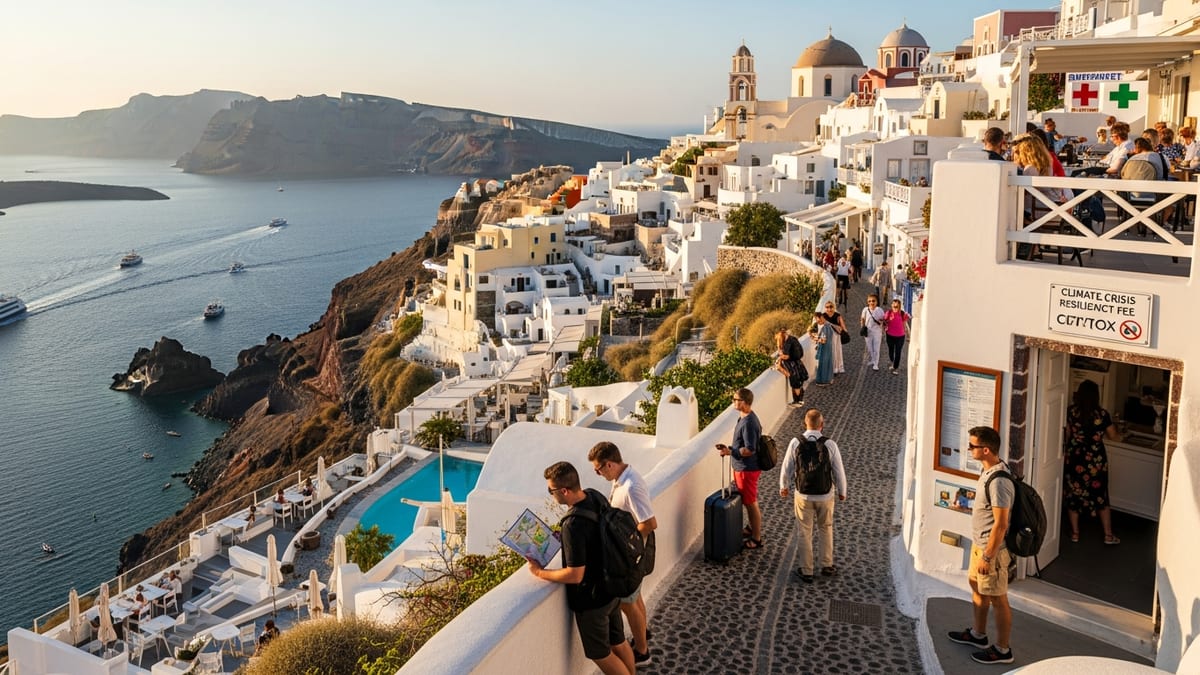
Perched along the rim of a flooded volcanic caldera, Fira is Santorini’s energetic capital and the island’s main transport and commercial hub. Whitewashed houses spill down sheer cliffs, blue-domed churches punctuate the skyline, and terraces overlook sea views that have lured travelers for decades.
Whether you are staying in Fira itself or simply passing through between ferries, understanding how the town works in 2026 will help you make the most of your time, from beating the cruise-ship crowds to navigating new tourist taxes and attraction hours.
Getting Your Bearings in Fira
Fira sits roughly in the center of Santorini’s western caldera edge, a compact tangle of pedestrian lanes spread along and just behind the cliff. The core of town is fully walkable, but it is also hilly, with plenty of steps and uneven stone paths. At the heart of Fira are two main squares: Theotokopoulou Square, where buses and taxis congregate nearby, and the smaller, cliffside plaza near the Orthodox Metropolitan Cathedral, which opens directly onto the caldera path with some of the town’s best panoramic views.
The settlement essentially has two faces. On the caldera side, you find boutique hotels, bars and restaurants tiered down the cliff, many with infinity pools or terraces suspended above the sea. On the inland side, the town runs into Firostefani and then Imerovigli, which are technically separate villages but feel like seamless extensions of Fira along the cliff path. Inland streets host supermarkets, pharmacies, casual eateries and services used by locals, which makes this area useful for practical errands and often a little cheaper.
Below Fira, at sea level, lies the Old Port (Gialos), accessible via a zigzag stairway of nearly 600 steps and by the Santorini Cable Car. This is where cruise tenders drop passengers during the day and where some boat excursions depart. It is important not to confuse the Old Port beneath Fira with Athinios, the main ferry port for inter-island and mainland connections. Athinios is several kilometers away on the island’s west coast and is reached by road, not by the cable car.
Because Fira is the hub for buses, tour pick-ups and much of the island’s nightlife, even travelers staying in Oia or the beaches usually pass through at least once. Knowing the geography of the town, along with where key viewpoints, museums and transport connections sit, will save you time and help you avoid backtracking through the crowds on hot summer days.
Top Sights and Caldera Views
Most visitors come to Fira for the views, and it does not disappoint. The main cliffside promenade runs from the Orthodox Metropolitan Cathedral south through Fira and north toward Firostefani. Along this route you will find a string of lookout points where you can gaze over the caldera, the volcanic islets of Nea Kameni and Palea Kameni, and the arcs of cliff-top villages marching off toward Oia. Early morning or late afternoon typically offer softer light and fewer people, while sunset can see terraces and lanes tightly packed, especially in high season.
Several churches add character to the skyline. The Orthodox Metropolitan Cathedral, with its sweeping arches and mosaic iconography, is one of the town’s most recognizable landmarks and a fine place to start a stroll along the caldera rim. Nearby, the Catholic Cathedral of St. John the Baptist, with its pastel bell tower, stands in the Catholic quarter and provides another visual focal point. Many smaller chapels dot the cliff paths, often with quiet courtyards where you can pause away from the busiest stretches.
For a more structured vantage point, some hotel and restaurant terraces open to non-guests for coffee, drinks or meals. Paying for a drink in exchange for a calmer seat and unobstructed view is often worthwhile in peak months, when the public paths can feel congested. Photography enthusiasts should consider scouting locations earlier in the day, as popular corners and rooftop viewpoints may be occupied by private events or wedding shoots in the evening.
At night, Fira’s caldera face lights up in a cascade of glowing terraces, which presents an entirely different atmosphere. Even if you are staying on the beaches or in quieter villages, an after-dark visit to the cliff path can be memorable, with the caldera reduced to a dark void and the focus shifting to the illuminated architecture hugging the cliff.
Museums, Culture and History
Beyond the views and nightlife, Fira has some of Santorini’s most important cultural institutions. The Museum of Prehistoric Thera presents finds from the Bronze Age settlement at Akrotiri and other prehistoric sites on the island, including exquisite frescoes, pottery and everyday objects that help bring the ancient Aegean world to life. Exhibits are clearly labeled and compact enough to explore in one to two hours, making it an ideal stop during the hottest part of the day.
The Archaeological Museum of Thera focuses more broadly on the island’s long history, from Geometric and Archaic artifacts to Roman and Byzantine eras. Together with the Prehistoric Museum, it offers context for the island’s dramatic geological story and its role in regional trade and culture. Hours can be shorter in winter and on certain holidays, and at least one of the main museums typically closes one day per week, often Monday, so it is worth checking opening times locally when you arrive.
Fira also has several small private galleries showcasing Greek and international art, from contemporary paintings and sculpture to jewelry and ceramics. Exploring these spaces offers a window into the island’s creative scene and can be a welcome break from souvenir shops. Many visitors are surprised to discover how strong the tradition of jewelry design is on Santorini, particularly pieces inspired by ancient Cycladic motifs or volcanic forms.
Religious life remains an important part of Fira’s identity, and if your visit coincides with a festival, you may witness processions, church services or local celebrations. While tourists are welcome to observe respectfully, remember that churches are active places of worship. Dress modestly when entering interiors, avoid using flash photography and respect any signage about restricted areas or visiting hours during services.
Experiences You Should Not Miss
One of the quintessential experiences from Fira is a boat excursion into the caldera, usually visiting Nea Kameni’s volcanic crater, the sulfurous hot springs off Palea Kameni, and sometimes Thirassia island across the water. Tours range from basic half-day trips on traditional wooden boats to small-group catamaran cruises with swimming, snorkeling and dining on board. In high season, departures are frequent, but advance booking is still advised, especially for sunset itineraries and smaller vessels.
From Fira’s cliff path you can also join longer hikes along the caldera edge. The best-known route connects Fira with Oia via Firostefani and Imerovigli, a roughly 10-kilometer trail that takes about three hours at a relaxed pace, not counting photo stops. Many travelers start in Fira early in the morning to avoid the midday heat, carrying water, sunscreen and a hat. The path alternates between paved sections and volcanic dirt, with some steep and rocky stretches, but the continuous sequence of viewpoints makes it one of the island’s most rewarding walks.
For nightlife, Fira remains Santorini’s liveliest town. Cliffside cocktail bars, open-air lounges and late-night clubs cluster near the caldera and inland streets. The atmosphere ranges from relaxed wine bars to high-energy venues with DJs and dancing until the early hours in peak months. If you are sensitive to noise, consider booking accommodation slightly outside the densest nightlife zone or in neighboring Firostefani or Imerovigli and visiting Fira’s bars as a guest rather than sleeping in the middle of the action.
Shopping can be more interesting than you might expect from a resort town. Alongside predictable souvenirs, look for shops featuring local designers, volcanic stone jewelry, Cycladic-inspired ceramics and Greek natural beauty products. Prices are often higher along the cliff, where rents are steep, so you may find better value on inland streets. In summer, many stores stay open late into the evening, which allows you to combine browsing, dining and sunset watching in a single outing.
Getting Around: Cable Car, Ports and Buses
The Santorini Cable Car connects Fira with the Old Port directly below the town. It is primarily used by cruise passengers and those joining boat tours from the port. In peak season, typical operating hours run from early morning to late evening, with frequent departures and a journey time of just a few minutes. Schedules can vary by month and according to cruise ship arrivals, and strong winds may cause temporary suspensions. Expect queues on busy cruise days, particularly in late afternoon when many passengers are returning to their ships.
The alternative to the cable car is the nearly 600-step stairway that zigzags up the cliff. Walking down requires good knees and steady footing, and walking up is a strenuous climb in the sun. The route is shared with working mules, and the combination of droppings, cobbles and heat makes it less romantic than photos might suggest. Animal welfare concerns have grown in recent years, and many travelers now avoid riding the donkeys altogether. If you have mobility issues or are traveling with young children, the cable car is generally the safer and more comfortable choice.
Athinios, the main ferry port where large ferries and high-speed vessels arrive and depart, is not beneath Fira and is reached via a separate, winding road. Local buses and private transfers connect Fira’s central bus station with Athinios, timed around major ferry departures. In high season, port traffic can be intense, and the road is narrow with hairpin turns, so allow extra time for transfers. Walking along this road is strongly discouraged for safety reasons. Taxis, pre-booked shuttles and rental cars all share the same route, and delays are common when several ferries arrive close together.
Within the island, Fira is the hub of the KTEL bus network, with routes radiating out to Oia, the airport, the main port, Kamari, Perissa and other key points. Buses are inexpensive and reasonably frequent in summer, although they can become crowded, with standing passengers, especially around sunset and during cruise-ship peaks. Schedules during shoulder and low seasons are more limited, particularly early in the morning and late at night, so check the latest timetables posted at the station when you arrive. If you plan multiple excursions and late evenings, combining buses during the day with one or two taxi or transfer rides can keep both your budget and your schedule manageable.
Where to Stay, Eat and Drink in and around Fira
Accommodation in Fira runs the gamut from simple guesthouses to upscale cliffside suites with private plunge pools. Cliff-facing properties charge a premium for caldera views, especially at sunset, and rates climb steeply in July and August. Rooms on the inland side, or in adjacent Firostefani and Karterados, are often significantly more affordable yet still within reasonable walking distance of Fira’s center. When comparing options, pay close attention to how many steps are involved, especially if you have heavy luggage or mobility concerns, as some hotels require steep descents or ascents from the nearest road.
Food-wise, Fira offers everything from gyros counters and bakeries to fine-dining restaurants. Cliffside venues typically emphasize atmosphere and sunset views, with pricing to match, while more local-style tavernas and casual eateries tend to sit a street or two back from the rim. Classic island dishes to look for include fava (yellow split pea puree), tomato fritters made with Santorini’s sun-dried tomatoes, grilled seafood, and white eggplant preparations. House wine from local vineyards pairs naturally with most menus, and many establishments highlight Santorini’s distinctive Assyrtiko whites.
Cafes and patisseries are scattered throughout the town, useful for early-morning coffee before buses and tours, or for an afternoon break from the heat. In peak season, consider adopting a Mediterranean rhythm, with a lighter lunch and a later dinner, as this can help you dodge the busiest restaurant times. Making reservations is advisable at popular cliffside restaurants, particularly for sunset-facing tables, while simpler spots inland are usually more flexible about walk-ins.
For drinks, choices range from quiet wine bars with curated Greek lists to high-energy cocktail spots featuring DJs. A sunset drink along the cliff is almost a rite of passage, but you do not need to repeat it every night to appreciate it. Combining one or two premium-view evenings with more relaxed nights in less crowded venues offers a good balance between atmosphere and budget. If you plan a late night out, confirm how you will get back to your accommodation, as bus service tapers off and taxis can be in high demand after midnight.
Costs, New Tourist Taxes and Practical Tips for 2026
Santorini in general, and Fira in particular, are among the more expensive destinations in Greece, and 2025 and 2026 have brought additional costs that travelers should factor into their budgets. Greece’s “climate crisis resilience” fee, which replaced the previous hotel tax, is charged per room per night and scales with accommodation category and season. In practice, visitors staying in midrange and higher-end hotels on Santorini during the main season can expect a daily surcharge that adds up over the course of a week-long stay. The fee is usually collected by hotels at check-in or check-out, separate from your booking total.
From mid-2025, an additional seasonal levy applies to cruise passengers disembarking in Santorini. Cruise visitors arriving between early June and the end of September pay the highest rate, with reduced amounts in shoulder months and winter. The fee is handled by cruise operators or agents rather than paid in cash on the pier, but it contributes to the overall cost of a cruise stop in Santorini and is part of wider efforts to manage overtourism and fund local infrastructure. If you are booking a cruise, check whether your line itemizes this fee in pre-cruise documentation so you understand what is included.
Everyday expenses in Fira vary dramatically depending on your choices. A coffee or simple snack on a back street can cost only a few euros, while cocktails and gourmet meals with caldera views command significantly higher prices. Public buses remain one of the island’s best-value services, and many memorable activities such as hiking the caldera paths or exploring the town’s lanes are free. Boat excursions, private transfers, wine tours and spa treatments are the experiences most likely to raise your overall trip cost, so prioritizing the ones that matter most to you helps keep spending in check.
Cash and cards are widely accepted, with most businesses taking major credit cards, though smaller shops and bus tickets still favor cash. ATMs are plentiful in Fira but can have queues or occasional outages during peak periods. Tap water on Santorini is not generally recommended for drinking, so factor bottled water into your daily budget or consider a reusable bottle with a filter system. Finally, summertime heat can be intense, especially during mid-afternoon, and shade is limited along exposed cliff paths, so comfortable shoes, sun protection and regular hydration are essential practicalities, not luxuries.
Safety, Crowds and When to Visit
Fira is generally a safe destination, with low violent crime and a visible presence of police and local authorities, particularly during the tourist season. Petty theft can occur in crowded areas, as in any busy tourist town, so standard common-sense measures apply: keep valuables secure, avoid leaving bags unattended on café chairs and be mindful of phones and wallets in dense crowds. At night, main streets and squares are busy and well-lit, though some smaller alleys can be darker and uneven underfoot, so watch your step after dark.
The main safety concerns on Santorini tend to be environmental and geological rather than criminal. The island remains an active volcanic region, and in early 2025 a swarm of small earthquakes prompted temporary precautionary measures and heightened monitoring. Authorities stressed that such episodes are part of the volcano’s long-term behavior and that major eruptions are extremely rare on human timescales. Even so, it is wise to follow any local guidance if seismic activity increases during your visit, as officials may temporarily close certain paths or sites for inspection and safety.
Overtourism is the other defining issue. On days when multiple large cruise ships anchor off the caldera, Fira’s narrow lanes can become heavily congested from late morning through mid-afternoon. This has driven the introduction of daily passenger caps for cruise arrivals and the new cruise levy. As a visitor, you can reduce your own exposure to crowds by exploring town early in the morning or after cruise departure times, and by using midday for museum visits, pool breaks or excursions away from the central lanes. Shoulder seasons in April, May and October balance more moderate visitor numbers with generally pleasant weather.
Winter brings a very different atmosphere. Many hotels and restaurants close or reduce operations, but a core of year-round businesses in Fira remains open, and accommodation prices drop significantly. Weather can be cooler and more changeable, with some transport schedules reduced, but if your priority is atmosphere and views rather than swimming and nightlife, the quieter months can be rewarding. Whenever you visit, consider travel insurance that covers disruptions, as ferry and flight schedules can be affected by strong winds or occasional strikes.
The Takeaway
Fira is more than just a pretty caldera view. It is the living, working heart of Santorini, where buses converge, ferries feed the island, and cliffside terraces host countless personal milestones against a backdrop of sea and sky. In 2026 it is also an evolving destination, grappling with questions of sustainability, visitor caps and new tourist taxes while still delivering the romantic images that draw travelers from around the world.
Approach Fira with a little planning and realistic expectations. Allow time to simply wander the lanes at quieter hours, budget for the rising costs embedded in accommodation and cruise fares, and respect the island’s geological and environmental sensitivities. Combine the headline experiences, such as a caldera boat trip or a sunset drink above the cliffs, with lesser-known pleasures like an early morning walk to Firostefani, a slow museum visit or a casual meal on a back street.
If you do, Fira becomes not only the place you pass through on your way to a beach or a ferry, but the lens through which you come to understand Santorini’s layered history and complex present. The town rewards repeat visits and unhurried moments, and with thoughtful choices, you can experience its beauty while contributing to a more sustainable future for the island.
FAQ
Q1. How many days should I spend in Fira?
For most travelers, two to three nights in or near Fira works well, giving you time to explore the town, visit its museums, enjoy at least one caldera boat excursion and take a cliffside walk without rushing. If you are using Fira as a base to explore the whole island by bus, adding a fourth night can make your schedule more relaxed.
Q2. Is Fira or Oia better as a base?
Fira is more central and practical, with the main bus station, more services and a wider choice of nightlife, while Oia is quieter at night and known for its highly photogenic sunsets. If you plan to move around the island by public transport or enjoy going out late, Fira generally makes a better base. If you prefer a smaller, more romantic setting and are willing to rely on transfers, Oia may suit you more.
Q3. How do I get from the main ferry port to Fira?
The main ferry port at Athinios is connected to Fira by a winding, cliff-hugging road. Public buses typically run to meet major ferry arrivals, and tickets are inexpensive but buses can be crowded in high season. You can also pre-book a shuttle or take a taxi from the port. Walking this road is not recommended due to distance, traffic and lack of sidewalks.
Q4. What is the best way to reach the Old Port below Fira?
You can reach the Old Port via the Santorini Cable Car or by walking the long stairway that zigzags down the cliff. The cable car is fast and scenic, but queues can be long during cruise peaks, while the steps demand good fitness and sure footing. Because of animal welfare concerns and the strenuous climb, many visitors now avoid riding the donkeys that also use the path.
Q5. Are there new tourist taxes I should know about?
Yes. Greece applies a “climate crisis resilience” fee on overnight stays, which varies by accommodation category and season and is collected by hotels in addition to your booking rate. Since 2025, cruise passengers disembarking in Santorini also pay a seasonal per-person levy managed through cruise operators. These charges are part of broader efforts to fund infrastructure and address overtourism, so factor them into your budget.
Q6. Is Fira suitable for travelers with limited mobility?
Fira’s topography can be challenging. Many streets and paths involve steps, slopes and uneven surfaces, and some hotels require steep stair access. However, the central squares and a few main streets are relatively level, and some accommodations advertise more accessible rooms near road level. If mobility is a concern, contact hotels directly to clarify step counts, elevator access and proximity to vehicle drop-off points.
Q7. When is the best time to visit Fira to avoid crowds?
April, May and October typically offer a good balance of pleasant weather and more manageable visitor numbers. Within any given day, early mornings and evenings after cruise departures are quieter, while late morning to mid-afternoon on peak cruise days can be extremely crowded. Winter months are very quiet but come with cooler weather, more limited services and reduced transport schedules.
Q8. Is the tap water in Fira safe to drink?
Tap water on Santorini is generally not recommended for drinking, largely due to its mineral content and limited freshwater resources. Locals and visitors typically rely on bottled water for drinking, which is widely available in supermarkets and kiosks. You can use tap water for brushing teeth and bathing, but for hydration, stick to bottled or filtered water.
Q9. How expensive is Fira compared with the rest of Greece?
Fira is among the more expensive places in Greece, especially for accommodation, dining with caldera views and organized excursions. Inland eateries, bakeries and supermarkets are more affordable, and public buses remain good value. If you are on a budget, mixing a few splurge experiences with everyday meals and activities off the main cliff path will keep costs under better control.
Q10. Is Santorini’s volcano currently dangerous for visitors?
Santorini is an active volcanic area, and mild seismic or volcanic activity is monitored continuously by Greek authorities. While small earthquake swarms can occur, experts currently consider the risk of a major eruption very low, and the island remains open to tourism. If you experience tremors during your stay, follow local guidance, respect any temporary closures and rely on official announcements rather than rumors.