

Perched on the eastern shore of Lake Huron, the town of Goderich in Ontario has long been celebrated as one of Canada’s prettiest small communities. With its unique octagonal downtown, trio of sandy beaches, and sweeping lake vistas that glow at sunset, Goderich blends historic character with a relaxed, beach-town atmosphere.
This guide brings together the essential experiences, practical tips, and local context you need to make the most of a visit to this Lake Huron gem.
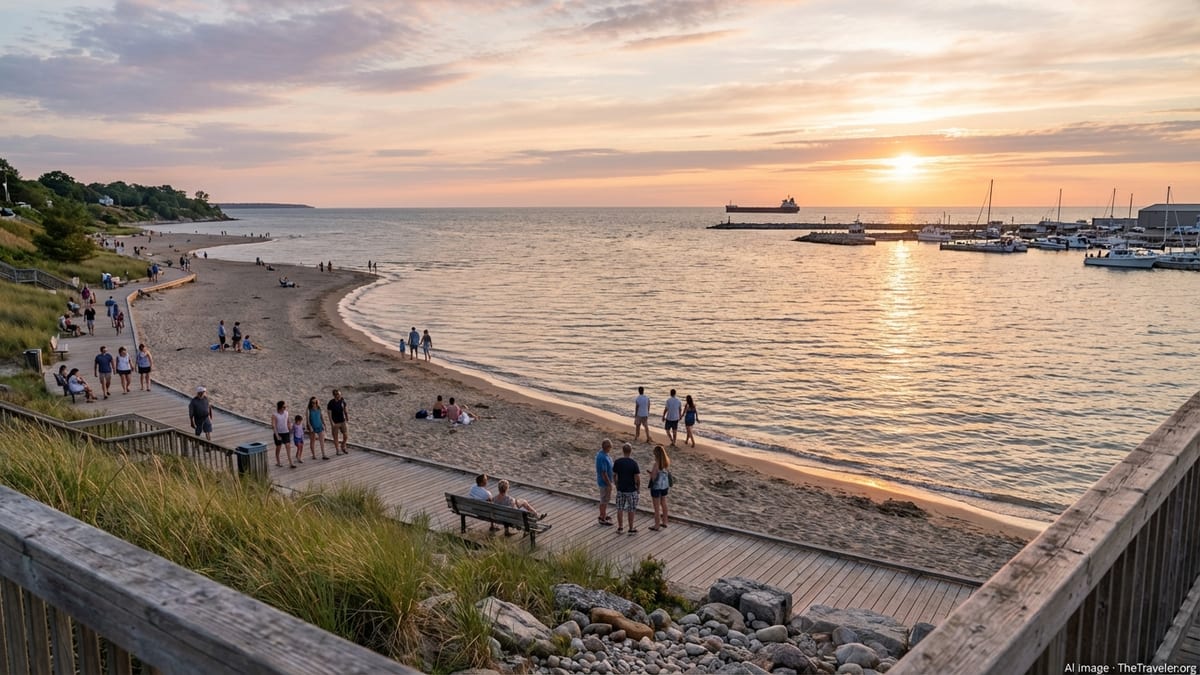
Getting to Know Goderich on Lake Huron
Goderich sits where the Maitland River meets Lake Huron, roughly a two and a half hour drive northwest of Toronto through the farmland and small towns of Huron County. With a population of just under 8,000 people, it feels compact and walkable, yet offers enough services, dining, and attractions to anchor a full weekend or longer stay. The town’s setting on low bluffs above the lake creates a distinctive two-level experience: a historic downtown on the upper level and a broad strand of beaches and boardwalk below.
Founded in the 1820s and named after British statesman Frederick John Robinson, 1st Viscount Goderich, the town was carefully planned from the outset. Its famous octagonal Courthouse Square was designed before many of the surrounding streets were built, a sign of how much thought went into both function and aesthetics. Today that plan still shapes how visitors experience the town, from the way traffic flows around the central park to the views that open up as you descend toward the waterfront.
Goderich’s economy has deep roots in agriculture, shipping, and salt mining, with a major underground salt mine still operating beneath Lake Huron. At the same time, tourism has become increasingly important. Visitors are drawn by the combination of small-town friendliness, heritage streetscapes, and the kind of wide, luminous sunsets that the Lake Huron shoreline is famous for. Even a short stay gives you a sense of a community that has chosen to protect its character while refreshing its public spaces.
The town has also proven resilient. In 2011, a powerful tornado tore through the core, heavily damaging buildings and mature trees around the square. Rather than changing direction, Goderich used the recovery period to restore its downtown and upgrade the waterfront, with improved public spaces and a more accessible boardwalk. The result is a community that feels both historic and renewed, with a strong sense of local pride.
The Historic Heart: Courthouse Square
At the center of Goderich stands Courthouse Square, the octagonal hub around which the town is organized. Locals simply call it The Square, and it serves as both a civic centerpiece and a natural gathering place. In the middle lies a landscaped park and the Huron County courthouse, while roads radiate outward like spokes, lined with low-rise brick buildings that house shops, services, and cafés. It is an unusual layout in North America, and one that gives Goderich an instantly recognizable identity.
The design of The Square, often described as a radial composition, is attributed to early town planner John Galt and the Canada Company, inspired in part by European and Roman precedents. Over the 19th century, the streets around it filled in with a mix of commercial and civic architecture. Many of these structures still stand, some restored after the 2011 storm, and together they form a streetscape of brick façades, display windows, and upper-storey apartments that reward slow wandering.
During the warmer months, Courthouse Square feels particularly lively. Patios spill onto the sidewalks, hanging baskets and planters brighten the corners, and weekend markets bring in both locals and visitors from across Huron County. The town’s famed farmers’ and flea markets set up within and around the square, with stalls that typically feature regional produce, preserves, maple products, baked goods, and handcrafted items. Even when you are not shopping, it is an engaging place to soak up the atmosphere.
The park in the middle of The Square is more than just a green island in a traffic circle. With benches, shade trees, and a performance area used for concerts and community events, it acts as Goderich’s outdoor living room. On a summer evening you might encounter live music or a small festival, while on quieter days it is simply a pleasant spot to sit with a coffee and watch the flow of town life. For most visitors, starting a walking tour of Goderich at Courthouse Square is the ideal way to understand both the town’s layout and its character.
Main Beach, St. Christopher’s, and Rotary Cove
From the upper town, a short, gently curving drive down to the waterfront brings you to one of Goderich’s main draws: a string of beaches that run along the Lake Huron shoreline. The town has three primary public beaches, each with a slightly different personality. They are linked by a boardwalk that lets you stroll or cycle between them while enjoying unobstructed lake views.
At the northern end is Main Beach, a broad swath of sand and fine gravel that fronts a sheltered harbor area. Here you can watch freighters and lake vessels docking to load salt and other commodities, a reminder that this is an active working port as well as a recreation area. Families gravitate to Main Beach for its easy vehicle access, parking, washrooms, and nearby snack options. The swimming area tends to feel lively on hot summer days, with the sounds of children playing and seagulls overhead.
South of Main Beach lies St. Christopher’s Beach, named in the 1960s in honor of the patron saint of travelers and mariners. This stretch has a somewhat more relaxed feel, with a mix of rocky shoreline and sand, a pavilion, playground equipment, and picnic tables set back from the water. The setting is well suited to family gatherings, casual barbecues, and long, unhurried afternoons watching waves roll in from the open lake. For those who like to intersperse swimming with shade and conversation, St. Christopher’s is an appealing middle ground between bustle and quiet.
At the far southern end of the waterfront is Rotary Cove, a sandy, family-friendly beach that has benefitted from decades of community investment. Picnic tables, benches, a playground, and seasonal food stands give this area a day-at-the-beach feel, while nearby trees provide pockets of shade. In summer, you may find lifeguard services in place, depending on local conditions and season. Because Rotary Cove sits slightly apart from the harbor, it often feels more purely recreational, with open views of the horizon and space to spread out on the sand.
Boardwalks, Bluffs, and Lake Huron Views
One of Goderich’s signature experiences is walking the waterfront boardwalk, a trail that runs for roughly a mile and a half along the shoreline and ties together Main Beach, St. Christopher’s, and Rotary Cove. The path is wide enough to comfortably share between walkers, strollers, and casual cyclists, and its surface is suitable for most levels of mobility. Throughout your walk, the sounds of waves and shorebirds form a steady backdrop, punctuated by the occasional horn of a ship in the harbor.
The boardwalk’s evolution reflects the town’s relationship with its waterfront. Where there were once eroding clay bluffs and patches of industrial shoreline, incremental restoration and regrading have created a broad beach and more stable edge. Over time, local Rotary members, municipal staff, and community volunteers planted trees, installed lighting, and added interpretive signage explaining Goderich’s marine heritage. Today, it feels like an integrated corridor of recreation, history, and nature, rather than a separate series of spots.
Above the beaches, a line of parks and lookouts along the bluff offers elevated views over Lake Huron and the port. Spots such as Lions Harbour Park and several smaller viewpoints let you gaze out over freighters at anchor, the curve of the shoreline, and, on clear days, the distant horizon where sky and lake meet. These vantage points can be especially dramatic at sunset, when the light drops behind the water and colors the sky in bands of pink, orange, and violet that Goderich is increasingly known for.
In all seasons, the interplay between lake and land shapes the experience of visiting Goderich. On calm summer days, the water may appear glassy and inviting, with small waves lapping at the sand. In late autumn or early spring, wind-driven swells crash against the breakwall and send spray into the air, creating a very different atmosphere. The boardwalk and bluff-top parks offer safe, accessible places to observe these changing moods without venturing into hazardous conditions, allowing you to appreciate the scale and power of Lake Huron up close.
Heritage, Culture, and Local Life
While the square and beaches define Goderich at first glance, the town’s deeper appeal lies in how its history and everyday life intersect. Alongside Courthouse Square you will find the Huron Historic Gaol and local museums that interpret the region’s past, including its role in settlement, agriculture, and maritime trade. A visit here adds context to the streets you stroll, from the early Canada Company headquarters that once stood by the square to the evolving use of the port and harbor.
Beyond formal museums, heritage is expressed in the details of the built environment. Walking the side streets near downtown, you will see a mix of Victorian homes, early 20th-century residences, and newer infill construction that followed the 2011 tornado. Many properties feature deep porches, gables, and mature gardens that speak to the town’s long-standing residential character. It is worth taking a slow loop a few blocks off the square, where you can appreciate the quieter rhythm of local life.
Cultural activity in Goderich is steady rather than overwhelming. Seasonal festivals, outdoor concerts, and arts events typically center on Courthouse Square and the waterfront, drawing on a regional audience. Summer weekends may include live music on the park stage or informal performances at patios and cafés. Makers and artisans from around Huron County often appear at markets and pop-up events, showcasing pottery, textiles, woodwork, and other crafts that reflect the area’s rural roots.
At street level, everyday businesses keep the town feeling lived-in rather than like a purely tourist enclave. Independent bookstores, bakeries, galleries, and specialty shops share space with practical services, ensuring that the downtown stays active year-round. Visitors benefit from this balance; even in quieter shoulder seasons, there is typically somewhere to find coffee, a meal, or a conversation with a local who can offer up-to-the-minute tips on current conditions and events.
Outdoor Adventures Beyond the Beach
Goderich’s location at the mouth of the Maitland River and along the Lake Huron shore makes it a natural base for outdoor exploration. In addition to the beach boardwalk, several local and regional trails fan out from town, linking river valleys, rail corridors, and wooded ravines. These routes offer an appealing contrast to time spent on the sand, especially in spring and autumn when the forests are at their most colorful.
One of the most notable routes is the Goderich to Auburn Rail Trail, which follows a former railway line through the countryside and across the Menesetung Bridge, a graceful former rail bridge with wide views over the Maitland River valley. From this elevated vantage point, you can see the river looping below, the forested slopes of the valley, and, in the distance, hints of Lake Huron beyond the treeline. The trail surface and grade are generally suitable for walking and cycling, though conditions can vary with weather.
Closer to town, nature enthusiasts often explore local conservation areas and short trail systems such as the Maitland Trail segments and woodland loops that thread through mixed hardwood forest. Wildflowers, migrating birds, and a variety of small mammals can be observed in these habitats, and the relative quiet provides a change of pace from the more social waterfront. As always in natural areas, it is wise to stay on marked paths, respect signage, and be prepared for uneven ground.
On the water, conditions dictate what is realistic and safe. During calmer stretches of summer, paddling, stand-up paddleboarding, and nearshore kayaking can be popular along the lakefront, especially in the more sheltered areas near the harbor. Wind and waves on the Great Lakes can change quickly, however, so many visitors choose to enjoy the water from shore unless they have experience and appropriate equipment. If you plan to get on the lake or the river, checking local advisories and speaking with outfitters or experienced residents is strongly recommended.
Planning Your Stay: When to Visit and Practical Tips
Choosing when to visit Goderich largely comes down to what kind of experience you are seeking. Late spring through early autumn tends to be the busiest season, as residents and visitors alike take advantage of beach weather, long daylight hours, and a fuller schedule of outdoor events. July and August often deliver the warmest lake temperatures and the most consistent conditions for swimming and sunbathing, along with peak crowds on weekends.
Shoulder seasons in late May, June, September, and early October can be especially rewarding for travelers who prioritize walking, photography, and quieter streets. Air temperatures are often mild, foliage is either emerging or turning, and the low-angle light over Lake Huron can be dramatic. Some seasonal businesses may operate on reduced hours outside the core summer period, so it is wise to check ahead if there are particular eateries or attractions you hope to visit.
Winter in Goderich has its own character. Snow-covered bluffs, ice-rimmed shorelines, and the muted palette of the lake under grey skies can be strikingly beautiful in a more austere way. The boardwalk and bluff-top parks remain accessible much of the time, though footing can be slippery and conditions change quickly. For those comfortable with winter driving and outdoor preparation, a cold-season visit offers a very different perspective on the town and its connection to Lake Huron.
Whatever the season, a few practical considerations help make a trip smoother. Summer parking near the waterfront can be busy, particularly on hot weekends, so arriving earlier in the day generally provides more options. Wind and sudden weather changes are common along large lakes, so layers, sun protection, and a willingness to adapt plans are useful. Local visitor information centers and municipal websites provide current updates on beach conditions, closures, and events, and staff at accommodations and shops are often excellent sources of current, informal advice.
The Takeaway
Goderich’s appeal lies in the way its elements fit together: the carefully planned historic square, the broad sweep of Lake Huron, the working harbor, and the sequence of beaches and parks that link them. It is a place where you can browse independent shops in the morning, walk a boardwalk beside freighters in the afternoon, and watch the sun sink below the lake from a bench on the bluff in the evening, all without feeling rushed.
Rather than offering a single headline attraction, Goderich unfolds slowly. The octagonal streets reveal new angles on the courthouse and park as you circle them, the boardwalk’s interpretive signs add layers of history to the view of the waves, and conversations at markets and cafés fill in the personality of the town. Whether you stay for a day or linger for a week, the result is often the same: a sense of having discovered a quietly distinctive place on the Lake Huron shore that balances everyday life with an extraordinary setting.
FAQ
Q1. Where is Goderich located?
Goderich is in southwestern Ontario, Canada, on the eastern shore of Lake Huron at the mouth of the Maitland River, serving as the county seat of Huron County.
Q2. What is special about Courthouse Square in Goderich?
Courthouse Square is an octagonal downtown core with a central park and courthouse, surrounded by radial streets lined with shops, cafés, and historic buildings, giving the town a unique layout and focal point.
Q3. How many public beaches does Goderich have?
Goderich has three main public-use beaches along Lake Huron: Main Beach near the harbor, St. Christopher’s Beach in the middle stretch, and Rotary Cove at the southern end.
Q4. Is the waterfront boardwalk suitable for all ages and abilities?
The waterfront boardwalk is generally wide, level, and suitable for most ages and abilities, including families with strollers and many visitors with limited mobility, though conditions can vary with weather.
Q5. When is the best time of year to visit Goderich?
The most popular time is late spring through early autumn for beach weather and events, while shoulder seasons offer milder temperatures, fewer crowds, and excellent conditions for walking and photography.
Q6. Can you swim safely in Lake Huron at Goderich’s beaches?
Swimming is a common summer activity, but conditions depend on weather, waves, and local advisories, so visitors should always follow posted signage and lifeguard guidance where available.
Q7. What outdoor activities are available beyond the beach?
Beyond the beach, visitors can enjoy lakeside and river valley trails, cycling routes such as the Goderich to Auburn Rail Trail, birdwatching, and exploring conservation areas and lookout parks.
Q8. Does Goderich have historical attractions to visit?
Yes, Goderich features heritage sites such as the Huron Historic Gaol, local museums, and interpretive signage around the harbor and waterfront that highlight the town’s maritime and settlement history.
Q9. Is Goderich suitable for a weekend getaway without a car?
Once in town, Goderich is compact and walkable, with the downtown and waterfront relatively close together, though regional transit options to and from the town may be limited compared to larger cities.
Q10. What is Goderich known for besides its beaches?
Goderich is known for its octagonal Courthouse Square, spectacular Lake Huron sunsets, a working deepwater port and salt mine, and a reputation as one of Canada’s prettiest small towns.