

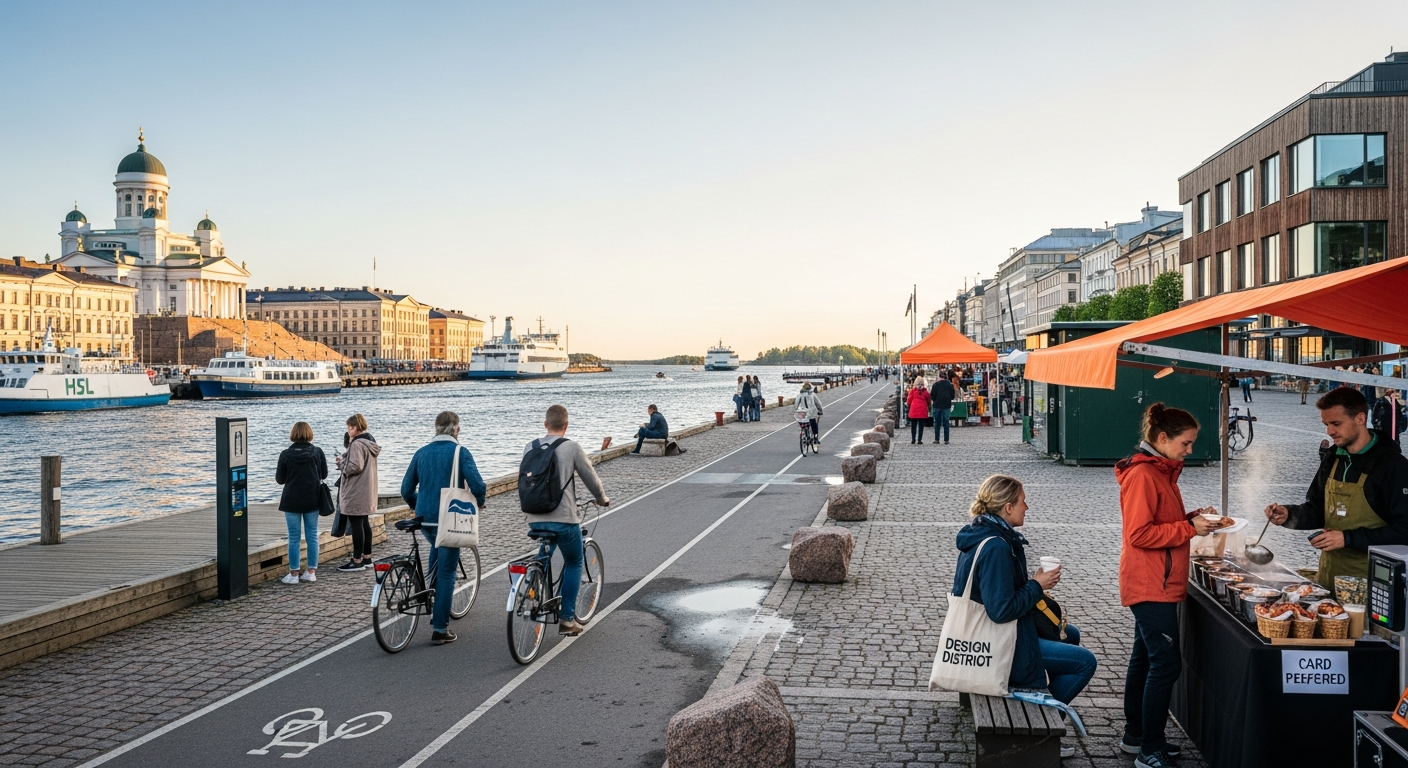
Helsinki is a city of quiet confidence, where cutting-edge design, Baltic seascapes and a fiercely sustainable way of life come together in a compact, walkable capital.
Whether you are here for a weekend city break, a winter adventure under the northern skies, or a longer Nordic itinerary, Helsinki rewards slow exploration, good planning and a willingness to embrace its saunas, ferries and inventive food scene.
This guide brings together what to see and do, plus the essential practical details to know before you go in 2025 and beyond.
Essential Things to Know Before You Go
Helsinki is an easy city for visitors, but a little advance knowledge will make your trip smoother and often cheaper. From when to visit and how to choose your neighborhood, to understanding local customs such as sauna etiquette and tipping, starting with the basics will help you feel at home quickly.
When to Visit Helsinki
Helsinki is a genuine four-season destination, and the city feels very different in July than it does in January. Deciding when to visit should depend on the kind of experience you want rather than chasing idealized “best” weather.
June to August is peak season, with long daylight hours, outdoor terraces, island ferries in full swing and a busy festival calendar. Temperatures are usually mild rather than hot, which makes it ideal for cycling, waterfront walks and late-night drinks on rooftop bars.
Accommodation prices are at their highest and popular attractions such as Suomenlinna Fortress and Löyly sauna get busy, but the city rarely feels overcrowded.
Spring and autumn bring fewer tourists, lower hotel rates and a more local feel. May and early June combine fresh greenery with lengthening days, while September and early October can offer crisp, clear weather and colorful parks. Late autumn is darker and quieter, but museums, design shops and the food scene become the main focus.
Winter visits, from December to March, are for travelers who do not mind snow, ice and very short days. In return, you get atmospheric streets, Christmas lights and, in December, the popular Helsinki Christmas Market on Senate Square.
If you are unlucky with cloud cover, you are unlikely to see the northern lights from the city itself, but winter is perfect for hopping into steamy saunas, trying ice swimming and visiting cozy cafés.
Currency, Costs and Cards
Finland uses the euro, and Helsinki is a cash-light city where cards rule almost everywhere. Contactless payment is widely accepted, from public transport ticket machines and tram validators to market stalls and food kiosks.
Ticket readers on local transport allow you to select zones and tap a contactless Visa or Mastercard to buy a single ticket on the spot, which is particularly convenient when arriving at Helsinki Airport and heading into town.
Helsinki is not a budget destination, but careful planning can keep costs under control. Public transport is excellent and affordable, tap water is clean and free, and many of the city’s best experiences involve the waterfront, parks and architecture rather than high entry fees.
Consider using lunch deals at restaurants, where high-quality set menus are generally cheaper than dinner, and combining paid attractions with free sights such as churches, markets and design districts.
Language and Local Etiquette
Finnish and Swedish are the two official languages of Helsinki, but English is widely spoken and used in menus, signage and public transport information. Learning a couple of Finnish phrases such as “kiitos” (thank you) and “moi” (hi) is appreciated but not essential.
Locals value personal space and a calm, low-key manner in public. Queues are respected, public transport is quiet and crowding doors or speaking loudly on trams is frowned upon.
Tipping is not expected and service charges are included in prices, though rounding up a bill or leaving a small tip in a restaurant or for exceptional taxi service is welcomed.
Sauna Culture Basics
Sauna is central to Finnish life and a quintessential part of a visit to Helsinki. You will find everything from traditional neighborhood saunas to sleek seaside complexes with Baltic views. Mixed-gender saunas typically require swimwear, while single-sex saunas are often textile-free, with towels provided or available to rent.
Always shower before entering the sauna, sit or lie on a towel, and keep conversation low. Pouring water on the hot stones to create steam is normal, but do so cautiously if others are sharing the space.
Many public saunas offer direct access to the sea or a cold plunge pool. A classic Helsinki ritual is alternating between hot sauna and an icy dip in winter or a cool swim in summer.
Top Sights and Neighborhoods in Helsinki
Helsinki’s main attractions are clustered around a walkable city center, but each neighborhood has its own character. From islands and fortresses to design streets and former industrial zones turned creative hubs, the city is best understood district by district.
Suomenlinna Sea Fortress
Suomenlinna, a UNESCO World Heritage sea fortress spread across several islands, is Helsinki’s signature attraction and an easy half-day excursion. Regular ferries operate year-round from Market Square, with the journey itself offering fine harbor views. Once there, a network of walking paths, tunnels and old fortifications reveals centuries of maritime history.
Beyond the military heritage, Suomenlinna feels like a living village, with cafés, galleries, a brewery and residents’ homes. It is especially atmospheric on sunny summer days and snowy winter afternoons, but sturdy footwear is important in any season because cobbled paths and rocky outcrops can be uneven and slippery.
Senate Square, Helsinki Cathedral and the Historic Core
Senate Square forms the classical heart of Helsinki, framed by neoclassical buildings and dominated by the white Helsinki Cathedral. The broad steps leading up to the church are a popular spot for photos and people-watching, while the square below hosts events and seasonal markets.
From here, you are within a short stroll of key sights such as the Government Palace, the University of Helsinki main building and the harborfront. In December, the area becomes even more atmospheric as stalls, lights and a vintage carousel appear for the city’s main Christmas market, which draws hundreds of thousands of visitors each year.
Market Square and the Waterfront
Market Square is Helsinki’s primary harborfront plaza and a natural starting point for island ferries, harbor cruises and waterfront walks. From spring to autumn, open-air stalls sell berries, vegetables, baked goods, coffee and souvenirs.
Simple food stands serve salmon soup, fried fish and traditional meat pastries, providing an easy way to sample local flavors without a formal restaurant booking.
The square is bordered by landmarks including the Presidential Palace and City Hall, and connects to the Esplanadi park promenade, where locals stroll between trees, cafés and boutiques.
On the opposite shore, new sustainable developments and waterfront paths have been reshaping former harbor areas into promenades, hotels and public spaces that emphasize low-carbon construction and access to the sea.
Temppeliaukio Church (Rock Church)
Carved directly into natural rock and covered with a copper dome, Temppeliaukio Church is one of Helsinki’s most distinctive buildings. Its combination of rough-hewn stone walls and soft natural light creates both striking visuals and excellent acoustics, making it a venue for concerts as well as regular services.
Arrive early in the day or later in the afternoon to avoid tour-bus crowds, and check opening hours in advance because the church may close for weddings or events. Photography is allowed, but visitors are expected to remain quiet and respectful, treating it as an active place of worship.
Design District and Shopping Streets
Helsinki’s Design District spans parts of Punavuori, Kaartinkaupunki and Ullanlinna, with streets full of independent boutiques, galleries, vintage stores and studios. This is where you will find contemporary Finnish fashion, ceramics, textiles and furniture, alongside classic names associated with Finnish design.
Window-shopping is an attraction in itself, but serious design enthusiasts should allow a half-day to explore side streets, pop-up exhibitions and small cafés in between. Prices are not low, but items are usually made to last and reflect the city’s emphasis on craftsmanship and sustainability.
Kallio and the Creative East
Across the water from the center, Kallio has transformed from a traditional working-class neighborhood into one of Helsinki’s liveliest quarters. Here you will find vintage shops, record stores, beer bars, late-night venues and small, inventive eateries. The vibe is more bohemian and youthful than in the downtown business district.
Nearby areas such as Kalasatama and Suvilahti showcase Helsinki’s ongoing urban regeneration, with waterfront paths, event spaces and repurposed industrial sites. If you are curious about how the city is evolving beyond classic postcard views, exploring this eastern side of Helsinki is essential.
Experiences You Should Not Miss
Beyond ticking off landmarks, Helsinki is about experiences: steaming in a seaside sauna, crossing ice-sprinkled harbors by ferry, sampling hyperlocal ingredients and moving at the city’s unhurried rhythm. These are the activities that define a Helsinki visit in 2025.
Sauna and Sea Swimming
Spending time in a public sauna is one of the most authentic ways to connect with Finnish culture. In Helsinki, you can choose between sleek design-driven sauna complexes on the waterfront, historic public saunas in residential districts and smaller neighborhood spots known mainly to locals.
Many of the most popular venues combine sauna with direct sea access, allowing year-round swimming. In winter, holes are cut in the ice for bracing dips between sauna sessions, supported by lifeguards and safe access points. In summer, lingering on terraces with a drink and watching the sun slide slowly toward the horizon becomes part of the ritual.
Island-Hopping in the Archipelago
Helsinki sits in a vast archipelago, and ferries and small boats connect dozens of islands that are open to visitors. In addition to Suomenlinna, islands near the city center offer everything from picnic lawns and coastal walks to restaurants and public saunas with sea views.
Summer is the main island-hopping season, when schedules are frequent and cafés and seasonal eateries are open. Pack a light jacket even on warm days, because breezes on open water can be cool, and bring snacks and water if you plan to spend longer hours on smaller islands where services are limited.
Walking and Cycling the Waterfront
Helsinki’s extensive waterfront paths and green corridors make walking or cycling one of the best ways to absorb the city. Long stretches of car-free coastline link parks, beaches, residential neighborhoods and new eco-friendly developments, often with wide cycle lanes and space for pedestrians.
Bike rental options range from hotel bikes to independent rental shops, and cycling infrastructure is generally well marked and safe. Even if you prefer to walk, consider planning at least one long ramble that follows the coast, taking in beaches, viewpoints and cafés along the way.
Seasonal Events and Festivals
While the full event calendar changes year by year, several recurring highlights anchor Helsinki’s cultural life. In winter, the Helsinki Christmas Market turns Senate Square into a festive village from early to late December, while light festivals illuminate the darker months with projections and installations.
Summer is shaped by outdoor concerts, design events, food festivals and neighborhood celebrations. Major sports and cultural competitions, including international figure skating events like the Finlandia Trophy when held in Helsinki, periodically bring a global audience to the city and add extra buzz, particularly around the main arenas and fan zones.
Helsinki’s Food and Drink Scene
Few European capitals have reinvented their culinary identity as thoroughly as Helsinki. The city now sits comfortably on the global food map, with a stable set of Michelin-starred restaurants and a fast-evolving casual dining scene led by chefs who balance creativity with sustainability and informal service.
Michelin-Starred and High-End Dining
Helsinki currently hosts half a dozen Michelin-starred restaurants, including one with two stars, reflecting the city’s commitment to serious, technically ambitious cuisine.
Menus typically highlight wild fish, game, seasonal vegetables, berries and mushrooms sourced from Finland’s forests, lakes and farms, often prepared with a light, minimalist touch.
Reservations are essential, especially on weekends and during major events. Tasting menus dominate at the top end, and wine pairings or non-alcoholic drink flights built around Nordic ingredients are common.
Prices are comparable to other Nordic capitals, but the emphasis on locally sourced produce and thoughtful plating makes fine dining a concentrated way to experience Finnish flavors.
The Rise of Creative Casual Restaurants
Alongside the formal dining rooms, Helsinki’s most dynamic culinary story in recent years has been the rise of relaxed, chef-driven restaurants. Many are led by cooks with high-end backgrounds who now favor short menus, neighborhood locations and a focus on thoughtful, ingredient-led dishes without white tablecloths.
Casual spots specializing in Nordic-Japanese mashups, seasonal bistro cooking or natural-wine-friendly small plates are scattered across inner-city districts, particularly in the Design District, Kallio and on streets just beyond the busiest tourist routes. These places are ideal for travelers who want high-quality cooking in a less formal environment, and they often offer better value than top-tier tasting menus.
Traditional Flavors and Everyday Eating
At street level, Helsinki offers plenty of ways to sample Finnish staples without committing to long meals. Indoor markets and food halls serve salmon soup, rye bread, cinnamon buns, pastries and filter coffee, while outdoor kiosks known as “lippakioski” dispense snacks, ice cream and simple lunches.
Look out for dishes with locally sourced fish, wild mushrooms, root vegetables and game, as well as modern takes on classics such as open sandwiches, porridge with creative toppings and seasonal berry desserts. Vegetarian and vegan options are widely available, reflecting both local demand and the city’s broader sustainability goals.
Cafés, Bars and Nightlife
Helsinki has one of the highest per-capita rates of coffee consumption in the world, and café culture reflects that. From minimalist third-wave coffee bars in the Design District to old-fashioned sweet shops with glass cases full of pastries, you are rarely far from a good espresso or a simple cup of filter coffee.
Craft beer, natural wine and small cocktail bars have also flourished, especially in neighborhoods like Kallio and along the edges of the city center. Nightlife tends to be relaxed rather than frenetic, with many venues doubling as cafés by day and bars by night. Dress codes are informal, but do bring a warm layer for late-night walks between venues, even in summer.
Getting Around: Transport and Practicalities
Helsinki is compact enough to explore on foot but big enough that you will likely use its excellent public transport network. Understanding zones, tickets and the basics of airport transfers can save money and time, particularly on shorter stays.
From the Airport to the City Center
Helsinki Airport is connected to the city center by frequent commuter trains that run roughly every 10 minutes at peak times. The journey takes about half an hour and is usually the fastest and most reliable way into town, avoiding road traffic and unpredictable taxi queues.
To ride the train, you need a ticket valid for zones A, B and C. You can purchase this as an ABC single ticket via the HSL public transport app, at station ticket machines or by using contactless payment at card readers, which let you select the right zones and tap your card to buy a time-limited ticket. Once your ticket is active, it covers transfers onto trams, buses and metro services within the same validity period.
Understanding Zones and Tickets
Helsinki’s wider metropolitan area is divided into zones A, B, C and D. Most visitors stay and travel within zones A and B, which cover the downtown area and many central neighborhoods. The airport falls into zone C, so journeys to and from flights require three-zone tickets.
Ticket options include single tickets, which are valid for a set time window and allow transfers, and day tickets covering one or more days of unlimited travel within your chosen zones.
For brief city breaks focused on central sightseeing, a one to three-day ticket for zones AB or ABC can be more cost-effective than buying multiple singles, especially if you plan to use trams frequently or hop between districts.
Trams, Metro, Buses and Ferries
Helsinki’s trams are the backbone of inner-city transport, crisscrossing major streets and connecting key sights. They are easy to navigate, with clear route maps and announcements in multiple languages. The metro, while smaller in scope than in some capitals, provides fast links east and west, and buses fill in gaps around the region.
City ferries function as both public transport and miniature cruises, particularly on the routes between Market Square and Suomenlinna and other nearby islands. In most cases, the same tickets and zones apply, making it simple to integrate a ferry ride into your day without separate fare systems.
Walking, Cycling and Scooters
Within the central districts, walking is often the most straightforward way to get around. Distances between the main sights are modest, and wide pavements and pedestrianized areas make strolling enjoyable in good weather. In winter, sidewalks are generally cleared of snow and sanded, but footwear with good grip is essential.
Cycling is increasingly popular, supported by extensive bike lanes and routes that follow the coastline and connect parks and residential areas. Rental bikes and e-scooters are widely available during the snow-free months, though regulations on where they can be ridden and parked are enforced, so always check local rules on speed limits and parking zones.
Where to Stay in Helsinki
Helsinki’s accommodation scene mirrors its broader character: design-forward, sustainable and not overly flashy. From waterfront hotels in new timber buildings to compact design hotels in historic blocks and laid-back hostels in arty neighborhoods, there are options for most budgets, though advance booking is wise for peak summer and major event dates.
City Center and Esplanadi
Staying in or near the compact downtown area around the Central Railway Station, Esplanadi park and Market Square puts you within walking distance of many top attractions. This is the most convenient base for a first visit, with easy access to trams, ferries, shopping streets and major museums.
Hotels here range from traditional grand properties with high ceilings and harbor views to sleek modern establishments that emphasize Nordic minimalism and sustainability. Prices are higher than in outlying neighborhoods, but time saved on transport can be valuable, particularly on weekend visits.
Waterfront and Harbor Districts
Several redeveloped harborfront areas offer a blend of cutting-edge architecture, water views and proximity to both the city center and ferries. New timber buildings and eco-certified hotels have opened along the waterfront, often with in-house saunas, restaurants that prioritize locally sourced ingredients and direct access to promenades and cycle paths.
These districts suit travelers who want a sense of space and calm but still need quick connections into the core. Expect design details in wood and glass, high insulation standards and in-house initiatives focused on low-carbon operations, such as renewable electricity and reduced food waste.
Design District, Punavuori and Kallio
For a more local feel, consider staying in the Design District or nearby residential areas like Punavuori, which put you close to independent shops, galleries and smaller restaurants. Boutique hotels, guesthouses and high-quality apartments are common, and evening options are plentiful without the busiest tourist crowds.
Kallio and the surrounding eastern districts appeal to travelers seeking nightlife and creative culture. Accommodation here tends to be more modest in scale, with guesthouses, smaller hotels and private rentals above bars, cafés and record shops. Trams run frequently into the center, making it a viable base even if you plan to tour the main sights.
Booking Tips and Sustainability
Helsinki has a high proportion of green-certified hotels, reflecting the city’s emphasis on sustainable tourism. When choosing a place to stay, look for properties that publish information about their environmental practices, energy use and sourcing of food and furnishings. Many hotels also offer discounts or perks for guests who skip daily housekeeping or arrive by train rather than plane.
As in most popular European cities, booking early secures the best choice of rooms and rates, particularly around summer weekends, major festivals and international conferences. Flexible cancellation policies are common, but always check specific terms, especially for non-refundable promotional rates.
The Takeaway
Helsinki is not a city of spectacle but of detail: the texture of rock in a church carved from granite, the smell of pine in a seaside sauna, the clean lines of a tram gliding past a waterfront park. It rewards curiosity more than box-ticking, and at its best it feels less like a stage set for tourists and more like an authentic, functioning city that you are briefly invited to share.
With thoughtful planning around seasons, neighborhoods and transport, even a short stay can combine island fortresses, design boutiques, public saunas and ambitious Nordic cooking. For travelers interested in sustainability, architecture and a calmer pace of urban life, Helsinki in 2025 stands out as one of Europe’s most compelling city breaks.
FAQ
Q1: Do I need cash in Helsinki, or are cards enough?
Cards are sufficient for almost all transactions in Helsinki, including public transport, restaurants, shops and many market stalls. Contactless payment with major credit and debit cards is widely accepted, and it is increasingly rare to encounter a cash-only business.
Q2: How many days should I spend in Helsinki?
Three full days is an ideal minimum for a first visit, allowing time for the main sights, a half-day trip to Suomenlinna, at least one sauna experience and unstructured wandering in districts like the Design District or Kallio. Shorter visits are still rewarding, but you will have to be more selective.
Q3: Is Helsinki a good destination in winter?
Yes, if you are prepared for cold temperatures, snow and limited daylight hours. Winter brings a different kind of beauty, with quiet streets, frozen harbors and an emphasis on saunas, cafés, museums and seasonal markets. Pack warm layers, waterproof footwear with good grip and be ready for early nightfall.
Q4: Can I see the northern lights in Helsinki?
It is possible but unlikely, because light pollution and frequent cloud cover make aurora sightings rare in the city. If seeing the northern lights is a priority, plan at least one night further north in Finland, where dark skies and clearer conditions greatly increase your chances.
Q5: Is Helsinki walkable for visitors?
Helsinki is very walkable, with a compact city center, wide pavements and pedestrian-friendly areas. Many key attractions are within a 15 to 20 minute walk of each other. For longer distances or bad weather, trams, buses and the metro provide easy backups.
Q6: How expensive is eating out in Helsinki?
Eating out is relatively expensive compared with many European cities, particularly at dinner and in fine-dining restaurants. You can manage costs by targeting weekday lunch deals, using food halls and markets, and mixing occasional splurge meals with simpler, casual options such as bistros, cafés and kiosk snacks.
Q7: Do I need to book saunas and restaurants in advance?
For popular public saunas and well-known restaurants, especially those with Michelin recognition or strong media coverage, advance reservations are strongly recommended, particularly on weekends and in peak summer or around December holidays. Smaller neighborhood spots may accept walk-ins, but booking ahead is still a good idea if you are on a tight schedule.
Q8: Is English widely spoken in Helsinki?
Yes. Most people working in hospitality, retail and public services speak good English, and many signs, menus and transport announcements are available in English. You will have no practical difficulty getting around without Finnish, though learning a few basic phrases is appreciated.
Q9: What should I pack for a trip to Helsinki?
Your packing list should be driven by season. Year-round essentials include comfortable walking shoes, a waterproof outer layer and clothing you can wear in layers. In winter add thermal layers, gloves, a hat and insulated boots, while in summer pack a light jacket for cool evenings and a sleep mask if you are sensitive to long daylight hours.
Q10: Is Helsinki safe for solo travelers and families?
Helsinki generally ranks as a very safe city, with low levels of violent crime and a strong social safety net. Standard urban precautions apply, such as keeping an eye on belongings in busy areas, but serious incidents are rare. Public transport is safe and reliable, and the city’s size and infrastructure make it a comfortable destination for solo travelers, families with children and older visitors alike.