

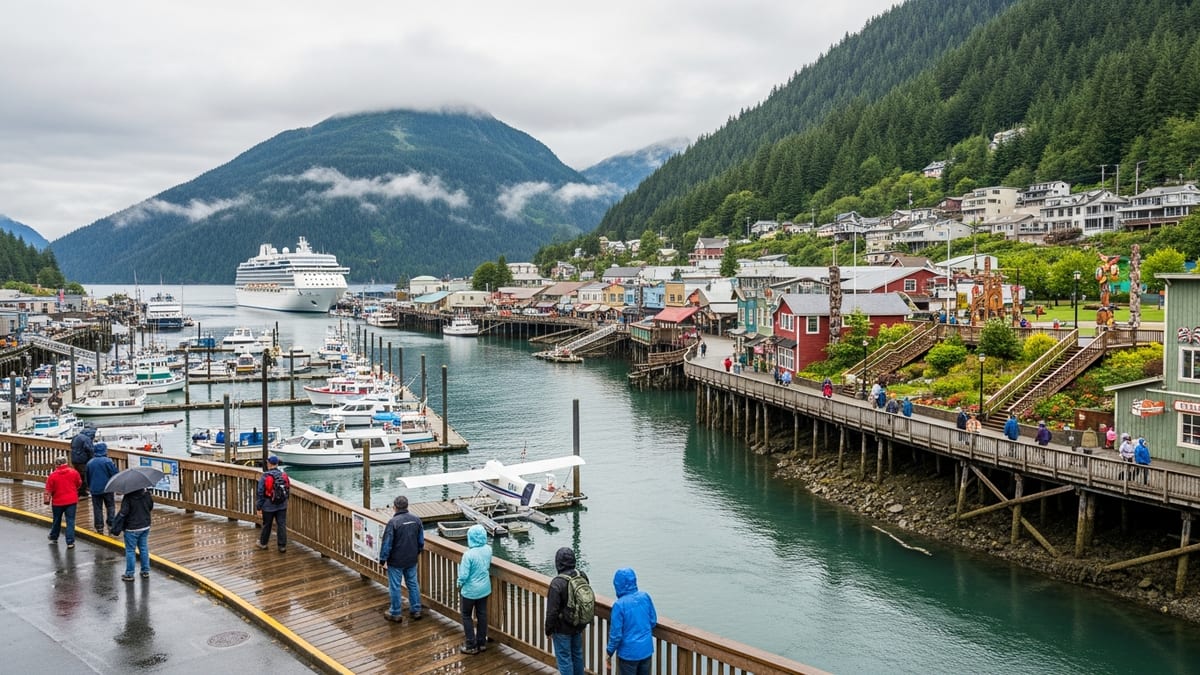
Ketchikan is the self-proclaimed Salmon Capital of the World and one of the first ports of call for many travelers entering Alaska’s Inside Passage. Backed by temperate rainforest and fronted by a busy waterfront, it offers a mix of Indigenous culture, Gold Rush history, outdoor adventure and small-town charm. Whether you arrive on a cruise ship or fly in for a longer stay, a bit of planning goes a long way in this compact but experience-rich community.
Understanding Ketchikan and When to Go
Ketchikan sits on Revillagigedo Island in Southeast Alaska along the famed Inside Passage. The town hugs a narrow strip of shoreline at the base of steep, forested mountains, which means nearly everything is concentrated along one main corridor. That geography makes Ketchikan incredibly walkable for visitors, especially around the downtown and harbor area where most attractions cluster close to the cruise docks.
The climate is maritime and mild by Alaska standards, but it is also one of the wettest places in North America. Ketchikan typically records more than 140 inches of rain per year. Even in summer, showers are common and cloud-filled skies are more likely than bluebird days. Temperatures from late May through early September usually hover between the mid 50s and mid 60s Fahrenheit, occasionally warmer on sunny days.
Peak visitor season runs from May through September, when cruise ships call almost daily and tour operators run at full capacity. The local visitor bureau encourages travelers planning summer trips to book transportation and lodging well in advance, especially in July and August when both ship and independent traffic are highest. Same-day tour bookings are often available through the tour center near the docks, but sought-after excursions can sell out in advance.
Shoulder-season visits in April or October bring fewer crowds and lower prices, but also a thinner tour schedule and more unpredictable weather. Winter sees very little tourist traffic. If you are hoping to see salmon running in Ketchikan Creek or eagles feeding along the waterfront, aim for late July through September, when fish runs are typically strongest.
Top Sights You Should Not Miss
For a compact town, Ketchikan offers several standout sights that can easily fill a day or more. Chief among them is Creek Street, the historic boardwalk perched on pilings over Ketchikan Creek. Once the town’s red-light district from the early 1900s until the 1950s, it is now a colorful cluster of shops, galleries and small museums. The boardwalk curves gracefully above the creek, which teems with salmon during late summer runs. Storyboards, plaques and costumed guides share tales of the district’s former brothels and the infamous “Married Man’s Trail” used to evade raids.
Just a short walk from the docks, the Southeast Alaska Discovery Center serves as a thoughtful introduction to the region. Operated by the United States Forest Service, the center focuses on the ecology of the Tongass National Forest, Alaska Native cultures in Southeast, and the modern relationship between people and this vast temperate rainforest. Exhibits are hands-on and family friendly, and the indoor setting is ideal for a rainy-day orientation to Ketchikan and its surroundings.
Ketchikan is also renowned for its totem poles, and there are few better places to appreciate them than at the Totem Heritage Center. This city-run museum preserves and displays original 19th-century poles recovered from abandoned village sites, along with contemporary examples. Panels and staff interpreters explain the stories, artistry and cultural significance of Tlingit, Haida and Tsimshian carving traditions.
About 10 miles north of town along the North Tongass Highway, Totem Bight State Historical Park combines coastal scenery with an array of restored and replica poles set amid moss-draped forest. A reconstructed clan house offers a glimpse into traditional village life. Many visitors pair a trip to Totem Bight with a stop at nearby totem parks or carving centers, making for a half-day immersion in regional Indigenous heritage.
Outdoor Adventures and Wildlife Experiences
Ketchikan’s dramatic setting between sea and forest makes it a natural base for outdoor adventures. One of the most popular is flightseeing over Misty Fjords National Monument, a vast wilderness of glacially carved fjords, sheer granite cliffs and mirrored lakes. Small floatplanes take off from the Ketchikan harbor and within minutes you are soaring above waterfalls, snowfields and narrow inlets that are otherwise extremely difficult to reach. Some itineraries include water landings on remote lakes for brief shore excursions.
On the water, a wide range of boat-based wildlife and scenic tours depart from near the cruise berths and harbor marinas. These excursions might focus on whale and marine life viewing in the Inside Passage, lighthouse and island sightseeing, or Misty Fjords cruises that offer a slower-paced alternative to flightseeing. Along the way, it is common to spot harbor seals, sea lions, porpoises and bald eagles, and in-season there are good chances of seeing humpback whales and sometimes orcas.
Fishing charters are a major draw. Depending on the time of year, visitors can target salmon or halibut on half-day or full-day trips. Many operators will arrange to process and ship your catch home. In late summer, simply walking the bridges over Ketchikan Creek offers a spectacular view of salmon fighting their way upstream, with eagles perched nearby waiting for an easy meal.
On land, guided hiking tours explore the rainforest that blankets the surrounding hills. Trails range from gentle boardwalks through muskeg and old-growth forest to more strenuous routes that gain significant elevation for panoramic views over the town and Tongass Narrows. ATV and Jeep tours follow historic logging roads and often combine views, light off-roading and short walks to scenic overlooks or secluded lakes. Even if you are not on a tour, there are accessible local trails reachable by bus or taxi for a few hours of independent hiking.
Cultural Experiences, History and Local Flavor
Beyond its natural charms, Ketchikan offers a surprising variety of cultural and historical experiences in a compact radius. Start with a walk along the waterfront and up into the historic downtown. Wooden staircases climb the steep hillside to neighborhoods with classic clapboard homes, while murals and public art highlight the town’s maritime and Indigenous heritage.
The Great Alaskan Lumberjack Show, located near the harbor, puts a theatrical spin on Ketchikan’s logging past. Over the course of about an hour, teams of competitive lumberjacks face off in events such as log rolling, speed climbing and axe throwing, interspersed with commentary about the timber industry that once drove the local economy. The show is lighthearted and family friendly, and its close proximity to the cruise berths makes it a convenient option for short stays.
Art is another strong thread in the local fabric. Numerous galleries and shops downtown showcase Northwest Coast Indigenous carving, jewelry, prints and contemporary work by both Native and non-Native artists. While mass-produced souvenirs are easy to find, look for labels or staff information that distinguish locally made pieces and Native-owned studios. Investing in these works directly supports practicing artists and cultural continuity.
Food in Ketchikan reflects both its fishing heritage and its role as a visitor hub. Salmon, halibut and Dungeness crab feature prominently on menus, from casual harborfront eateries to more upscale dining rooms with water views. Many restaurants highlight smoked and grilled salmon, fish and chips, and chowders using local seafood. In summer, pop-up stands and seasonal venues often sell salmon tacos, crab legs or reindeer sausages to go. Coffee shops, bakeries and brewpubs round out the options, providing comfortable refuges when the rain sets in.
Getting There, Getting Around and Cruise Port Logistics
Most visitors reach Ketchikan either by cruise ship or by air. The Port of Ketchikan accommodates multiple large cruise ships at four main berths spread along the downtown waterfront, making it one of the busiest cruise ports in Alaska. On heavy traffic days, the streets around the docks can feel crowded as thousands of passengers disembark within a short window, so allow extra time to move between the piers and downtown attractions.
Independent travelers typically fly into Ketchikan International Airport, located on Gravina Island across the Tongass Narrows from town. A short airport ferry connects arriving passengers with the road system on Revillagigedo Island, after which taxis, rental cars and local buses provide onward transport to hotels and downtown. Flights connect Ketchikan to other Southeast Alaska communities and to larger hubs such as Seattle.
Once in town, you can easily explore the central area on foot. For longer distances, Ketchikan Gateway Borough operates an extensive public transit system known simply as The Bus. Fixed routes serve the city of Ketchikan, the neighboring village of Saxman and areas of the surrounding borough, with service generally running from early morning into the evening seven days a week. Summer-only downtown shuttles circulate between the cruise ship docks and key downtown stops when ships are in port, offering an easy option for visitors unfamiliar with the area.
Fares for the fixed-route buses are modest relative to many U.S. cities, and all buses are wheelchair accessible. The system connects to popular visitor stops such as Totem Bight and various shopping centers, making it a cost-effective alternative to taxis and tour buses if you are comfortable navigating a route map. For travelers with mobility limitations, a complementary paratransit service operates during the same hours within designated areas, although advance registration and reservations are required.
Practical Planning: Weather, What to Pack and Safety
Planning for Ketchikan starts with accepting that you will likely encounter rain at some point during your visit. The key is to pack for comfort rather than hoping for perfect weather. A lightweight, fully waterproof jacket with a hood, quick-drying layers, and comfortable waterproof or water-resistant shoes are far more useful than heavy winter gear in summer. Add a compact umbrella, but do not rely on it exclusively, as wind can make umbrellas awkward near the waterfront and on exposed boardwalks.
Temperatures in peak season are cool but rarely cold, so think in terms of layers. A base layer, fleece or light sweater, and shell will handle most conditions. If you plan on boat tours or flightseeing, remember that it often feels cooler on the water or at altitude. Gloves and a warm hat can make a significant difference in your comfort on open-deck vessels or while waiting outdoors in damp conditions.
Footwear matters more than you might expect. Downtown sidewalks and Creek Street’s wooden boardwalk can become slick when wet. Sturdy shoes with good grip are safer than smooth-soled fashion footwear. If you intend to hike, choose closed-toe shoes or hiking boots suitable for muddy, root-strewn trails. A small daypack with a dry bag or plastic liner protects cameras and electronics during surprise downpours.
In terms of safety, Ketchikan is generally considered a low-crime destination with a strong focus on visitor services. As in any busy port, standard precautions apply: keep valuables secure, be aware of your surroundings in crowded areas and watch for traffic when crossing streets between buses and ships. Nature-related hazards are more likely than human ones. Trails can be slippery, and bears are present in the surrounding forest, particularly where salmon streams are nearby. If you are hiking independently, learn basic bear safety, make noise on the trail and follow posted guidance from local authorities.
Budgeting, Booking Tours and Avoiding Crowds
Costs in Ketchikan can be high compared with many mainland destinations, reflecting both its remoteness and the short tourism season. Flightseeing and boat excursions are often the priciest activities, but many travelers consider at least one such splurge central to the Alaska experience. Shore excursions booked through cruise lines tend to carry a premium; independent booking directly with reputable local operators or through the visitor bureau’s tour center can sometimes save money or offer more flexible itineraries.
For travelers on tighter budgets, Ketchikan still offers plenty to do with modest spending. Public buses provide inexpensive access to totem parks and some trailheads. Creek Street, the harborfront, and multiple small museums and galleries can be enjoyed for little or no admission. Watching salmon surging up Ketchikan Creek, scanning for eagles along the waterfront, or simply wandering the staircases and viewpoints above town are rewarding, low-cost ways to spend a day.
Booking ahead is crucial during peak months if you have specific tours in mind, such as Misty Fjords flightseeing, fishing charters or limited-capacity cultural programs. These popular activities can sell out well before arrival, particularly when several large ships are in port simultaneously. If you prefer spontaneity, check the day’s ship schedule; days with fewer or smaller vessels usually feel less pressured and may offer better last-minute availability.
To avoid the heaviest crowds, consider starting your day early, especially on multi-ship days when most passengers disembark mid-morning. Visit headline sights such as Creek Street and the Discovery Center early or late in the day. If your ship stays into the evening, downtown often quiets down dramatically after mid-afternoon when day tours wind down and many passengers reboard, giving you a different, more relaxed perspective on town.
The Takeaway
Ketchikan may be a small community, but it delivers an outsized Alaska experience. In a single day you can stand in a rainforest beneath centuries-old trees, watch salmon and eagles animate a downtown creek, learn the stories carved into towering totem poles and board a boat or plane to reach roadless wilderness. Add in maritime heritage, a lively art scene and plenty of fresh seafood, and it becomes clear why Ketchikan is a highlight of so many Inside Passage itineraries.
Success in Ketchikan hinges less on chasing a checklist and more on preparing well and remaining flexible. Pack for rain, plan your must-do tours in advance, and leave enough unstructured time to wander the harbor, talk with local artists or linger over views from a hillside staircase. Whether you are visiting for a few cruise hours or settling in for a multi-day stay, this blend of culture, nature and working waterfront energy makes Ketchikan an ideal introduction to Southeast Alaska.
FAQ
Q1. How much time do I need to see Ketchikan’s main highlights?
Most cruise visitors have between four and eight hours in port, which is enough to explore Creek Street, visit either the Southeast Alaska Discovery Center or Totem Heritage Center, and add one short excursion such as a wildlife cruise or lumberjack show. If you have a full day or longer, you can include Misty Fjords flightseeing, a totem park visit and some hiking without feeling rushed.
Q2. Is Ketchikan walkable from the cruise ship docks?
Yes. The central downtown area, including Creek Street, many shops, restaurants and the Discovery Center, is within easy walking distance of all four main cruise berths. The terrain rises steeply away from the waterfront, but most key attractions are located along relatively level streets near the harbor.
Q3. Do I need to book tours in advance, or can I wait until I arrive?
For popular trips such as Misty Fjords flightseeing, fishing charters and some small-group cultural or wildlife tours, advance reservations are strongly recommended during the May to September high season. That said, same-day bookings are often available through the visitor bureau’s tour center on the dock, particularly for shorter or higher-capacity excursions.
Q4. What is the weather like in Ketchikan during summer?
Summer temperatures usually sit in the 50s and 60s Fahrenheit, with cooler conditions on the water and at higher elevations. Rain is very common, ranging from light drizzle to steady showers, so visitors should expect damp conditions and pack waterproof outer layers rather than relying on heavy winter clothing.
Q5. How can I get to Totem Bight State Historical Park without a tour?
Totem Bight lies about 10 miles north of downtown along the North Tongass Highway. Public buses run this corridor, offering a budget-friendly way to reach the park using the local transit system. Taxis and rides with tour operators are other options for travelers who prefer door-to-door transport or guided commentary.
Q6. Are there good wildlife viewing opportunities right in town?
Yes. During salmon season, Ketchikan Creek hosts impressive fish runs that often attract bald eagles and seals, all within a short walk of the docks. Harborfront promenades are good places to watch for eagles, ravens and occasional marine mammals. For higher chances of spotting whales and more remote wildlife, dedicated boat tours are recommended.
Q7. Is Ketchikan suitable for travelers with limited mobility?
Many downtown sidewalks near the waterfront are relatively flat, and the main cruise berths are designed to handle large numbers of passengers, including those using wheelchairs or mobility aids. The local bus fleet is wheelchair accessible, and there is a paratransit service for eligible riders. Some historic sites and trails involve stairs or uneven surfaces, so it is wise to check accessibility details in advance for specific attractions.
Q8. What should I wear for a day of touring in Ketchikan?
Plan on comfortable, layered clothing and waterproof outerwear. A light base layer, warm mid-layer and waterproof jacket typically suffice in summer. Sturdy shoes with good traction are important because wooden boardwalks and streets can become slippery. Even if it seems dry when you disembark, carrying a compact rain layer is advisable.
Q9. Can I explore Ketchikan independently, or should I join organized excursions?
Both approaches work well. Independent travelers can easily walk through downtown, visit museums and Creek Street, and reach some attractions by bus or taxi. Organized excursions are valuable if you want structured activities such as flightseeing, fishing, guided cultural programs or boat-based wildlife tours that would be difficult to arrange on your own for a short port call.
Q10. When is the best time to see salmon in Ketchikan Creek?
Salmon runs vary by species and year, but late July through September is typically the best window to see large numbers of fish moving upstream through Ketchikan Creek and other local streams. During this period, bridges and boardwalks near the creek provide excellent vantage points for watching the runs and observing associated wildlife such as eagles.