

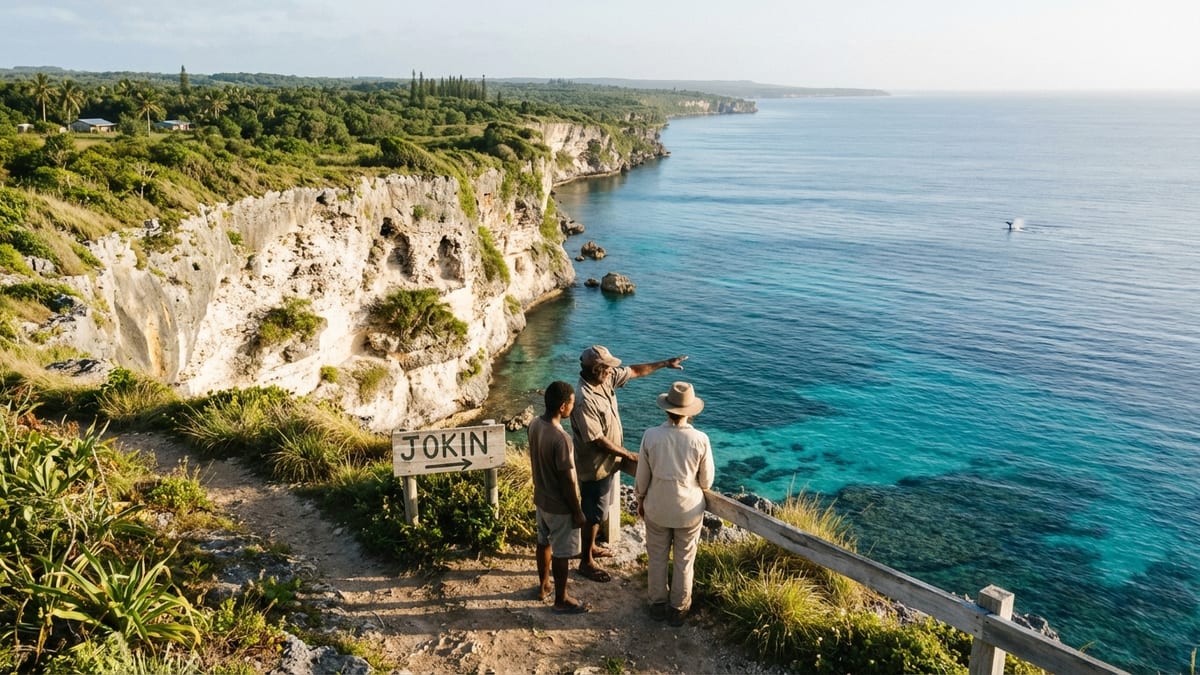
Lifou is the kind of island that still feels like a secret. The largest of New Caledonia’s Loyalty Islands, it rises from the Pacific not as a volcanic peak but as an uplifted atoll, a fossilized coral plateau ringed with cliffs, lagoons and forests.
Here, yawning caves were once burial sites for chiefs, whales glide past 40 meter headlands, and visitors are welcomed into Kanak tribal lands through a living tradition of custom and shared meals. This guide brings together the essentials for planning a trip to Lifou, from its dramatic Jokin cliffs and luminous lagoons to the contemporary rhythms of Kanak culture.
Getting Oriented: Where Lifou Is And Why It Feels So Different
Lifou lies northeast of New Caledonia’s main island, Grande Terre, in the South Pacific between Australia and Fiji. Rather than being shaped by fire and lava, Lifou is the result of ancient coral reef slowly lifted above sea level. The result is a landscape of vertical limestone walls, terraces and sinkholes where underground freshwater lenses feed lush vegetation and vanilla plantations. The coast alternates between deserted bays with talcum-soft sand and abrupt precipices that drop into clear water.
Three customary districts divide the island, each structured around Kanak tribes and their chiefs. Wetr occupies the north, Lösi lies to the west and south, and Gaica forms the eastern district. The main administrative center is the village of Wé on the east coast, while many visitors first encounter Lifou via Easo on the sheltered western bay where cruise tenders land. Away from these small hubs, the island’s interior remains lightly developed, threaded with narrow roads that pass through forest, coconut groves and tribal lands.
This geography shapes how you travel. Distances are short but services are scattered, so planning ahead matters more than on a typical resort island. There are few large hotels, limited public transport and only a handful of formal tour operators. Most experiences are community based. When you stay in a tribal guesthouse, buy vanilla directly from growers or pay a small fee at an access hut near a lookout, you are participating directly in the island’s economy and customary life.
Lifou’s climate is tropical and moderated by trade winds. The cooler, drier season typically runs from about May to September, with water still warm enough for swimming and snorkeling, and this is also when humpback whales pass the coast. The hotter, more humid months from November to March bring bolder greens in the forest and the chance of tropical downpours, but also quieter paths and fewer visitors at main sites.
Reaching Lifou And Getting Around The Island
Most international travelers reach Lifou via Nouméa on Grande Terre. From Nouméa’s Magenta domestic airport, regular short flights connect to Lifou’s Wanaham Airport, typically taking around 40 minutes. Seats are limited, so booking early is wise if you are traveling in the Southern Hemisphere school holidays or during events and festivals. Ferries operated by local companies also link Nouméa and Lifou, usually in around five hours, which can be a scenic if slower option and is sometimes preferred by locals and travelers on tighter budgets.
Once on Lifou, independent exploration almost always involves a rental car. Vehicles are usually collected at the airport or in Wé, and demand often outstrips supply during busy periods. A small car is enough for the island’s sealed roads, but be prepared for a few potholes and narrow sections when heading into more remote tribal areas. There is no islandwide public bus system in the way many visitors expect. Informal local transport may exist, yet it is typically geared toward residents rather than tourists and can be irregular.
Cruise passengers experience Lifou differently. Ships usually anchor off Easo on the western side of the island and use tenders to bring guests ashore. From the cruise village at Easo, you can join prearranged shore excursions to the Jokin cliffs, vanilla plantations, beaches and cultural encounters, or explore the immediate surroundings on foot. Because the number of visitors arriving at once can be high compared to the island’s limited infrastructure, patience and realistic expectations go a long way.
Driving is on the right, and speeds are modest, especially when passing through villages and tribal land where children, dogs and pigs often roam close to the road. Fuel is generally available in or near Wé but not always in remote corners, so topping up when you can is a sensible habit. Mobile coverage is improving, yet there are still pockets without reliable signal, particularly along as-yet undeveloped stretches of coastline.
Cliffs And Caves: The Wild Face Of Lifou
Few sights on Lifou are as dramatic as the Jokin cliffs at the island’s northern tip. Here, around 40 meters of pale limestone, formed from ancient coral, plunge sheer into water streaked in greens and blues. A small parking area near Jokin village leads to a viewpoint where you can look along the line of cliffs and, in the cooler months, scan for the spouts and tail flukes of humpback whales moving along the coast. Traditional belief holds that caves in the cliffs served as burial sites reserved for chiefs, and some of these grottoes are still treated with quiet respect by local guardians.
A steep staircase of close to two hundred steps leads from the top of the cliff down to a simple platform at sea level. From here, snorkelers can slide into deep, glassy water above coral heads and drop-offs where schooling fish, clownfish and occasional turtles can be seen. Conditions are highly dependent on swell and wind. On calm days the water can be serene and welcoming, but in heavy sea swells the same entry point becomes exposed and hazardous, and local advice leans toward caution. Even strong swimmers should pay attention to the sea state before committing to the descent in fins and mask.
Away from Jokin, lifelike sculptures in limestone and the interplay of cliff and lagoon appear in other corners of Lifou. In places, the uplifted coral platform is undercut by small caves and arches that can be explored by kayak or on guided boat trips when sea conditions allow. Inland, sinkholes and limestone shafts contrast with the flatness of the surrounding forest. Some of these sites are on customary land and require permission or a guide. Local operators sometimes combine visits to caves with walks to viewpoints or beaches to create varied half day excursions.
Because so much of Lifou’s coastline is cliff backed rather than lined with roads and resort strips, you will often find yourself looking out from headlands with no obvious sign of development in either direction. The sense of isolation is magnified at dusk, when the low sun burnishes the limestone walls and the horizon disappears into a wash of pink and silver. It is in these moments that Lifou feels farthest from busier Pacific islands where the built environment often competes with the seascape.
Lagoons, Bays And Beaches: Finding Your Own Patch Of Sand
Lifou’s lagoons and beaches offer a softer counterpoint to its vertical cliffs. Around Easo and Sandalwood Bay on the western side, shallower waters and calmer conditions create popular swimming spots for both visitors and local families. From the small Notre Dame de Lourdes chapel perched on a headland above Easo, a short path leads to a viewpoint with expansive vistas across the bay and along the coastline in both directions. On days when cruise ships are anchored offshore, you can watch tenders crisscross between ship and shore like water beetles.
On the northwest of the island, Kiki Beach is known for feeling remote even by Lifou standards. Accessible by a drive along a minor road and a short walk, it lies at the base of cliffs where a crescent of white sand meets calm, shallow water. There are typically no facilities here and you should not count on shade other than what you bring yourself. This is part of the appeal. It is an easy place to lose a few hours simply floating, reading or watching the play of light over the reef and rock walls.
Jinek Bay, just below the Notre Dame de Lourdes headland, has earned a reputation as one of the finest shore snorkeling sites in the South Pacific. The bay has been managed as a small marine reserve, with capped daily visitor numbers and a permit system designed to protect the coral and limit crowding. Access rules can change from season to season, and there have been temporary closures for reef recovery and management. When open, the bay rewards careful, low impact snorkelers with dense coral gardens, bright reef fish and excellent visibility in the right conditions.
Elsewhere on the island, small coves and semi wild beaches often sit at the edge of tribal land, sometimes with a simple hut where a guardian or family member collects a modest fee in local currency. Paying this fee is part of acknowledging that while the lagoon may feel like a shared public space, the access points, trees, shade and nearby land are privately or communally held. In return, you receive a measure of watchfulness and welcome that makes remote beaches feel less anonymous than similar stretches of sand elsewhere in the Pacific.
Kanak Culture And Everyday Life On Lifou
To understand Lifou, it helps to see it as more than a scenic destination. It is a Kanak homeland where customary authority remains central to social organization and where tradition and modern life intermingle. The island’s three districts each have a high chief, beneath whom sit tribal chiefs and clan structures. Many decisions about land use, access and visitor activities pass through these customary channels. Visitors entering tribal land are often expected to observe certain protocols that express respect for the community and its leaders.
One of the most meaningful ways to connect with this culture is to stay overnight with a local tribe. Community guesthouses and homestays are typically built in or near traditional round huts with thatched roofs, known as cases. Sleeping arrangements may be simple mattresses on the floor, mosquito nets and shared facilities. Meals center on local staples such as taro, yams, fish, coconut and seasonal fruits. Conversation can range from family life and gardening to island politics, church activities and rugby. For many visitors, this homestay experience becomes the highlight of their time on Lifou.
The notion of coutume underpins interactions between visitors and Kanak hosts. In practical terms, this might mean bringing a small symbolic gift, such as a length of fabric, tea, rice or tobacco, and presenting it respectfully to a chief or elder when you arrive. This act is not a formal fee but a gesture that acknowledges you are entering another’s land and social space. Local guides and guesthouse owners can explain what is appropriate in each context, and many are used to helping international visitors navigate this custom.
Christianity, especially Catholicism and Protestant denominations, is deeply woven into island life without displacing older beliefs entirely. Sunday services fill churches, and religious holidays shape the social calendar. At the same time, ancestral connections to land, respect for sacred sites and stories attached to cliffs, caves and trees remain strong. As a visitor, you may see these parallel currents when a guide explains a traditional association with a place and then, moments later, points out a modern shrine or church built nearby.
Vanilla, Markets And Flavors Of Lifou
Vanilla is one of Lifou’s most distinctive crops and a source of pride for many families. The island’s humid interior, shaded forest plots and coral soil all contribute to the cultivation of high quality vanilla orchids. Vines are grown on supports under partial shade and hand pollinated, then beans are harvested, scalded, dried and cured in a process that can take several months. For tribal households, vanilla can be an important cash crop that complements subsistence gardening and fishing.
Visitors can learn about this process at dedicated vanilla houses and plantations that accept guests. Guided visits may include walking through the vines, seeing curing racks and storage, and tasting vanilla infused coffee, tea or desserts. Buying beans directly from producers not only gives you fresher product than is often available abroad but also channels your spending straight into local hands. Many producers sell both whole beans and simple value added items like vanilla sugar or small bottles of extract.
Fresh produce and prepared foods appear in village markets and roadside stalls, particularly when cruise ships are in port or around local festivals. You may find bundles of taro, yams, bananas, papayas, mangos and coconuts arranged alongside handmade crafts such as weaving, shell necklaces and carved items. Typical snacks include coconut bread, fritters and grilled fish served on leaves with lime and chili. While Lifou does not have a dense restaurant scene, a few small eateries in Wé and near popular sites offer plates that mix local ingredients with French staples such as baguettes and pastries.
In tribal guesthouses, guests are often invited to share in communal meals where food is cooked in earth ovens or over open fires. Such meals may feature dishes prepared in coconut milk or wrapped in banana leaves, with portions of pork, chicken or fish mixed with roots and greens. The pace is unhurried, and time at the table is as much about conversation and hospitality as it is about the meal itself. Letting your host know in advance if you have dietary restrictions helps avoid awkwardness in settings where ingredients are sourced close to home and menus are planned around what is available.
Practicalities, Seasons And Responsible Travel
Planning a smooth visit to Lifou involves a few more practical considerations than a conventional resort island holiday. Accommodation ranges from small hotels and bungalows to church run guesthouses and tribal stays, but capacity overall is modest. Booking ahead is essential in peak periods and advisable year round if your schedule is fixed. Some tribal accommodations can only be reserved through local tourism offices or by phone, and may not appear on international booking platforms, so flexibility and patience in communication are valuable.
The best time to visit depends on your priorities. From around July to September, conditions are typically cooler and drier, and humpback whales are often visible offshore near the Jokin cliffs and along parts of the coast. This is also when some of the island’s cultural and agricultural events may take place, drawing both visitors and residents together. The shoulder seasons around April to June and October to early December combine warm water and generally good weather with fewer visitors. The wettest months, often late December through March, can bring heavy rain and muggy heat, along with the small but real possibility of tropical storms.
Basic medical care is available on the island, but serious conditions usually require evacuation to Nouméa. Travel insurance that includes medical evacuation is strongly recommended, particularly if you plan to snorkel, dive or take part in other water based activities. Sun exposure is intense even on cloudy days, so high factor sunscreen, a hat, light long sleeved clothing and reef-safe sun protection are essential. Insects can be active near forest and water, especially around dawn and dusk, and a good repellent is useful.
Responsible travel on Lifou revolves around respect. Ask for permission before photographing individuals or private spaces, and accept that some sacred sites, burial caves and ceremonies are not appropriate for visitors. When snorkeling or swimming, avoid standing on coral or touching marine life. If you visit marine reserves such as Jinek Bay when they are open, follow all guidelines regarding entry numbers, time limits and equipment. In villages and at tribal beaches, dress modestly with shoulders and midriff covered, and use a sarong or shirt when moving between the water and communal areas.
The Takeaway
Lifou is not a place of grand hotels or manicured promenades. It is an island where cliffs tell stories of ancient reefs, where lagoons still feel like aquariums, and where Kanak culture shapes not only festivals and ceremonies but the everyday welcome extended to strangers. Travelers who come prepared to slow down, to accept limited infrastructure as part of the experience, and to engage with hosts on their terms, often find that the simplicity and directness of life on Lifou leave a lasting impression.
Whether you spend your days peering into the blue depths below the Jokin cliffs, drifting over coral gardens, walking among vanilla vines or sharing taro and fish in a thatched hut, the island encourages a more attentive way of traveling. It asks you to notice tides and winds, to learn names and stories, and to remember that even in a world of instant information, some places still reveal themselves best through patience and conversation. Lifou’s blend of wild edges, luminous water and living Kanak culture makes it one of the South Pacific’s most quietly remarkable destinations.
FAQ
Q1. How long should I plan to stay on Lifou to experience its cliffs, lagoons and culture?
For an in depth visit that includes the Jokin cliffs, several bays and beaches, a vanilla plantation and at least one night in a tribal guesthouse, many travelers find that three to five days on Lifou works well. Cruise passengers often have only a single day, which is enough for a first taste but not for a deeper exploration.
Q2. Is Lifou suitable for families with children?
Lifou can be very rewarding for families, especially those who enjoy nature and simple outdoor activities. Calm beaches near Easo and some sheltered coves suit younger children, while older kids often enjoy snorkeling, light walks and cultural visits. Parents should keep a close eye on children near cliffs, staircases and in the water, as safety infrastructure is minimal compared with larger resorts.
Q3. Do I need to speak French to travel around Lifou?
French is widely spoken and is the main administrative language, while Drehu is the local Kanak language. In tourism settings such as guesthouses, tours and markets, you will usually find someone who speaks at least basic English, especially when cruise ships are in port. Learning a few simple phrases in French and Drehu is appreciated and can make interactions smoother.
Q4. Can I visit the Jokin cliffs independently or do I need a guide?
Independent visits to the Jokin cliffs are possible if you have your own transport, and access to the main viewpoint is straightforward. The stairway to the water can be used without a guide in calm conditions by confident swimmers and snorkelers. However, if you are unfamiliar with ocean conditions or prefer extra context about the site’s cultural significance, joining a guided excursion is a sensible option.
Q5. Are there ATMs and credit card facilities available on Lifou?
ATMs and card payment facilities exist primarily in Wé and at a few larger businesses or market areas, but they are not universal and can occasionally be out of service. Smaller tribal guesthouses, access huts and roadside stalls usually expect payment in cash. It is wise to bring enough local currency from Nouméa to cover your stay, especially if you plan to travel beyond the main villages.
Q6. What kind of snorkeling experience can I expect on Lifou?
Snorkeling on Lifou ranges from relaxed coral gardens in shallow lagoons to deeper drop offs at the base of cliffs. Sites like Jokin and Jinek Bay are known for clear water, healthy coral and abundant reef fish in the right conditions. Access can involve ladders, staircases or rocky entries, and currents and swell must always be considered, so good water confidence and a cautious approach are important.
Q7. Is it possible to rent diving or snorkeling gear on the island?
Snorkeling gear can sometimes be rented near popular beaches, through guesthouses or via cruise pier operations when ships call. Availability and quality may be limited, especially away from Easo and Wé. Bringing your own well fitting mask, snorkel and fins is recommended if snorkeling is a priority. Scuba diving options are more limited than in some neighboring destinations and may require advance arrangement.
Q8. How should I dress to respect local customs on Lifou?
Modest dress is appreciated in villages, markets and around tribal guesthouses. This usually means covering shoulders and midriff, avoiding very short shorts and wearing a shirt or sarong over swimwear when not actually on the beach or in the water. At churches and during visits that involve meeting chiefs or elders, slightly more conservative clothing such as longer skirts or trousers is appropriate.
Q9. What is the best way to arrange a stay in a tribal guesthouse?
Some tribal guesthouses can be booked through regional tourism offices or via partner agencies in Nouméa, while others rely on direct phone contact. If you are already on the island, local information points and residents in Wé or Easo can often suggest contacts. When arranging a stay, be clear about dates, number of people, any dietary needs and whether you speak French, so your hosts can prepare accordingly.
Q10. Are there any particular safety concerns I should be aware of on Lifou?
Violent crime is rare and Lifou generally feels safe, particularly within villages and guesthouse settings. The more significant risks relate to the natural environment: strong sun, dehydrating heat, ocean currents, sudden changes in swell at cliff bases and the potential for falls on steep staircases or uneven limestone. Taking standard precautions, listening to local advice and avoiding risky behavior near cliffs or in rough seas will mitigate most concerns.