

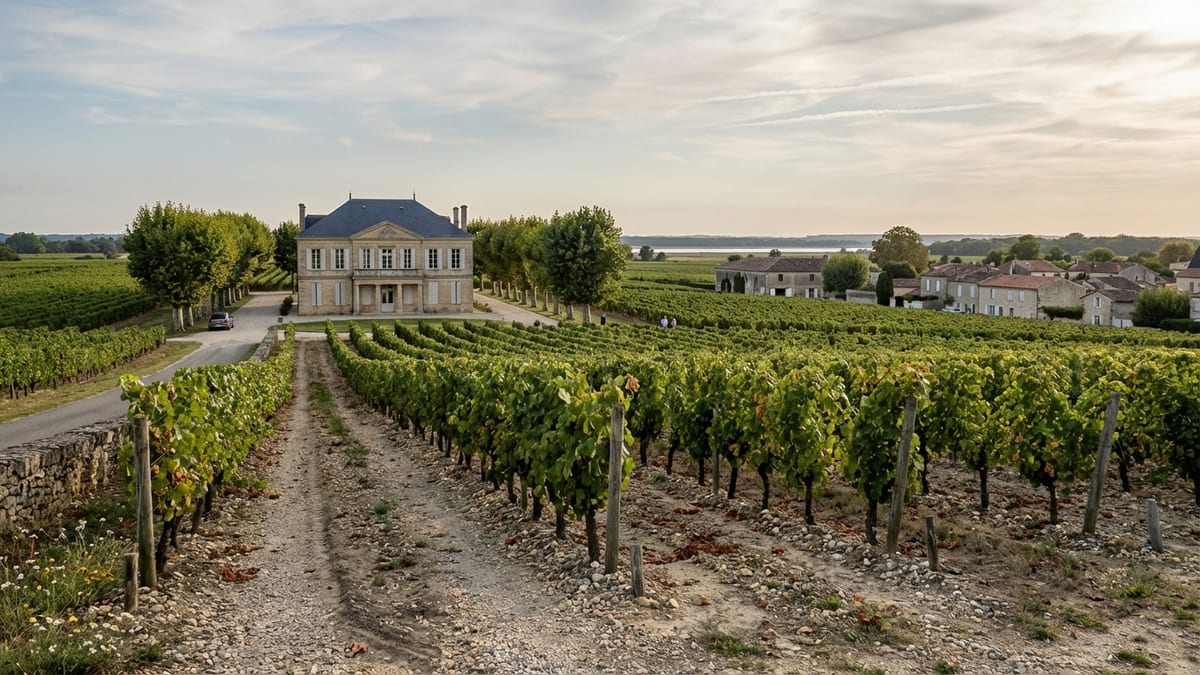
In the pantheon of Bordeaux wine, few names are as evocative as Margaux. Synonymous with perfume-like aromas, silken textures and almost architectural elegance, this appellation on the Left Bank of the Gironde estuary has seduced wine lovers for centuries.
For travelers, Margaux offers a rare combination of grand châteaux, quietly beautiful countryside and a wine culture that remains deeply rooted in the land. Whether you are planning a dedicated wine holiday or simply adding a day trip from Bordeaux, understanding what makes Margaux special will transform your visit from a series of tastings into a richer journey through history, terroir and craftsmanship.
Where in Bordeaux Is Margaux and Why It Matters
Margaux lies in the Médoc, on the Left Bank of the Gironde estuary, about 25 kilometers northwest of the city of Bordeaux. It is one of the key communal appellations of the Haut-Médoc, alongside Saint-Julien, Pauillac and Saint-Estèphe. What sets Margaux apart geographically is that its vineyards are clustered on a low plateau of gravel deposited by the Garonne River, a narrow strip roughly 6 kilometers long and 2 kilometers wide. That concentration of high-quality vineyard land helps explain why the appellation is home to more classified growths than any other in the 1855 classification.
Within the Margaux appellation, you will find several communes: Margaux itself, as well as Cantenac, Soussans, Labarde and Arsac. Together they form a patchwork of small gravel hillocks, streams and tiny hamlets where many estates lie almost shoulder to shoulder. The proximity of the Gironde moderates temperature extremes, while breezes off the estuary help keep vines healthy and reduce disease pressure, a key factor in the consistently high quality of Margaux wines.
For visitors, Margaux’s location is both convenient and atmospheric. The drive from Bordeaux follows the D2, the so-called “Route des Châteaux,” which threads past famous names and long alleys of plane trees leading to turreted estates. It is close enough for a day trip yet far enough to feel like a different world, especially in the quieter months outside harvest when mist drifts over the vines at dawn and evenings cool quickly after golden sunsets.
The Terroir That Creates Margaux’s Signature Style
Talk to any winemaker in Margaux and the conversation will quickly turn to gravel. The appellation is built on a series of terraces created during the Quaternary period, where the Garonne’s waters left behind layers of gravel, pebbles and sand over older limestone or clay-marl. These free-draining soils are ideal for Cabernet Sauvignon, which thrives when its roots are encouraged to dig deep in search of water and nutrients. The pebbles also absorb heat during the day and re-radiate it at night, helping grapes ripen fully even in cooler years.
Yet Margaux’s soils are not one-dimensional. Within the appellation, six distinct gravel terraces have been identified, each with slightly different proportions of sand, clay and stone. On some plots, large Garonne gravels dominate, while on others fine pebbles sit in a matrix of sandy clay. These variations create subtle differences in water retention and heat accumulation, which in turn shape the character of each estate’s wine. One property might produce wines of pronounced floral lift and lightness, while a neighbor’s bottling feels deeper and more structured, even if they share a fence line.
Compared with Pauillac or Saint-Estèphe, Margaux’s gravel tends to be a bit lighter and sandier overall, which contributes to the appellation’s hallmark of finesse rather than sheer power. Vines in denser clay sections may produce wines with more tannic grip and dark fruit, but the best Margaux estates marry these elements of structure with incredible aromatics. Visitors walking through the vineyards may not see dramatic slopes, as the land is quite flat, but a short stroll can cross several underground transitions that are invisible to the eye yet crucial to the glass.
The Evolution of Margaux Wines: Style, Grapes and Modern Trends
Margaux wines have traditionally been dominated by Cabernet Sauvignon, often complemented by Merlot, Cabernet Franc and Petit Verdot, with tiny proportions of Malbec in a few vineyards. The classic profile is medium to full-bodied, with cassis and plum fruit, high-toned floral notes of violets and rose, and complex aromas of cedar, tobacco and graphite with age. What distinguishes Margaux compared with many other Left Bank wines is the sensation of texture on the palate: the best examples feel almost weightless yet persistent, with tannins so fine they seem woven into the wine rather than sitting on top of it.
In the past few decades, viticulture and cellar work in Margaux have seen significant refinement. Many leading estates have adjusted pruning and canopy management to achieve more even ripening and greater precision. In the cellar, you will now find an almost obsessive focus on parcel-by-parcel vinification, with grapes from different soils and exposures fermented separately before blending. This allows winemakers to capture the nuances of each plot and fine-tune the final cuvée each year.
Another major evolution has been the move toward more sustainable and organic practices. Several Margaux châteaux now farm organically or biodynamically, and a growing number hold environmental certifications. This shift is partly philosophical and partly practical, as healthier soils and balanced vine growth tend to yield grapes with better natural concentration and acidity. It also responds to visitors’ increasing interest in how wines are grown as much as how they taste in the glass.
Stylistically, there has been a gradual move away from the very extracted, heavily oaked wines fashionable in the 1990s and early 2000s. Many estates are now seeking greater freshness, elegance and moderate alcohol levels, more in tune with Margaux’s inherent strengths. Tasting current releases, you are likely to encounter wines with vibrant fruit, polished tannins and less overt new oak, designed to show well younger while still rewarding decades of aging.
Grand Names and Hidden Gems: Châteaux to Know
No exploration of Margaux can ignore Château Margaux itself, the First Growth estate whose neoclassical façade and long tree-lined drive have become shorthand for Bordeaux grandeur. Its vineyards sit on some of the finest gravel in the appellation, and its grand vin is often cited as the purest expression of what Margaux can be: supremely elegant, intensely aromatic and capable of ageing gracefully for decades. The estate’s cellars and barrel halls, redesigned in recent years by a renowned architect, add a contemporary flourish to an otherwise deeply historic setting.
Just as influential, though softer spoken, is Château Palmer. Classified as a Third Growth yet often mentioned in the same breath as the top names of the Médoc, Palmer has a reputation for opulent, velvety wines that are often higher in Merlot than its neighbors. The estate has embraced biodynamics and artistic collaborations, inviting photographers and other artists to interpret the estate and its terroir through ongoing “artistic cycles.” This blend of avant-garde culture and precise viticulture has made Palmer one of the most intriguing visits in Margaux today.
Beyond these headliners, Margaux is rich with distinguished classified growths such as Rauzan-Ségla, Lascombes, Brane-Cantenac, Kirwan, Giscours, Cantenac Brown, Marquis de Terme, Prieuré-Lichine and many more. Each offers its own version of Margaux’s signature fragrance and finesse, shaped by specific parcels, grape blends and cellar philosophies. Some are owned by international luxury groups, others by long-established local families, and a growing number are experimenting with organic and biodynamic farming, concrete or amphora fermenters and more restrained oak use.
Crucially for travelers, Margaux is not only about the most famous labels. The appellation is also home to a constellation of Crus Bourgeois, smaller family-owned estates and so-called artisans winegrowers who often offer excellent value and a more intimate welcome. Properties such as Paveil de Luze, Siran, Haut-Breton Larigaudière and La Tour de Bessan illustrate this accessible face of Margaux, where tours may be given by the owner or winemaker themselves and where you can taste serious wines without the price tags of the top tier.
Wine Tourism in Margaux: How to Visit and What to Expect
Margaux has embraced wine tourism with increasing enthusiasm, and many estates now offer structured visits that go well beyond a quick cellar tour and tasting. The local Maison du Vin in the village of Margaux serves as an informal welcome center and information point, and the appellation highlights around 16 châteaux that open their doors to visitors throughout the year. These include grand classified growths and more modest family estates, providing a spectrum of experiences and price points.
Visits are typically by appointment, especially outside the main summer season. Tours are usually offered in small groups and often include a walk through the vines, a look at the vat room and barrel cellar, and a guided tasting of one or more wines. Many properties now propose thematic experiences such as blending workshops, vertical tastings of older vintages, food and wine pairings or introductory sessions on aromas and tasting technique. English is widely spoken at major estates, though it is still wise to confirm language options when you book.
Opening hours vary by season. Some châteaux maintain extended hours from May to October, occasionally opening on weekends and public holidays, while winter hours are more limited and often restricted to weekdays. A few estates feature guest rooms, self-catering cottages or on-site restaurants, making it possible to base yourself amid the vines rather than commuting from Bordeaux. Others have embraced outdoor experiences, offering picnic baskets to enjoy in the park or under old chestnut trees, sometimes paired with bicycle rentals so you can explore the surrounding countryside between tastings.
Increasingly, Margaux estates are adding cultural and artistic layers to their visits. Contemporary art exhibitions, sculpture in the gardens and photography installations in barrel halls reflect a broader trend in French wine tourism to link wine, art and landscape. This not only enriches the experience for visitors but also offers new perspectives on how estates see their role as custodians of both land and culture.
Planning Your Trip: When to Go and How to Make the Most of It
Margaux can be visited year-round, but the season you choose will strongly influence your experience. Late spring and early summer bring fresh green vines, comfortable temperatures and relatively calm estates, making this an excellent period for unhurried visits. July and August are livelier, with more tourists in the region and longer opening hours at many châteaux. The heat can be intense, but early morning or late afternoon tours can be particularly atmospheric when long shadows fall across the vines.
September and early October can be magical, as the vineyards ripen and harvest approaches. However, this period also sees estates at their busiest. Some châteaux limit or suspend visits during peak harvest so that teams can focus fully on bringing in the grapes. If you dream of seeing harvest in action, communicate with estates well in advance and be prepared for last-minute changes due to weather. After the grapes are safely in, Margaux celebrates with events such as Margaux Saveurs in October, when the villages of the appellation host tastings, concerts, workshops and food-focused gatherings that showcase local gastronomy alongside the wines.
Winter has its own quiet charm. Vines stand bare against low skies, and visits are calmer and more contemplative. Cellar tours feel particularly authentic at this time, as you are likely to see wines in the midst of élevage, resting in barrel or tank. Shorter opening hours and fewer weekend options require more careful planning, but for serious wine lovers the tradeoff is more time to talk with staff and a deeper sense of how the wines are made between harvests.
Regardless of the season, booking ahead is essential. Many estates allow or even require online reservations, and it is wise to group visits by proximity to avoid spending too much time in the car. Two or three châteaux per day is usually ideal: enough to compare styles and philosophies while leaving time for a leisurely lunch and a walk along the estuary or through the village streets.
Tasting Margaux: How to Understand the Wines in Your Glass
Arriving in Margaux, you will likely encounter a range of wines: grand vins, second wines, white bottlings from some estates and, at a few properties, even rosés. Starting with the appellation’s reds, pay attention first to aroma. High-quality Margaux is often intensely perfumed, with notes of blackcurrant, red cherry, violets, rose petals and sometimes hints of dried herbs, cedar or sandalwood. Swirling the glass should unlock further complexity as oxygen coaxes out subtle spice and earth tones.
On the palate, Margaux typically offers medium to full body, with a fine-boned structure and a long, tapering finish. Even when tannins are abundant in young wines, they should feel finely grained rather than coarse. Acidity tends to be fresh but not sharp, supporting the fruit and giving the wines lift. When tasting multiple estates side by side, notice how some prioritize linear precision and cool aromatic profiles while others lean into plush fruit and generous textures. Both styles can be true to the appellation, reflecting differences in soil composition, grape varieties and cellar choices.
Vintage variation remains a key part of understanding Margaux. In warmer, sunnier years, wines may show riper fruit, higher alcohol and softer tannins, often making them approachable earlier. Cooler or more challenging vintages can emphasize acidity, structure and savory notes, sometimes requiring longer cellaring to fully bloom. Many estates now produce highly successful wines even in previously difficult years thanks to improved vineyard management and selective harvesting. During tastings, do not hesitate to ask staff how they adapted to the specific conditions of recent vintages; their answers often illuminate the character of the wines in your glass.
Beyond the reds, a small but growing number of Margaux estates produce white wines, often labeled under broader Bordeaux appellations. These whites, typically blends of Sauvignon Blanc, Sémillon and sometimes Muscadelle, can show impressive freshness, citrus and stone fruit aromas and a subtle oak influence when aged in barrel. Tasting a white alongside the reds can offer a different lens on the estate’s philosophy and its interpretation of Margaux’s terroir.
Beyond the Cellar: Food, Culture and the Rhythm of Local Life
Wine may be the magnet that draws travelers to Margaux, but the broader experience rests just as much on food, landscape and the quiet daily rhythms of rural Gironde. Several estates now operate restaurants or offer chef-prepared meals on site, ranging from gourmet lunches to more casual picnics in the park. These meals often highlight regional specialties such as entrecôte à la bordelaise, duck confit, seasonal mushrooms and local cheeses, paired thoughtfully with the estate’s wines.
In and around the villages of Margaux, Cantenac and Soussans, you will find small bistros, bakeries and markets where local life unfolds largely unchanged by tourism. Morning might bring growers dropping off fresh produce or oysters from the nearby Atlantic coast, while afternoons see residents pausing for coffee on shaded terraces. For travelers, joining this unhurried rhythm is part of Margaux’s charm: a counterpoint to the usually structured nature of château visits.
Culturally, Margaux is increasingly positioning itself as more than a wine-producing area. Estates host temporary art exhibitions, concerts in barrel halls or courtyards, and thematic events that link music, photography and wine. This cultural programming both enriches the visitor experience and reflects a broader desire among proprietors to anchor their estates as living, evolving places rather than static monuments. Checking the calendar of local events when planning your trip can unlock opportunities to experience Margaux in a more immersive way, whether through an evening jazz concert among the vines or a guided walk that explores the appellation’s biodiversity.
The nearby city of Bordeaux, with its grand 18th-century architecture, riverfront quays and vibrant restaurant scene, complements a stay in Margaux perfectly. Many visitors choose to base themselves in Bordeaux and explore the Médoc as a series of day trips, while others prefer a quieter base in Margaux itself. Either way, the interplay between city and vineyards is part of what makes a wine-focused journey to this corner of France so rewarding.
The Takeaway
Margaux occupies a special place in Bordeaux, and understanding why deepens every sip and every step among its vines. The appellation’s distinctive gravel soils, moderated climate and long winemaking history have given rise to wines that are both structured and ethereal, capable of great longevity yet often remarkably charming in youth. For travelers, Margaux offers a concentrated slice of Bordeaux: iconic grand châteaux, family-run estates, evolving approaches to sustainability and a thriving wine tourism culture that keeps opening new doors.
Planning a visit with care, tuning into the nuances between estates and vintages, and leaving room for unplanned moments in the villages and countryside can transform a simple tasting itinerary into a richer encounter with place. Whether you are standing in the grand courtyard of a First Growth or sharing a picnic beside the vines at a small artisan estate, you are participating in a living story that continues to unfold with each new harvest. That blend of tradition, innovation and understated beauty is ultimately what makes Margaux not just a name on a label, but a destination worth savoring in person.
FAQ
Q1: How do I get to Margaux from Bordeaux without a car?
It is possible to reach Margaux by regional train from Bordeaux in around 30 to 40 minutes, with the station located near the village. From there, you can walk to a few nearby estates or arrange taxis and transfers to châteaux farther afield. Some travelers also book guided tours from Bordeaux, which include transportation and prearranged visits.
Q2: Do I need to book château visits in advance?
Yes, advance reservations are strongly recommended and often required, especially for classified growths and during the busy summer and harvest seasons. Booking ahead ensures that an English-speaking guide is available and that the estate can organize a tailored experience for your group.
Q3: Can I visit Château Margaux and Château Palmer on the same day?
In practical terms, you can visit both in one day given their proximity, but each estate typically offers visits at specific times and with limited capacity. It is wise to treat each visit as an anchor point and plan no more than one additional château around them. Confirm timing directly with the estates before finalizing your schedule.
Q4: Is Margaux suitable for wine beginners or only for experts?
Margaux is very accessible for beginners. Many estates offer introductory tastings and clear explanations of grape varieties, terroir and winemaking. At the same time, the appellation’s diversity and depth of history provide ample interest for seasoned enthusiasts, making it a destination that rewards all levels of knowledge.
Q5: What is the best time of year to visit Margaux for good weather and open estates?
Late spring from May to June and early autumn in September and October generally offer pleasant weather and a wide range of open estates. July and August have long days and many visiting options but can be hotter and busier. Winter visits are quieter and more intimate but require more careful planning due to shorter hours.
Q6: Are there options to stay overnight in the vineyards?
Yes, several Margaux estates offer guest rooms or self-catering accommodation, and there are small hotels and bed and breakfasts in nearby villages. Staying locally allows you to experience the vineyards at dawn and dusk and makes it easier to space out tastings without rushing back to the city.
Q7: Can I explore Margaux by bicycle?
Cycling is a popular way to explore Margaux’s relatively flat landscape. Some estates rent bicycles or can recommend local rental services. The quiet country roads and vineyard tracks are well suited to relaxed rides between nearby châteaux, though care should be taken on busier stretches of the main D2 road.
Q8: Are children welcome at Margaux estates?
Policies vary, but many estates do welcome families and can adapt visits to keep younger guests engaged, focusing on the history, architecture and nature around the vineyards. However, tastings remain reserved for adults, and more technical or lengthy visits may be less suitable for very young children.
Q9: Is it possible to buy older vintages directly from châteaux?
Some Margaux estates sell a limited range of older vintages from their cellars, while others focus primarily on recent releases. Availability varies year by year and estate by estate. If you are interested in older bottles, it is worth asking in advance or during your visit; staff can explain what is currently offered and any limits on quantities.
Q10: What is the dress code for visits and tastings in Margaux?
Dress is generally smart casual. Comfortable shoes are important, as visits often include walking on gravel in the vineyards and around cellars. There is no need for formal attire, but avoiding strong perfumes is appreciated since they can interfere with wine aromas during tastings.