

Nanaimo, perched on the east coast of Vancouver Island, is more than a convenient ferry stop between Vancouver and the rest of the island. Known as the Harbour City, it blends an active working waterfront with a surprisingly relaxed pace, strong cultural roots, and immediate access to forests, islands, and beaches.
This guide explores the city’s highlights, the stories behind its harbor, and what daily life feels like for the people who call Nanaimo home.
The Spirit of the Harbour City
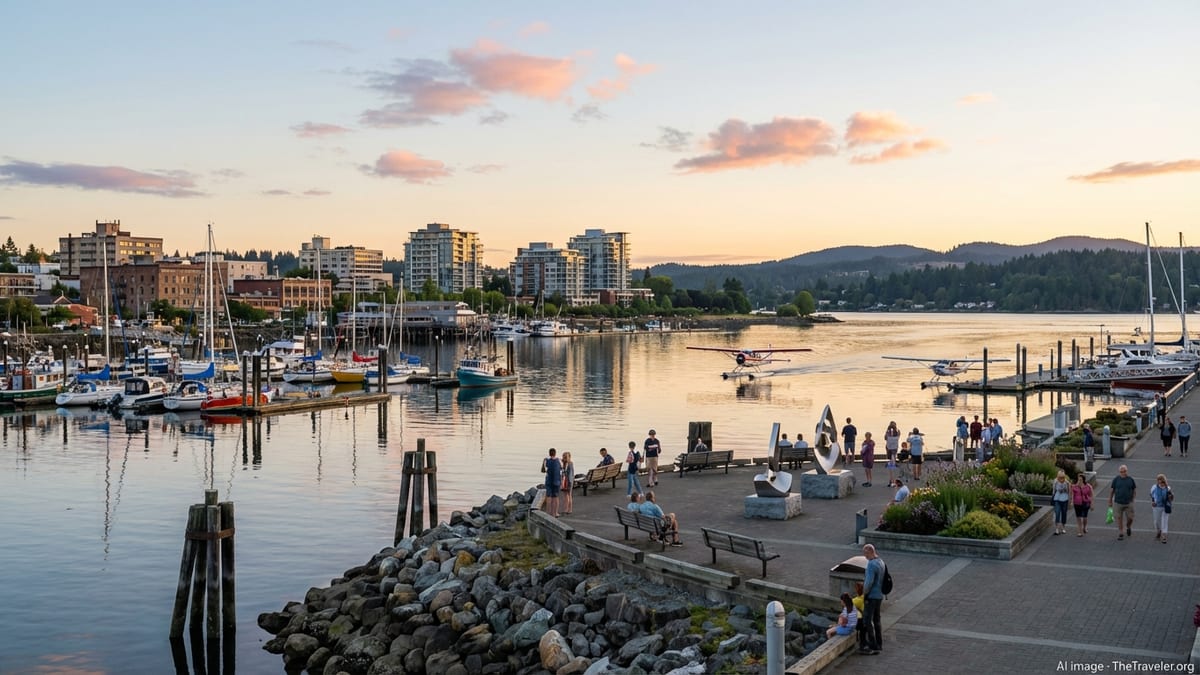
Nanaimo’s identity is inseparable from its deep, sheltered harbor. Ferries, floatplanes, working tugs, kayaks, and sailing boats all share the same stretch of water, giving the city a sense of motion and connection. For visitors, the waterfront is often the first impression: a sweep of marinas, seawall paths, and public spaces looking out toward Newcastle and Protection Islands and, on clear days, the Coast Mountains on the mainland beyond.
Historically, the harbor supported coal mining, shipping, and fishing; today, that industrial backbone has softened into a mix of marine services, tourism, and recreation. Old warehouses have been repurposed, walkways extended, and parks created where working wharves once dominated. Yet the harbor still feels authentic rather than overly polished. It is common to see commercial fish boats moored beside pleasure craft or seaplanes landing within sight of office towers and condo balconies.
Locals frequently refer to Nanaimo as a city that feels smaller than it looks. The urban area has grown, but its core remains compact and human-scaled, with the harbor only a few minutes’ walk from most of downtown. The result is a place where grabbing a coffee, strolling the seawall, and catching a ferry to a nearby island all easily fit into the same morning. For many residents, that effortless connection to the water is what makes life here distinctive.
The city also carries a growing awareness of its setting on the traditional territory of the Snuneymuxw First Nation. Acknowledgements at public events, interpretive signage, and collaborative cultural projects along the waterfront are slowly reshaping how visitors understand the place. The harbor is not just a scenic backdrop; it is part of a living cultural landscape that predates modern Nanaimo by thousands of years.
Walking the Waterfront: Seawall, Parks, and Island Hops
The Harbourfront Walkway, often just called the seawall, is Nanaimo’s outdoor living room. This paved route traces the inner harbor from the downtown marina area toward Maffeo Sutton Park, passing public art, moored boats, and casual cafes. Locals use it for their daily run, dog walkers linger over views, and office workers slip out at lunchtime to sit on benches facing the water.
Maffeo Sutton Park is the centerpiece of this waterfront corridor. With its lawns, playgrounds, seasonal public art installations, and panoramic harbor views, it acts as both a community gathering space and a front-row seat to Nanaimo’s marine life. Families picnic on the grass while children explore the inclusive destination playground designed in collaboration with local First Nations artists, whose imagery reflects salmon and river life. On warm evenings, the park often fills with people listening to live music or simply watching the sky change color over the water.
From a small pier beside the park, a passenger ferry connects visitors to Saysutshun, also known as Newcastle Island, a provincial marine park co-managed with the Snuneymuxw First Nation. The journey takes only a few minutes but feels like stepping into a different world of quiet forest trails, sheltered coves, and open picnic areas. Locals use the island as an easy day trip for hiking, beachcombing, and learning about regional Indigenous history through interpretive signs and guided experiences in summer.
Another short boat ride leads to Protection Island, a low, forested community at the edge of the harbor. With gravel lanes, modest cottages, and small beaches, the island offers a slower, more private feel. People come to walk, paddle nearby waters, and gain a fresh perspective on Nanaimo’s skyline and harbor activity. These small islands, so close and accessible, are central to the experience of life in a harbor city and showcase how quickly urban edges give way to nature.
Culture, History, and Harbour Festivals
Nanaimo’s cultural life is concentrated downtown, within a few blocks of the waterfront. The Nanaimo Museum, located near the conference centre, provides an essential introduction to the city’s story, from pre-contact Snuneymuxw history and Coast Salish culture to coal mining, maritime trade, and the evolution of the harbor. A walk-through coal mine replica captures the conditions that defined early industry here, while exhibits highlight the ways the community has changed as mining gave way to service, educational, and tourism sectors.
Nearby, the Vancouver Island Military Museum offers a focused look at regional contributions to Canada’s armed forces. Its displays span conflicts from the 19th century to present-day peacekeeping, but what stands out for many visitors are the personal stories. Photographs, uniforms, and letters tell the experiences of individuals from Nanaimo and other Vancouver Island communities, grounding national history in local lives.
Art and performance also play a visible role in the harbor area. The Port Theatre, just up from the seawall, serves as a major performing arts centre, hosting everything from symphony performances and dance to touring musicians and literary events. Alongside it, Diana Krall Plaza functions as an outdoor gathering place and stage for festivals, street performances, and summer events. The Nanaimo Art Gallery, located on Commercial Street, contributes contemporary visual culture, often with exhibitions that involve local and Indigenous artists and invite visitors to consider the changing relationship between people and place on the island.
Festivals punctuate the local calendar and take full advantage of the waterfront setting. The Nanaimo Marine Festival and its World Championship bathtub races have become emblematic of the city’s playful side. Modified motorized bathtubs set off from the harbor on a route that tests both engineering and nerve, while onshore, the event feels like a mid-summer community reunion. Food stalls, music, and family activities spill through downtown streets, reminding visitors that this is a city that does not take itself too seriously.
Local Life: Neighborhoods, Daily Rhythms, and Community Spirit
Beyond the immediate waterfront and downtown, Nanaimo unfolds into a patchwork of neighborhoods, parks, and hillside streets. Many residents live within a short drive or bus ride of the harbor but enjoy distinctly local pockets of community life in areas like Old City Quarter, Departure Bay, and the hillside districts overlooking the downtown core. Each neighborhood blends residential streets with small clusters of cafes, independent shops, and parks.
For many people who relocate to Nanaimo from larger centers, the appeal lies in its balance: busy enough to offer services, arts, and education, yet small enough that people routinely cross paths with acquaintances at the farmers’ market or along the seawall. Weekdays see a typical rhythm of commuters, students, and tradespeople moving around town, but rush hour is brief and the city rarely feels overwhelming. On weekends, parks like Westwood Lake and Neck Point draw locals for swimming, hiking, dog walking, and photography, while Mount Benson offers a more demanding trail reward with sweeping views over the city and the Salish Sea.
Community life shows up in small, recurring rituals as much as in major events. Regulars gather at independent coffee shops to compare notes on trails, weather, and local news. Food trucks appear at parks and markets through the warmer months. Pick-up games and fitness groups meet in open spaces, and recreational clubs span everything from dragon boat paddling and outrigger canoeing to cycling and disc golf. The city’s recreational facilities, from pools and arenas to bike parks and skateparks, form an extended network that supports active lifestyles year-round.
Underlying this is an increasing effort to acknowledge and engage with the Snuneymuxw First Nation and other Indigenous communities. Cultural collaborations, language signage, educational programming in schools, and public art projects all contribute to a more visible Indigenous presence in city life. For visitors, this means more opportunities to learn about the land they are walking on and to experience cultural events, from canoe journeys to seasonal celebrations, that are rooted in deep local histories.
Food, Drink, and the Famous Nanaimo Bar
Nanaimo’s culinary reputation has long been tethered to its namesake dessert, the Nanaimo bar. This no-bake treat, with its layered combination of crumb base, custard-flavored filling, and chocolate topping, appears on menus across the city. Bakeries, cafes, and restaurants have developed their own versions, from classic to inventive. Visitors can easily spend an afternoon sampling interpretations of the bar and discovering how a simple dessert became a symbol of local pride.
The broader food scene reflects coastal British Columbia’s emphasis on freshness and regional ingredients. Seafood plays a prominent role, with salmon, halibut, and local shellfish appearing frequently on menus. Many chefs look to farms elsewhere on Vancouver Island for seasonal produce, creating dishes that feel closely tied to the region. Waterfront restaurants and bistros allow diners to pair local flavors with harbor views, turning a meal into an experience of place.
Downtown streets and the Old City Quarter house an eclectic mix of eateries representing global cuisines. From casual noodle shops and cozy Mediterranean spots to higher-end dining rooms, the food options mirror the city’s increasingly diverse population. Evening crowds are more relaxed than in larger cities, but pubs, cocktail bars, and wine-focused venues provide social anchors where locals and visitors mingle. Live music is common in several downtown establishments, especially on weekends.
Craft beverages have taken firm root in Nanaimo, echoing trends seen throughout British Columbia. Small breweries and cideries operate taprooms that serve as neighborhood gathering spots. Independent coffee roasters supply cafes that pride themselves on carefully prepared espresso and slow-brewed coffee. Markets and special events occasionally spotlight locally made products, giving curious visitors a chance to taste the city’s creative output in a single afternoon.
Outdoor Adventures by Sea and Shore
Life in Nanaimo naturally spills beyond sidewalks and city streets into forests, lakes, and open water. The city’s surroundings offer a spectrum of outdoor experiences, from gentle seaside strolls to demanding hikes and advanced scuba diving. One of the appeals of living or traveling here is that adventure can be scaled to the day’s energy level and weather, with options rarely more than a short drive away.
Along the shoreline, parks such as Neck Point and Piper’s Lagoon provide rocky headlands, beaches, and tidal pools where visitors can watch seabirds, search for marine life, or simply sit and listen to waves. These parks are especially atmospheric in fall and winter, when wind and weather give the sea a restless energy. In calmer seasons, they are favored spots for picnics, photography, and sunsets. Slightly inland, Westwood Lake offers a freshwater alternative, popular for swimming, paddleboarding, and running or walking the forested trail that circles its shore.
More ambitious hikers look to Mount Benson, the local mountain that rises behind the city. Trails to the summit are steep in parts and require some fitness, but the reward is a broad viewpoint taking in downtown Nanaimo, distant islands, and the mainland coastal ranges. On clear days, the panorama reinforces how closely the city is tied to land and sea. Cycling routes, including multi-use pathways and segments of former rail corridors, provide another way to explore the area at a slower pace, connecting neighborhoods with parks and viewpoints.
Below the surface of the harbor and nearby waters, Nanaimo has earned a reputation among divers for its artificial reefs and marine life. Purpose-sunk ships, including retired naval vessels, rest on the seabed offshore, creating complex habitats that attract fish, invertebrates, and seaweeds. Dive charters operate from the harbor, and certified divers travel here specifically to explore these sites. Even for those who never don a wetsuit, knowing that another world exists just below the waves adds to the allure of the harbor.
Arts, Nightlife, and Everyday Evenings
As evening settles over the harbor, Nanaimo does not shift into a frenetic nightlife mode so much as a comfortable, sociable one. The Port Theatre’s programming provides an anchor for cultural nights out, ranging from local productions to touring acts and classical performances. People spill out afterward into nearby restaurants and bars, lending downtown a gentle buzz rather than a roar.
Smaller venues and community theatres support a lively grassroots arts scene. Local bands, singer-songwriters, and jazz ensembles perform in pubs and cafes, often clustered around Commercial Street and Victoria Crescent. During warmer months, outdoor concerts and events activate plazas and parks, turning the seawall and harborfront into informal amphitheaters with ocean views.
Visual arts are visible both indoors and outside. In addition to the Nanaimo Art Gallery, a growing collection of public art dots the waterfront and downtown streets, including sculptures and pieces that incorporate Indigenous themes and languages. Temporary installations and rotating exhibits keep repeat visits interesting, while murals and creative signage signal the presence of studios and maker spaces tucked into side streets.
For many residents, an ideal evening needs little more than a walk along the harbor at dusk, perhaps with an ice cream or coffee in hand, watching floatplanes depart and ferries arrive. The scale of the city allows people to spontaneously meet friends or neighbours without planning far in advance. While Nanaimo may not rival major cities for late-night energy, it offers a kind of intimacy and ease that many visitors find appealing and that locals come to value as part of their quality of life.
The Takeaway
Nanaimo’s harbor might first appear as a scenic stage set, but spending even a short amount of time here reveals a layered city with its own rhythm. Working boats and island ferries share space with pleasure craft and kayaks, while trails, parks, and nearby islands invite residents and visitors to shift quickly from city streets to natural settings. Culture and community gather along the same waterfront, whether through Indigenous language signage, festivals, or family events in public plazas.
For travelers, Nanaimo can serve as both a base and a destination: a place to hop off the ferry, explore galleries and museums, sample the Nanaimo bar, and then push farther into Vancouver Island. For those who stay longer, the appeal often lies in how livable the city feels. Commutes are short, green spaces plentiful, and the harbor never far away. Life here revolves around views of the water, conversations with neighbors, and a sense that the outdoor world is always within reach.
Ultimately, what sets Nanaimo apart is the way local life continues at its own pace alongside visitor experiences. Farmers’ markets, small festivals, and everyday routines unfold regardless of who arrives on the next ferry. The city invites you not just to see the harbor, but to share in the daily patterns shaped by it, even if only for a few days.
FAQ
Q1. When is the best time of year to visit Nanaimo?
The most popular months are late spring through early fall, roughly May to September, when days are longer, temperatures are milder, and many outdoor events and markets take place. Winter visits can still be enjoyable, especially for storm watching and quieter city exploration, but expect cooler, wetter conditions.
Q2. How long should I stay in Nanaimo to experience its highlights?
A two to three day stay is enough to walk the waterfront, visit key museums, explore a nearby park or two, and sample the local food scene. With four or more days, you can add island day trips, a hike up Mount Benson, and more time to experience neighborhood life at a relaxed pace.
Q3. Is Nanaimo a walkable city for visitors without a car?
The downtown, harborfront, and nearby cultural attractions are very walkable and compact, making it easy to get around on foot. To reach farther-flung parks, beaches, and viewpoints, public transit and taxis are available, though many travelers choose to rent a car or join guided tours for added flexibility.
Q4. What are some must-see spots along the Nanaimo waterfront?
Highlights include the Harbourfront Walkway, Maffeo Sutton Park, and the marinas clustered near downtown, where you can watch boats and seaplanes come and go. Taking a short ferry to Saysutshun (Newcastle Island) or Protection Island adds another dimension, letting you experience the harbor from the water and enjoy quiet beaches and forest trails.
Q5. How can I learn about Indigenous culture while in Nanaimo?
Visit the Nanaimo Museum to see exhibits on the Snuneymuxw First Nation and regional Coast Salish history, and watch for interpretive signage along the waterfront that features Indigenous languages and stories. Depending on timing, you may also find public cultural events, such as canoe gatherings or seasonal celebrations, that welcome visitors and share living traditions.
Q6. Is Nanaimo suitable for families with children?
Yes, Nanaimo is very family-friendly. The waterfront playgrounds at Maffeo Sutton Park, easy walks along the seawall, and calm beaches at places like Departure Bay are popular with families. Museums, parks, and island trips provide low-pressure outings that can be adjusted to different ages and energy levels.
Q7. What kind of outdoor activities are available close to the city centre?
Within a short drive or bus ride you can hike forest trails at Westwood Lake, wander coastal paths at Neck Point or Piper’s Lagoon, and explore urban parks. More ambitious outings include hiking Mount Benson for panoramic views or joining a dive charter to explore artificial reefs offshore, all while basing yourself in the city.
Q8. What is the nightlife like in Nanaimo?
Nanaimo’s nightlife is relaxed and centered on pubs, live music venues, and cultural performances rather than late-night clubs. Evenings often revolve around shows at the Port Theatre, casual drinks in downtown bars, or seasonal outdoor concerts and events, with the harborfront remaining a popular place for after-dinner strolls.
Q9. Are there vegetarian and vegan food options in Nanaimo?
Yes, most neighborhoods, especially downtown and the Old City Quarter, offer restaurants and cafes with vegetarian and increasingly vegan options. Many places emphasize fresh, seasonal ingredients, so plant-forward dishes are common, and local markets make it easy to find produce and prepared foods to suit a range of dietary needs.
Q10. Is Nanaimo a good base for exploring the rest of Vancouver Island?
Nanaimo works well as a central base, thanks to its ferry links to the mainland and road connections up and down Vancouver Island. From here, you can make day or overnight trips to destinations such as Parksville and Qualicum Beach, the Cowichan Valley, or farther afield to the island’s west coast, returning to the relative calm of the Harbour City between excursions.