

The Ngorongoro Conservation Area in northern Tanzania is one of Africa’s most iconic safari destinations. Centered on the vast Ngorongoro Crater, an intact volcanic caldera with extraordinary densities of wildlife, it combines big game viewing, breathtaking landscapes and living Maasai culture in a compact, easily accessible region.
For many travelers, it is the highlight of a northern Tanzania itinerary that may also include the Serengeti, Tarangire and Lake Manyara. This guide explains how the conservation area works, what a crater safari is really like, practical details on fees and logistics, and what to expect throughout the year.
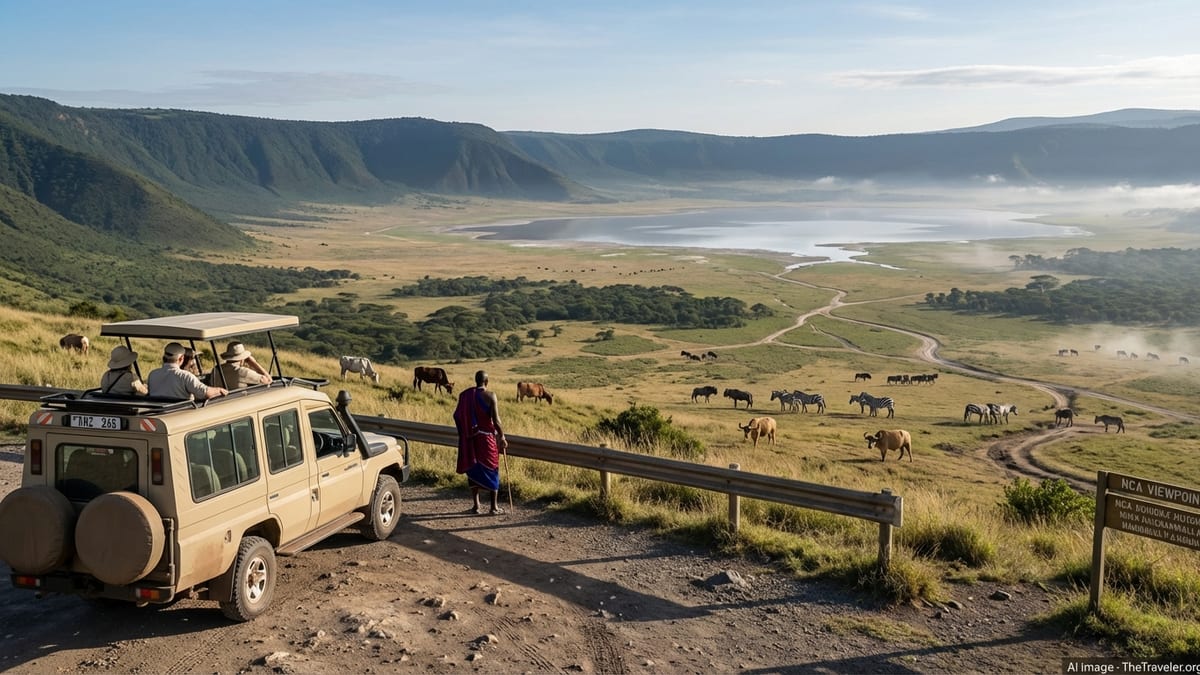
Understanding the Ngorongoro Conservation Area
The Ngorongoro Conservation Area, often shortened to NCA, covers more than 8,200 square kilometers of highland plains, craters and savannas in northern Tanzania. Unlike a typical national park that excludes permanent human settlement, the NCA is managed as a multiple land use area. Wildlife, Maasai pastoralists and tourism all coexist, making it a complex but fascinating landscape where you may see herds of cattle and goats grazing not far from wildebeest and zebra.
The centerpiece is the Ngorongoro Crater itself, a collapsed volcanic caldera roughly 20 kilometers across and about 600 meters deep. It is widely described as the largest unbroken and unflooded caldera in the world and has been recognized as a UNESCO World Heritage Site as well as part of the Ngorongoro Lengai UNESCO Global Geopark. On the crater floor, a patchwork of grasslands, swamps, acacia woodland and the shallow Lake Magadi creates a mosaic of habitats that supports a dense and largely resident population of large mammals.
Management of the NCA falls under the Ngorongoro Conservation Area Authority, a Tanzanian government body based near the crater. The authority is responsible for long term conservation, regulation of tourism, and balancing the needs of wildlife with the rights of indigenous communities. This means that visitor rules and fee structures are periodically updated to reflect conservation priorities and growing tourism demand. Travelers planning a visit in 2025 or 2026 should always confirm the most recent regulations with their tour operator close to departure.
While the crater is the main draw for most first time visitors, the wider conservation area holds a variety of attractions. These include the dramatic crater highlands such as Empakaai and Olmoti, sections of the Serengeti ecosystem that form part of the route of the Great Migration, Oldupai (Olduvai) Gorge where important early human fossils were discovered, and remote cultural areas where the Maasai and other groups still follow largely traditional lifestyles.
Wildlife, Landscapes and Why the Crater Is So Famous
Ngorongoro Crater has earned its reputation as one of the best wildlife viewing locations in Africa because of its unique geography. The caldera walls effectively create a natural enclosure, concentrating animals on the fertile crater floor. In a single game drive, it is common to see many of the species that can take days to find elsewhere, making the crater particularly appealing to first time safari travelers or anyone with limited time.
The crater is home to all members of the so called Big Five. You can often see large herds of buffalo grazing open plains, elephant bulls with impressive tusks moving through the Lerai Forest, and prides of lion scattered across the central grasslands and around hippo pools. Leopard are present but more elusive, usually seen along the forested slopes rather than on the open floor. One of the most compelling reasons to visit is the chance to see black rhino, which are critically endangered across much of Africa but still survive in small numbers inside the crater.
Beyond the Big Five, the concentration of plains game is remarkable. Thousands of wildebeest and zebra share the crater with Thomson’s and Grant’s gazelles, eland, hartebeest and warthog. Around Lake Magadi, flocks of flamingos may gather depending on water levels and salinity, while other wetlands support hippos and a profusion of waterbirds. Birders can tick off raptors such as augur buzzards and crowned eagles, as well as kori bustards, ostriches and numerous smaller species, with the broader conservation area holding more than 500 recorded bird species.
Scenically, the crater is just as compelling as its wildlife. The moment many travelers remember most is the first look from the crater rim. From viewpoints near the main road or public picnic sites, the entire caldera opens up below in a sweeping panorama of greens, browns and shimmering water, with tiny dots of animals visible even from a distance. Early mornings can bring low clouds and mists that slowly lift, while clear afternoons reveal the steep inner walls that wrap around the floor on all sides. It is an environment that feels both contained and vast, a self contained world that has sometimes been nicknamed the Garden of Eden.
How Crater Safaris Work: Game Drives, Walking and More
Most travelers experience Ngorongoro through a classic crater game drive. Park regulations require that all visitors be accompanied by a licensed guide, so the simplest approach is to book through a reputable safari operator that provides a 4x4 vehicle, driver guide and handles all permits. Self driving is strongly discouraged and, in practice, can be complicated due to licensing requirements and complex fee structures that apply differently to local and foreign operators.
For crater game drives, only four wheel drive vehicles up to a specified maximum weight are allowed on the crater floor. Vehicles must carry basic recovery equipment such as a heavy duty jack, tow rope or chain and digging tools. Off road driving is not permitted, and guides are required to keep to designated roads and tracks. There are strict rules on how many vehicles may gather around a single wildlife sighting, and speed limits apply both on the crater rim roads and inside the conservation area. These regulations aim to minimize environmental impact and reduce stress on wildlife while still allowing visitors close viewing opportunities.
A typical crater safari day begins early. Entry gates to the NCA open at around 06:00, and specific descent roads into the crater are managed with time restrictions. The Seneto descent road is usually for descending vehicles only, while the Lerai road is mostly used for ascending out of the crater and the Lemala road can function in both directions depending on conditions. Once you have descended, you will spend several hours driving slowly across the floor, stopping to watch animals and enjoy views before ascending again in the early afternoon. Crater descent fees are charged per vehicle for each day that you enter the crater, on top of park entry fees charged per person.
Beyond vehicle based game drives, the wider conservation area offers walking and hiking options. Rim walks with an armed ranger or guide provide superb views into the crater without adding vehicles to the floor. In the highlands to the north and east, day hikes or overnight treks to places such as Empakaai Crater or down to the shores of its alkaline lake offer a more remote and quieter experience. Walking on the actual floor of Ngorongoro Crater itself is not part of standard tourism activities because of safety and conservation restrictions, so expect your core crater experience to be from inside a vehicle, with walks reserved for the rim and other parts of the NCA.
Practicalities: Fees, Rules and Safety
Ngorongoro is one of the more expensive safari destinations in East Africa, and understanding the fee structure helps set realistic expectations. As of the 2025 and 2026 seasons, non East African adult visitors typically pay a daily conservation or entry fee per person to access the NCA, which is valid for a 24 hour period. On top of this, there is a crater service fee per vehicle each time you descend into the crater. Children between about five and fifteen years usually pay reduced fees, and children under five are generally exempt, although exact terms can change and should always be confirmed at the time of booking.
Fees are set and collected by the Ngorongoro Conservation Area Authority and are subject to 18 percent value added tax. Payment systems have modernized in recent years, and cash is no longer accepted at the entry gates. Instead, visitors must pay via credit card or use prepaid cards issued by a Tanzanian bank prior to arrival. For most international travelers, these financial and administrative details are handled by a tour operator as part of an inclusive safari package, which can also bundle accommodation, guiding and transport between parks.
Visitor rules are strongly enforced to protect both wildlife and people. All visitors enter at their own risk and must follow instructions from rangers and other officials. Off road driving is prohibited, vehicle speed limits are low, and visitors must remain inside vehicles at all times on the crater floor except at designated picnic sites or in emergencies. There are clear regulations on noise levels near animals and on how many vehicles may surround a sighting, which helps keep encounters relatively calm even when the crater feels busy during peak seasons.
Safety in Ngorongoro is generally very good when you follow guidance. Big animals are always potentially dangerous, and predators, elephants and buffalo are all present at close quarters, but attacks on visitors are rare. The most common hazards are vehicle accidents on steep and slippery roads, minor injuries when climbing in and out of vehicles, and sun exposure at altitude. Carrying a hat, sunscreen, sunglasses and layers for sudden weather shifts is advisable. At camps and lodges on the crater rim, staff typically escort guests after dark because wildlife often moves through the grounds at night.
Planning Your Trip: When to Go, How Long and Where to Stay
Ngorongoro can be visited year round, and there is no simple best time that suits every traveler. The classic dry season from roughly June to October brings generally clearer skies, less rainfall and easier driving conditions. Grass on the crater floor is shorter and more open, which can make wildlife spotting easier, and many international travelers come at this time, combining Ngorongoro with the central Serengeti to see part of the Great Migration. The trade off is that the crater is busiest in these months, and vehicle numbers at popular sightings can feel high.
The green or wet seasons, roughly November to March and again in April and May, transform the crater floor into a lusher landscape. Afternoon showers are common, and heavier rains in April and May can lead to muddier tracks and occasional road closures. In return, there are fewer visitors, accommodation rates can be lower, and birdlife is excellent, with many migratory species present. Calving season for wildebeest and other herbivores in the broader ecosystem typically peaks early in the year, which can bring heightened predator activity, although the main calving areas are usually outside the crater itself.
Most travelers allocate at least one full day to Ngorongoro, usually involving an overnight stay on the crater rim or nearby followed by a full morning game drive and then onward travel. Two nights in the area allows you to enjoy a rim walk, visit a Maasai community or explore the highlands without feeling rushed. Because the crater is relatively small, spending more than one or two crater descent days is rarely necessary unless you are particularly focused on photography or specific wildlife sightings.
Accommodation options range from public campsites on the rim to some of East Africa’s most luxurious lodges. Public and special campsites offer simple facilities but unbeatable locations, with views into the crater and the sounds of wildlife at night. Mid range lodges and tented camps near the rim balance comfort and cost, often including spacious rooms, hearty meals and shared game drives. At the top end, high luxury lodges provide elaborate suites, fine dining, spas and highly personalized guiding. Slightly farther from the rim, in the nearby town of Karatu and along the approach roads, there are additional lodges and guesthouses that can reduce costs, although staying outside the conservation area means a longer drive to reach the crater each day.
Culture, Communities and Responsible Travel
One of the defining features of Ngorongoro is that it is not just a wildlife reserve but also the home of people. The Maasai, who began moving into this region from the north in the 18th century, are the most visible community in and around the crater. Wearing their distinctive red and blue shukas, many Maasai continue to herd cattle, goats and sheep across the highlands, using seasonal movements to find grazing for their livestock. Their presence, together with smaller groups such as the Hadzabe and Datoga in other parts of the NCA, gives the conservation area a cultural dimension that is distinct from national parks where permanent settlement is prohibited.
Visiting a Maasai boma, or homestead, is a common optional activity on Ngorongoro safaris. These visits usually involve a welcome song or dance, a short tour of the circular village of huts, and an opportunity to see inside a traditional dwelling. Guides explain aspects of Maasai life, from cattle herding and social structures to beadwork and ceremonies, and there is usually a small market where women sell handmade jewelry and crafts. While some travelers find these boma visits staged, they do provide an accessible introduction to Maasai culture when run in partnership with the community and with clear benefits for local families.
Responsible travel in Ngorongoro means recognizing that tourism is one element in a complex social and environmental system. The conservation area has been at the center of debates about land rights, grazing pressures, human population growth and wildlife protection. While the details are beyond the scope of a short guide, travelers can support better outcomes by choosing operators that employ local people, respect cultural protocols, minimize environmental impact and are transparent about how community visits and conservation levies are structured and distributed.
In practical terms, respect is shown through small actions as well as big decisions. Ask permission before photographing people, especially in villages or markets. Dress modestly when visiting communities, keep noise levels low on game drives and at viewpoints, and do not attempt to give sweets or money directly to children, which can encourage dependency. Purchasing crafts at fair prices, tipping staff and guides appropriately, and sharing feedback with tour companies about responsible practices are all meaningful ways to contribute positively during your visit.
What to Expect Day by Day on a Crater Safari
On arrival in northern Tanzania, most travelers overnight in Arusha or nearby before driving several hours to Ngorongoro the next day. The road climbs steadily into the highlands, passing small towns, farms and coffee plantations. As you approach the conservation area gate, your guide will handle entry formalities while you stretch your legs and perhaps browse small craft stalls. Once inside the NCA, the landscape shifts to rolling, grassy hills and patches of forest, with Maasai bomas dotted across the slopes and herds of livestock visible in the distance.
If you arrive by mid to late afternoon, your first stop is often a viewpoint on the crater rim. In clear weather, this initial panorama is unforgettable. After photographs and orientation, you continue along the rim road to your chosen lodge or campsite. Evening brings cooler temperatures at altitude, crackling fires in lodge lounges, and early nights in preparation for the dawn start. You will typically be briefed by your guide on the next day’s plan, including departure time to reach the descent road promptly when it opens.
The crater game drive day usually begins before sunrise. After a quick breakfast, you set off along the rim in the half light, then queue briefly at the descent road entry. As you drop down the steep gravel road into the crater, the temperature rises and the scale of the caldera becomes apparent. Your guide will choose a route based on recent wildlife reports and your interests, perhaps heading first towards the marshes where hippos wallow, or to lion territories in the central plains. Wildlife sightings accumulate quickly: grazing herds, solitary bull elephants, jackals trotting along tracks, hyaena clans near dens, and the distant shapes of rhino if you are fortunate.
Mid morning, you stop at a designated picnic area for a packed breakfast or early lunch, watching birds or hippos while you eat. Facilities are basic but functional, and you are required to stay within marked zones for safety. After the break, you continue your game drive, exploring different sections of the crater floor and revisiting promising sightings. By early to mid afternoon, you begin the ascent back up the crater wall, often taking the Lerai or Lemala roads, and return to your lodge or continue on to the next destination on your itinerary. Many travelers leave Ngorongoro at this point and drive towards the Serengeti, passing through wide open plains that mark the transition between the highlands and the famous migration routes.
The Takeaway
A visit to the Ngorongoro Conservation Area is a powerful experience that combines intense wildlife viewing with striking landscapes and living culture. The crater is one of the few places in Africa where, in a single day, you can observe a huge variety of animals at close quarters framed by a natural amphitheater of volcanic walls. Beyond the crater floor, the highlands and surrounding plains offer hiking, cultural encounters and a broader understanding of how people and wildlife coexist in this part of Tanzania.
Successful trips here depend on careful planning and realistic expectations. Costs are relatively high, rules are detailed and enforced, and visitor numbers in peak months can make the crater feel busy. Yet with a good guide, early starts and thoughtful timing, the rewards are exceptional. Whether you stay in a simple campsite on the rim or one of the region’s most luxurious lodges, the moments that stay with you are likely to be the same: the first glimpse of the crater at dawn, the quiet weight of a rhino crossing open grassland, the sound of Maasai cowbells drifting through the highland mist.
For many travelers, Ngorongoro is more than just another stop on a safari circuit. It is a place that encapsulates much of what East Africa offers: wildlife, scenery, human history and present day communities intertwined in a single landscape. Arrive informed, travel respectfully and give yourself time to absorb both the grand vistas and the small details. In return, Ngorongoro will deliver a safari experience that is as unforgettable as it is unique.
FAQ
Q1. How many days do I need for Ngorongoro Crater?
Most travelers find that one full crater descent day combined with one or two nights on the rim or nearby is ideal. This allows time for a comprehensive game drive, a rim viewpoint stop and possibly an additional activity such as a cultural visit or a short walk without feeling rushed.
Q2. When is the best time of year to visit the Ngorongoro Conservation Area?
The area is a year round destination. The drier months from June to October bring clearer skies and easier driving, but also larger crowds. The wetter green season from November to March and the long rains around April and May offer fewer visitors, greener landscapes and excellent birding, although showers and occasional muddy roads are more likely.
Q3. Is Ngorongoro suitable for children and families?
Yes, Ngorongoro can be very family friendly. The crater offers relatively short game drives with high chances of seeing many animals in a single day, which suits younger attention spans. Families should discuss age appropriate activities with their tour operator, ensure child seats are available where necessary, and plan rest breaks during drives.
Q4. Can I do a self drive safari in Ngorongoro Crater?
In practice, self drive is difficult and not recommended for most visitors. Vehicles operating commercially in the NCA must meet specific licensing and equipment requirements, and the roads can be steep and challenging. Using a professional safari operator with a licensed guide simplifies permits, payments and navigation, and generally leads to a safer and more rewarding experience.
Q5. What kind of vehicle is used for crater safaris?
Crater safaris are typically conducted in closed or open sided four wheel drive vehicles such as modified Land Cruisers or Land Rovers with pop up roofs. Regulations limit vehicle weight and require basic recovery gear. The raised seating and opening roofs give good visibility for photography and wildlife viewing while still offering protection from the elements.
Q6. How much does a Ngorongoro safari cost?
Costs vary widely depending on accommodation level, group size and itinerary. As a rough guide, a fully inclusive crater safari day including park fees, crater descent fee, vehicle, guide and accommodation can range from a few hundred to well over a thousand US dollars per person per day. Group tours, shoulder season travel and simpler lodgings or campsites can significantly reduce per person costs.
Q7. Will I definitely see the Big Five in the crater?
While no sightings can be guaranteed, Ngorongoro offers some of the best odds in Africa. Buffalo, elephant and lions are commonly seen on most crater drives, and there is a good chance of seeing at least one black rhino, although they may be distant. Leopard are present but much harder to spot. A skilled guide and an early start increase your chances of seeing a broad range of wildlife.
Q8. What should I pack specifically for Ngorongoro?
Pack layers suitable for cool, misty mornings on the crater rim and warmer conditions on the floor. A windproof jacket, fleece, long trousers, a hat, sunglasses and sunscreen are essential. Binoculars, a camera with a moderate telephoto lens, insect repellent and any personal medications should also be included. Comfortable closed shoes are recommended for walking around lodges and on rim walks.
Q9. Are there health concerns I should be aware of?
Ngorongoro lies at moderate altitude, so nights can be cool and some travelers may feel mild shortness of breath if exerting themselves. The region lies within a broader malaria zone, so prophylaxis may be advised depending on your itinerary and medical history. It is important to drink plenty of safe water, use sun protection and follow your doctor’s recommendations on vaccinations and medications before traveling.
Q10. Can I combine Ngorongoro with other parks in Tanzania?
Yes, Ngorongoro is usually part of a broader northern circuit that often includes Serengeti National Park, Tarangire National Park and sometimes Lake Manyara. Many itineraries start in Arusha, visit Tarangire or Lake Manyara, then Ngorongoro and continue to the Serengeti, returning by small aircraft. This combination provides a rich mix of landscapes, wildlife experiences and cultural encounters in a single journey.