

Ottawa blends national symbolism with relaxed small-city charm, offering grand landmarks, world-class museums, historic neighborhoods, and easy access to nature in every season.
Whether you are here for a weekend escape or a longer Canadian itinerary, the capital rewards curious travelers with experiences that are both quintessentially Canadian and distinctly local. This guide highlights the city’s major sights, neighborhoods, museums, and activities so you can make the most of your time in Ottawa.
Getting Oriented in Canada’s Capital
Ottawa sits on the Ontario side of the Ottawa River, facing the city of Gatineau in Quebec, and together the two form the National Capital Region. The compact downtown core makes it easy to explore on foot, by bike, or using the light rail system and buses. Many of the city’s most important landmarks are clustered close together around Parliament Hill, the Rideau Canal, and the historic ByWard Market, which means you can see a great deal in a short visit without needing a car.
First-time visitors quickly discover that Ottawa is both an administrative capital and a lived-in city with residential neighborhoods, green spaces, and a food scene that reflects Canada’s diversity. English and French are both widely spoken, and you will hear many other languages in busy areas such as the ByWard Market and Chinatown. The city experiences hot, often humid summers and very cold winters, so your packing list will vary dramatically depending on the time of year you visit.
Most visitors base themselves downtown or in nearby neighborhoods like ByWard Market, Centretown, or the Glebe, where hotels, restaurants, and transit are all within easy reach. If you plan to spend serious time in the museums, allow extra days, as Ottawa is home to a remarkable concentration of national institutions that can easily fill an extended stay with art, history, and science.
Parliament Hill and the Nation’s Political Heart
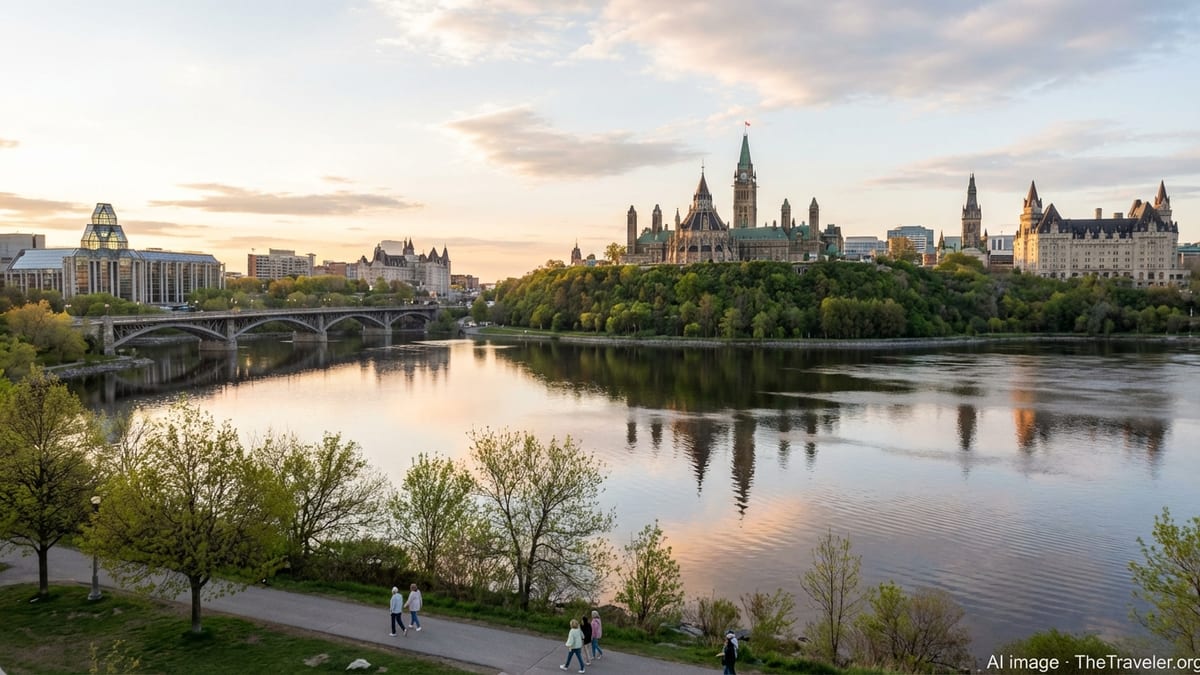
Parliament Hill is the symbolic and geographic heart of Ottawa. Set on a bluff above the Ottawa River, this cluster of neo-Gothic buildings houses the House of Commons, the Senate of Canada, and offices for elected officials and staff. Much of the parliamentary complex is undergoing a long-term rehabilitation, but guided tours are still offered, often starting from the modern visitor center and using temporary chambers while historic spaces are restored. These tours are one of the most informative ways to understand how Canada’s federal government works and to appreciate the ornate interiors that blend carved stone, stained glass, and symbolic artworks.
The lawns and terraces around Parliament Hill serve as a public gathering place in every season. In summer they host yoga sessions, festivals, and informal picnics with sweeping views over the river toward Gatineau. On national occasions such as Canada Day, crowds fill the area for concerts and fireworks. Even on an ordinary day, the site is busy with school groups, civil servants on their lunch break, and visitors taking in the panorama of the river, bridges, and surrounding architecture.
Allow time to simply walk the perimeter paths, where interpretive panels explain the history of the buildings and monuments. From the west side you can look down over the river and across to the Canadian Museum of History in Gatineau, while the east offers views toward the Rideau Canal and the elegant Fairmont Chateau Laurier hotel. Early morning and evening light are particularly beautiful here and ideal for photography.
The Rideau Canal and Waterfront Experiences
The Rideau Canal is one of Ottawa’s defining features and a UNESCO World Heritage Site, linking the Ottawa River with Lake Ontario. In the city center, a historic series of hand-operated locks carries boats between the river and the higher canal basin beside the Chateau Laurier and the National Arts Centre. In warmer months, sightseeing cruises and small pleasure craft glide along the canal, providing a relaxing way to see downtown landmarks from the water and to appreciate the engineering of the early 19th century waterway.
Walking or cycling along the canal’s paved paths is a favorite activity for locals and visitors alike. On summer evenings, the banks fill with joggers, cyclists, and families out for a stroll, while grassy slopes near Dow’s Lake and the Dominion Arboretum invite picnics. The arboretum, part of the Central Experimental Farm, displays hundreds of tree and shrub species and creates a slightly warmer microclimate than the surrounding city, which makes it especially lush in late spring and summer.
In winter, conditions permitting, a long stretch of the canal within Ottawa transforms into the Rideau Canal Skateway, widely recognized as one of the world’s largest naturally frozen skating rinks. When the ice is thick and smooth enough, skaters can travel several kilometers through the heart of the city, pausing at huts for hot chocolate and the local fried pastry known as a BeaverTail. The exact opening and closing dates vary each year with the weather, so it is wise to check current conditions shortly before your trip if skating is on your wish list.
Exploring ByWard Market and Central Neighborhoods
Just east of Parliament Hill, the ByWard Market area combines a historic farmers’ market with a dense grid of streets lined with restaurants, bars, and independent boutiques. The outdoor market typically operates from spring through fall, with stalls selling produce, maple products, flowers, and crafts, while the indoor building hosts year-round vendors. Even in the depths of winter, the neighborhood remains lively thanks to cafes, bakeries, and pubs that offer a warm refuge from the cold.
The market is also one of Ottawa’s best places to sample local and regional foods. Many eateries feature Canadian ingredients such as Quebec cheeses, Atlantic seafood, and Ontario farm produce. Signature Ottawa treats, including BeaverTails and the often-photographed “Obama cookie” at a popular bakery, are easy to find as you wander. Patio season is a highlight in late spring and summer, when sidewalks and courtyards fill with diners late into the evening.
Nearby, the streets of Centretown and the Glebe reveal a more everyday side of the city. Centretown mixes office towers with heritage homes, small restaurants, and coffee shops, while the Glebe south of the canal is known for its tree-lined streets, independent retailers, and Lansdowne entertainment district with sports events and festivals. To the west, Ottawa’s Chinatown features an impressive ceremonial archway and an evolving collection of public art, murals, and sculptures that speak to the community’s history and cultural contributions.
Ottawa’s National Museums and Cultural Highlights
For a city of its size, Ottawa has an extraordinary concentration of museums, many of them national institutions that cover the country’s art, history, and science in impressive depth. On the Ontario side of the river, the National Gallery of Canada occupies a striking glass and granite building near the ByWard Market. Inside, you will find extensive collections of Canadian, Indigenous, and international art, as well as photography and rotating special exhibitions that draw visitors from across the country.
Along the river a short distance west of Parliament Hill, the Canadian War Museum explores Canada’s military history, from early conflicts to contemporary peacekeeping missions. Its angular, green-roofed building is rich in symbolism and offers both large artifact halls, where tanks and artillery pieces are displayed, and quiet spaces for reflection. Directly across the street, the National Holocaust Monument commemorates the Holocaust and honors survivors who made new lives in Canada, providing a sobering but important counterpoint to the museum visit.
Across the Ottawa River in Gatineau, the Canadian Museum of History presents large-scale exhibitions on the stories of Indigenous peoples and the broader history of Canada, set within an architecturally distinctive complex with sweeping views back toward Parliament Hill. Nearby, the Canadian Children’s Museum offers interactive experiences geared to younger visitors. Other national museums within the Ottawa area include the Canada Science and Technology Museum, the Canada Aviation and Space Museum, and the Canada Agriculture and Food Museum, where visitors can learn about farming and food production at a working farm site in the city.
Museum hours and exhibition lineups evolve throughout the year, and many institutions offer evening openings, special events, and family-friendly programming. It is worth reviewing current exhibitions and booking timed tickets in advance for popular shows, particularly during school breaks, long weekends, and the busy summer season.
Parks, Lookouts, and Nature Close to Downtown
One of Ottawa’s great strengths is the amount of green space woven into and around the urban core. Major’s Hill Park, perched above the confluence of the Rideau Canal and the Ottawa River, offers some of the best vantage points for photographing Parliament, the Chateau Laurier, and the distant Gatineau Hills. The park’s lawns and flowerbeds are ideal for a leisurely stroll, and seasonal events sometimes bring art installations or small festivals to the space.
A short walk away, Confederation Park provides another central green space, bordered by civic buildings and the National Arts Centre. During summer it often hosts cultural events and music festivals, while in winter it becomes one of the hubs for Winterlude, Canada’s long-running winter festival that features ice sculptures, entertainment, and family activities around the city. Farther afield but still within Ottawa, parks like Brewer Park on the Rideau River offer sports fields, skating ovals in winter, and community gardens that showcase local urban agriculture.
One of the newest high-profile outdoor attractions is Kìwekì Point, a redeveloped lookout between the National Gallery and the Alexandra Bridge. Recently reopened after a significant rehabilitation project, this elevated promontory provides sweeping views up and down the Ottawa River and a fresh perspective on the skyline. Across the river in Quebec, the vast Gatineau Park delivers a more rugged landscape of forests, lakes, and hills, crisscrossed by hiking and cycling trails in summer and extensive cross-country ski routes in winter.
Together, these parks and lookouts allow you to shift quickly from urban sightseeing to moments of quiet in nature. They are particularly rewarding at sunrise and sunset, when the warm light softens the stone and glass of the city and reflections ripple across the river.
Seasonal Experiences and When to Visit
Ottawa is very much a four-season destination, and your experience of the city will change dramatically depending on when you arrive. Summer brings warm temperatures, long evenings, and a full calendar of festivals, from music events in central parks to cultural celebrations in neighborhoods across the city. Patio dining, boat cruises, and outdoor markets are at their busiest, and many attractions extend their hours to accommodate both residents and visitors taking advantage of the season.
Autumn often offers crisp air and clear skies, with fall colors glowing across the urban canopy and in nearby Gatineau Park. This can be a particularly pleasant time to visit if you prefer fewer crowds but still want comfortable weather. Farmers’ markets brim with apples, squash, and other harvest produce, while cafes and restaurants highlight seasonal ingredients. Packing layers is advisable, as temperatures can vary widely between sunny afternoons and cool evenings.
Winter brings cold temperatures and snow, yet it is one of the most distinctive times to experience Ottawa. When conditions allow, the Rideau Canal Skateway opens, and the city celebrates Winterlude during the first part of February with ice sculptures, outdoor entertainment, and family-friendly activities. Many museums and attractions remain fully operational, making it easy to blend indoor cultural visits with time outdoors. Proper winter clothing, including insulated boots and windproof layers, is essential if you plan to spend long periods outside.
Spring can be transitional, with melting snow, rising river levels, and trees slowly leafing out. It is also tulip season, when beds across the city, particularly near Dow’s Lake, burst into color during the Canadian Tulip Festival. Whatever season you choose, it is wise to check current conditions and event calendars close to your travel dates, since festival schedules, skating seasons, and special exhibitions can change from year to year.
Practical Tips for Getting Around and Staying Safe
Getting around Ottawa is relatively straightforward. The city’s O-Train light rail line and an extensive bus network connect downtown with major neighborhoods, attractions, and park-and-ride lots. Many visitors rely on public transit and walking for the entirety of their stay, especially if they are focusing on downtown sights and museums. Cycling is also popular during the warmer months, with multi-use paths following the canal, rivers, and parkways. Bike rentals and bike-share services may be available seasonally, and dedicated bike lanes are expanding across the city.
Driving is possible, but parking in central areas like ByWard Market and around Parliament Hill can be expensive and limited, particularly during major events and peak times. If you choose to rent a car, it may be more convenient to leave it at your accommodation and use transit for day-to-day sightseeing, only driving when you plan excursions to areas farther from the core. Winter visitors should be prepared for snow-covered streets and occasionally challenging conditions, and allow extra travel time when storms are forecast.
Ottawa is generally considered a safe city for travelers, but standard urban precautions still apply. Keep valuables secure, be aware of your surroundings, and use well-lit routes at night, especially if you are unfamiliar with the area. In winter, watch for icy sidewalks and dress appropriately to avoid frostbite or discomfort in low temperatures. During hot summer days, carry water, sunscreen, and a hat, particularly if you will be walking long distances between sites.
Language should not be a barrier for most visitors, as service staff in hotels, museums, and major attractions usually speak both English and French, and many are accustomed to helping international guests. Visitor information centers, museum staff, and local tourism websites provide up-to-date details on opening hours, ticketing, and any temporary closures or construction that might affect your plans.
The Takeaway
Ottawa rewards slow exploration. Beyond its iconic Parliament buildings and postcard views along the Rideau Canal, the city offers layered stories told through its national museums, vibrant neighborhoods, public art, and accessible green spaces. In a single day you can tour the country’s political heart, browse a historic market, and watch the sun set from a riverside lookout, yet still feel the relaxed pace that sets Ottawa apart from larger cities.
Whether you come to skate along a frozen canal, wander through galleries of Canadian art, or simply enjoy patio conversations on a summer evening, the capital provides a welcoming introduction to Canada’s culture and landscape. With thoughtful planning and an eye on the seasons, you can tailor your itinerary to match your interests and discover why many visitors leave Ottawa surprised by how much they enjoyed their time in the nation’s capital.
FAQ
Q1. How many days do I need to see the main sights in Ottawa?
Most visitors find that two to three full days is enough to see key landmarks, one or two major museums, and explore the ByWard Market and canal area at a comfortable pace.
Q2. Do I need a car to get around Ottawa as a visitor?
No, a car is not essential for most trips. The downtown core is walkable, and public transit, taxis, and ride-hailing services cover major attractions. A car is mainly useful for exploring outlying areas and Gatineau Park at your own pace.
Q3. When is the best time of year to visit Ottawa?
It depends on your interests. Summer offers festivals and outdoor dining, winter features skating and Winterlude festivities when conditions allow, and spring and autumn provide milder weather with fewer crowds.
Q4. Can I tour the Parliament buildings in Ottawa?
Guided tours are generally available, although access may change while long-term renovations continue. It is advisable to check current tour availability and reserve tickets ahead of your visit.
Q5. Is the Rideau Canal Skateway open every winter?
The skateway usually opens in mid-winter when ice conditions are safe, but exact dates vary with the weather. In some years, warm temperatures or inconsistent freezing can shorten or disrupt the skating season.
Q6. Which museums should I prioritize if I have limited time?
Many visitors start with the National Gallery of Canada, the Canadian Museum of History across the river in Gatineau, or the Canadian War Museum. Your choice will depend on whether you are most interested in art, broad Canadian history, or military stories.
Q7. Is Ottawa a good destination for families with children?
Yes. Several museums have interactive exhibits and children’s areas, there are parks and outdoor spaces throughout the city, and seasonal activities such as skating or the tulip displays add kid-friendly variety.
Q8. What should I pack for a winter trip to Ottawa?
For winter, bring a warm insulated coat, hat, gloves, scarf, thermal layers, and waterproof boots with good grip. Temperatures can be well below freezing, and wind along the river and canal can make it feel colder.
Q9. Is it easy to visit Gatineau Park from Ottawa?
Gatineau Park is a short drive from downtown Ottawa, and some shuttle and tour options operate during busy periods. Having a car or joining an organized excursion makes it easier to reach trailheads and viewpoints.
Q10. Are there bilingual services for visitors who speak only English or only French?
Yes. Museums, major attractions, and many businesses operate in both official languages, and staff are accustomed to helping visitors who speak primarily English or primarily French, as well as international travelers using other languages.